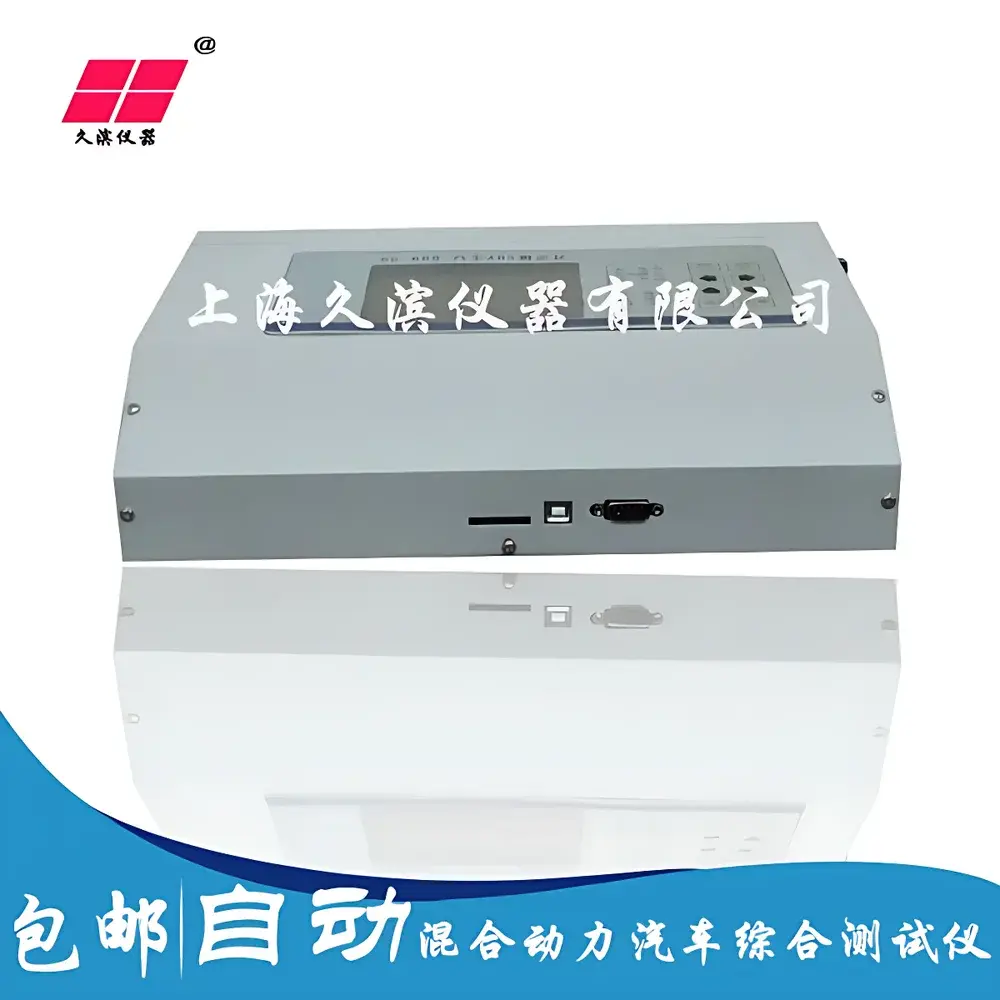
JB-850 Hybrid Electric Vehicle (HEV) & Electric Vehicle (EV) Integrated Performance Test System
| Brand | Jiubin Instruments |
|---|---|
| Model | JB-850 |
| Origin | Shanghai, China |
| Power Supply | DC 12 V (internal Ni-MH battery pack: 9.6 V / 8 × 1.2 V / 800 mAh) |
| Dimensions | 330 × 220 × 75 mm |
| Weight | 1.2 kg (incl. battery) |
| Operating Temperature | −20 °C to +45 °C |
| Humidity Range | 30–80 % RH |
| Speed Range | 0–500.0 km/h (resolution: 0.01 km/h, accuracy: ±0.5 %) |
| Distance Range | 0–999999.999 m (resolution: 1 mm, accuracy: ±0.2 %) |
| Time Range | 0–99999.999 s (resolution: 1 ms, accuracy: ±0.1 %) |
| Deceleration Range | 0–14.9 m/s² (resolution: 0.01 m/s², accuracy: ±1 %) |
| MFDD Range | 0–9.999 m/s² (resolution: 0.001 m/s², accuracy: ±1 %) |
| Brake Pedal Force | 0–999 N (resolution: 1 N, accuracy: ±1 %) |
| Fuel Consumption | 0–999.999 L/100 km (resolution: 0.001 L/100 km, accuracy: ±2 %) |
| Hourly Fuel Flow | 0–999.999 L/h (resolution: 0.001 L/h, accuracy: ±2 %) |
| Voltage Input | 0–300 V (resolution: 0.1 V, accuracy: ±0.5 %) |
| Current Input | 0–500 A (resolution: 0.1 A, accuracy: ±0.5 %) |
| Data Storage | SD card (FAT32 formatted, user-replaceable), USB host/device interface |
| Real-time OS | µC/OS-II |
| Display | 240 × 128 monochrome LCD with Chinese character UI |
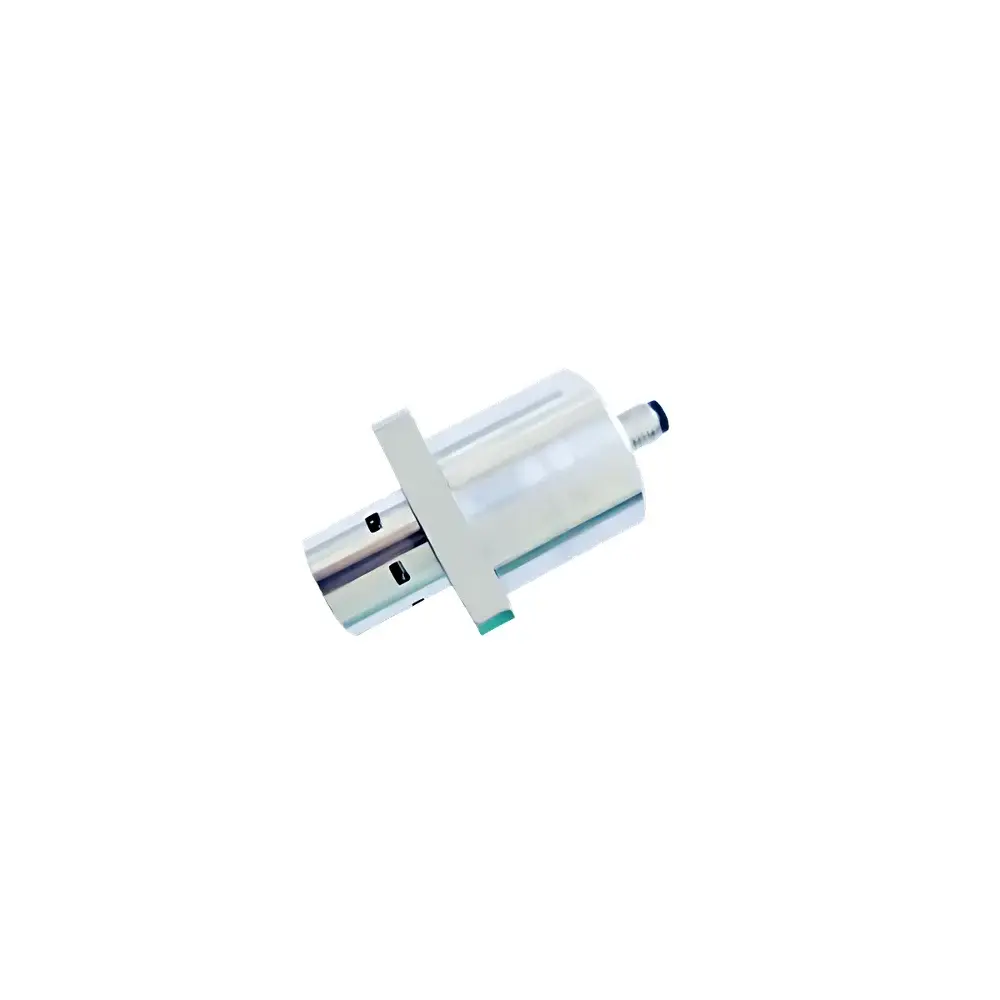
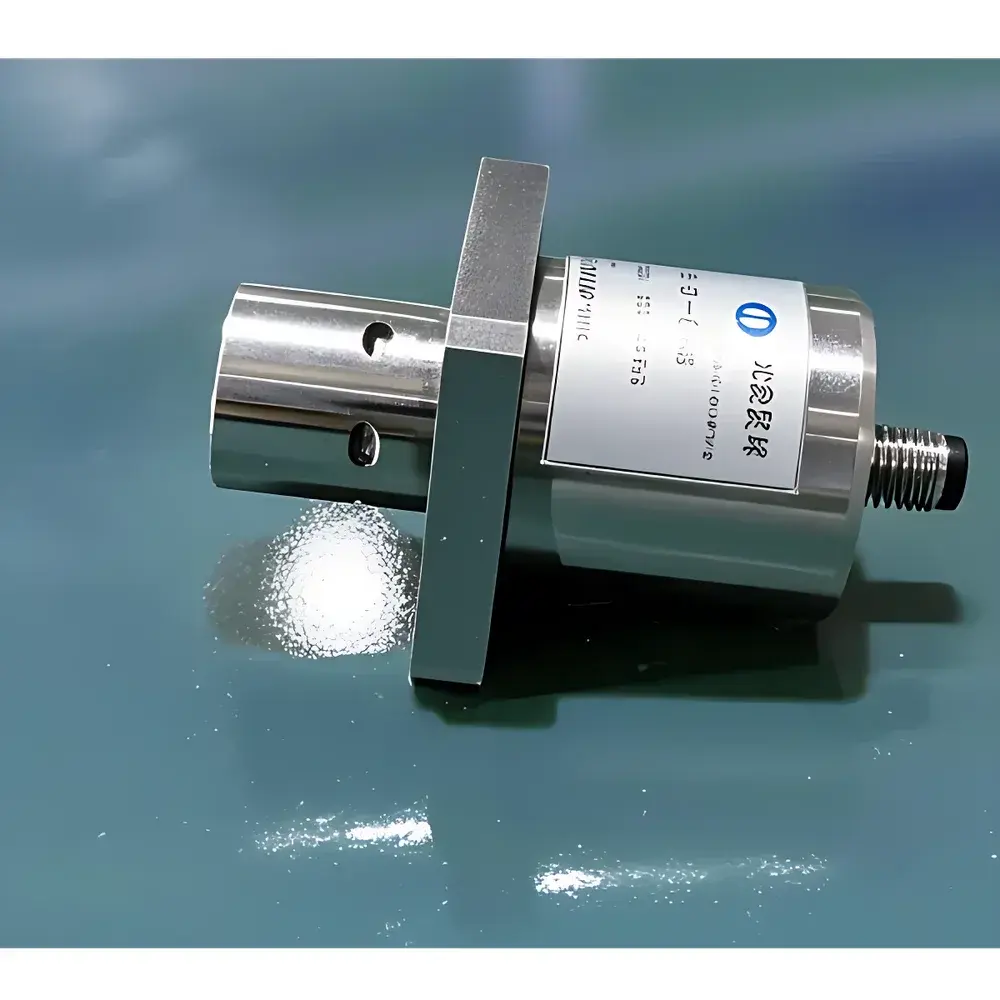
| Interface Options | Dual RS-232 ports, built-in thermal printer, optional pedal force sensor, optional GPS/non-contact optical speed sensor, optional electronic fuel injection (EFI) flow sensor |
Overview
The JB-850 Hybrid Electric Vehicle (HEV) & Electric Vehicle (EV) Integrated Performance Test System is a portable, embedded instrumentation platform engineered for comprehensive dynamic and energy-based characterization of light-duty motor vehicles. Built around an ARM Cortex-based 32-bit microcontroller and running the deterministic real-time operating system µC/OS-II, the system delivers synchronized acquisition and computation across mechanical, electrical, and fuel-energy domains. Its architecture supports simultaneous measurement of kinematic parameters (speed, acceleration, distance, time), braking dynamics (MFDD, coordination time, deceleration profile), propulsion efficiency (acceleration performance, gear-shift timing), and energy consumption metrics (fuel volume flow, battery voltage/current, state-of-charge integrated ampere-hours). Designed for field-deployable operation in vehicle development labs, regulatory inspection facilities, technical training institutions, and road safety research units, the JB-850 meets the functional requirements of ISO 8855 (road vehicle dynamics), SAE J227a (braking test procedures), and GB/T 12544–2012 (Chinese national standard for automobile performance testing).
Key Features
- High-resolution real-time data acquisition: 0.01 km/h speed resolution, 1 ms time stamping, and 1 mm distance quantization ensure traceable repeatability in regulatory-grade validation.
- Dual-mode speed sensing architecture: Supports both non-contact optical sensors (for controlled track use) and GPS-based velocity input (for open-road validation), enabling compliance with ISO 15031-3 for on-road emissions-related diagnostics.
- Multi-domain synchronization: Simultaneous capture of mechanical (brake pedal force, acceleration), electrochemical (voltage, current, coulombic integration), and fluidic (fuel mass flow via optional EFI sensor) signals under common timebase.
- Robust embedded storage: FAT32-formatted SD card slot enables unlimited sequential logging; data files are stored in CSV-compatible plain-text format for direct import into MATLAB, Python pandas, or LabVIEW for post-processing.
- Regulatory-ready output interfaces: Dual RS-232 ports support legacy diagnostic tools and telematics gateways; integrated thermal printer generates audit-trail hard copies compliant with GLP documentation requirements.
- Low-power design: Static power draw ≤1 W; total system consumption <3 W — suitable for extended unattended operation using internal Ni-MH battery pack (9.6 V / 6.4 Wh).
Sample Compatibility & Compliance
The JB-850 is validated for use with passenger cars, light commercial vehicles, and low-speed electric utility vehicles conforming to UN ECE Regulation No. 13-H (braking), ISO 2631-1 (ride comfort assessment inputs), and GB/T 18385–2001 (electric vehicle performance testing). It accommodates OEM-specific CAN bus message structures via optional add-on modules but operates independently as a self-contained analog/digital acquisition unit without requiring vehicle network access. All sensor inputs comply with IEC 61000-4-2 (ESD immunity) and IEC 61000-4-4 (electrical fast transient robustness). Calibration constants for all transducers are retained in non-volatile memory with EEPROM write-cycle protection, satisfying ISO/IEC 17025 clause 6.5.2 on measurement traceability.
Software & Data Management
Data is logged in timestamped ASCII files (.CSV) containing header metadata (test ID, date/time, sensor configuration, calibration IDs). Each record includes synchronized columns for speed (km/h), longitudinal acceleration (m/s²), elapsed time (s), cumulative distance (m), brake pedal force (N), voltage (V), current (A), and optionally fuel flow (L/h). The system does not include proprietary analysis software; instead, it follows open-data principles compatible with third-party platforms including National Instruments DIAdem, Python-based automotive data toolkits (e.g., asammdf, canmatrix), and Excel-based statistical templates used in ISO 26262 ASIL-B verification workflows. Audit logs—including parameter changes, calibration events, and user login timestamps—are maintained internally and exportable upon request, supporting FDA 21 CFR Part 11-compliant environments when deployed with external identity management systems.
Applications
- Validation of regenerative braking energy recovery efficiency in HEVs/EVs per SAE J2908.
- Verification of coast-down aerodynamic and rolling resistance coefficients (CdA, Crr) per ISO 8713 Annex C.
- Dynamic brake balance evaluation during ABS/ESC system development.
- Evaluation of driver-assist system response latency using synchronized pedal-force and speed profiles.
- Academic curriculum delivery in automotive engineering programs: hands-on laboratory exercises covering vehicle dynamics modeling, energy accounting, and sensor fusion fundamentals.
- Periodic technical inspection (PTI) of commercial fleets under national roadworthiness regulations.
FAQ
Does the JB-850 support CAN FD or high-speed CAN communication?
No — the base JB-850 operates as an isolated analog/digital front-end. CAN connectivity requires optional hardware expansion modules sold separately.
Can test data be exported in MDF4 format for compatibility with ETAS INCA or Vector CANoe?
Not natively. Raw CSV output may be converted to MDF4 using open-source converters such as mdfreader or commercial tools like DTS Monaco.
Is firmware upgrade capability available over USB or SD card?
Yes — field-upgradable firmware images (signed binary .bin files) can be loaded via USB mass-storage mode or SD card insertion.
What is the maximum sampling rate for voltage and current channels?
The system acquires all analog channels at a fixed 100 Hz synchronous rate, sufficient for capturing transients in traction motor control loops and fuel injector pulse widths.
Are calibration certificates provided with each unit?
Factory calibration reports (traceable to CNAS-accredited standards) are included; accredited calibration services are available upon request for ISO/IEC 17025 compliance.
Related Products