
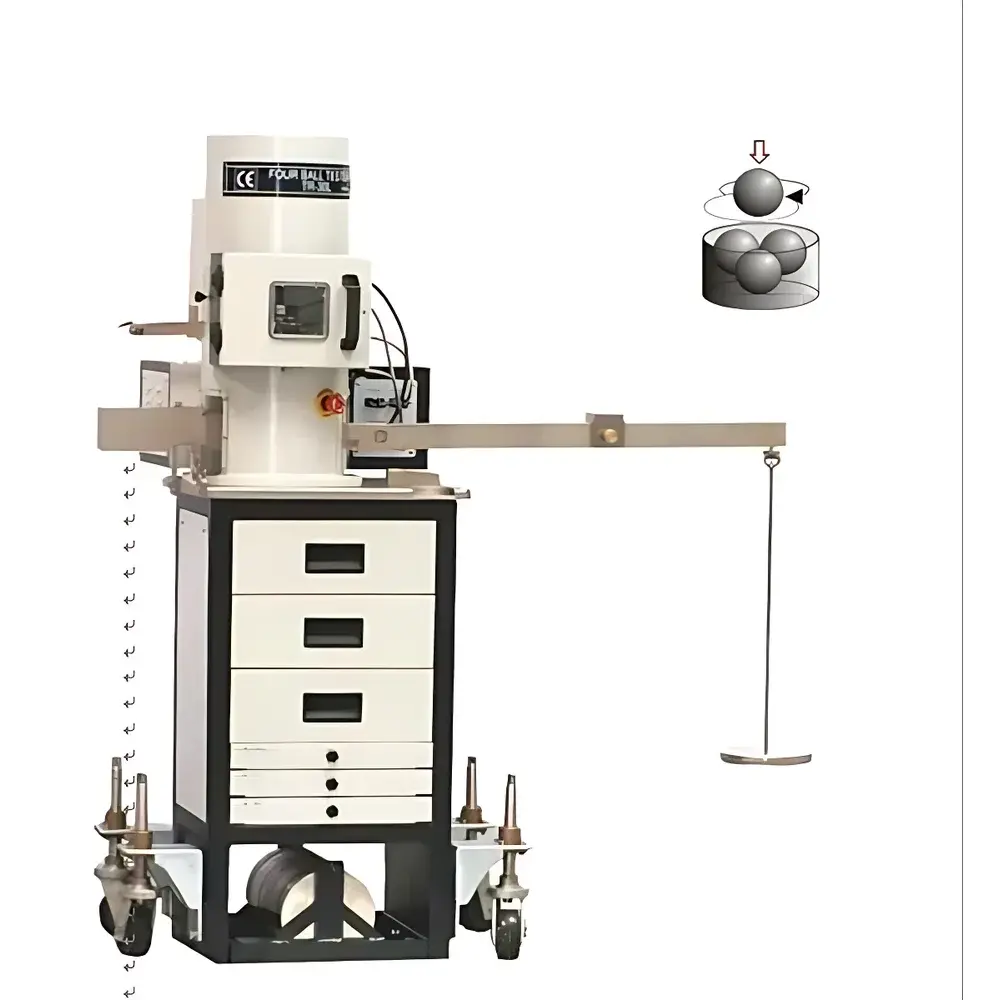
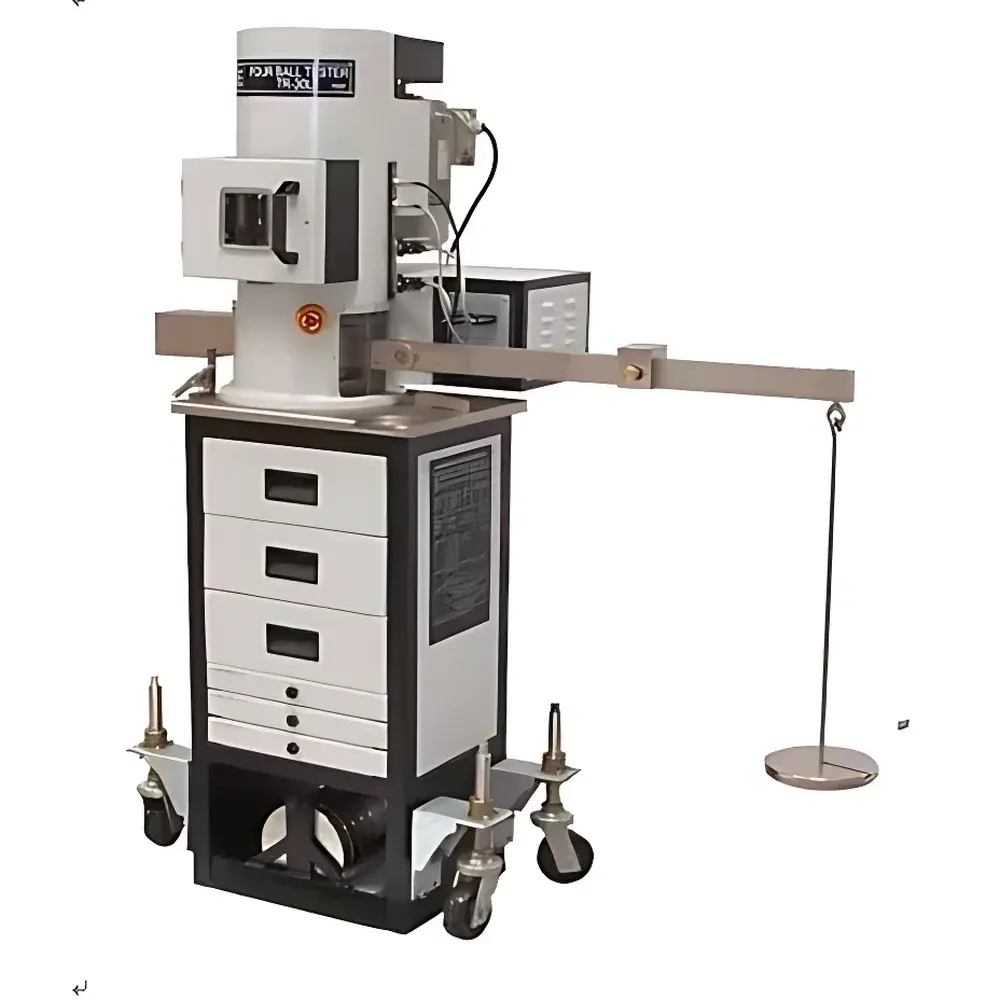
JHT TR-30 Four-Ball Tribological Tester
| Brand | JHT |
|---|---|
| Origin | USA |
| Manufacturer Type | Authorized Distributor |
| Category | Imported Instrument |
| Model | TR-30 |
| Price Range | USD 70,000 – 140,000 |
| Instrument Type | Multi-Function Four-Ball Tribometer |
| Maximum Friction Force | 20 N |
| Friction Force Resolution | 0.4 mN |
| Maximum Test Temperature | 1000 °C |
| Compliance | ASTM D2266, D2596, D2783, D4172, D5183 |
Overview
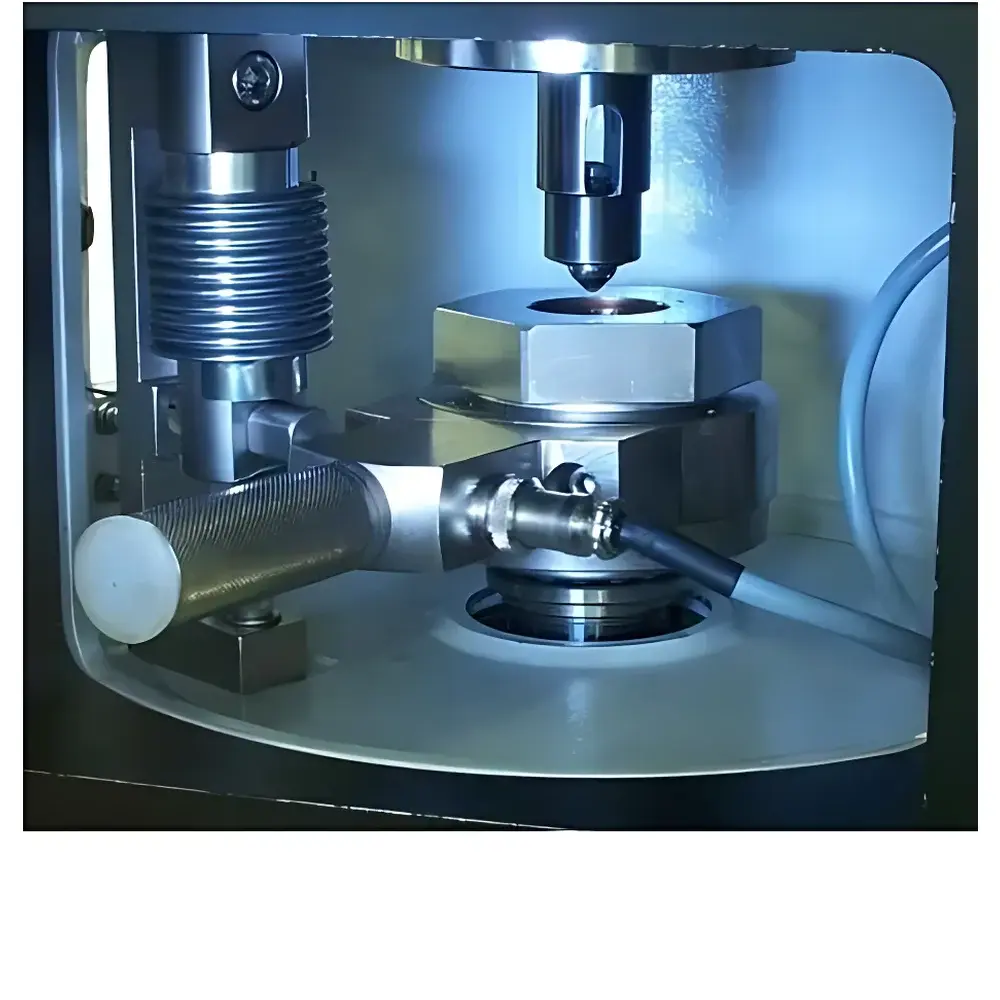
The JHT TR-30 Four-Ball Tribological Tester is an engineered precision instrument designed for standardized evaluation of lubricant performance under controlled tribological conditions. Based on the classical four-ball geometry—where one rotating steel ball is loaded against three stationary balls immersed in test fluid—the system enables quantitative assessment of wear resistance (WP), extreme pressure (EP) behavior, friction coefficient, and rolling contact fatigue (RCF) according to internationally recognized protocols. Its modular architecture integrates high-stability mechanical loading, real-time torque and temperature monitoring, and programmable rotational control to support reproducible testing across ASTM, IP, and DIN standards. The TR-30 operates within a calibrated thermal envelope up to 1000 °C, accommodating high-temperature lubricant formulations and enabling direct correlation between thermal stability and tribological failure modes.
Key Features
- CE-certified mechanical and electrical safety architecture compliant with EU Machinery Directive 2006/42/EC and Low Voltage Directive 2014/35/EU
- Simultaneous execution of ASTM D4172 (wear), D2596/D2783 (EP), D5183 (friction coefficient), and IP 300 (rotating contact fatigue) on a single platform
- Dual-mode loading: manual lever-based load application with digital force feedback or optional pneumatic actuation with closed-loop servo control
- Integrated high-resolution torque sensor (0.4 mN resolution) and axial load transducer (±0.5% full scale) synchronized with rotational speed (0–2000 rpm)
- Collate Master™ quick-release ball holder enabling tool-free insertion/removal of test balls without disassembly
- Modular electronics design with field-replaceable I/O modules and onboard diagnostics for minimal downtime
- Ergonomic operator interface with adjustable height, integrated tool storage, and interlocked access doors meeting ISO 13857 safety clearance requirements
- Optional CCD-based imaging system with automated wear scar diameter measurement and overlay comparison of multiple test results
Sample Compatibility & Compliance
The TR-30 accommodates standard 12.7 mm (½-inch) AISI E52100 steel test balls per ASTM E2338 and ISO 6506-1. It supports liquid lubricants, greases, solid lubricant dispersions, and formulated additives. All test configurations comply with GLP-aligned data integrity requirements: audit-trail-enabled software logs user actions, parameter changes, calibration events, and raw sensor outputs. The system meets ISO 9001:2015 quality management criteria and is validated for use in laboratories operating under FDA 21 CFR Part 11-compliant environments when paired with appropriate electronic signature and data archiving protocols. Thermal control conforms to ASTM E77 and ISO/IEC 17025 traceability guidelines via NIST-traceable RTD sensors and PID-regulated heating elements.
Software & Data Management
TR-30 Control Suite v4.x provides deterministic real-time acquisition at 1 kHz sampling rate for load, torque, temperature, and RPM. Data streams are timestamped with microsecond precision and stored in vendor-neutral ASCII (.csv) format for third-party statistical analysis. The GUI supports multi-test overlay visualization, automatic wear scar diameter calculation from imported microscope images, and comparative EP load progression charts. Calibration records—including force, torque, and temperature verification certificates—are embedded in each test file header. Software validation documentation (IQ/OQ/PQ templates) and 21 CFR Part 11 configuration files are supplied with every system. Remote monitoring via Ethernet TCP/IP allows integration into centralized laboratory information management systems (LIMS).
Applications
- Quantitative wear scar diameter (WSD) measurement per ASTM D4172 for anti-wear additive screening in engine oils and hydraulic fluids
- Determination of weld point load (PB, PD) and load-wear index (LWI) per ASTM D2596/D2783 for gear oil and grease formulation development
- Friction coefficient profiling under variable load/speed/temperature regimes for boundary lubrication studies
- Rotating contact fatigue life assessment of synthetic esters and PAOs per IP 300 using vibration amplitude threshold detection
- KRL shear stability testing per DIN 51350-06 using optional conical roller bearing fixture and thermostatically controlled housing (60 °C ± 0.5 °C)
- High-temperature oxidation-induced scuffing analysis in turbine and compressor lubricants up to 1000 °C
FAQ
What ASTM and ISO standards does the TR-30 fully support?
The TR-30 is factory-validated for ASTM D2266, D2596, D2783, D4172, D5183, and IP 300. Optional KRL fixtures enable compliance with DIN 51350-06. Full traceable test reports include standard-specific pass/fail logic and uncertainty budgets.
Is the system suitable for GMP-regulated environments?
Yes—when configured with Part 11-compliant software options, electronic signatures, and audit trail logging, the TR-30 meets ALCOA+ data integrity principles and supports inspection readiness for FDA, EMA, and PMDA audits.
Can wear scar measurements be automated?
With the optional CCD imaging module and TR-30 Image Analysis Suite, wear scar diameters are measured automatically using edge-detection algorithms; results are exported with pixel-to-micron calibration metadata.
What maintenance intervals are recommended?
Load cell and torque sensor recalibration is recommended annually or after 500 test cycles. Ball holder alignment verification is required before each test series per ASTM D4172 Section 7.3.
Does the system support custom test protocols beyond published standards?
Yes—the scripting engine accepts user-defined ramp profiles, conditional stop triggers, and multi-stage load/torque/temperature sequences, all logged with full parameter provenance.



