
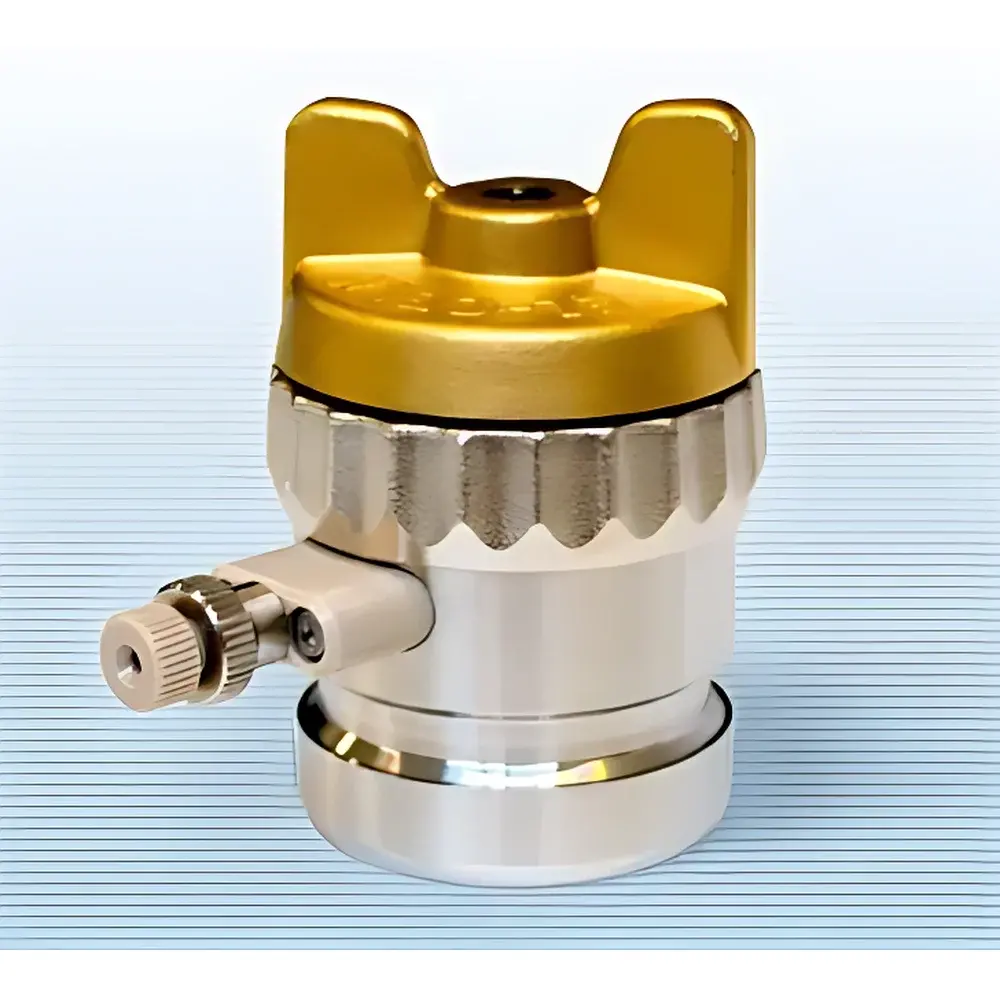
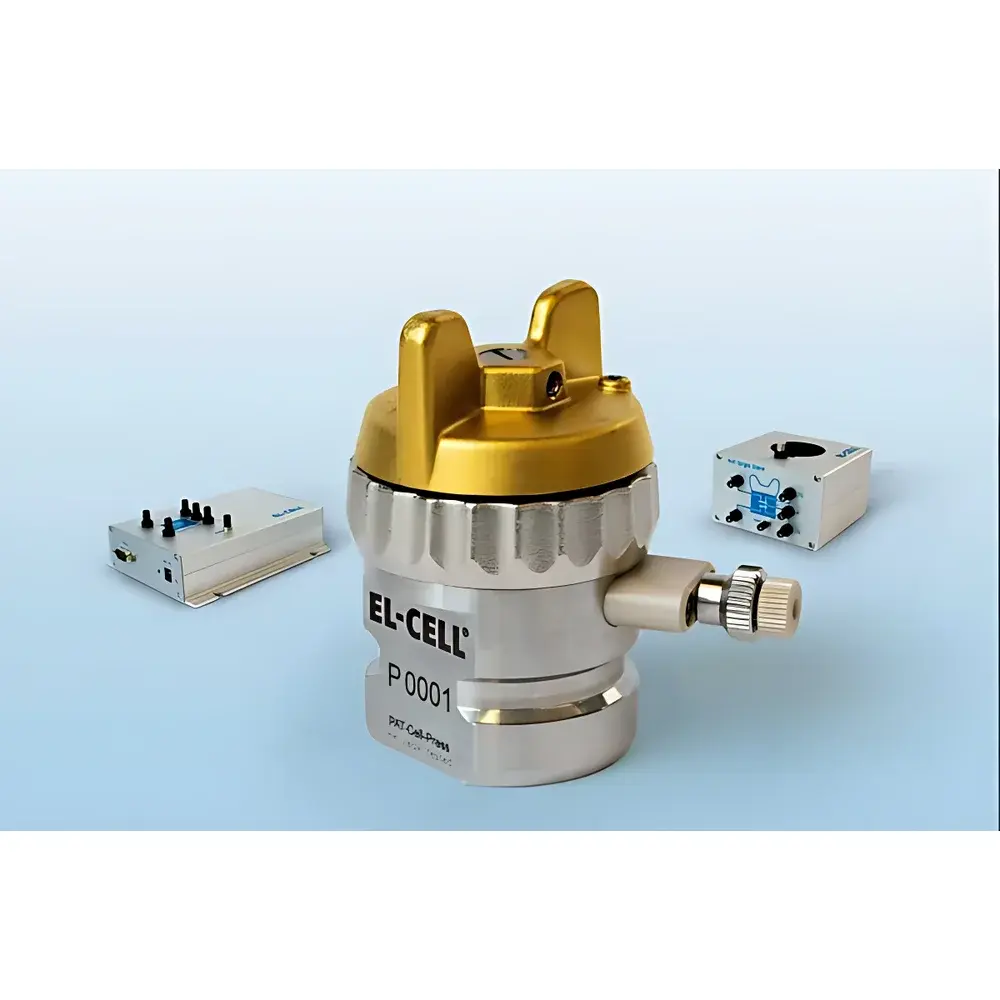
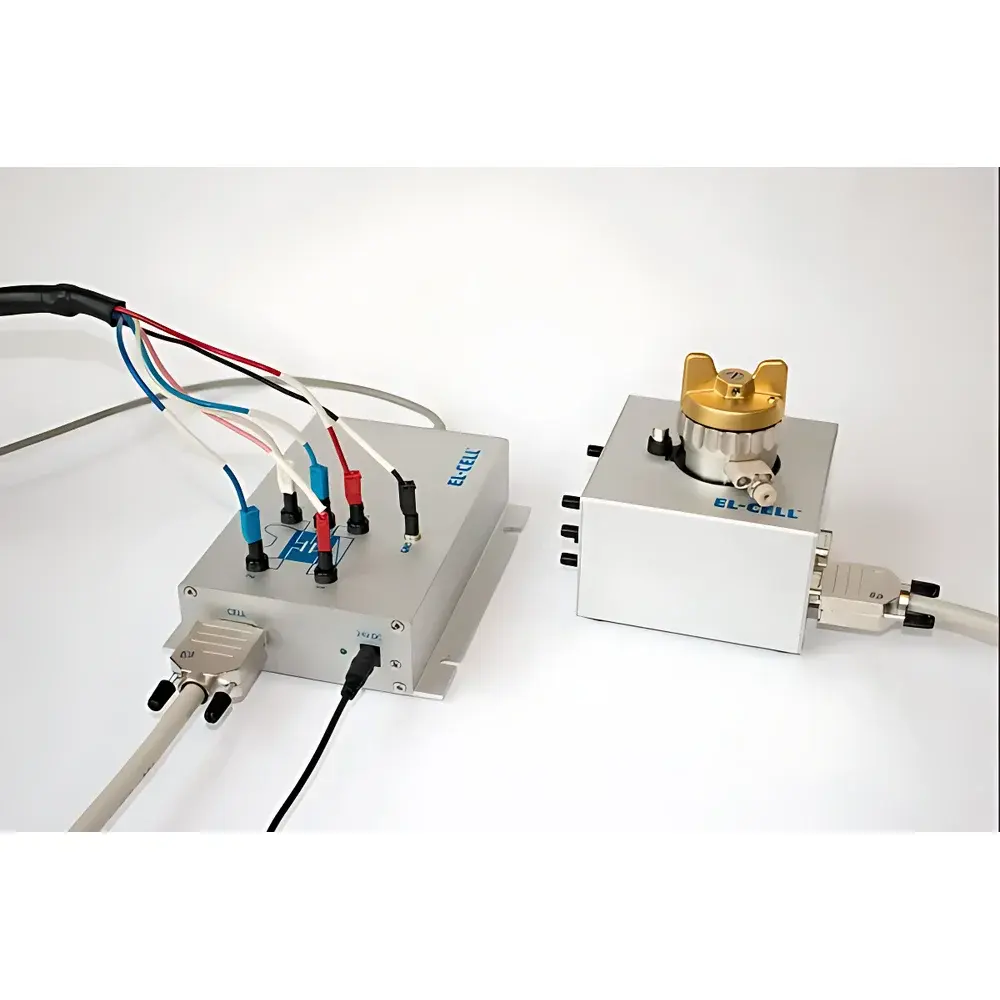
EL-Cell PAT-Cell-Press Pressure Test Module for In Situ Gas Evolution & Adsorption Monitoring
| Brand | EL-Cell |
|---|---|
| Origin | Germany |
| Model | PAT-Cell-Press |
| Pressure Range | 0–2.5 bar (abs) |
| Sensor Type | Laser-Welded Piezoresistive Transducer |
| Sealing | Glass-to-Metal + Single PE O-Ring |
| Dimensions (L×W×H) | 69 mm × 49 mm × 73 mm |
| Weight | 0.5 kg |
| Electrode Materials | Al (lower plunger), Cu (upper plunger), PP insulator sleeve |
| Optional Current Collectors | Stainless Steel 316L |
| Output Signals | Analog ±10 V (pressure, temperature, current, half-cell voltage) |
| Integrated Data Logger | USB interface, simultaneous recording of pressure, temperature, cell current, and half-cell potential |
| Compliance | Helium-leak tested (<1×10⁻⁹ mbar·L/s), battery-grade material certified per ISO 9001 manufacturing controls |
Overview
The EL-Cell PAT-Cell-Press is a purpose-engineered pressure test module designed for in situ quantification of gas evolution, consumption, and adsorption dynamics during electrochemical cycling of lithium-ion, sodium-ion, and solid-state battery cells. It operates on the principle of real-time absolute pressure monitoring within a hermetically sealed, mechanically constrained electrochemical test cell—enabling precise correlation between electrochemical activity (e.g., charge/discharge overpotential, side reactions) and volumetric gas behavior. Unlike conventional gas chromatography or mass spectrometry coupling, the PAT-Cell-Press delivers continuous, high-temporal-resolution pressure data without external sampling lines or vacuum infrastructure. Its integration with the modular PAT-Core architecture ensures compatibility with standard three-electrode configurations—including optional ring-shaped reference electrodes embedded within the polypropylene insulation sleeve—thereby supporting accurate half-cell potential control and kinetic deconvolution of anode/cathode processes.
Key Features
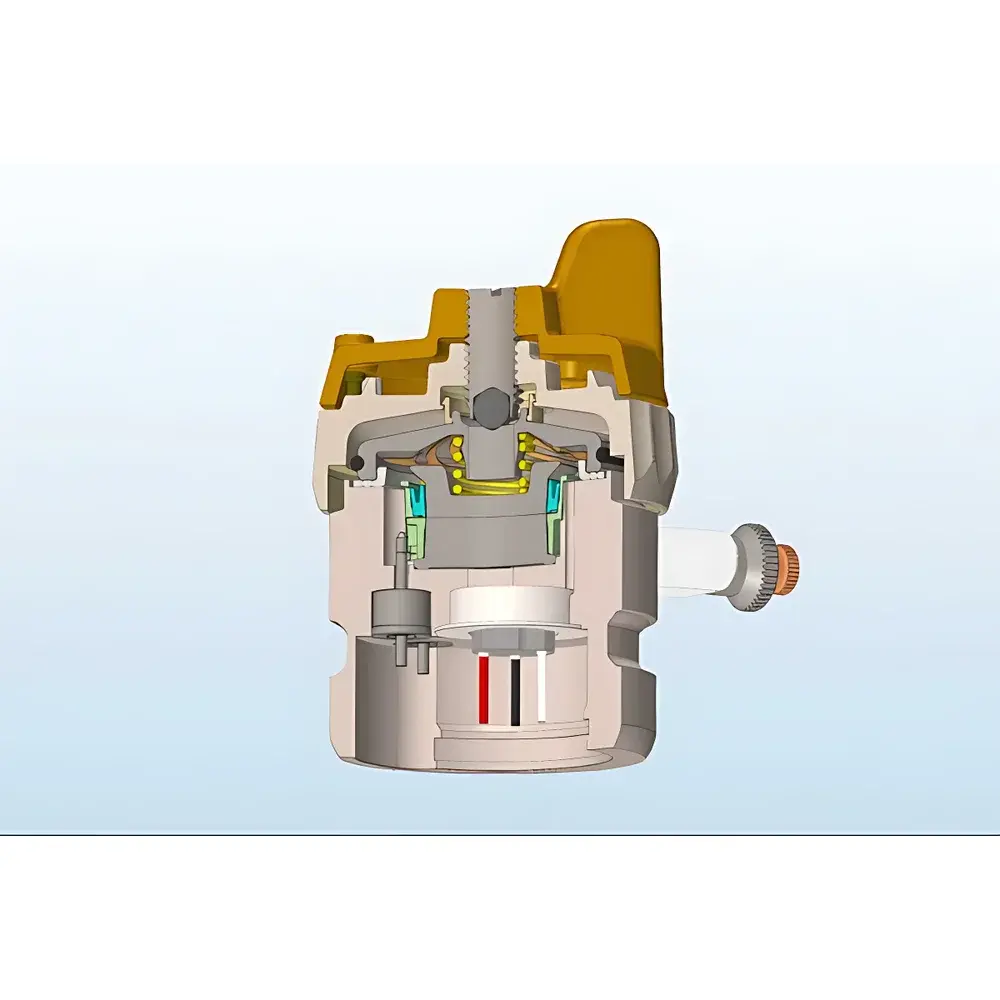
- Laser-welded piezoresistive pressure sensor with 0–2.5 bar absolute range and factory-calibrated linearity (±0.5% FS), mounted directly into the cell base to minimize thermal drift and mechanical hysteresis.
- Glass-to-metal hermetic seal between sensor housing and cell body eliminates elastomeric gasket dependency; only one disposable PTFE-coated ethylene-propylene (EPDM/PE) O-ring interfaces the top cap and base—reducing leak paths and enabling rapid cell assembly/reuse.
- Modular PAT-Core subassembly: Lower plunger (Al, battery-grade) serves as positive-current collector; upper plunger (Cu or optional 316L stainless steel) functions as negative-current collector; both are precision-machined, passivated, and surface-characterized for low interfacial resistance.
- Integrated USB data logger captures synchronized time-series data at up to 10 Hz: absolute pressure, thermistor-based temperature (−20 °C to +80 °C), full-cell current, and two independent half-cell potentials (vs. built-in reference).
- Analog ±10 V outputs for pressure, temperature, current, and half-cell voltage enable direct interfacing with potentiostats (e.g., BioLogic VSP-300, Gamry Interface 5000E), DAQ systems, or PLC-based test stands compliant with IEC 62660-1 safety protocols.
- Each unit undergoes individual helium mass-spectrometer leak testing (detection limit <1×10⁻⁹ mbar·L/s) prior to shipment—certified per ISO 15850:2021 for electrochemical containment integrity.
Sample Compatibility & Compliance
The PAT-Cell-Press accommodates coin-type (CR2032, CR2025), pouch, and custom-designed cylindrical test cells via interchangeable PAT-Series bases. Its internal 18 mm electrode separation distance and 49 mm outer diameter support standard slurry-coated electrodes (≤16 mm diameter) and separator films (Celgard, glass fiber, ceramic-coated PE/PP). All wetted materials meet battery-grade purity specifications: Al 1060-H14 (≥99.6% Al), OFHC Cu (≥99.99% Cu), and medical-grade polypropylene (USP Class VI). The device conforms to EU RoHS 2011/65/EU and REACH SVHC screening requirements. For regulated R&D environments, raw pressure and temperature logs include embedded timestamps traceable to UTC via onboard RTC, satisfying GLP audit requirements for data integrity (21 CFR Part 11 readiness when paired with validated EL-Cell software).
Software & Data Management
Data acquisition is managed through EL-Cell’s open-architecture PAT-Control Suite (v4.2+), which supports bidirectional communication via USB CDC class protocol. The suite provides real-time visualization of differential pressure vs. capacity, Arrhenius-derived activation energy mapping for gas evolution onset, and automated event tagging (e.g., SEI formation threshold, electrolyte oxidation onset). Export formats include CSV (tabular), HDF5 (for MATLAB/Python analysis), and MDF4 (ASAM-compliant for long-term fleet testing archives). Raw analog outputs are compatible with third-party platforms including LabVIEW, Python (PyVISA), and MATLAB Data Acquisition Toolbox—enabling custom control loops for pressure-regulated gas injection or feedback-driven current interruption.
Applications
- Quantifying CO₂, C₂H₄, H₂, and O₂ evolution during lithiation/delithiation of Si-anodes, Ni-rich NMC cathodes, and Li-metal anodes.
- Studying solid-electrolyte interphase (SEI) growth kinetics via pressure-integrated coulombic efficiency correction.
- Evaluating gas adsorption/desorption hysteresis in porous sulfur cathodes or MOF-based hosts.
- Validating thermal runaway propagation models by correlating exothermic onset (via embedded thermistor) with rapid pressure rise (>100 mbar/s).
- Supporting DOE ARPA-E METALS program metrics for next-gen electrolytes requiring <0.1 mL gas per Ah at 4.3 V vs. Li/Li⁺.
FAQ
Is the PAT-Cell-Press compatible with non-aqueous and solid-state electrolytes?
Yes—its glass-to-metal seal and inert wetted materials ensure chemical stability against carbonate-based, ether-based, sulfone-based, and polymer electrolytes (e.g., PEO-LiTFSI), as well as sulfide and oxide solid electrolytes under controlled humidity conditions.
Can the built-in reference electrode be omitted for two-electrode testing?
Yes—the PAT-Core is supplied in both two-electrode (no reference ring) and three-electrode (integrated Ag/Ag⁺ or Li-metal ring) configurations; users select based on experimental design requirements.
What calibration documentation is provided?
Each unit ships with a traceable calibration certificate (NIST-traceable pressure standard, ±0.1% uncertainty) and helium leak test report, valid for 12 months under normal laboratory handling conditions.
Does the USB data logger require external power?
No—the module draws power exclusively from the USB host port (5 V, ≤500 mA); no external PSU or batteries are needed.
How is temperature measured, and where is the sensor located?
A calibrated 10 kΩ NTC thermistor is embedded in the lower plunger near the electrode interface, providing localized temperature measurement with ±0.3 °C accuracy across −20 °C to +80 °C.





