
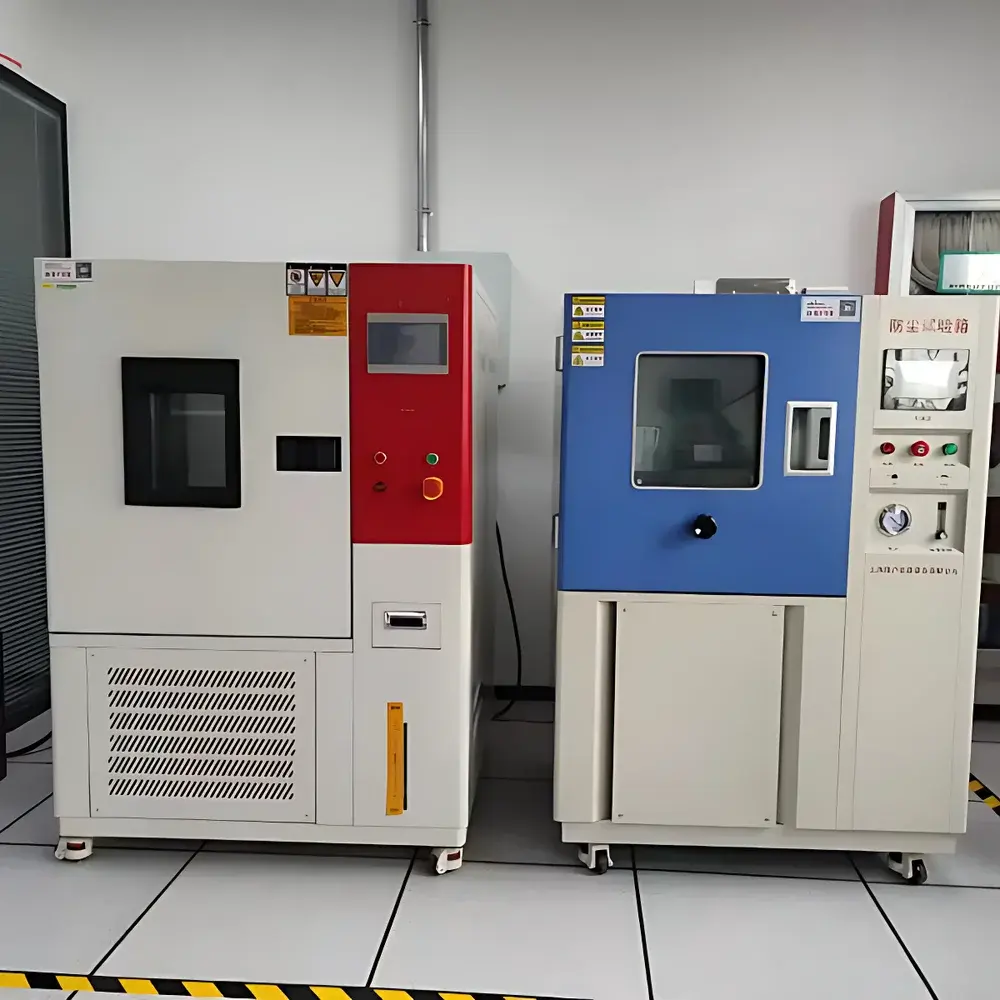
Jianhu JH-2026 Temperature and Humidity Controlled Environmental Test Chamber
| Brand | Jianhu |
|---|---|
| Origin | Shanghai, China |
| Manufacturer Type | Authorized Distributor & OEM Manufacturer |
| Country of Origin | China |
| Model | JH-2026 |
| Price Range | USD 700 – 70,000 |
| Chamber Type | Upright |
| Condensation Method | Air-Cooled |
| Temperature Range | 15–45°C |
| Humidity Range | 30–98% RH |
| Temperature Uniformity | ≤ ±2°C |
| Temperature Fluctuation | ±1°C (high-temp), ±2°C (low-temp) |
| Humidity Uniformity | ≤ ±3% RH |
| Humidity Fluctuation | ±3% RH |
| Heating Rate | 1.0–3.0°C/min |
| Interior Dimensions | Custom-Engineered per Application Requirements |
Overview
The Jianhu JH-2026 Temperature and Humidity Controlled Environmental Test Chamber is an industrial-grade environmental simulation system engineered for long-term stability, reproducible climate control, and compliance with international reliability testing protocols. It operates on a dual-loop PID-controlled air-circulation architecture, integrating high-efficiency scroll compressors, precision capacitive humidity sensors (traceable to NIST standards), and insulated double-wall stainless-steel construction. Designed specifically for continuous-duty operation in R&D labs, quality assurance departments, and certification testing facilities, the JH-2026 delivers tightly regulated thermal-hygrometric conditions across its specified operating envelope—enabling accelerated aging, storage condition validation, and environmental stress screening (ESS) per IEC 60068-2-1, IEC 60068-2-2, and MIL-STD-810H methodologies.
Key Features
- Robust structural integrity: 1.2 mm SUS304 stainless steel interior with full TIG welding and argon back-purge, ensuring corrosion resistance and vacuum-tight chamber sealing.
- Intelligent dual-stage humidity control: Combines ultrasonic humidification with electrically heated steam generation and condensate recovery—minimizing water consumption while maintaining stable RH profiles under dynamic load conditions.
- Thermal management optimized for low-drift performance: Independent air duct design with adjustable laminar flow baffles ensures uniform temperature distribution (≤ ±2°C) across non-standardized workspaces up to 2 m³.
- Energy-efficient refrigeration circuit: R404A/R23 cascade system with electronic expansion valves and real-time subcooling monitoring, enabling precise cooling response without overshoot or thermal shock to test specimens.
- Industrial HMI with audit trail capability: 10.1″ touchscreen interface supports user-defined test profiles, event logging, and export of CSV/Excel-formatted operational records compliant with FDA 21 CFR Part 11 requirements when paired with optional validation software.
Sample Compatibility & Compliance
The JH-2026 accommodates heterogeneous sample configurations—including PCB assemblies, battery modules, medical device packaging, polymer components, and pharmaceutical primary containers—without compromising environmental fidelity. Its custom-dimensioned workspace allows integration of internal power feeds, data acquisition ports, and purge gas inlets (N₂, dry air) for inert-atmosphere testing. The chamber conforms to ISO 17025-accredited calibration practices and supports third-party verification against ASTM E145, IEC 60068-3-5, and GB/T 10586 standards. All units undergo ≥72-hour factory burn-in at maximum load, with temperature/humidity deviation, uniformity, and recovery time validated per IEC 60068-3-10 Annex B.
Software & Data Management
Jianhu’s proprietary TEMPCONTROL v4.2 software enables remote supervision via Ethernet/Wi-Fi, multi-user role-based access control, and automated report generation with digital signatures. Raw sensor data (temperature, humidity, compressor duty cycle, fan speed) is timestamped and stored locally on encrypted SD card or network-attached storage. Optional IQ/OQ/PQ documentation packages include installation checklists, operational qualification scripts, and performance verification templates aligned with GLP and GMP environments. Full traceability—including firmware revision history, calibration certificate metadata, and maintenance logs—is retained for ≥15 years per internal data retention policy.
Applications
- Electronics reliability assessment: Thermal cycling of automotive ECUs, EV battery management systems (BMS), and 5G RF modules under controlled humidity to evaluate delamination, solder joint fatigue, and conformal coating integrity.
- Pharmaceutical stability studies: ICH Q1A(R3)-compliant long-term and accelerated storage condition testing (e.g., 25°C/60% RH, 30°C/65% RH) for drug substance and product shelf-life determination.
- Aerospace component qualification: Moisture absorption/desorption profiling of composite airframe structures and avionics enclosures per DO-160 Section 4.11.
- Materials science research: Hygrothermal aging of biodegradable polymers, optical films, and MEMS packaging under programmable ramp-soak cycles.
- Automotive EMC pre-compliance: Simultaneous thermal conditioning and electromagnetic interference testing within shielded enclosures equipped with RF-transparent viewport windows.
FAQ
Is the JH-2026 suitable for regulatory submission testing?
Yes—when operated with documented calibration, preventive maintenance logs, and validated test protocols, it meets evidentiary requirements for submissions to FDA, EMA, and NMPA.
Can the chamber be integrated into an existing LIMS or MES platform?
Yes—via Modbus TCP or OPC UA protocol support; API documentation and driver libraries are provided upon request.
What is the typical lead time for non-standard chamber configurations?
Standard models ship within 4–6 weeks; fully customized dimensions, material upgrades (e.g., electropolished interior), or special electrical interfaces require 10–14 weeks from PO confirmation.
Does Jianhu provide on-site IQ/OQ execution services?
Yes—certified validation engineers offer turnkey installation qualification, operational qualification, and risk-based performance qualification aligned with Annex 15 and ISO 13485 requirements.
How frequently should recalibration be performed?
Annual recalibration is recommended; however, interval adjustments may be justified based on usage intensity, criticality of application, and internal quality system policies.



