
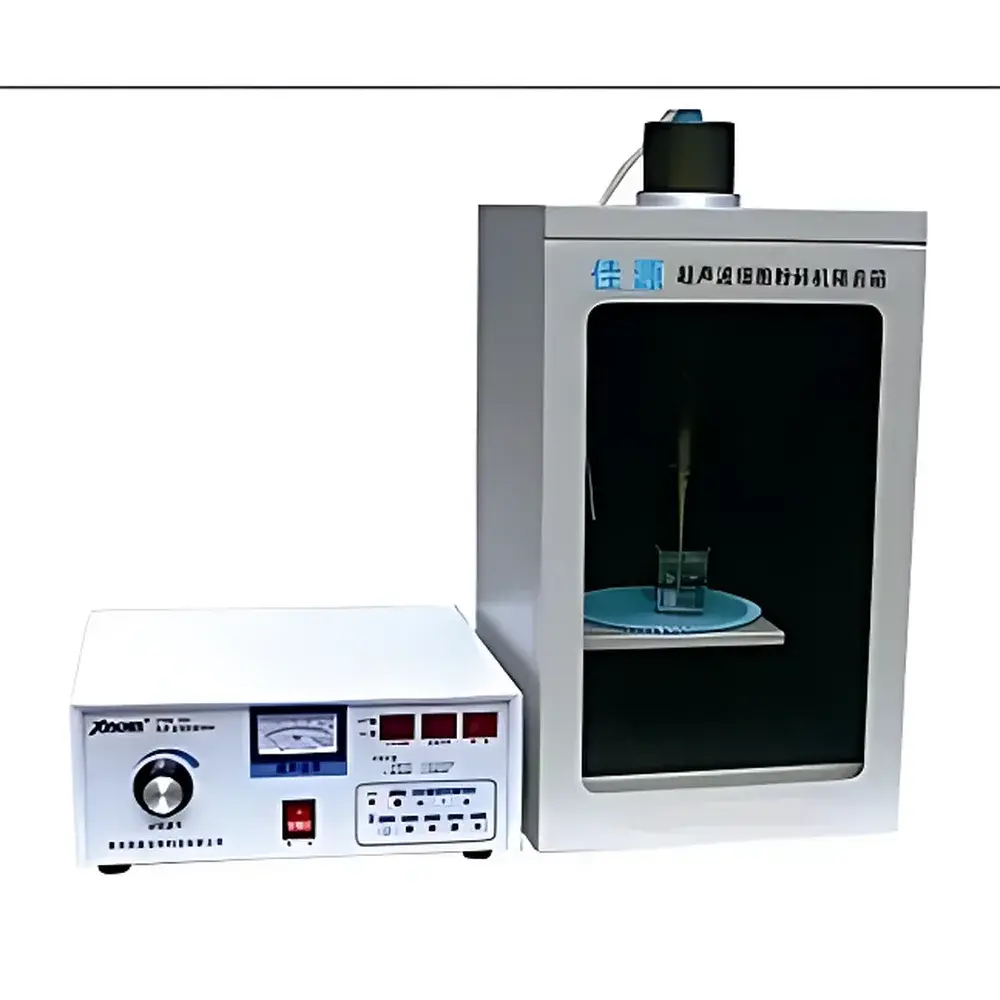
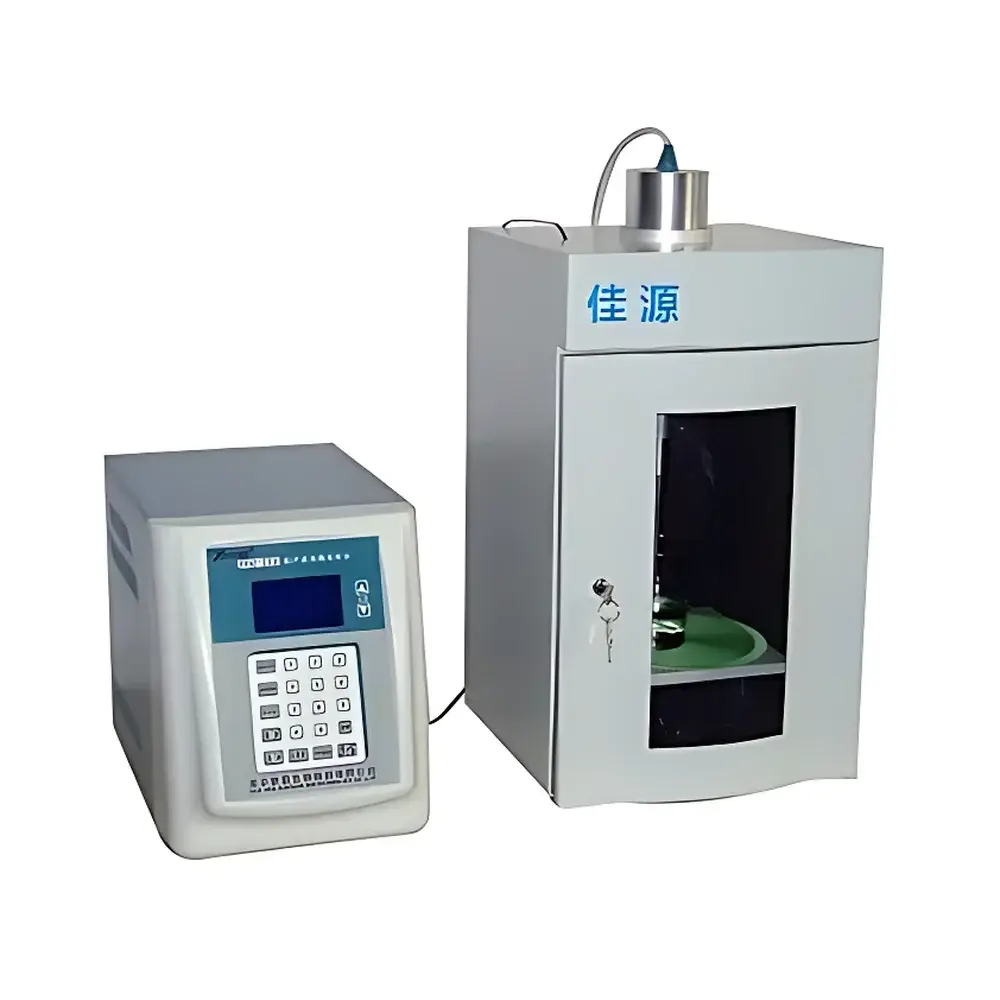
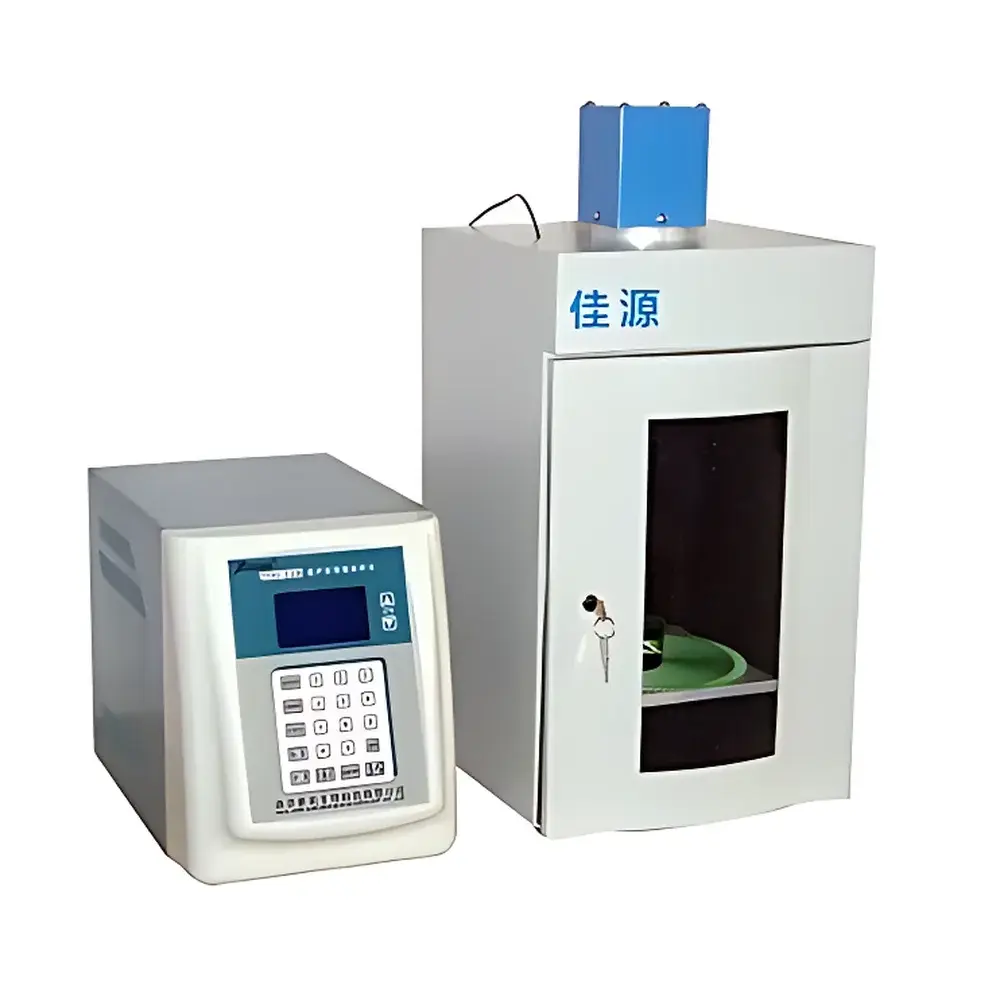
Jiayuan JY92-IID Ultrasonic Cell Disruptor
| Brand | Jiayuan |
|---|---|
| Origin | Beijing, China |
| Model | JY92-IID |
| Ultrasonic Frequency | 20–25 kHz (auto-frequency tracking) |
| Output Power | 900 W |
| Pulse Mode | Adjustable On/Off duration (0.1–99 s) |
| Total Processing Time | 0.1–99 min |
| Temperature Monitoring Range | 0–99 °C |
| Standard Probe Diameter | Φ6 mm |
| Optional Probes | Φ2, Φ3, Φ8, Φ10, Φ15 mm |
| Sample Volume Capacity | 0.2–600 mL |
| Duty Cycle | 0.1–99.9% |
| Input Voltage | 220 V / 110 V, 50 Hz / 60 Hz |
Overview
The Jiayuan JY92-IID Ultrasonic Cell Disruptor is a high-power, microprocessor-controlled sonication system engineered for precise and reproducible cell lysis, tissue homogenization, and nanoparticle dispersion in life science laboratories. It operates on the principle of high-intensity ultrasonic cavitation—where rapid pressure fluctuations in a liquid medium generate transient microbubbles that collapse violently, producing localized shear forces, shockwaves, and extreme temperatures (>5,000 K) sufficient to disrupt cellular membranes, organelles, and extracellular matrices. Unlike thermal or mechanical lysis methods, ultrasonic disruption preserves native protein conformation and enzymatic activity when operated under controlled conditions (e.g., pulsed mode, temperature monitoring), making it ideal for downstream applications such as Western blotting, ELISA, co-immunoprecipitation, and nucleic acid extraction. The JY92-IID integrates real-time temperature sensing and automatic frequency tracking to maintain stable acoustic output across varying sample viscosities and volumes—critical for protocol standardization in GLP-compliant environments.
Key Features
- 900 W nominal output power with digital amplitude control for consistent energy delivery across diverse biological matrices
- Auto-frequency tracking circuitry ensures optimal resonance at 20–25 kHz, minimizing probe wear and maximizing cavitation efficiency
- Pulse-mode operation with independently adjustable ON time (0.1–99 s), OFF time (0.1–99 s), and total duration (0.1–99 min) to prevent thermal denaturation
- Integrated PT100 temperature sensor with real-time display (0–99 °C) and optional external cooling interface for cryogenic processing
- Duty cycle adjustment from 0.1% to 99.9%, enabling fine-tuned control over acoustic energy deposition per unit time
- Standard titanium alloy probe (Φ6 mm) optimized for small- to mid-volume samples (0.2–600 mL); compatible with optional probes (Φ2–Φ15 mm) for specialized applications including microfluidic lysates and viscous suspensions
- Robust aluminum chassis with IP20-rated enclosure, EMI-shielded power supply, and safety interlock for probe insertion detection
Sample Compatibility & Compliance
The JY92-IID supports broad sample compatibility—including mammalian and insect cell cultures, bacterial pellets (E. coli, Bacillus spp.), yeast, plant tissues, viral particles, and subcellular fractions—without requiring chemical additives or centrifugation pre-treatment. Its modular probe design allows optimization for low-volume microcentrifuge tubes (0.2 mL) or larger beakers (up to 600 mL). For regulatory alignment, the instrument’s programmable parameters support traceable, repeatable protocols compliant with ISO/IEC 17025 requirements for method validation. While not certified for GMP manufacturing, its logging-capable firmware architecture (via optional RS232/USB interface) facilitates audit-ready documentation suitable for academic, pharmaceutical R&D, and contract research organizations operating under FDA 21 CFR Part 11–aligned data integrity practices.
Software & Data Management
The JY92-IID features an embedded LCD interface with non-volatile memory storing up to 10 user-defined protocols—including amplitude, pulse settings, temperature thresholds, and duty cycle configurations. Optional PC connectivity (RS232 or USB-to-serial adapter) enables remote parameter configuration and session log export (CSV format) for electronic lab notebook (ELN) integration. Firmware supports timestamped event logging (start/stop times, temperature maxima, fault codes), satisfying basic ALCOA+ principles (Attributable, Legible, Contemporaneous, Original, Accurate) for quality-assured workflows. No proprietary software installation is required; terminal-based communication is compatible with common serial terminal emulators (e.g., PuTTY, Tera Term).
Applications
- Cell lysis for soluble protein extraction from adherent and suspension cultures
- Chromatin shearing in ChIP-seq and ATAC-seq library preparation
- Preparation of antigenic lysates for monoclonal antibody development
- Nanoparticle dispersion and deagglomeration in drug delivery formulation studies
- Emulsification of lipid-based carriers (e.g., liposomes, nanoemulsions)
- Disruption of biofilms and extracellular polymeric substances (EPS) in environmental microbiology
- Rapid homogenization of plant leaf tissue for metabolomic profiling
FAQ
What is the maximum recommended continuous operating time per cycle?
For thermal stability and probe longevity, continuous operation beyond 5 minutes is not advised. Use pulse mode (e.g., 5 s ON / 5 s OFF) for extended treatments.
Can the JY92-IID be used with corrosive solvents such as chloroform or phenol?
Titanium probes are resistant to most aqueous buffers but not to strong halogenated solvents; use only with chemically compatible media and verify probe integrity post-use.
Is temperature calibration traceable to NIST standards?
The built-in PT100 sensor provides relative temperature monitoring; for absolute traceability, users must perform independent calibration using a certified reference thermometer.
Does the instrument support external triggering or TTL synchronization?
No—the JY92-IID lacks hardware trigger inputs; timing control is limited to internal programmable parameters.
How often should the ultrasonic probe tip be inspected for erosion?
Inspect visually before each use; replace if pitting, cracking, or diameter reduction >5% is observed—especially after prolonged use with abrasive samples (e.g., soil extracts, bone powder).




