
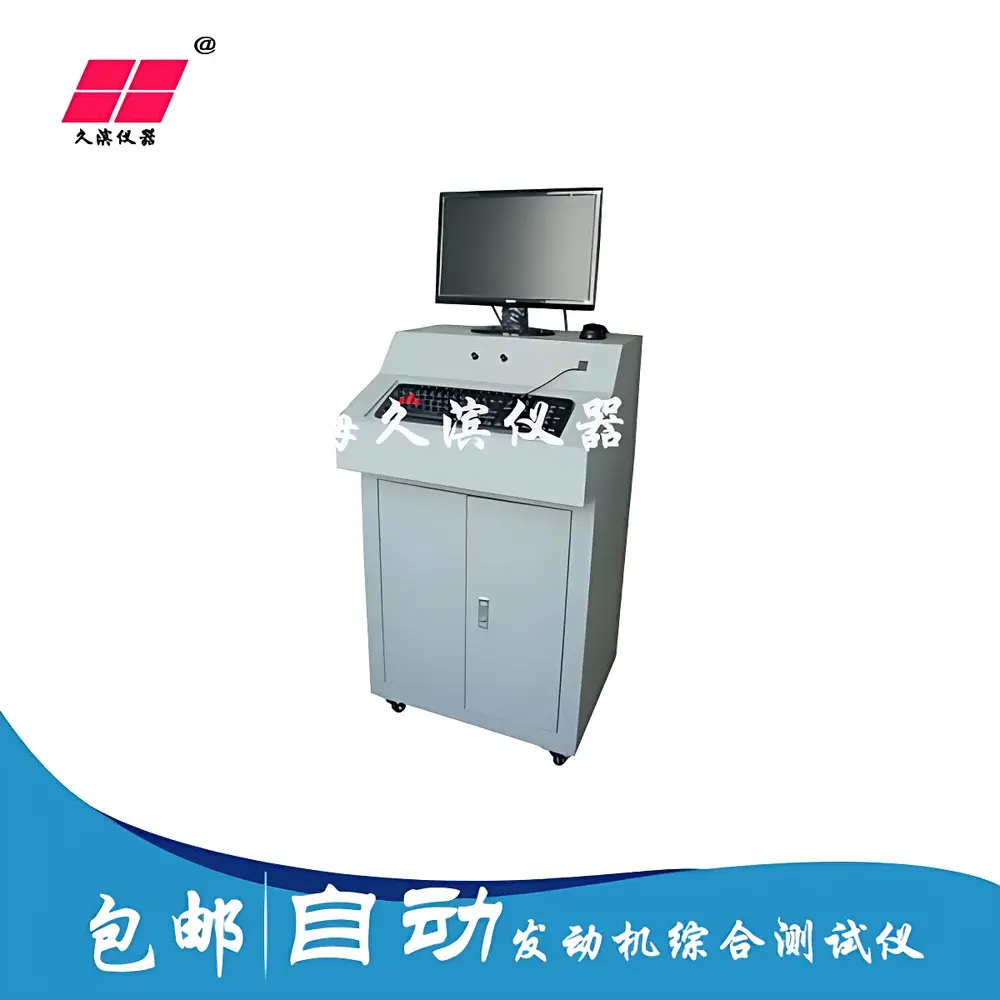
Jiubin JB-3000 Engine Integrated Diagnostic System
| Brand | Jiubin |
|---|---|
| Origin | Shanghai, China |
| Manufacturer Type | Authorized Distributor |
| Country of Origin | China |
| Model | JB-3000 |
| Pricing | Available Upon Request |
Overview
The Jiubin JB-3000 Engine Integrated Diagnostic System is a high-fidelity, multi-domain diagnostic platform engineered for comprehensive real-time analysis of internal combustion engines. Built upon synchronized analog signal acquisition, embedded digital signal processing (DSP), and time-correlated waveform interpretation, the system implements a modular architecture to support simultaneous measurement across ignition, fuel injection, intake manifold dynamics, thermal management, lubrication status, electrical charging systems, and emissions-related parameters. Designed specifically for workshop-level technical validation and OEM-aligned service diagnostics, the JB-3000 complies with fundamental principles of automotive electronic measurement per SAE J1930 and ISO 15031-5 for on-board diagnostic (OBD) data correlation. Its hardware-accelerated sampling engine captures transient events at up to 1 MS/s per channel, enabling precise characterization of crankshaft position-triggered waveforms, injector pulse timing, and cylinder pressure-derived combustion phasing—critical for both conventional and electronically controlled gasoline and diesel powertrains.
Key Features
- Dual-channel automotive oscilloscope with waveform storage, recall, and comparative overlay—supports trigger-based capture of sensor outputs (e.g., MAP, TPS, CKP, CMP, O2), actuator drive signals, and ignition secondary waveforms.
- Integrated digital multimeter functionality compliant with CAT II 600 V safety rating, covering DC/AC voltage, current (via clamp or shunt), resistance, continuity, and duty cycle measurement.
- Vacuum transducer interface for real-time monitoring of intake manifold absolute pressure (MAP) across 0–100 kPa, calibrated per ISO 20685 for steady-state and transient load evaluation.
- Multi-point thermal sensing module supporting simultaneous measurement of coolant temperature (–20°C to +150°C), engine oil temperature, and transmission fluid temperature with ±1% full-scale accuracy.
- Starter system analyzer measuring cranking voltage, battery voltage sag, starter motor current draw, cranking RPM, and associated transient waveforms—aligned with SAE J537 test protocols.
- Diesel-specific injection diagnostics including non-intrusive external clamp-on piezoelectric sensors for per-cylinder injection timing and duration, plus high-pressure rail monitoring up to 40 MPa.
- Combustion phase analysis via cylinder pressure-derived ignition timing (gasoline) and fuel injection timing (diesel), including advance angle calculation referenced to TDC.
- OBD-II protocol decoder (optional module) supporting SAE J1850 PWM/VPW, ISO 9141-2, and CAN 11-bit/29-bit message parsing for fault code retrieval, live PID streaming, and freeze frame logging.
Sample Compatibility & Compliance
The JB-3000 supports diagnostic workflows across light-duty gasoline and diesel engines (up to 8 cylinders), including port fuel injected (PFI), direct injection (GDI), common rail (CRDI), and unit injector (UI) architectures. It interfaces with standard OBD-II 16-pin DLC connectors and accommodates proprietary manufacturer adapters via configurable CAN ID tables. All analog input channels meet IEC 61000-4-5 surge immunity requirements and operate within industrial temperature range (–10°C to +50°C). Software firmware adheres to GLP-relevant traceability standards, with audit-ready calibration logs, user access control, and timestamped measurement records. While not certified for regulatory emissions testing under EPA 40 CFR Part 1065 or EU Regulation (EU) 2017/1151, the system is routinely deployed in Tier 2 service facilities for pre-certification verification and root-cause failure analysis.
Software & Data Management
The JB-3000 runs natively on Windows 7 Professional (32-bit) with backward compatibility to Windows XP SP3, leveraging a USB 2.0–based PCIe-equivalent data acquisition controller for deterministic latency (<100 µs jitter). The GUI features context-sensitive waveform annotation, customizable display templates, and synchronized multi-parameter trend charts. All captured data is stored in IEEE-compliant .tdms format (NI Technical Data Management Streaming), enabling interoperability with MATLAB, LabVIEW, and third-party post-processing tools. Export options include CSV, PNG, and PDF reports with embedded metadata (operator ID, vehicle VIN, date/time stamp, calibration certificate ID). Audit trail functionality logs all configuration changes, measurement initiations, and report generations—supporting internal quality system documentation per ISO/IEC 17025 Clause 7.9.
Applications
- Automotive technical training centers for hands-on instruction in EFI system diagnostics, combustion timing analysis, and sensor signal integrity assessment.
- Independent repair shops performing root-cause analysis of intermittent misfires, low power complaints, excessive smoke, or cold-start failures.
- Fleet maintenance depots conducting preventive health checks on diesel generator sets, agricultural machinery, and municipal transport engines.
- Aftermarket ECU calibration labs validating flash-tuned parameters against baseline combustion metrics and volumetric efficiency curves.
- Engineering support teams verifying OEM service bulletins related to camshaft position sensor drift, injector coking effects, or EGR valve hysteresis.
FAQ
Does the JB-3000 support CAN FD or DoIP protocols?
No—the system implements legacy CAN 2.0B (1 Mbps max) and does not support CAN FD or DoIP. For newer vehicles requiring UDS over DoIP, supplemental gateway hardware is required.
Is firmware update capability included?
Yes—firmware updates are distributed via secure web portal with SHA-256 checksum verification and rollback support.
Can measurement data be exported to cloud-based fleet management platforms?
Direct cloud integration is not built-in; however, .tdms and CSV exports enable scripted ingestion into AWS IoT Core, Azure IoT Hub, or custom CMMS APIs via middleware.
What calibration interval is recommended?
Annual calibration is advised per ISO/IEC 17025 Annex A.3, using NIST-traceable reference sources for voltage, pressure, and temperature channels.
Is technical support available outside mainland China?
Yes—remote diagnostics and application engineering assistance are provided globally through authorized regional distributors with English-speaking engineers.






