
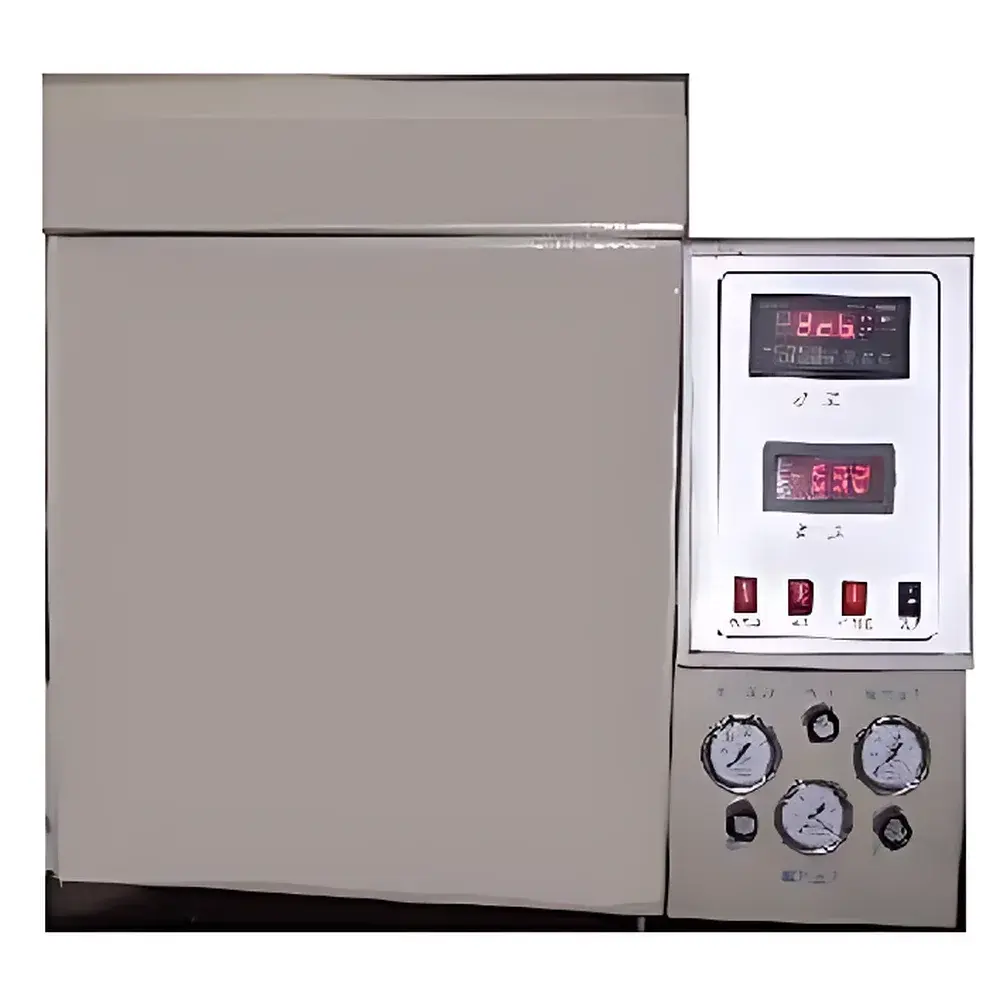
JK-8000 Micro-Sulfur Analyzer
| Brand | Jingke Ruida (Kyocera) |
|---|---|
| Origin | Beijing, China |
| Manufacturer Type | Authorized Distributor |
| Product Category | Domestic |
| Model | JK-8000 |
| Pricing | Upon Request |
| Detection Principle | Flame Photometric Detection (FPD) with Dual FPD Configuration |
| Detection Wavelength | 394 nm (S-specific emission) |
| Minimum Detectable Sulfur | ≤0.02 ppm (v/v) |
| Sensitivity (S) | 1–8 × 10⁻¹² g/s |
| Baseline Noise | ≤0.5 mV/h |
| Oven Temperature Range | Ambient to 400 °C ±1 °C |
| Column Compatibility | Reversible packed & wide-bore capillary columns |
| System Materials | PTFE-lined flow path throughout |
| Regulatory Compliance | ASTM D6667, ISO 8573-5, USP <232>/<233>, GLP-compliant data handling |
Overview
The JK-8000 Micro-Sulfur Analyzer is a dedicated gas-phase sulfur speciation and total sulfur quantification system engineered for high-sensitivity, selective detection of sulfur-containing compounds in industrial process gases. It operates on the principle of flame photometric detection (FPD), where sulfur-containing analytes are pyrolyzed in a hydrogen-rich flame to generate excited S₂* species that emit characteristic photons at 394 nm. This emission is isolated using an interference filter and converted into a proportional electrical signal via a high-gain photomultiplier tube (PMT). The dual-FPD configuration enables simultaneous or sequential analysis of multiple sulfur species—such as H₂S, COS, CS₂, mercaptans, sulfides, and SO₂—without cross-interference from hydrocarbon matrix components. Unlike generic GC-FPD systems, the JK-8000 integrates a fully PTFE-wetted gas path—from sample inlet through combustion chamber—to eliminate adsorption losses, especially critical for reactive and polar species like SO₂ and thiols. Its thermal stability (±1 °C over 0–400 °C oven range) and low baseline noise (<0.5 mV/h) ensure reproducible retention times and sub-ppm quantification accuracy across extended run sequences.
Key Features
- Dual-flame photometric detector architecture for independent optimization of sulfur speciation and total sulfur modes (including backflush-enabled total sulfur measurement)
- PTFE-lined entire gas pathway—including sampling valve, transfer lines, column oven interface, and combustion chamber—to prevent sulfur compound adsorption and memory effects
- Configurable column system supporting both packed columns (for robust H₂S/COS separation) and wide-bore fused-silica capillaries (for higher resolution of organic sulfides)
- High-sensitivity PMT detection with selectable gain and real-time baseline correction, achieving sulfur detection limits ≤0.02 ppm (v/v) and mass sensitivity of 1–8 × 10⁻¹² g/s
- Integrated temperature-controlled oven with precision PID regulation (±1 °C) and multi-zone capability for optimized gradient elution of complex sulfur mixtures
- Modular electronics architecture featuring low-noise operational amplifiers, regulated high-voltage PMT supply, and embedded LCD interface for local parameter monitoring and diagnostics
Sample Compatibility & Compliance
The JK-8000 is validated for direct injection and quantitative analysis of compressed gases including natural gas, refinery off-gas, coke oven gas, LPG, food-grade CO₂, syngas, and flue gas. It meets method requirements specified in ASTM D6667 (determination of total volatile sulfur in gaseous fuels by GC-FPD), ISO 8573-5 (purity classes for compressed air—sulfur compounds), and USP Chapters and (elemental impurities in pharmaceutical excipients, including sulfur species in CO₂ used in sterile manufacturing). Its PTFE-only wetted materials comply with FDA-recommended inert surface standards for trace-level sulfur analysis, and its hardware design supports full audit trail functionality when paired with compliant chromatography data systems (CDS), satisfying 21 CFR Part 11 and GLP/GMP documentation requirements.
Software & Data Management
Data acquisition and processing are performed via a Windows-based chromatography workstation supporting ICH-compliant electronic signatures, user role management, and secure audit trails. The software provides automated peak integration using retention time locking (RTL), multi-point calibration curve generation (linear/non-linear), and internal standard normalization. All raw data files (.raw) are stored with embedded metadata—including instrument parameters, sequence logs, and detector voltage history—for full traceability. Export formats include CSV, PDF analytical reports, and XML for LIMS integration. Optional validation packages (IQ/OQ/PQ protocols) are available for regulated environments requiring documented system suitability and performance verification.
Applications
- Monitoring sulfur breakthrough in amine scrubbers and ZnO beds during ammonia and methanol synthesis
- Verifying sulfur removal efficiency in pressure swing adsorption (PSA) units feeding hydrogen purification trains
- Quality control of food-grade carbon dioxide per FDA 21 CFR 184.1270 and EC No. 1333/2008 specifications
- Speciation of odor-causing sulfur compounds (e.g., methyl mercaptan, dimethyl sulfide) in biogas and landfill gas
- SO₂ quantification in flue gas desulfurization (FGD) bypass streams and catalyst regeneration off-gas
- Trace sulfur screening in electronic-grade specialty gases (e.g., H₂, N₂, He) per SEMI F57 standards
FAQ
What sulfur species can the JK-8000 reliably separate and quantify?
It resolves H₂S, COS, CS₂, CH₃SH, (CH₃)₂S, (CH₃)₂S₂, SO₂, and other low-molecular-weight organic sulfides using optimized packed or wide-bore capillary columns.
Is SO₂ analysis subject to adsorption artifacts on this platform?
No—the entire flow path is constructed from PTFE, eliminating active sites that cause SO₂ loss; recovery rates exceed 98.5% across concentration ranges from 0.05–100 ppm.
Can the instrument be configured for total sulfur only, without speciation?
Yes—via backflush mode with a guard column and non-polar main column, enabling rapid total sulfur determination in under 5 minutes per sample.
Does the system support unattended operation for routine QC labs?
It supports up to 120-sample autosampler sequences with automatic leak checks, column bake-out cycles, and failure-triggered shutdown protocols.
What regulatory documentation is provided for GMP environments?
Factory-issued IQ/OQ protocols, 21 CFR Part 11 readiness report, and electronic signature validation templates are included with the system delivery package.
Related Products





