
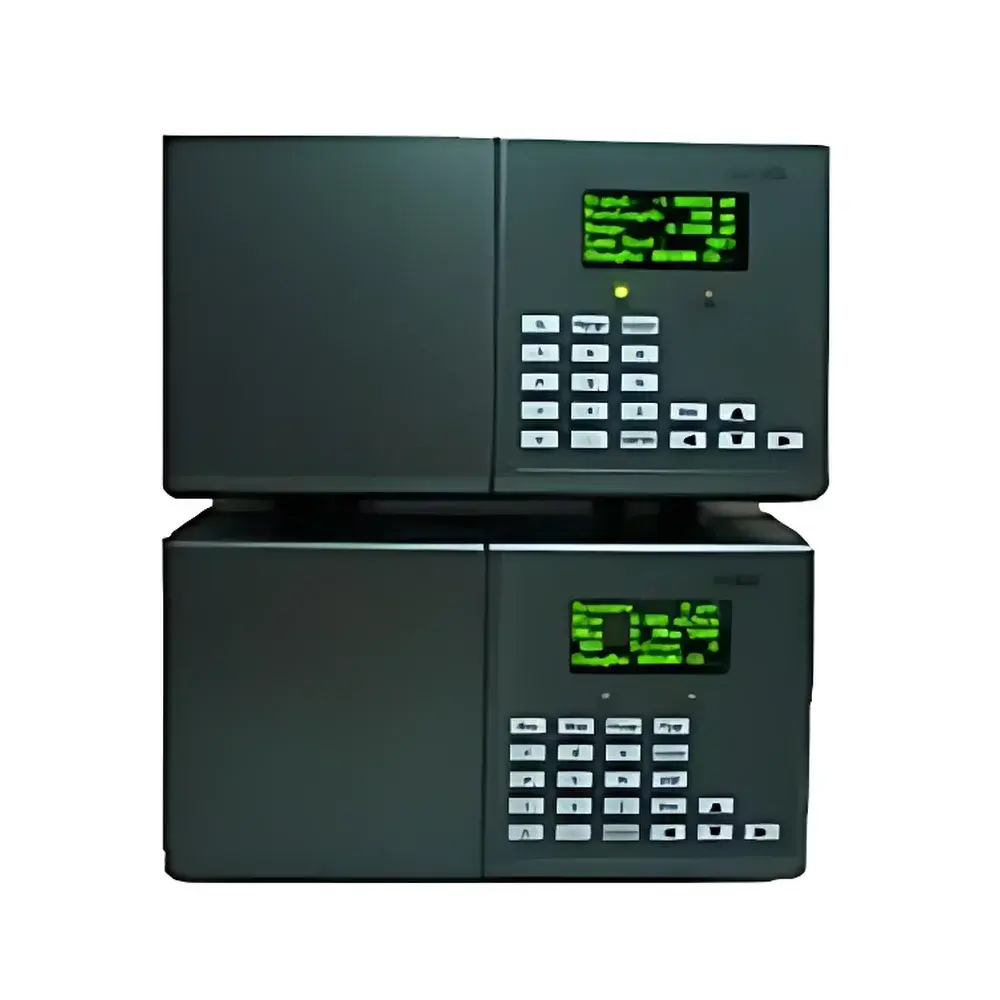
Kyocera LC2100 Dedicated HPLC System for Vitamin Analysis in Animal Feed
| Brand | Kyocera |
|---|---|
| Origin | Beijing, China |
| Manufacturer Type | Authorized Distributor |
| Region of Manufacture | Domestic (PRC) |
| Model | LC2100 |
| Pricing | Upon Request |
Overview
The Kyocera LC2100 is a dedicated high-performance liquid chromatography (HPLC) system engineered for the quantitative analysis of fat-soluble vitamins—including retinol (vitamin A), cholecalciferol (vitamin D₃), and α-tocopherol (vitamin E)—in compound feed, premixes, and feed raw materials. Built upon reversed-phase HPLC separation principles with UV detection, the system delivers robust, reproducible chromatographic performance under routine quality control conditions. Its architecture follows standard HPLC operational paradigms: solvent delivery via dual-plunger reciprocating pump, sample introduction through manual or optional autosampler injection, analyte separation on C18 or equivalent reversed-phase columns (e.g., 150–250 mm × 4.6 mm, 5 µm), and selective detection at optimized UV wavelengths (e.g., 325 nm for vitamin A, 265 nm for vitamin D₃, 292 nm for vitamin E). The LC2100 meets fundamental instrumental requirements for feed testing laboratories operating under GB/T 17817–2010 (vitamin A), GB/T 17818–2010 (vitamin D₃), and GB/T 17812–2009 (vitamin E), supporting compliance with national feed safety standards and internal QC protocols.
Key Features
- Dual-plunger, CPU-controlled high-pressure pump with patented “floating piston seal” technology—enabling automatic purge and self-cleaning cycles to extend seal and piston rod service life
- Flow rate range: 0.001–10.000 mL/min, pressure capability up to 41.4 MPa (6000 psi), pressure ripple < 10 psi across full flow range
- Integrated gradient mixing capability with low dwell volume, ensuring baseline stability and retention time reproducibility
- UV-Vis detector featuring imported German deuterium lamp and digital output via RS-232/USB interface—eliminating analog-to-digital conversion losses and reducing baseline noise
- Detector specifications: baseline noise ≤ 2 × 10⁻⁵ AU (methanol, 1.0 mL/min, 254 nm, 1.0 s response); drift ≤ 4 × 10⁻⁴ AU/h; LOD ≤ 1 × 10⁻⁹ g/mL (naphthalene/methanol)
- OLED display with localized Chinese UI support—designed for intuitive operation by technicians with minimal chromatography background
- RS-485 communication port enabling remote pump control and real-time parameter monitoring from external workstation software
- Modular pump head design (analytical, semi-preparative, preparative options available); externalized pump head for rapid maintenance and solvent compatibility verification
Sample Compatibility & Compliance
The LC2100 accommodates standard feed sample preparation workflows, including saponification (for fat-soluble vitamins), liquid-liquid extraction, solid-phase extraction (SPE), and filtration through 0.45 µm nylon membranes prior to injection. It supports analysis of fortified feeds, mineral-vitamin premixes, and raw ingredients such as fish meal, soybean meal, and dried distillers grains. While not certified to ISO/IEC 17025 or FDA 21 CFR Part 11 out-of-the-box, the system’s hardware architecture—including electronic logging of pump pressure, flow, and detector signal—is compatible with laboratory-developed data integrity controls required for GLP-compliant feed testing. Users may implement audit trails, user access levels, and electronic signature functionality via third-party chromatography data systems (CDS) interfaced via RS-232 or USB.
Software & Data Management
The LC2100 operates with Kyocera’s proprietary acquisition and processing software, delivered pre-installed on bundled Windows-based PCs. The software provides real-time chromatogram visualization, peak integration using tangent skim or Gaussian fitting algorithms, calibration curve generation (linear, quadratic, or weighted), and report export in PDF, CSV, and XLS formats. All raw data files (.raw or .dat) are timestamped and stored locally with metadata including operator ID, method name, injection volume, and instrument configuration. Data backup is supported via network drive mapping or external USB storage. While native software does not include 21 CFR Part 11 compliance modules (e.g., electronic signatures, audit trail encryption), its structured file architecture allows integration with validated enterprise CDS platforms used in regulated feed manufacturing environments.
Applications
- Quantification of vitamins A, D₃, and E in commercial livestock, poultry, and aquaculture feeds per Chinese national standards (GB/T series)
- Residue screening of melamine in feed protein concentrates using isocratic or shallow-gradient methods
- Analysis of antioxidant additives (e.g., BHT, ethoxyquin) and mycotoxin markers (e.g., aflatoxin B₁, ochratoxin A) with method adaptation
- Verification of vitamin stability during feed pelleting, extrusion, and storage—supporting shelf-life studies
- Method transfer and validation support for AOAC Official Methods (e.g., AOAC 2002.03 for vitamin A in animal feed)
FAQ
Is the LC2100 compliant with international regulatory frameworks such as FDA 21 CFR Part 11 or EU Annex 11?
The base system does not include embedded Part 11 or Annex 11 features (e.g., electronic signatures, encrypted audit trails). However, its digital detector output and pump telemetry enable integration with validated third-party CDS platforms that meet those requirements.
Can the LC2100 be upgraded to support automated sample injection?
Yes—Kyocera offers optional manual loop injectors (Rheodyne-type) and third-party autosamplers compatible with standard 7725i-style interfaces and TTL trigger signals.
What column temperature control options are available?
The LC2100 does not include a built-in column oven. Users typically employ external column heaters or ambient-temperature operation consistent with GB/T methods for vitamin analysis.
Does the system support gradient elution for multi-vitamin simultaneous analysis?
Yes—the integrated gradient mixer enables binary solvent programming, allowing co-elution optimization for vitamins A, D₃, and E in a single run when paired with appropriate C18 column chemistry and mobile phase selection.
What maintenance intervals are recommended for the pump seals and detector lamp?
Pump seals require inspection every 3–6 months depending on solvent aggressiveness and daily usage; the deuterium lamp has an average lifetime of 1,000–2,000 hours and includes lamp-hour tracking in software.





