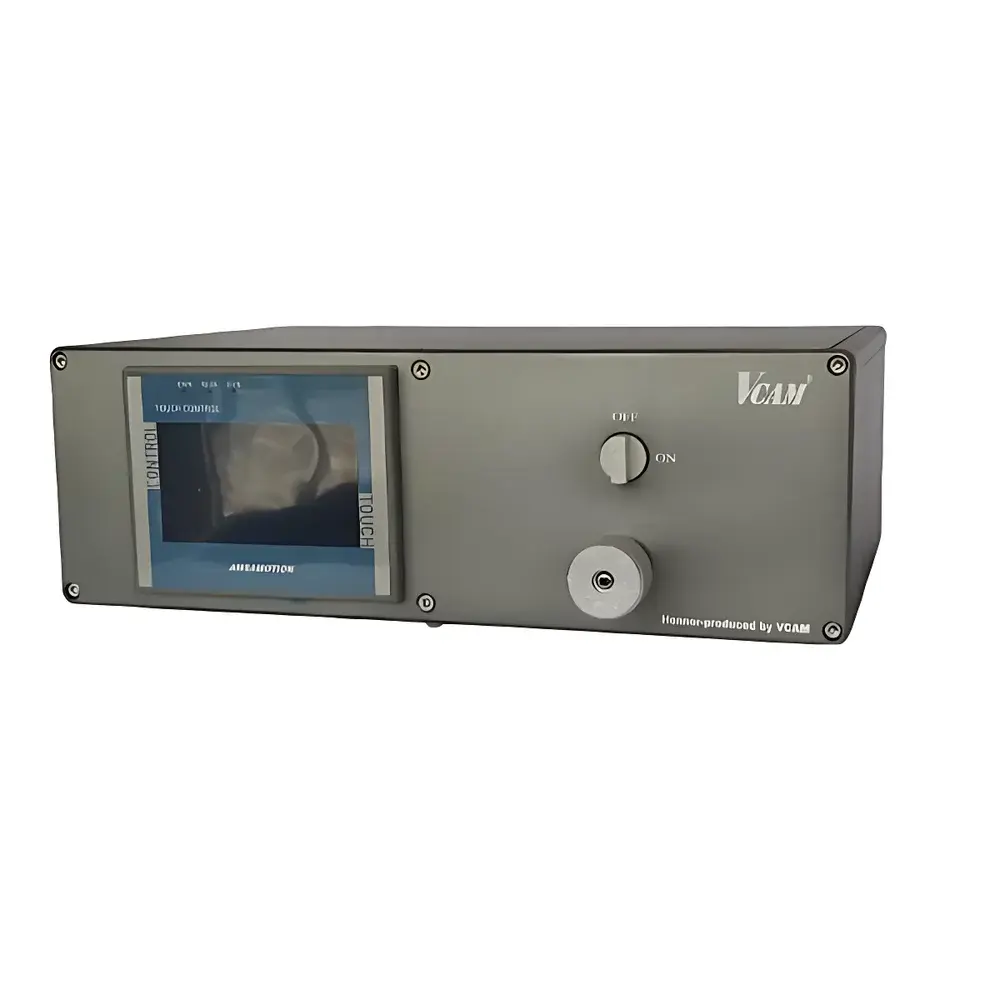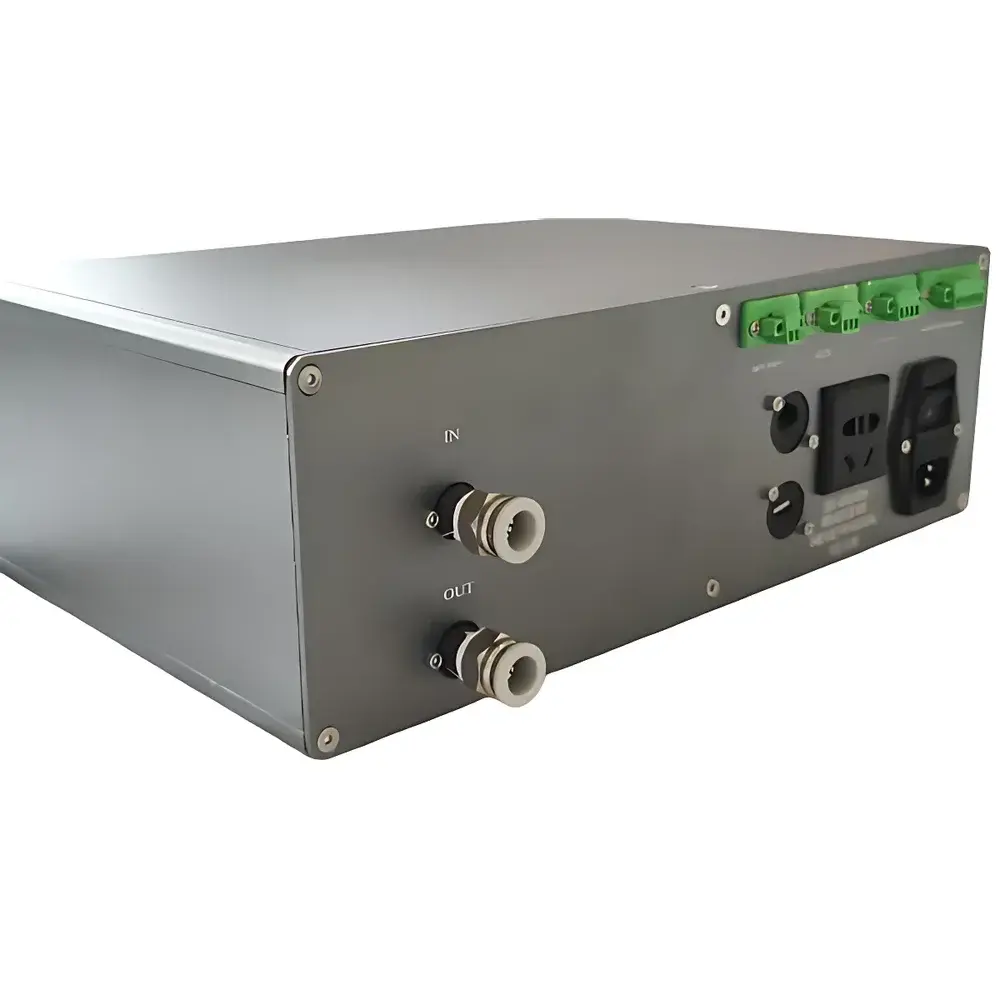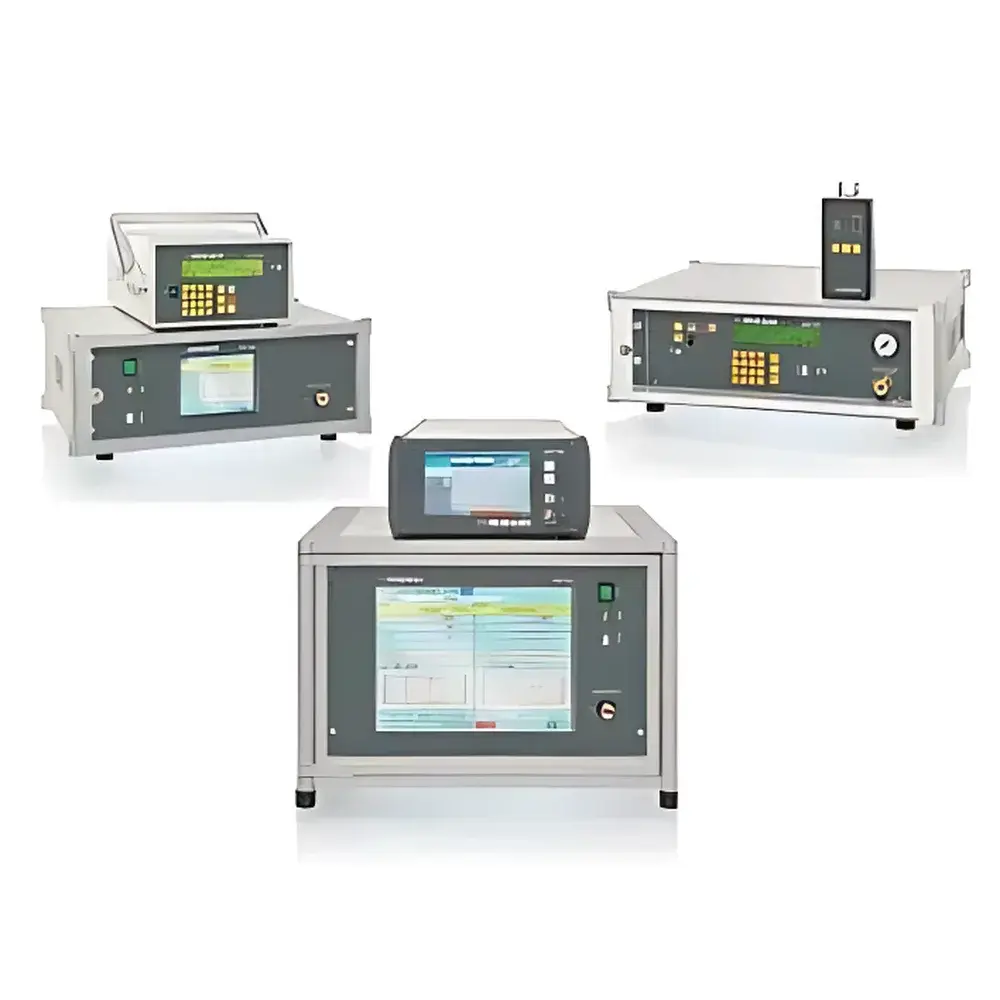
JWFroehlich MFL Series Mass Flow Leak Tester
| Brand | JWFroehlich |
|---|---|
| Origin | Germany |
| Model | MFL Series |
| Measurement Principle | Mass Flow Method (Standard & High-Range Modes) |
| Test Pressure Range | –0.8 to 6 bar (Standard Mode) |
| Applicable Components | Engine cylinder heads & blocks, coolant passages, low-pressure oil galleries, transmissions, fuel tanks, valve seat assemblies |
| Compliance Context | Designed for integration into automated production lines compliant with ISO 27228, VDA 19.1, and automotive OEM-specific leak test protocols (e.g., BMW QV-1010, VW TL-82304) |
Overview
The JWFroehlich MFL Series Mass Flow Leak Tester is an industrial-grade, computer-controlled leak detection system engineered for high-reliability functional testing of sealed components in automotive powertrain manufacturing. It operates on the physical principle of mass flow measurement—quantifying the real-time mass flow rate of compressed air (or inert gas) required to maintain a constant pressure differential across a test part under controlled conditions. Unlike pressure decay methods—which infer leakage from pressure loss over time—the mass flow approach delivers immediate, linear, and highly reproducible leakage quantification, particularly advantageous for large-volume parts (e.g., cylinder blocks >5 L internal volume) or applications demanding cycle times under 15 seconds. The system is built upon JWFroehlich’s decades-long heritage in engine and transmission test automation, with design input derived from direct collaboration with Tier 1 suppliers and OEMs including Mercedes-Benz, BMW, Volkswagen, Ford, and General Motors.
Key Features
- Two operational modes: Standard Mass Flow mode (optimized for precision measurement of leaks down to 10–3 mbar·L/s) and High-Range Mass Flow mode (engineered for rapid pass/fail screening of gross leaks up to 102 mbar·L/s).
- Integrated high-stability pressure regulation using servo-controlled proportional valves and redundant pressure transducers (0.05% FS accuracy), ensuring stable test pressure across variable ambient and supply conditions.
- Modular pneumatic architecture supporting dual-station parallel testing, automatic tooling recognition via RFID-enabled fixtures, and configurable test sequences (pre-fill, stabilization, measurement, venting, purge).
- Ruggedized industrial enclosure (IP54-rated) with CE, UL, and ATEX-compliant variants available for hazardous area deployment.
- Real-time diagnostic logging of all pneumatic events—including fill time, pressure overshoot, sensor drift compensation, and thermal zero-shift correction—enabling full traceability per test cycle.
Sample Compatibility & Compliance
The MFL Series accommodates a broad spectrum of geometrically complex, multi-cavity components common in modern powertrain assembly: cylinder heads with integrated EGR passages, aluminum engine blocks with water jackets and oil galleries, automatic transmission housings, fuel rail manifolds, and EV battery coolant manifolds. Each test configuration is validated against customer-specific acceptance criteria defined in accordance with ISO 20484 (leak testing vocabulary), ISO 27228 (industrial leak test systems), and VDA 19.1 (cleaning and contamination control for fluid systems). The system supports audit-ready documentation aligned with IATF 16949 process validation requirements and integrates seamlessly with MES platforms via OPC UA or TCP/IP protocols.
Software & Data Management
Control and analysis are performed via JWFroehlich’s proprietary LEAKSOFT™ software suite, running on a Windows-based industrial PC with deterministic real-time kernel. LEAKSOFT™ provides full GLP/GMP-aligned data integrity: electronic signatures, user role-based access control (RBAC), 21 CFR Part 11-compliant audit trails, and encrypted SQLite database storage with automatic daily backup to network shares. All raw sensor data (mass flow, pressure, temperature, time stamps) are retained for ≥15 years. Statistical process control (SPC) modules generate X̄/R charts, Cpk/Ppk reports, and trend alerts triggered by configurable sigma shifts—enabling proactive maintenance and root-cause analysis without external analytics tools.
Applications
- Final functional verification of cast aluminum cylinder heads prior to machining completion.
- In-line leak testing of high-pressure fuel rails after brazing and before ECU integration.
- End-of-line validation of electric vehicle battery cooling manifolds under simulated thermal cycling conditions.
- Supplier qualification testing for turbocharger housings per Ford WSS-M99P1111-A specification.
- Process capability studies during new model launch (NML) for transmission valve body assemblies.
FAQ
What is the fundamental difference between mass flow and pressure decay leak testing?
Mass flow directly measures the volumetric flow rate of make-up gas required to sustain constant pressure—yielding linear, time-invariant leakage values. Pressure decay infers leakage indirectly from pressure drop over time, making it sensitive to temperature drift, part compliance, and test duration.
Can the MFL Series be integrated into existing PLC-controlled assembly lines?
Yes. Native support for Siemens S7, Rockwell Logix, and Beckhoff TwinCAT via PROFINET, EtherNet/IP, and EtherCAT ensures plug-and-play interoperability without custom gateway hardware.
Does the system support helium-based tracer gas testing?
No. The MFL Series is optimized exclusively for compressed air or nitrogen-based testing. Helium mass spectrometry requires dedicated vacuum-based instrumentation not covered by this platform.
How is calibration traceability maintained?
Each unit ships with NIST-traceable calibration certificates for pressure transducers and mass flow sensors, renewed annually per ISO/IEC 17025-accredited service contracts.
What environmental conditions affect measurement stability?
Ambient temperature fluctuations exceeding ±2°C/hour may induce thermal drift in sensor zero points; therefore, installation in climate-controlled environments (20–25°C, <60% RH) is recommended for Class A metrology applications.
Related Products