
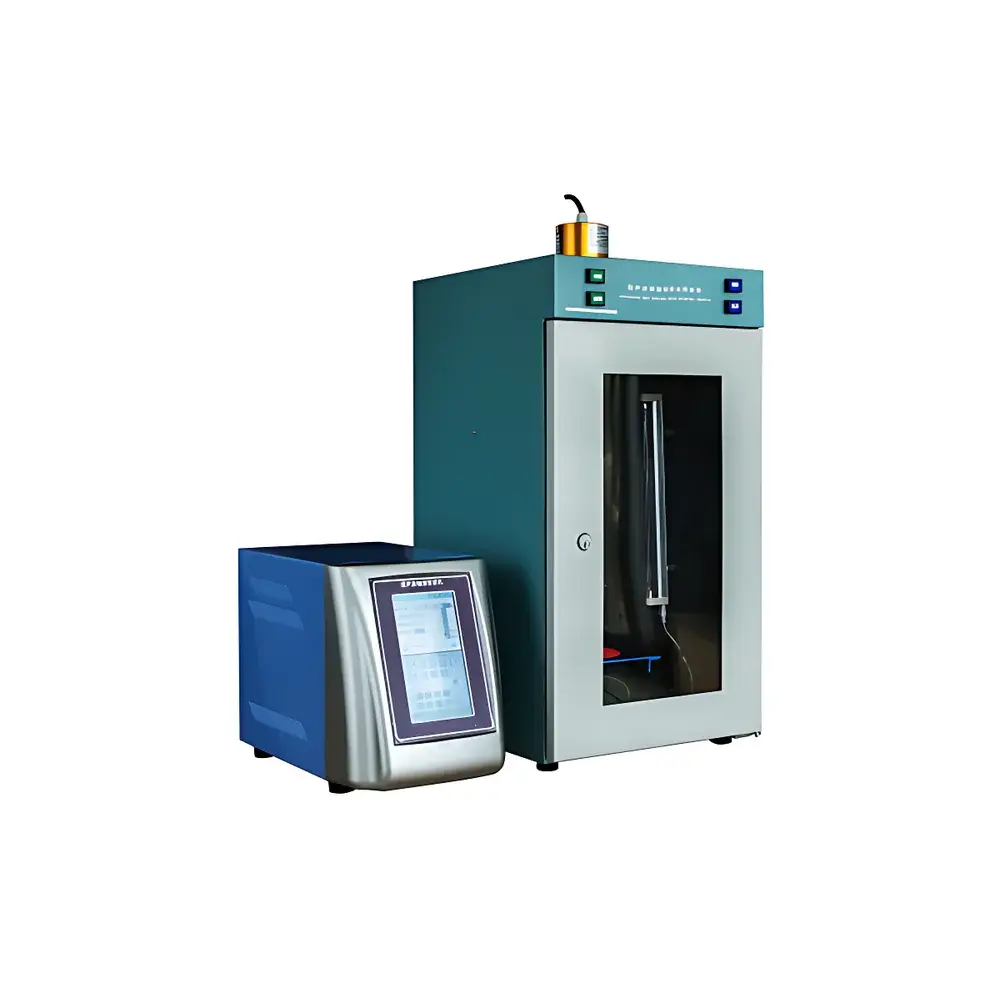
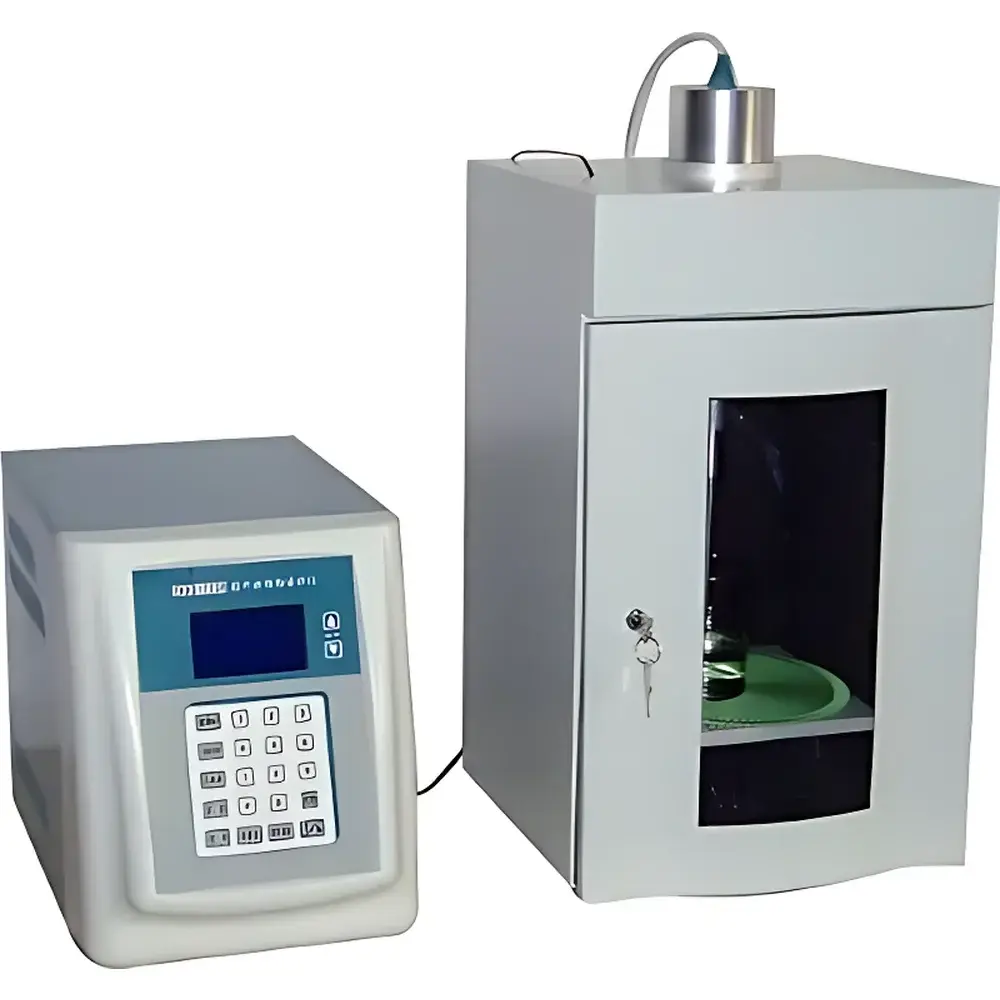
JY92-IIN Ultrasonic Cell Disruptor
| Origin | Beijing, China |
|---|---|
| Manufacturer Type | Distributor |
| Product Origin | Domestic (China) |
| Model | JY92-IIN |
| Instrument Type | Ultrasonic Cell Disruptor |
| Ultrasonic Power | 650 W |
| Operating Frequency | 22 kHz |
| Temperature Range | Ambient |
| Sample Volume | 0.5–600 mL |
| Sample Capacity | Single-sample processing |
| Duty Cycle | 0.1–99.9% |
| Input Voltage | 220 V / 110 V AC |
| Standard Probe | Φ6 mm titanium alloy horn |
Overview
The JY92-IIN Ultrasonic Cell Disruptor is a benchtop ultrasonic homogenizer engineered for efficient and reproducible cell lysis, emulsification, dispersion, and particle size reduction in life science laboratories. It operates on the principle of high-intensity focused ultrasound (HIU), generating acoustic cavitation in liquid media—where rapid formation and collapse of microscopic vapor bubbles produce localized shear forces, microstreaming, and transient high temperatures/pressures sufficient to disrupt cellular membranes and subcellular structures. Designed for routine and research-grade applications, the instrument delivers stable 22 kHz sinusoidal output at up to 650 W nominal power, with precise duty cycle control (0.1–99.9%) enabling optimization of energy delivery for heat-sensitive or mechanically resilient samples. Its robust transducer-horn architecture ensures consistent amplitude transmission and long-term operational stability under repeated load cycles.
Key Features
- 650 W high-efficiency piezoelectric ultrasonic generator with digital frequency tracking for minimal drift and optimal energy coupling
- Standard titanium alloy probe (Φ6 mm) with precision-machined tip geometry for uniform acoustic field distribution and resistance to corrosion and erosion
- Adjustable pulse mode (duty cycle) from 0.1% to 99.9%, allowing fine-tuned control over thermal load and mechanical stress during sonication
- Digital interface with real-time display of operating time, power output, and duty cycle; supports programmable multi-step protocols
- Integrated safety interlocks including over-temperature protection, overload cutoff, and probe detachment detection
- Compatible with optional auxiliary probes (Φ2, Φ3, Φ8, Φ10, Φ12, Φ15, Φ20, and Φ25 mm) for scalable processing across volume and viscosity ranges
- Benchtop configuration with compact footprint (W × D × H ≈ 320 × 300 × 220 mm); designed for integration into biosafety cabinets or fume hoods
Sample Compatibility & Compliance
The JY92-IIN accommodates sample volumes from 0.5 mL to 600 mL in standard glass or polypropylene tubes, microcentrifuge vials, beakers, and jacketed reactors. It is routinely employed for lysis of bacterial (e.g., E. coli, Bacillus), yeast (Saccharomyces cerevisiae), mammalian (HEK293, CHO), and plant cells, as well as for nucleic acid extraction, protein solubilization, nanoparticle dispersion, and liposome preparation. While the unit operates at ambient temperature without active cooling, users are advised to employ ice-water baths or chilled sample holders for thermolabile targets. The device conforms to IEC 61000-6-3 (EMC emission standards) and IEC 61000-6-2 (immunity). Though not certified for GMP manufacturing environments, its operational repeatability and parameter logging capability support GLP-aligned workflows in academic and industrial R&D settings.
Software & Data Management
The JY92-IIN features an embedded microcontroller-based system with non-volatile memory for storing up to 10 user-defined protocols—including time, power level, duty cycle, and pause intervals. All operational parameters are displayed in real time on a backlit LCD screen. While the base model does not include PC connectivity or FDA 21 CFR Part 11-compliant audit trail functionality, optional RS-232 or USB interfaces (available via third-party adapters) enable basic data export for external logging. For regulated environments requiring electronic records, integration with laboratory information management systems (LIMS) is achievable through custom scripting or middleware solutions compliant with ISO/IEC 17025 documentation requirements.
Applications
- Preparative cell disruption for intracellular protein, enzyme, or organelle isolation
- Chromatin shearing in ChIP-seq library preparation (with optimized low-power, high-cycle protocols)
- Homogenization of tissue lysates and suspension cultures prior to centrifugation or filtration
- Dispersion of carbon nanotubes, graphene oxide, and metal oxide nanoparticles in aqueous or organic media
- Accelerated solvent extraction (ASE) of phytochemicals from botanical matrices
- Deagglomeration of ceramic or polymer suspensions in materials science prototyping
- Microbial inactivation studies in food safety and environmental microbiology
FAQ
What is the maximum recommended continuous sonication time per cycle?
For thermal management and probe longevity, continuous operation should not exceed 5 minutes per cycle; allow ≥1 minute cooling interval between cycles.
Can the JY92-IIN be used with corrosive solvents such as chloroform or strong acids?
Titanium alloy probes resist mild corrosion, but prolonged exposure to halogenated solvents or pH 12 solutions requires validation; use PTFE-coated or custom quartz horns for aggressive chemistries.
Is calibration traceable to national standards?
Power output is factory-calibrated using NIST-traceable acoustic power meters (radiant force balance method); annual recalibration is recommended for quantitative applications.
Does the instrument meet CE or UL safety certification?
The JY92-IIN complies with CE marking requirements for electromagnetic compatibility (EMC) and low-voltage directive (LVD); UL listing is not held but meets equivalent insulation and grounding specifications per UL 61010-1.
How is amplitude controlled, and what is the effective range?
Amplitude is regulated via analog power modulation; typical peak-to-peak displacement at the Φ6 probe tip ranges from ~20 to ~120 µm depending on load and duty cycle—measured per ASTM E1002 for ultrasonic intensity profiling.






