
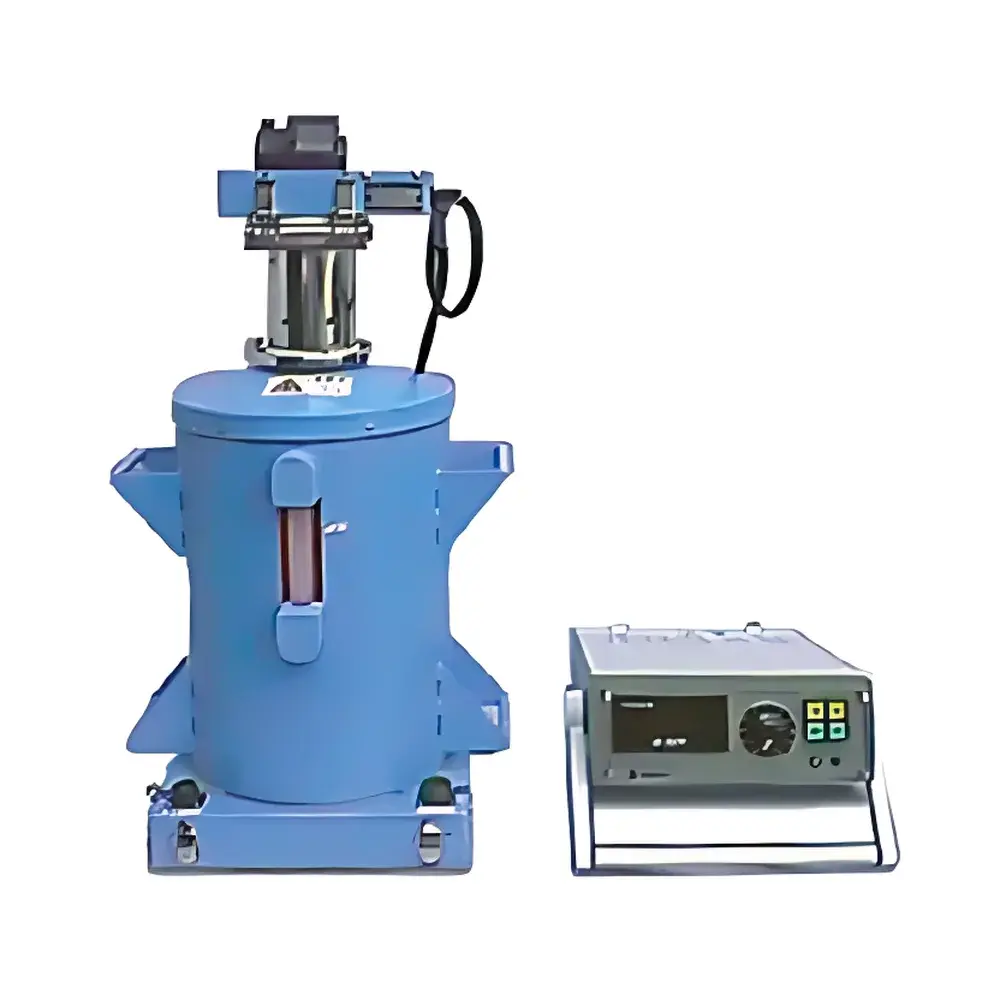
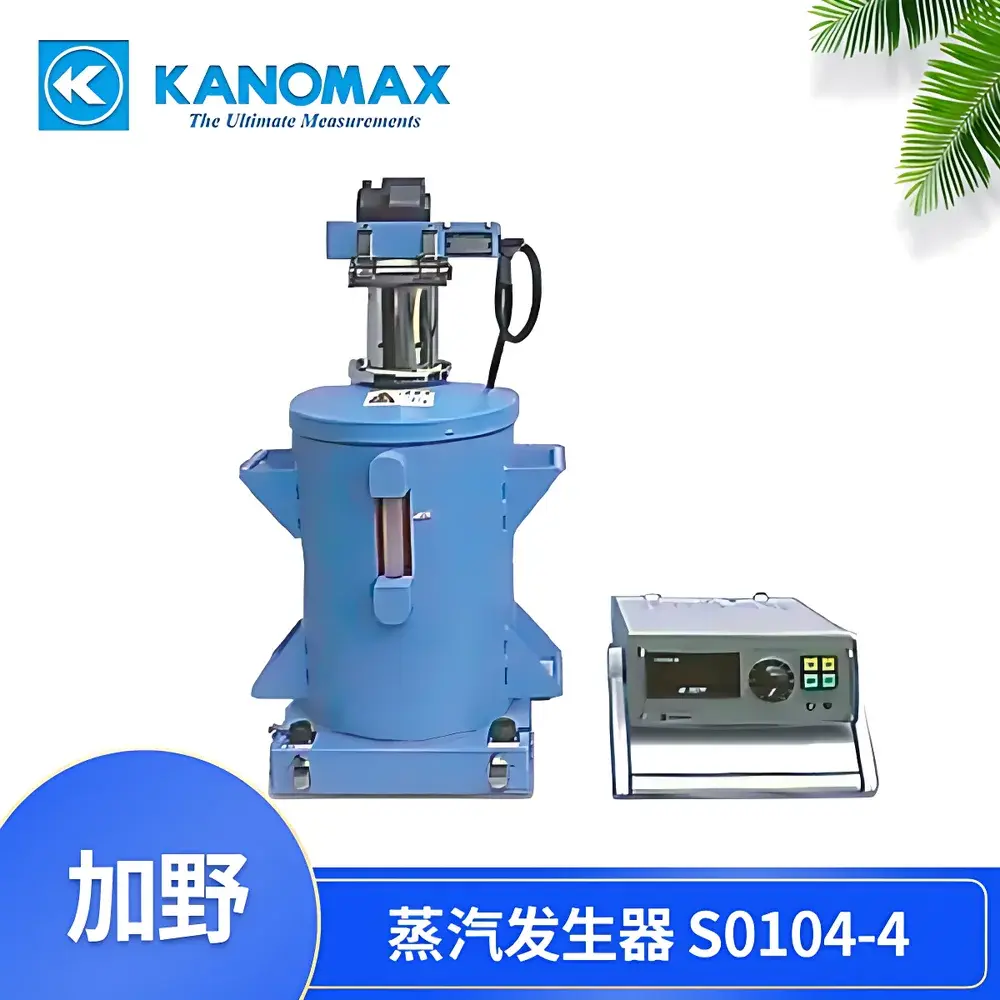
Kanomax S0104-4 Fogging Test Steam Generator
| Brand | Kanomax |
|---|---|
| Origin | Japan |
| Model | S0104-4 |
| Steam Output | 65–390 g/h |
| Thermal Loss | <75 W at –3 °C ±1 °C |
| Water Reservoir Capacity | 3.785 L (externally insulated) |
| Heater Power | up to 500 W, AC 100 V |
| Nozzle ID | Φ15 mm, Length: 100 mm |
| Exhaust Fan Flow | 0.05–0.1 m³/min at 49 Pa |
| Output Orifices | six × Φ6.3 mm |
| Compliance | SAE J953 (JUN84), EEC/317, GB 11555–2009 |
Overview
The Kanomax S0104-4 Fogging Test Steam Generator is a precision-engineered environmental simulation device designed exclusively for standardized automotive interior fogging and defogging performance evaluation. It operates on controlled thermal vaporization principles—generating saturated water vapor at precisely regulated mass flow rates under thermally stabilized ambient conditions (–3 °C ±1 °C). Unlike generic humidifiers or laboratory steam sources, the S0104-4 replicates human metabolic moisture emission profiles relevant to vehicle cabin environments, enabling repeatable, metrologically traceable assessment of windshield and side-window fogging behavior. Its design adheres strictly to the physical boundary conditions and operational protocols defined in SAE J953 (June 1984 revision), European Economic Community Regulation EEC/317 (as amended), and China’s national standard GB 11555–2009 for “Motor Vehicle Interior Fogging Performance Test Methods.” The unit integrates passive thermal insulation, calibrated resistive heating, and laminar-flow exhaust management to ensure stable vapor delivery across the full 65–390 g/h output range.
Key Features
- Stable, programmable steam generation with mass flow accuracy maintained within ±5 g/h at nominal 70 g/h output points—critical for inter-laboratory reproducibility in fogging validation studies.
- Externally insulated 3.785 L reservoir minimizes parasitic heat loss; total thermal dissipation remains below 75 W under specified –3 °C test chamber conditions.
- Six identical 6.3 mm diameter steam outlet orifices arranged symmetrically at the generator top ensure uniform spatial distribution of vapor plume—mimicking anthropogenic dispersion geometry in real-world cabin configurations.
- Dedicated 500 W AC100 V heating system with integrated temperature feedback loop enables rapid thermal equilibration and sustained operation at sub-zero ambient setpoints.
- Integrated axial fan delivers controlled exhaust airflow (0.05–0.1 m³/min at 49 Pa static pressure), preventing back-pressure accumulation and ensuring consistent vapor expulsion dynamics during extended test cycles.
- Stainless steel nozzle assembly (ID Φ15 mm, L 100 mm) provides mechanical durability and corrosion resistance over repeated thermal cycling and condensate exposure.
Sample Compatibility & Compliance
The S0104-4 is not intended for direct material analysis but serves as a certified reference vapor source within defined fogging test fixtures—typically paired with ISO-standardized test chambers, optical fog sensors (e.g., luminance meters per ISO 13670), or gravimetric condensate collectors. Its output profile satisfies the mandatory vapor generation requirements of SAE J953 (which specifies 70 g/h ±5 g/h at –3 °C), EEC/317 Annex IV fogging test methodology, and GB 11555–2009 Clause 5.2. Units are supplied with factory calibration documentation traceable to Japanese National Metrology Institute (NMIJ) humidity and mass flow standards. No modifications or third-party accessories are approved for use without revalidation against original compliance parameters.
Software & Data Management
The S0104-4 operates as a standalone analog-controlled instrument with no embedded microprocessor or digital interface. All operational parameters—including heater voltage, reservoir fill level, ambient temperature monitoring, and exhaust fan speed—are manually adjusted and verified using external calibrated instrumentation (e.g., NIST-traceable thermistors, digital anemometers, and gravimetric flow calibrators). Test data acquisition and reporting must be conducted externally in accordance with GLP-compliant laboratory information management systems (LIMS). When used in FDA-regulated or IATF 16949-certified automotive R&D facilities, full audit trails—including operator logs, calibration certificates, and environmental chamber validation records—must accompany each fogging test report per 21 CFR Part 11 electronic record requirements.
Applications
- Validation of anti-fog coating efficacy on laminated automotive glazing under standardized cold-start conditions.
- Development and verification of HVAC system defogging algorithms using repeatable vapor load inputs.
- Comparative evaluation of interior trim material outgassing contributions to optical obscuration.
- Supporting technical documentation for UN Regulation No. 43 (safety glazing) and ISO 16368 (fogging test methods) certification submissions.
- Quality assurance testing for Tier 1 suppliers delivering climate control modules to OEMs requiring SAE J953 conformance evidence.
FAQ
Is the S0104-4 compatible with automated test sequencing systems?
No—the unit has no digital communication ports (RS-232, USB, or Ethernet) and requires manual setup and monitoring per test cycle.
Can the steam output rate be adjusted continuously between 65 g/h and 390 g/h?
Yes, via analog heater power modulation; however, only discrete 70 g/h increments (e.g., 70, 140, 210 g/h) are validated and referenced in SAE J953 and GB 11555–2009.
Does Kanomax provide on-site installation or IQ/OQ protocol support?
Kanomax Japan offers optional qualification support packages—including Installation Qualification (IQ) templates and Operational Qualification (OQ) test scripts—for integration into GxP-regulated laboratories.
What maintenance intervals are recommended for long-term reliability?
Reservoir descaling every 200 operational hours; fan filter replacement every 500 hours; annual verification of heater resistance and orifice dimensional integrity using calibrated micrometers.
Is distilled water mandatory for operation?
Yes—use of deionized or distilled water (conductivity <1 µS/cm) is required to prevent mineral deposition in orifices and heater elements, which would compromise output stability and calibration integrity.



