
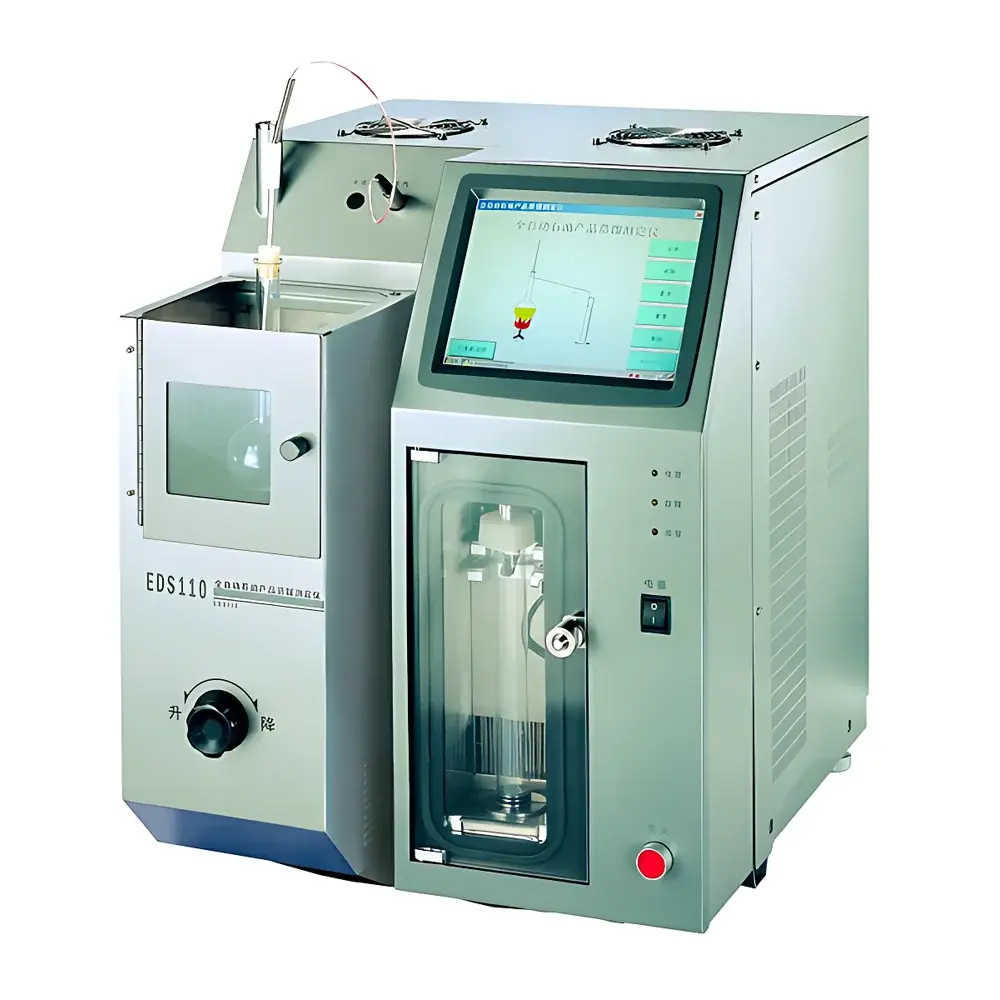
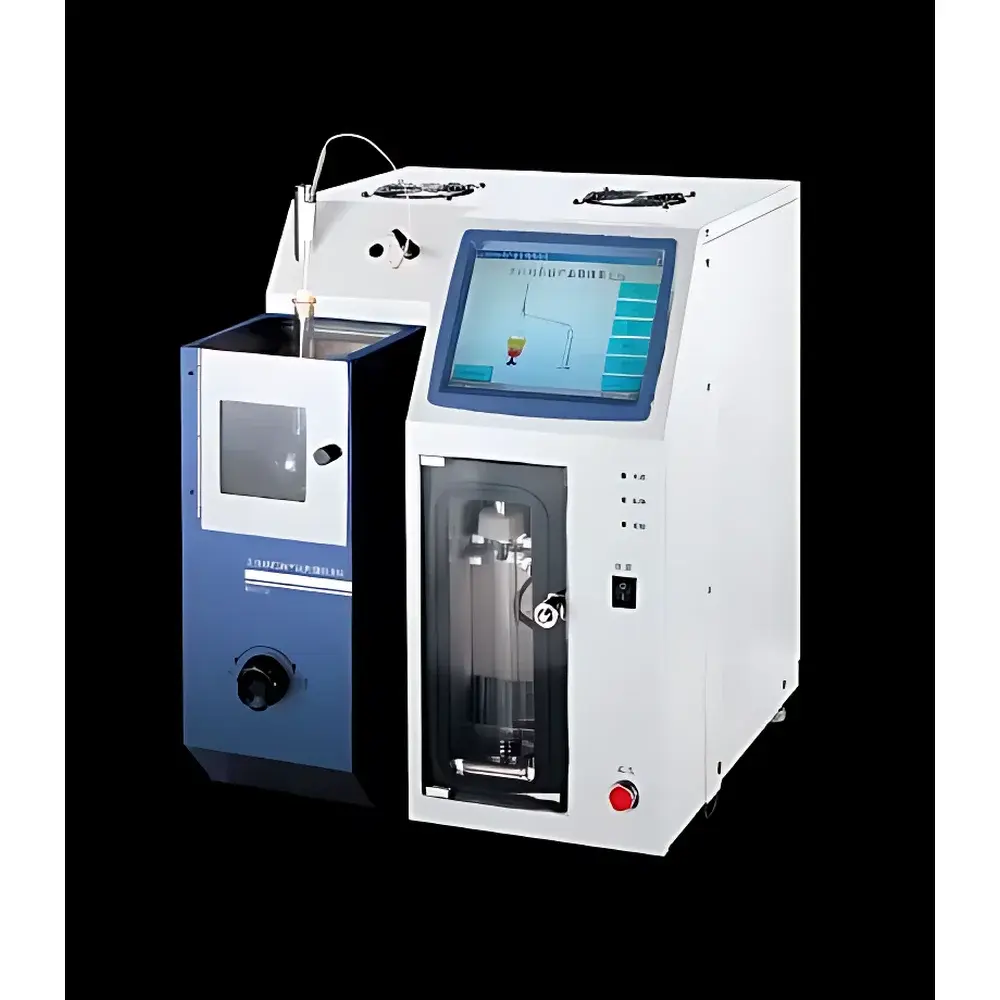
Karrie EDS110 Fully Automated Petroleum Distillation Apparatus
| Brand | Karrie |
|---|---|
| Origin | Shenzhen, China |
| Model | EDS110 |
| Temperature Range | Ambient to 400 °C |
| Temperature Accuracy | ±0.1 °C |
| Cold Bath Temperature Range | 0–60 °C |
| Distillation Rate | 1–12 mL/min |
| Volume Measurement Range | 0–100 mL |
| Volume Resolution | 0.1 mL |
| Compliance | ASTM D86, ASTM D850, GB/T 6536, GB/T 7534, ISO 3405 |
| Power Supply | AC 220 V, 50 Hz |
| Heating Power | 1000 W |
| Total Power Consumption | 2500 W |
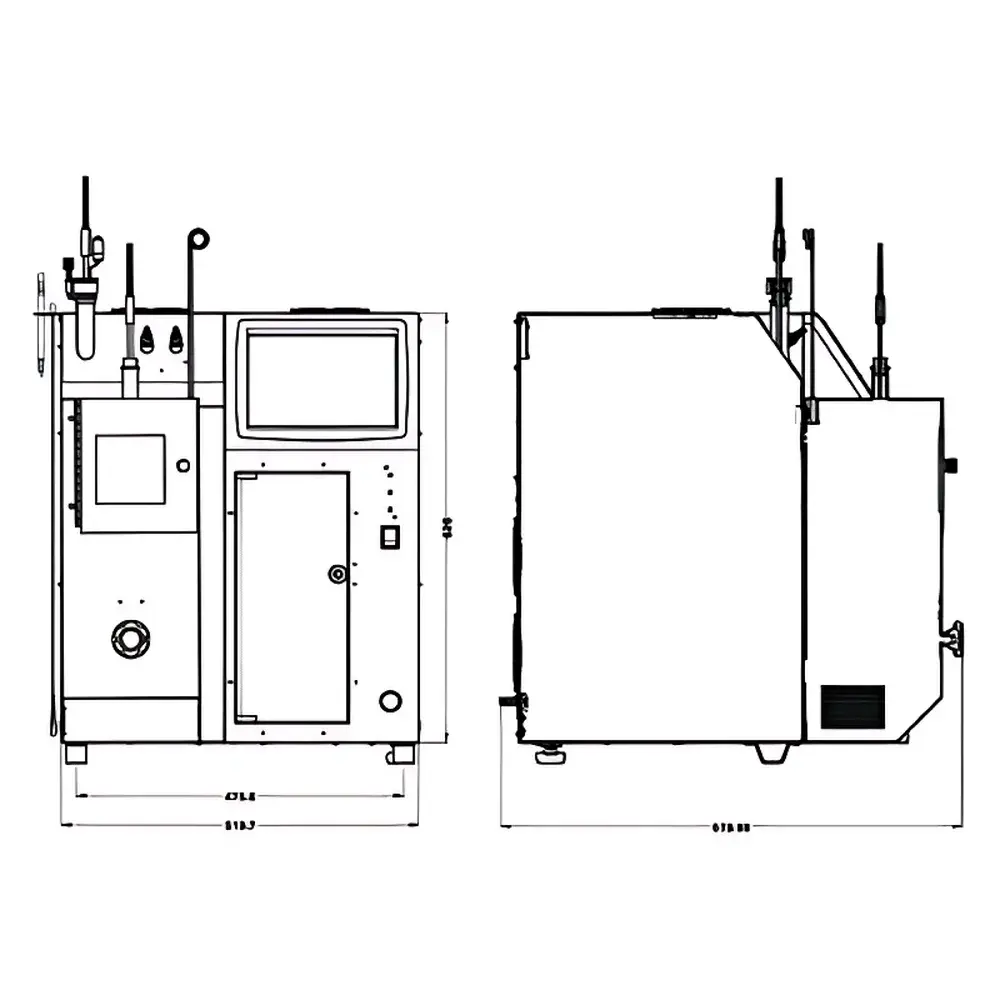
| Dimensions (L×W×H) | 565×515×660 mm |
| Weight | 55 kg |
Overview
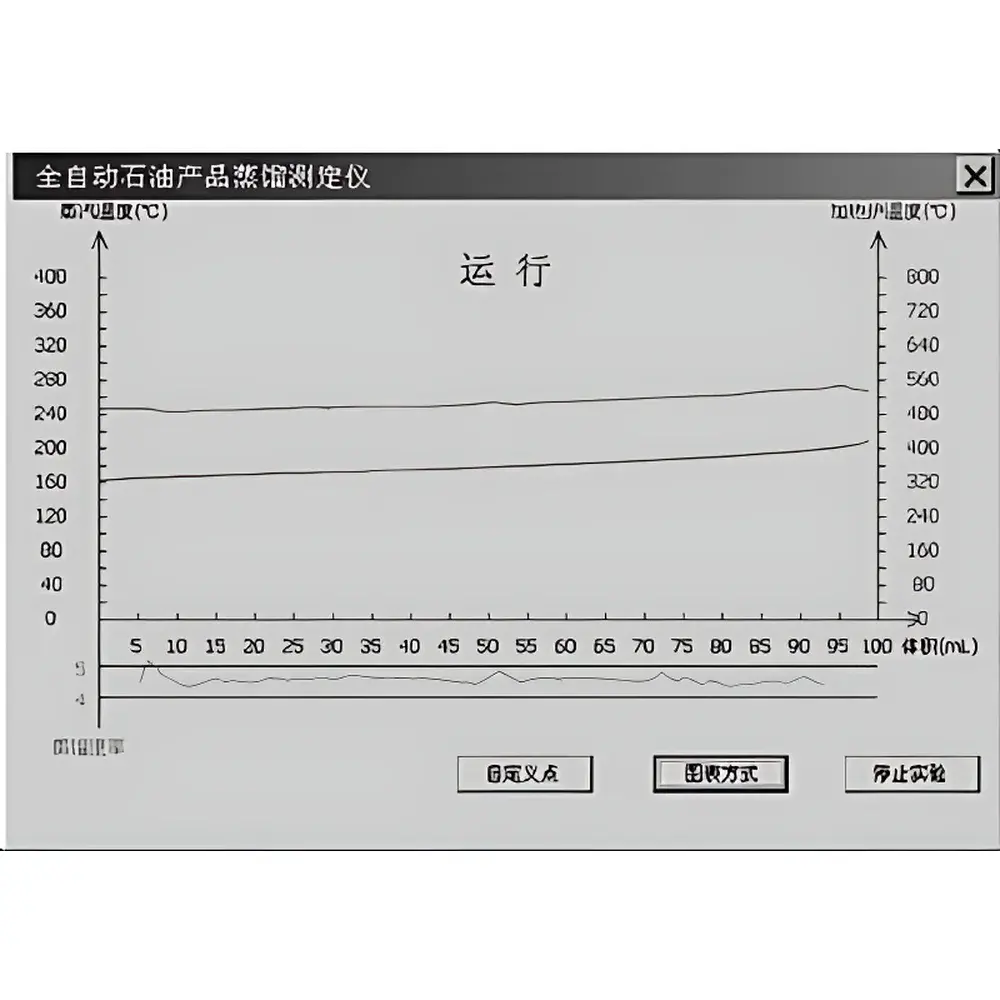
The Karrie EDS110 Fully Automated Petroleum Distillation Apparatus is an engineered solution for standardized distillation analysis of petroleum-based liquids in accordance with ASTM D86, ASTM D850, GB/T 6536, GB/T 7534, and ISO 3405. It implements a controlled batch distillation process based on classical vapor-liquid equilibrium principles under atmospheric pressure, with optional barometric correction. The system measures the relationship between distilled volume (in mL) and corresponding vapor temperature (in °C) across defined cut points—such as initial boiling point (IBP), 10%, 50%, 90%, and final boiling point (FBP)—to generate reproducible distillation curves essential for fuel specification compliance, refinery process control, and quality assurance laboratories.
Key Features
- Dual-architecture control system: Combines a rugged industrial PC (256 MB RAM, 2 GB flash storage, Windows CE 5.0 OS) for high-level sequencing and data management with a real-time microcontroller for precise thermal regulation, liquid level tracking, and sensor acquisition—ensuring deterministic response during critical phase transitions.
- Peltier-based dual-zone thermal control: Independently regulated cold bath and receiver chamber (0–60 °C) utilize solid-state thermoelectric modules for rapid, oil-free, maintenance-light cooling and fine-grained heating—eliminating refrigerants and reducing long-term operational risk versus compressor-based systems.
- High-fidelity metrology stack: German-sourced PT100 platinum resistance thermometers (4-wire configuration) provide traceable temperature measurement; industrial-grade infrared optical liquid-level sensors enable continuous 0.1 mL volumetric resolution across the full 0–100 mL range with extended thermal stability.
- Configurable distillation protocols: Supports both standard (e.g., ASTM D86 16-point volume→temperature sequence) and user-defined endpoints—including mixed-mode detection (volume-triggered temperature readout or temperature-triggered volume capture), programmable stop conditions (by volume or temperature), and multi-stage cold-bath ramping per GB/T 255 requirements.
- Comprehensive self-diagnostic suite: Performs automated pre-test verification of all critical sensors (vapor, heater, cold bath, receiver), mechanical actuators (fan, level detector), and safety interlocks (receiver door switch). Real-time fault logging includes audible alerts and on-screen diagnostic text aligned with ISO/IEC 17025 root-cause guidance.
Sample Compatibility & Compliance
The EDS110 is validated for use with volatile and semi-volatile hydrocarbon mixtures including gasoline (motor, aviation, and natural), jet fuels (Jet A, JP-5), naphthas, kerosene, diesel fractions, solvent blends, and related refinery intermediates. Its design conforms to the mechanical, thermal, and procedural constraints specified in ASTM D86 (Standard Test Method for Distillation of Petroleum Products at Atmospheric Pressure) and its international equivalents. All calibration-critical components—including PT100 sensors and volumetric receivers—are supplied with NIST-traceable calibration certificates. The instrument architecture supports GLP-compliant audit trails when integrated into LIMS environments via RS-232, USB, or Ethernet (RJ-45).
Software & Data Management
Operated via a 10.4-inch 24-bit TFT color touchscreen with optional keyboard/mouse input, the embedded software provides bilingual UI (English/Chinese toggle), real-time curve visualization (volume vs. temperature), tabular raw-data display, and automatic generation of ASTM-formatted reports. Data storage exceeds 10,000 test records with indexed search by date, sample ID, operator, method, or result parameter. Export functions support CSV and PDF formats via USB; network-enabled reporting integrates with enterprise LIMS using TCP/IP protocols. Firmware updates and report retrieval are performed without external PCs. System logs retain full timestamped records of all user actions, calibration events, and error states—meeting foundational requirements for FDA 21 CFR Part 11 electronic record integrity where local regulatory interpretation permits.
Applications
- Quality control of finished transportation fuels against ASTM D439, D1655, D975, and EN 228 specifications
- Refinery fractionation column optimization via feedstock and cut-point characterization
- Research evaluation of alternative fuel blends (e.g., ethanol-gasoline, biodiesel-diesel)
- Regulatory submission testing for customs clearance and environmental compliance (e.g., Reid Vapor Pressure correlation, volatility classification)
- Technical service labs performing third-party certification per ISO/IEC 17025 scope
FAQ
Does the EDS110 support atmospheric pressure correction during testing?
Yes—the system accepts manual or automated barometric input and applies real-time correction to vapor temperature readings per ASTM D86 Annex A1.
Can the instrument perform partial-range distillations?
Yes—users may define custom start/stop volumes or temperatures to limit analysis to specific cut points without running full-range tests.
Is the cold bath capable of sub-zero operation?
No—the Peltier-based cold bath operates from 0 °C to 60 °C; it does not achieve sub-zero temperatures.
What is the maximum sample volume the apparatus can accommodate?
The standard 125 mL distillation flask supports up to 100 mL of sample, consistent with ASTM D86 procedural limits.
How is temperature sensor accuracy maintained over time?
The four-wire PT100 probes are factory-calibrated with certificate; users may perform field verification using certified reference thermometers—software supports multi-point offset adjustment for drift compensation.





