
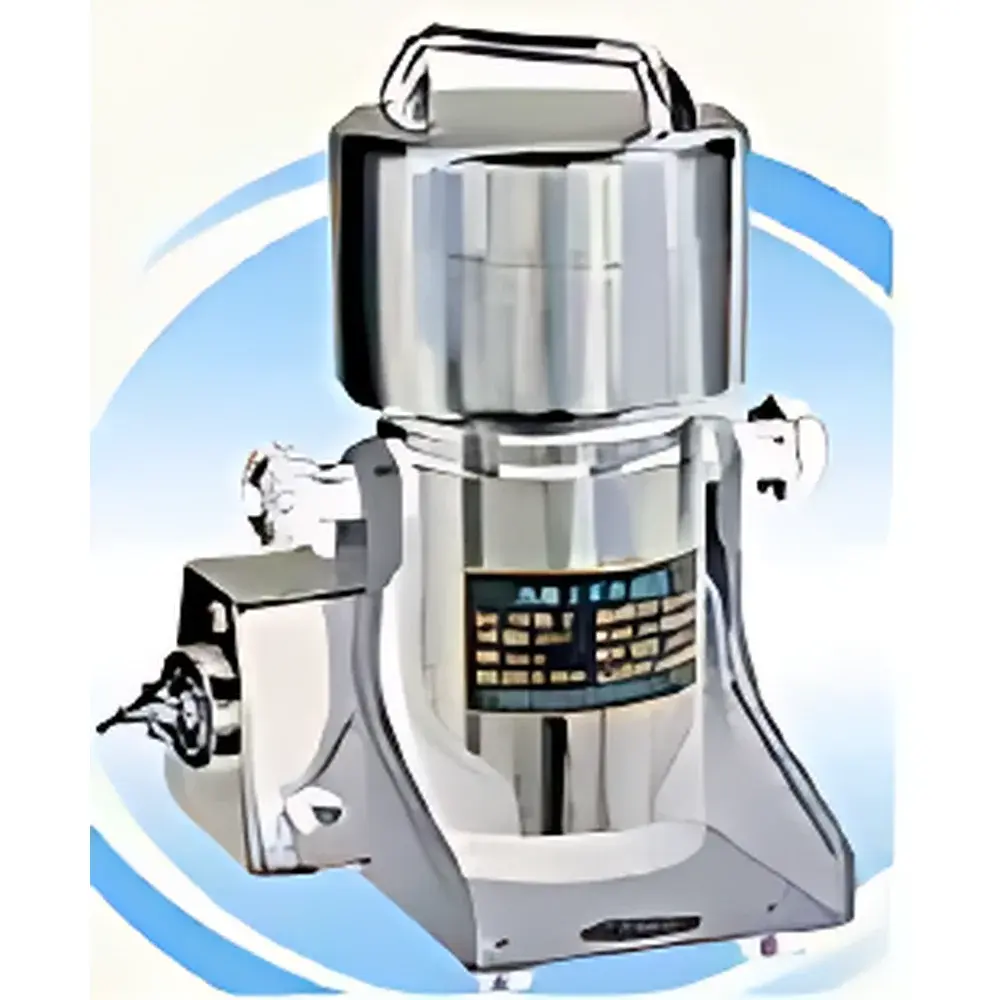
KeHeng FW80 & FW100 High-Speed Laboratory Crushers
| Brand | KeHeng |
|---|---|
| Origin | Shanghai, China |
| Model | FW80, FW100 |
| Instrument Type | High-Speed Crusher |
| Sample Suitability | Hard, Brittle, and Fibrous Materials |
| Maximum Batch Capacity | 80 g per run |
| Feed Particle Size | No strict upper limit (recommended ≤ 10 mm for optimal efficiency) |
| Construction | Stainless steel grinding chamber and rotor |
| Power Supply | 220 V AC, 50 Hz |
| Motor Power | FW80 – 1.1 kW |
| Rotational Speed | FW80 – 25,000 rpm |
| Safety Features | Interlocked lid switch, thermal overload protection |
| Compliance | CE-marked, conforms to IEC 61000-6-3 (EMC) and IEC 61000-6-2 (Immunity) |
Overview
The KeHeng FW80 and FW100 high-speed laboratory crushers are engineered for rapid, reproducible size reduction of hard, brittle, and moderately fibrous solid samples in research, quality control, and routine analytical laboratories. These instruments operate on the principle of high-velocity impact milling: a precision-balanced stainless steel rotor rotates at up to 28,000 rpm, propelling sample particles against a fixed hardened stainless steel grinding chamber wall. This mechanism delivers efficient particle fragmentation without significant heat accumulation—critical for thermolabile or oxidation-sensitive materials. Unlike planetary ball mills or cryogenic grinders, the FW series requires no pre-cooling, consumable media, or extended processing times, making it ideal for high-throughput sample preparation prior to elemental analysis (e.g., XRF, ICP-OES), moisture determination, homogeneity testing, or botanical extraction. Both models are designed for benchtop use with compact footprints (FW80: 240 × 220 × 360 mm; FW100: 260 × 240 × 390 mm) and integrate mechanical safety interlocks to prevent operation when the lid is unlatched.
Key Features
- Two-tier model selection: FW80 (1.1 kW motor, 25,000 rpm) for general-purpose crushing; FW100 (1.5 kW motor, 28,000 rpm) for tougher matrices including minerals, ceramics, and dried plant tissues.
- Stainless steel grinding chamber and rotor—corrosion-resistant, non-contaminating, and compliant with ISO 8573-1 for particulate cleanliness in instrument-grade environments.
- No-sieve design enables unrestricted feed particle size entry; recommended input size ≤10 mm ensures uniform residence time and minimizes rotor imbalance.
- Dual-stage safety architecture: electromechanical lid interlock prevents startup if improperly closed; integrated thermal cutoff interrupts power if motor temperature exceeds 110 °C.
- Low-maintenance construction: sealed bearings with lifetime lubrication, tool-free chamber disassembly, and smooth internal surfaces minimizing sample retention.
- CE-certified and compliant with IEC 61000-6-2 (electromagnetic immunity) and IEC 61000-6-3 (emission limits), supporting integration into GLP-regulated lab environments.
Sample Compatibility & Compliance
The FW80/FW100 systems accept dry, non-sticky, and low-moisture (15%), or hygroscopic powders prone to caking. Each unit ships with a validated cleaning protocol using ethanol or isopropanol followed by air-drying—documented in the user manual to support audit readiness under ISO/IEC 17025 and FDA 21 CFR Part 11 requirements for equipment qualification (IQ/OQ). Routine performance verification can be conducted using NIST-traceable glass bead standards (nominal d50 = 250 µm) to confirm consistent output fineness across batches.
Software & Data Management
These crushers operate as standalone mechanical instruments with no embedded microprocessor or digital interface. All operational parameters—including runtime, speed, and batch identification—are manually recorded by the user. To meet data integrity requirements in regulated labs, KeHeng recommends pairing the FW series with a validated electronic lab notebook (ELN) or LIMS platform. Timestamped operation logs, maintenance records (e.g., bearing replacement intervals), and calibration verifications (per ASTM E11-22 for sieve analysis of output) must be retained for minimum periods defined by local GLP/GMP guidelines. The absence of firmware eliminates cybersecurity vulnerabilities associated with connected lab devices while preserving full traceability through procedural documentation.
Applications
- Preparation of homogeneous subsamples for X-ray fluorescence (XRF) spectroscopy and inductively coupled plasma (ICP) analysis.
- Rapid comminution of herbal raw materials prior to Soxhlet extraction or HPLC assay development.
- Size reduction of failed tablet batches for dissolution profile re-evaluation per USP <711>.
- Fragmentation of ceramic or metallurgical specimens for metallographic mounting and SEM cross-sectioning.
- Standardization of reference material particle size distributions in metrology laboratories accredited to ISO/IEC 17034.
FAQ
What is the typical particle size distribution achieved after one pass?
Output median particle size (d50) ranges from 40–120 µm depending on material hardness and feed geometry; repeated short bursts (≤30 s each) with intermediate sieving yield narrower distributions.
Can the FW100 process wet or oily samples?
No—moisture or oil content above 5% w/w causes adhesion to chamber walls and rotor imbalance; samples must be oven-dried (≤60 °C) or lyophilized prior to processing.
Is rotor balancing required between runs?
No—the factory-balanced rotor maintains stability up to 28,000 rpm; however, visual inspection for wear or debris accumulation is recommended before each use.
How often should the grinding chamber be cleaned?
After every sample type change and at least once per work shift when processing identical materials, following the ethanol-rinse/air-dry protocol specified in Section 4.2 of the operator manual.
Does KeHeng provide IQ/OQ documentation templates?
Yes—validated installation and operational qualification templates aligned with ISO 9001 and ASTM E2500 are available upon request for qualified purchasers.



