
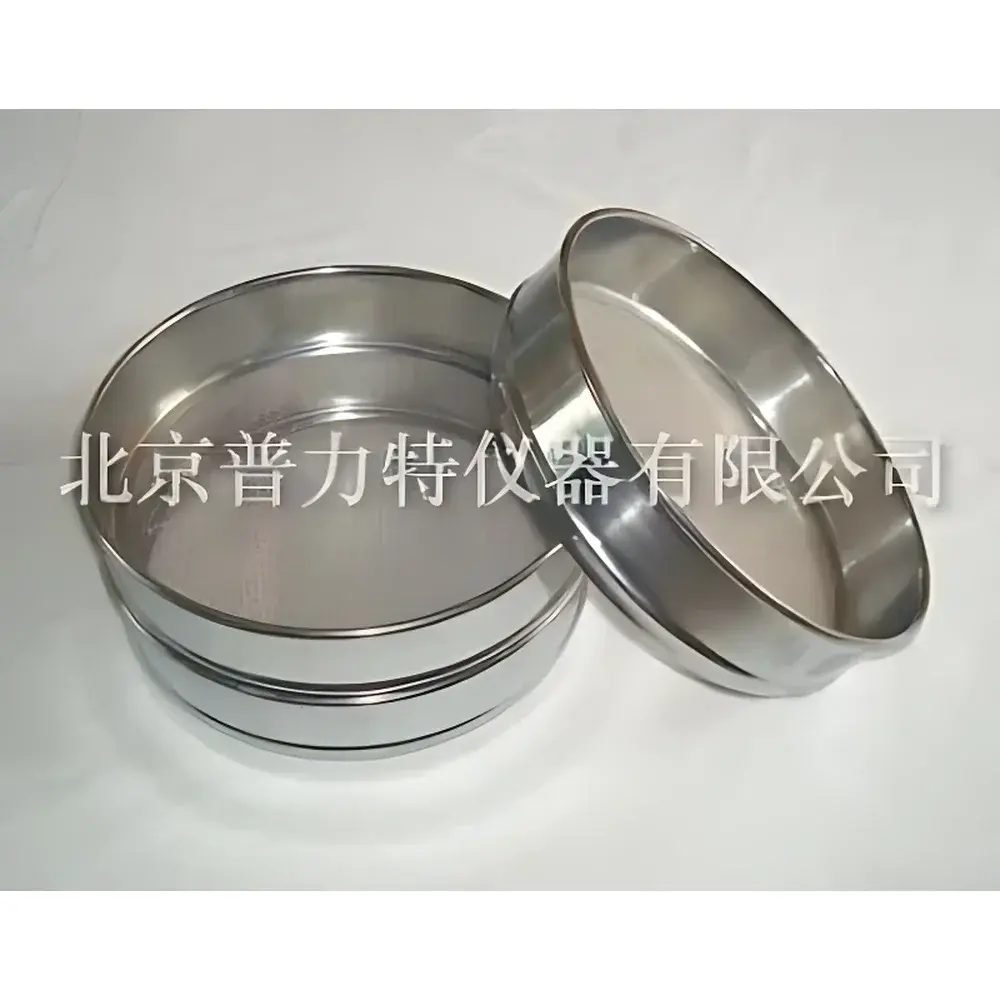
Plitex TS20 Benthic Sieve Set
| Origin | Beijing, China |
|---|---|
| Manufacturer Type | Authorized Distributor |
| Origin Category | Domestic (China) |
| Model | TS20 |
| Pricing | Available Upon Request |
| Sieve Material | Stainless Steel |
| Frame Construction | Dual-layer Stamped Steel |
| Diameter | 20 cm |
| Height | 5 cm |
| Mesh Sizes | 20 mesh (1000 µm) |
Overview
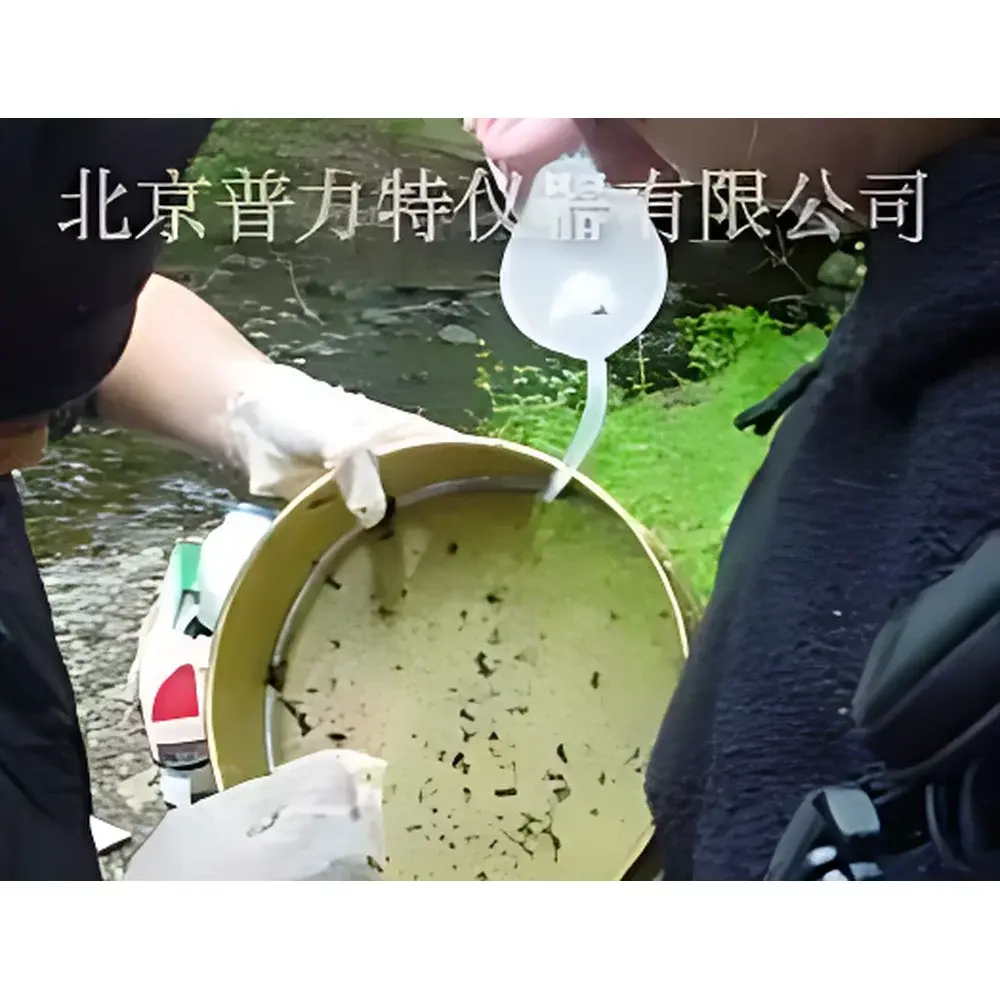
The Plitex TS20 Benthic Sieve Set is a precision-engineered laboratory tool designed for standardized physical separation of benthic macroinvertebrates and particulate matter from freshwater and marine sediment cores, grab samples, and dredged sludge. It operates on the principle of dry or wet sieving—where sample matrix is mechanically agitated across stacked, calibrated stainless-steel mesh screens to fractionate organisms and debris by particle size. This method aligns with internationally recognized protocols including ASTM D422-16 (Standard Test Method for Particle-Size Analysis of Soils), ISO 10390:2023 (Soil quality — Determination of pH), and EPA Method 1669 (Microbiological Methods for Monitoring the Estuarine and Marine Environment), which require reproducible, traceable sediment processing prior to taxonomic identification or ecological assessment.
Key Features
- Stainless-steel mesh construction ensures corrosion resistance, mechanical durability, and chemical inertness—critical for repeated use in saline, acidic, or organic-rich sediment matrices.
- Dual-layer stamped steel frame provides structural rigidity during manual or mechanical shaking, minimizing frame deformation and maintaining consistent aperture alignment across all sieve tiers.
- Uniform 20 cm diameter and 5 cm height enable compatibility with standard sediment washing trays, sieve shakers (e.g., Ro-Tap®-compatible units), and field-deployable rinsing setups.
- Six-tier graduated mesh configuration (20–120 mesh; 1000–125 µm) supports tiered sorting per established benthic survey guidelines, such as those outlined in the USGS National Water-Quality Assessment (NAWQA) Program and the European Union’s Water Framework Directive (WFD) monitoring protocols.
- Interlocking stack design facilitates rapid assembly/disassembly and prevents cross-contamination between fractions during sequential wet-sieving operations.
Sample Compatibility & Compliance
The TS20 Sieve Set accommodates unconsolidated sediments ranging from coarse sand to fine silt and clay-rich slurries. It is validated for use with both freshwater (lakes, rivers, reservoirs) and marine/estuarine sediments—including anoxic, sulfidic, or hydrocarbon-impacted matrices—when paired with appropriate rinsing media (e.g., filtered lake water, artificial seawater, or isotonic saline solutions). All mesh apertures comply with ISO 3310-1:2016 (Test sieves — Technical requirements and testing — Part 1: Test sieves of metal wire cloth) and are certified for nominal aperture tolerances within ±5% of stated values. The set meets GLP documentation requirements for chain-of-custody tracking when used in regulatory monitoring programs under EPA Region 10 or EU WFD Article 8 reporting frameworks.
Software & Data Management
As a passive mechanical separation device, the TS20 Sieve Set does not incorporate embedded electronics or software interfaces. However, it integrates seamlessly into digital laboratory workflows: sieve fractions can be directly logged into LIMS platforms (e.g., LabWare LIMS, Thermo Fisher SampleManager) via barcode-labeled collection vials. When used in conjunction with image-based identification systems (e.g., RiverBench™, BIOMONITOR), the consistent particle-size fractions produced by the TS20 enable automated morphometric analysis and machine-learning-assisted taxonomic classification. Audit trails for sieve calibration history, usage logs, and maintenance records may be maintained in accordance with ISO/IEC 17025:2017 clause 6.4.10 (Equipment Records) and FDA 21 CFR Part 11-compliant electronic record systems.
Applications
- Quantitative benthic macroinvertebrate surveys for ecological status assessment (e.g., BMWP, ASPT, EPT indices).
- Preparatory sample fractionation prior to DNA metabarcoding or environmental transcriptomics of sediment-associated communities.
- Sediment grain-size distribution analysis for geomorphological modeling and contaminant sorption studies.
- Quality control in sediment toxicity testing (e.g., ASTM E1383-22) where organism recovery efficiency must be standardized across laboratories.
- Field-based rapid assessment protocols used by environmental consultancies conducting baseline monitoring for EIA projects.
FAQ
Is the TS20 Sieve Set compatible with mechanical sieve shakers?
Yes—the 20 cm diameter and rigid dual-layer frame meet Ro-Tap® and Endecotts-standard mounting dimensions, enabling secure clamping and consistent amplitude transmission.
Can these sieves be autoclaved?
Stainless-steel mesh and stamped frames are autoclavable at 121°C for 20 minutes; however, repeated sterilization cycles may accelerate surface passivation—calibration verification is recommended after every 10 autoclave sessions.
What is the recommended cleaning protocol between samples?
Rinse thoroughly with deionized water followed by ultrasonic cleaning (40 kHz, 10 min) in 1% Alconox® solution; air-dry vertically to prevent moisture entrapment in mesh interstices.
Does Plitex provide calibration certificates?
Upon request, accredited third-party calibration reports (traceable to NIM China) are available for individual mesh tiers, documenting aperture measurements per ISO 3310-1 Annex A.
How should the TS20 be stored long-term?
Store assembled in low-humidity cabinets with silica gel desiccant; avoid stacking under load to preserve frame geometry and mesh planarity.







