
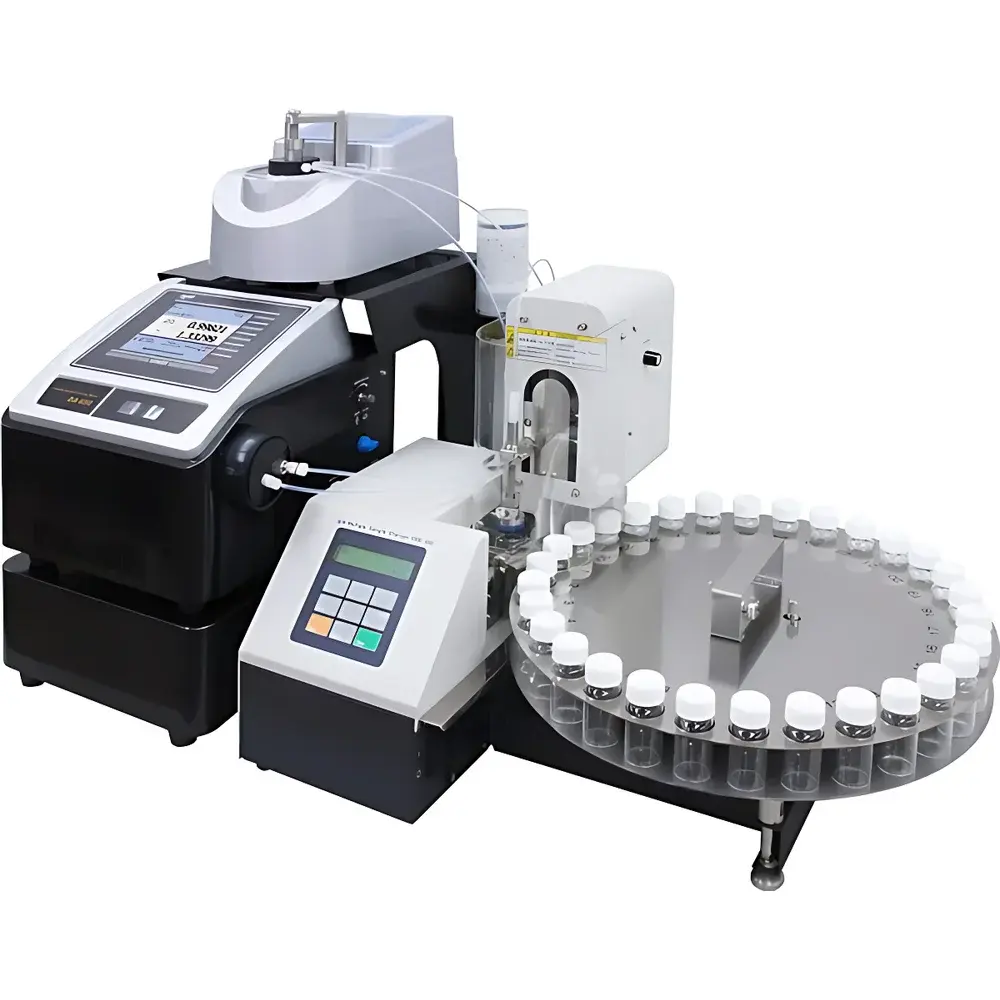
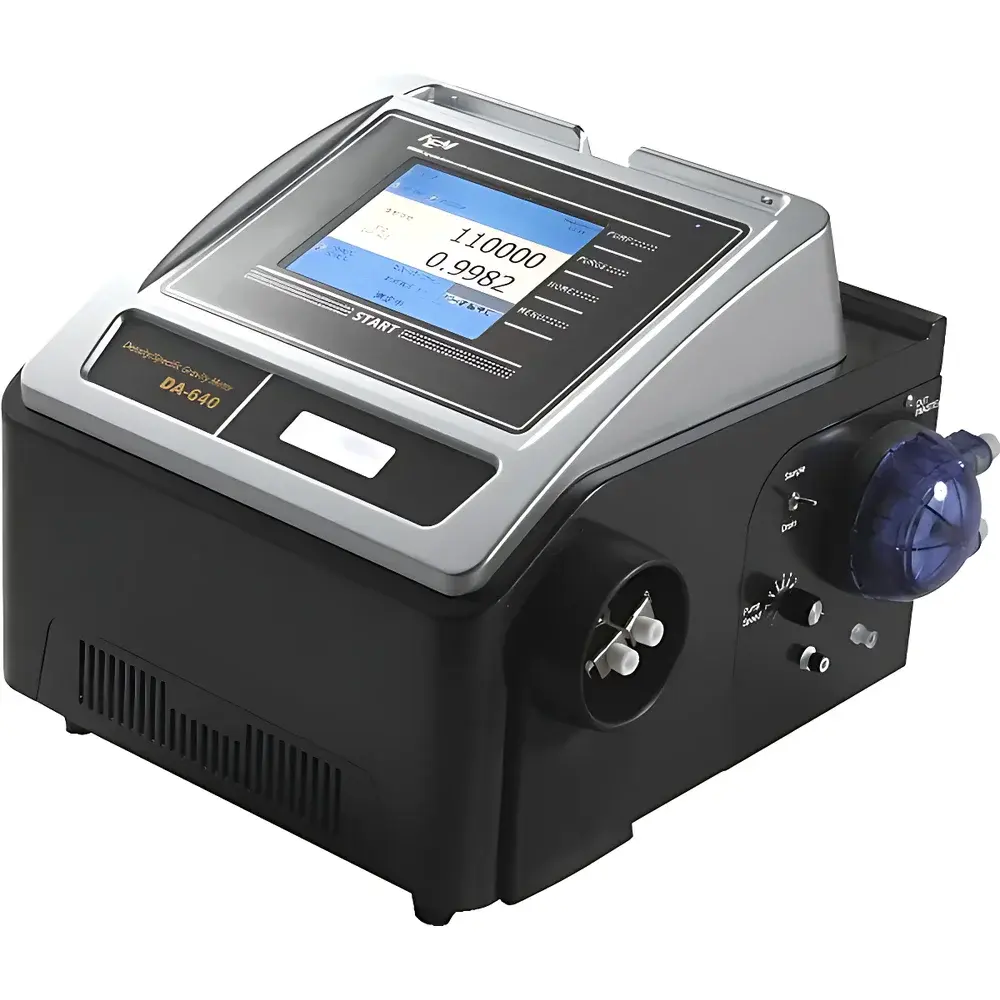
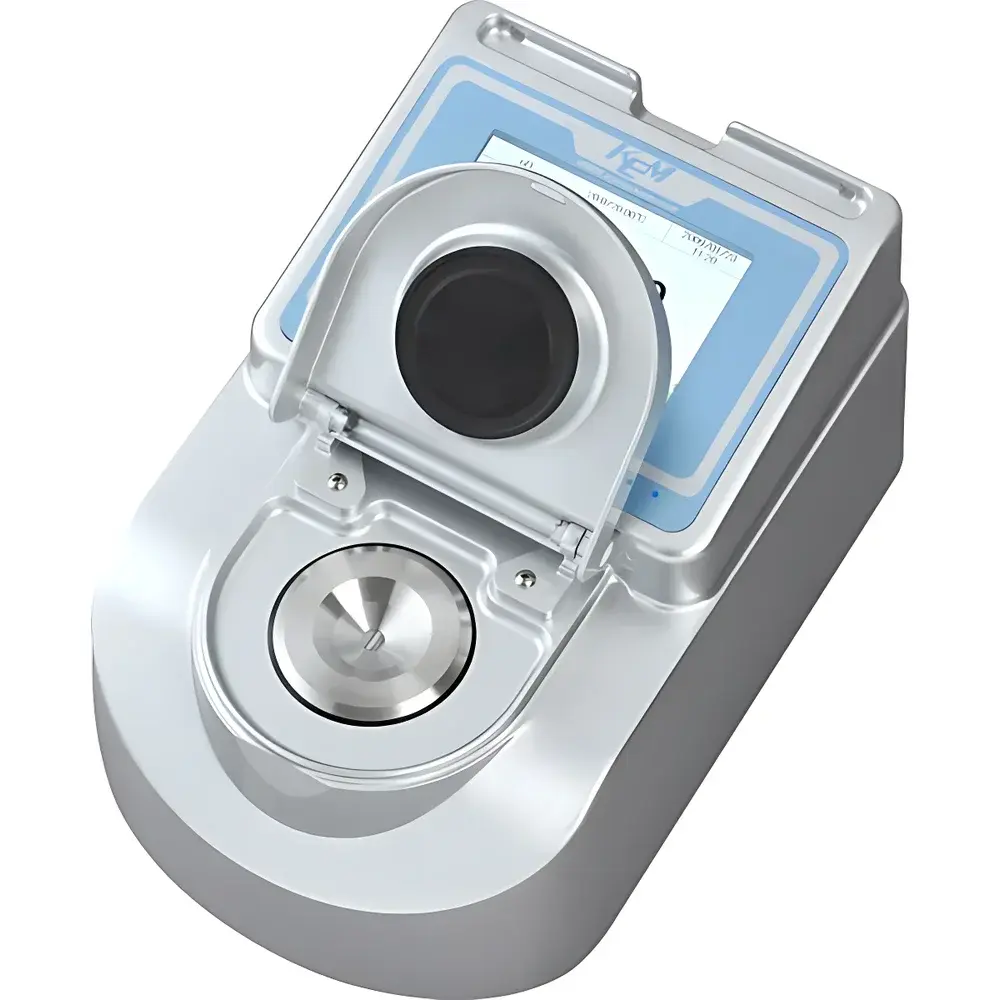
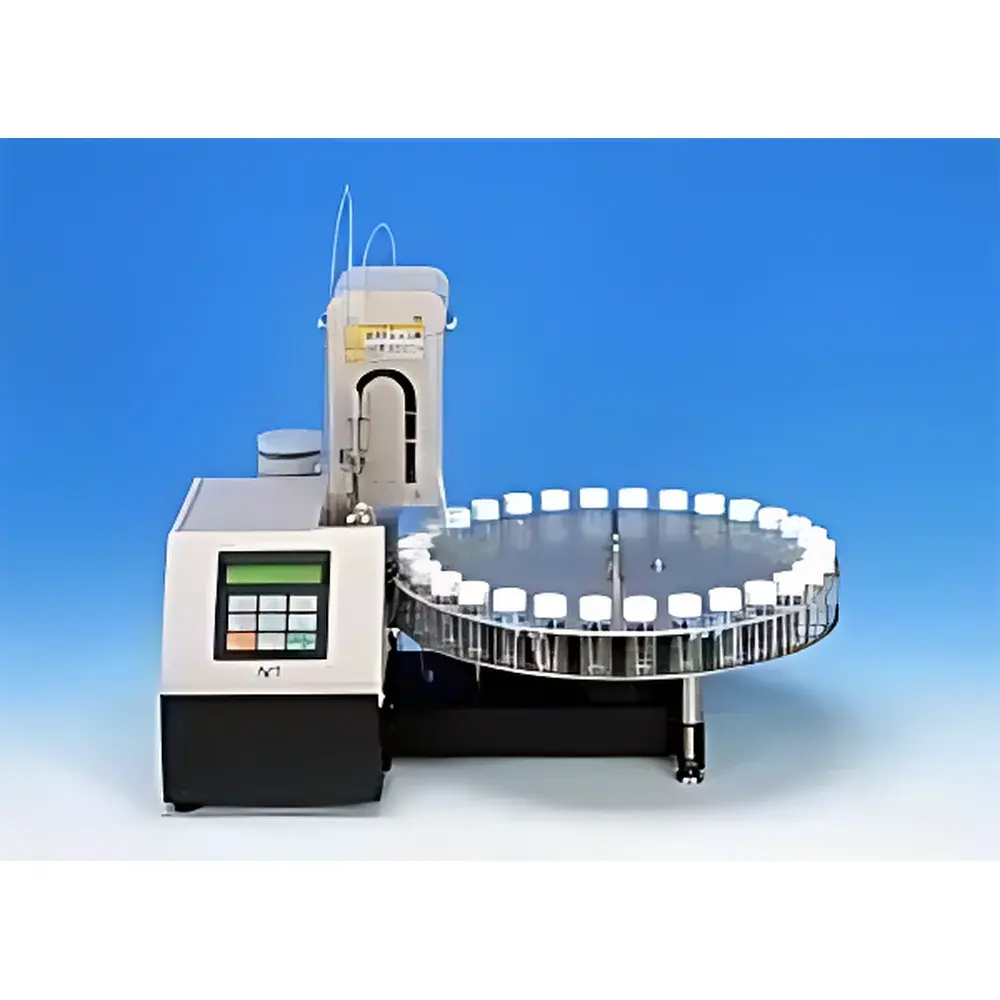
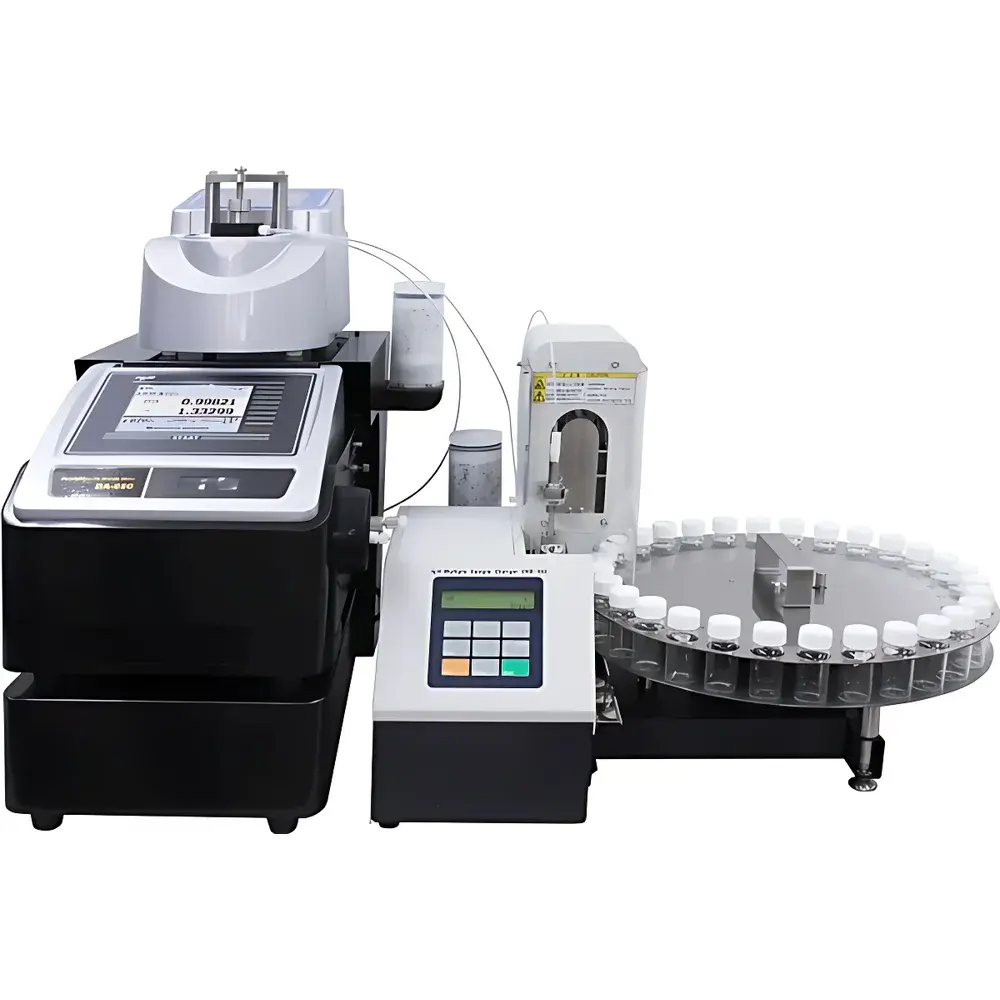
KEM DA-645+RA-600 Automated Density and Refractometer System
| Brand | KEM (Kyoto Electronics Manufacturing) |
|---|---|
| Origin | Japan |
| Manufacturer Type | Original Equipment Manufacturer (OEM) |
| Instrument Type | Benchtop Laboratory Densimeter & Refractometer |
| Measurement Principle | U-tube Oscillation for Density / Sodium D-line (589.3 nm) Critical Angle Refractometry |
| Density Range | 0–3 g/cm³ |
| Density Accuracy | ±5×10⁻⁵ g/cm³ |
| Refractive Index Range | 1.3200–1.7000 nD |
| Refractive Index Accuracy | ±0.0001 nD |
| Temperature Control Range (Density) | 0–96 °C |
| Temperature Control Range (Refractometry) | 5–75 °C (optional up to 100 °C) |
| Sample Volume | ~1 mL |
| Temperature Resolution | 0.01 °C |
| Density Resolution | 0.00001 g/cm³ |
| Refractive Index Resolution | 0.0001 nD |
| Auto-sampling | Integrated Peltier-driven syringe pump |
| Calibration Standards | Air + distilled water or certified reference materials |
| Compliance | ASTM D1250, ISO 12185, ISO 2859, USP <841>, JP XVII General Tests 2.31 & 2.32, GLP/GMP-ready with audit trail capability |
Overview
The KEM DA-645+RA-600 Automated Density and Refractometer System is an integrated benchtop analytical platform engineered for concurrent, high-precision determination of density (absolute and relative) and refractive index (nD) in liquid samples. It combines two orthogonal physical measurement principles—U-tube oscillation densimetry and critical-angle refractometry at the sodium D-line (589.3 nm)—within a single instrument architecture. The DA-645 module employs a temperature-controlled, evacuated quartz U-tube resonator; sample introduction induces a measurable shift in natural oscillation frequency, which is linearly correlated to mass per unit volume via rigorous calibration against traceable standards. Simultaneously, the RA-600 module utilizes a thermally stabilized prism interface and high-resolution photodetector array to determine the critical angle of total internal reflection, yielding refractive index with metrological traceability to NIST SRM 1483 and ISO 12185. This dual-parameter acquisition enables rapid characterization of composition, purity, concentration, and thermal behavior—particularly valuable in quality control workflows where cross-validated physical properties reduce analytical uncertainty.
Key Features
- Integrated dual-module design enabling simultaneous density and refractive index measurement from a single 1 mL sample aliquot, eliminating inter-instrument variability and operator-induced timing errors.
- Peltier-based thermostatic control with ±0.01 °C stability across both modules; independent temperature programming allows asynchronous conditioning (e.g., 20 °C for density, 25 °C for refractometry) or synchronized operation.
- Viscosity compensation algorithm embedded in the DA-645 firmware—applies empirically derived correction factors for samples with dynamic viscosity up to 250 mPa·s, ensuring accuracy without manual dilution or pre-heating.
- Automated air/water calibration sequence with programmable frequency and user-defined reference material support (e.g., certified sucrose solutions, hydrocarbon standards).
- Robust quartz U-tube cell with chemical resistance to organic solvents, acids, and bases; prism surface coated with anti-fouling diamond-like carbon (DLC) for extended service life in aggressive matrices.
- Compliance-ready data handling: full electronic signature support, 21 CFR Part 11–compliant audit trail, and configurable report templates aligned with ISO/IEC 17025 documentation requirements.
Sample Compatibility & Compliance
The DA-645+RA-600 accommodates a broad spectrum of homogeneous liquids—including volatile organics, viscous oils, aqueous electrolytes, pharmaceutical formulations, food-grade syrups, and cosmetic emulsions—provided they are free of suspended particulates or entrained air bubbles. Its validated application scope aligns with multiple international pharmacopoeial and industrial standards: USP (Refractive Index), USP (Specific Gravity), JP XVII General Tests 2.31 (Density) and 2.32 (Refractive Index), ASTM D1250 (Petroleum Density Tables), ISO 12185 (Crude Oil and Liquid Petroleum Products), and ISO 2859 (Sampling Procedures for Inspection by Attributes). The system supports GLP and GMP environments through hardware-enforced data integrity controls, including immutable raw signal logging, time-stamped calibration records, and role-based access management.
Software & Data Management
Operation is managed via KEM’s proprietary PC-based software suite, compatible with Windows 10/11 (64-bit) and supporting both local and networked deployment. The interface provides real-time visualization of oscillation decay curves and refractometric light intensity profiles, enabling immediate detection of sample anomalies (e.g., incomplete filling, bubble formation, or prism contamination). All measurements are stored with metadata (operator ID, timestamp, ambient conditions, calibration history), and reports export in PDF/A-1b or CSV formats with embedded digital signatures. Data archiving complies with FDA 21 CFR Part 11 requirements, including electronic record retention for ≥25 years, non-repudiation protocols, and automated backup to encrypted NAS or cloud storage endpoints.
Applications
- Pharmaceutical QC: Verification of excipient identity (e.g., glycerin, propylene glycol) via density/refractive index fingerprinting per USP monographs.
- Fuel and lubricant analysis: Determination of biodiesel blend ratios (B5–B20) and hydrocarbon chain length distribution using dual-parameter correlation models.
- Food & beverage testing: Quantification of soluble solids (°Brix) in juices, syrups, and dairy products—validated against AOAC 932.12 and ISO 2173.
- Essential oil authentication: Detection of adulteration in citrus, lavender, and eucalyptus oils through deviation from established nD/ρ20 reference envelopes.
- Chemical manufacturing: In-process monitoring of reaction progress in esterification, polymerization, and halogenation processes where density and refractivity co-vary predictably.
- Cosmetic formulation: Batch release testing of surfactant solutions, fragrances, and emollient blends per ISO 16128 and CTFA guidelines.
FAQ
What standards does the DA-645+RA-600 comply with for regulatory submissions?
The instrument meets ASTM D1250, ISO 12185, USP and , JP XVII General Tests 2.31/2.32, and supports 21 CFR Part 11 compliance when deployed with validated software configuration and documented SOPs.
Can the system measure samples above 75 °C for refractometry?
Yes—the RA-600 module offers an optional high-temperature prism assembly rated to 100 °C, enabling analysis of molten waxes, hot process streams, and thermally labile solvents under controlled conditions.
Is viscosity correction applied automatically during density measurement?
Yes—viscosity compensation is enabled by default and dynamically adjusts the density calculation based on real-time damping coefficient analysis of the U-tube resonance signal.
How is calibration traceability maintained?
Calibration uses NIST-traceable air and double-distilled water; optional certified reference materials (e.g., KEM SRM-101 series) provide secondary traceability with stated uncertainties ≤0.00002 g/cm³ and ≤0.00005 nD.
Does the system support LIMS integration?
Yes—via ASTM E1384-compliant HL7 and ASTM E2500-07 XML export protocols, enabling bidirectional communication with major laboratory information management systems including LabWare, Thermo Fisher SampleManager, and Agilent OpenLab.
Related Products



