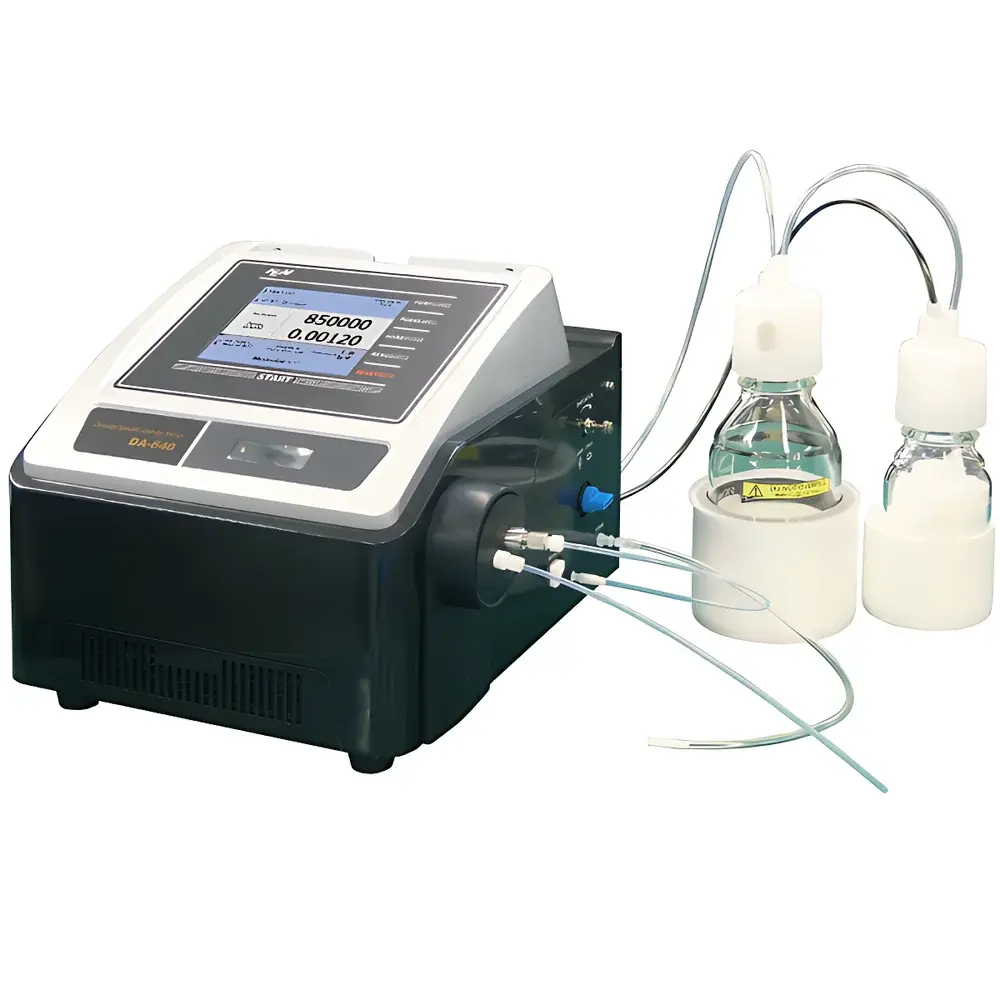
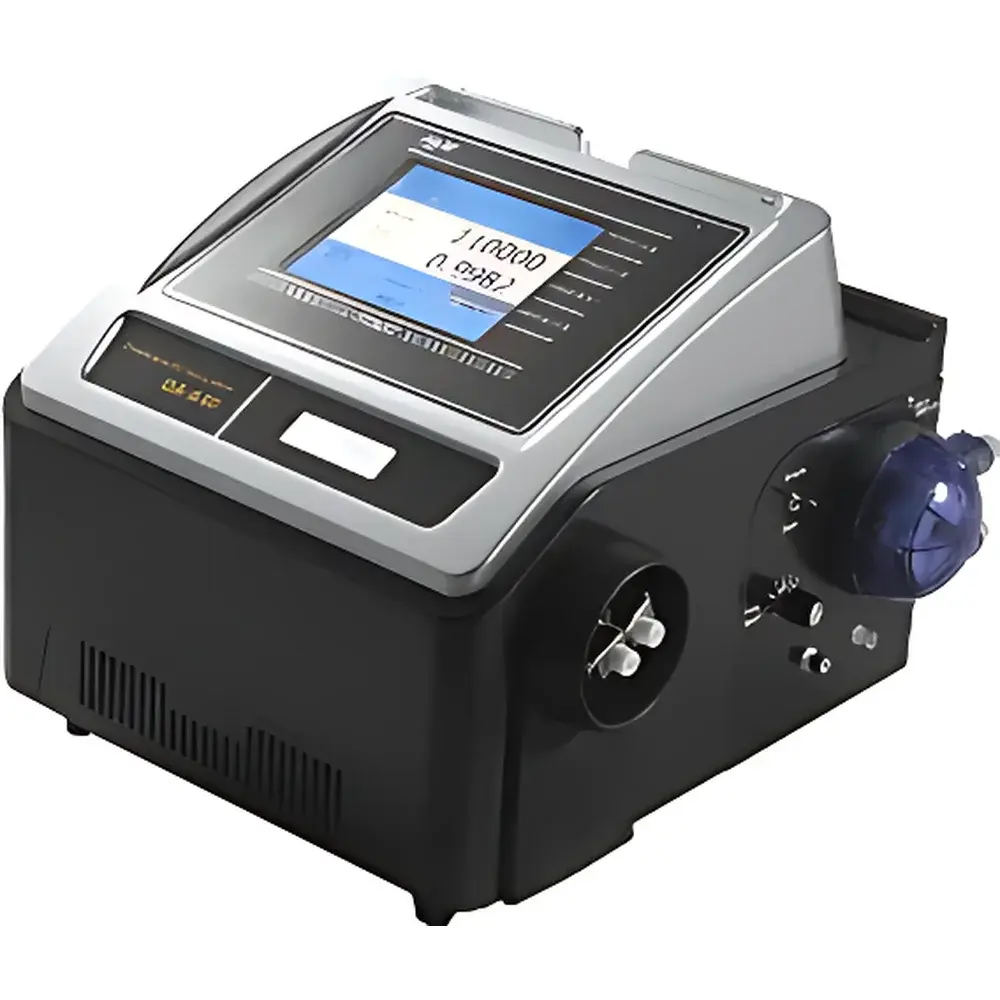
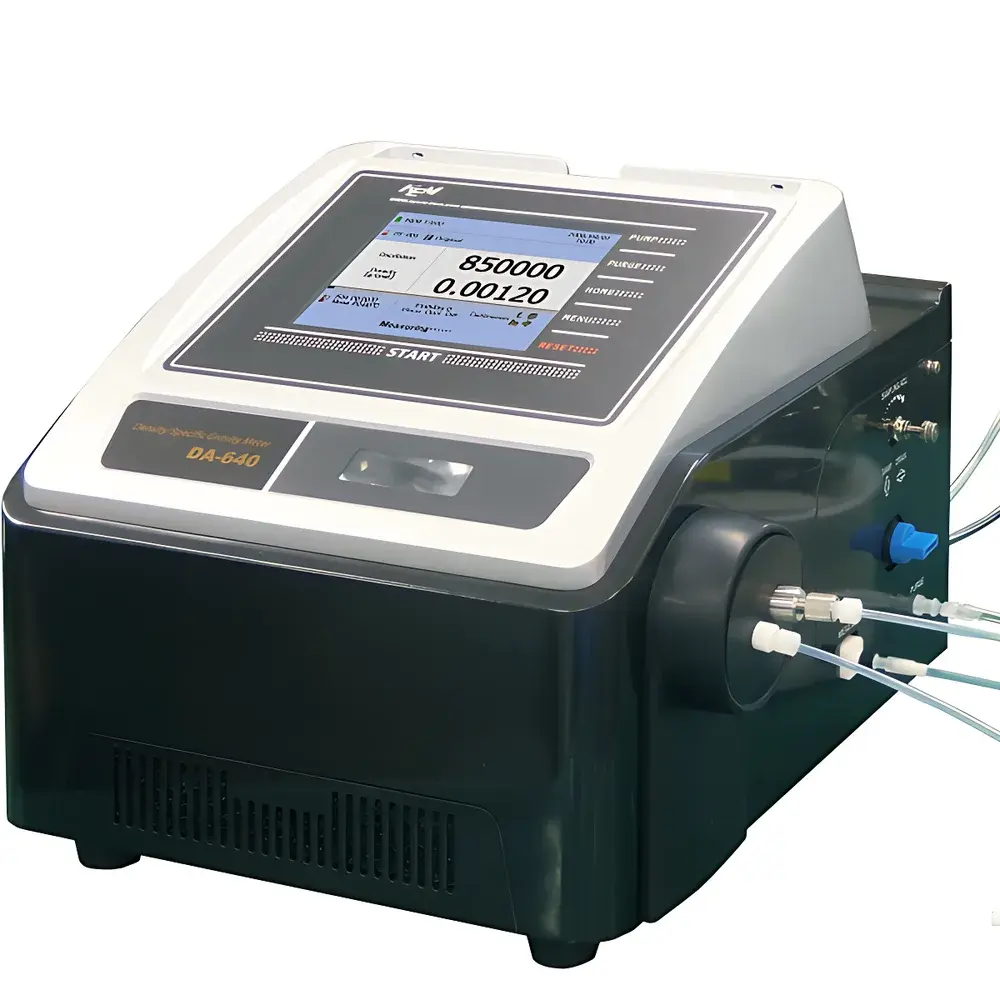
KEM DA-650 / DA-645 / DA-640 Digital Density Meter for Petroleum Products (Compliant with GB/T 29617–2013)
| Brand | KEM (Kyoto Electronics Manufacturing) |
|---|---|
| Origin | Japan |
| Manufacturer Type | Original Equipment Manufacturer (OEM) |
| Instrument Class | Imported Laboratory Analytical Instrument |
| Models | DA-650, DA-645, DA-640 |
| Measurement Principle | U-shaped Oscillating Tube Method |
| Density Range | 0–3 g/cm³ |
| Temperature Control Range | 0.000–96.000 °C (DA-650) |
| Density Resolution | 1×10⁻⁶ g/cm³ (DA-650), 1×10⁻⁵ g/cm³ (DA-645), 1×10⁻⁴ g/cm³ (DA-640) |
| Accuracy | ±2×10⁻⁵ g/cm³ (DA-650), ±5×10⁻⁵ g/cm³ (DA-645), ±1×10⁻⁴ g/cm³ (DA-640) |
| Repeatability (SD) | 5×10⁻⁶ g/cm³ (DA-650), 1×10⁻⁵ g/cm³ (DA-645), 5×10⁻⁵ g/cm³ (DA-640) |
| Sample Volume | 1–2 mL |
| Measurement Time | 1–4 min (manual), 2–10 min (automated) |
| Compliance Standards | GB/T 29617–2013, GB/T 2013–2010, SH/T 0604–2000, ASTM D4052–22, ASTM D5002–22, EN ISO 12185:1996, EN ISO 15212-1:1999 |
Overview
The KEM DA-650, DA-645, and DA-640 Digital Density Meters are precision laboratory instruments engineered for the accurate, rapid, and traceable determination of density, relative density (specific gravity), and API gravity of homogeneous liquid petroleum products and related hydrocarbon-based fluids. These analyzers operate on the oscillating U-tube principle—a well-established primary method in metrology—where the resonant frequency of a hermetically sealed, U-shaped glass tube filled with sample is inversely proportional to its mass inertia. By precisely measuring the oscillation period (or frequency) and referencing temperature-controlled calibration data, the instrument calculates density at user-defined temperatures with microgram-per-cubic-centimeter resolution. Designed specifically to meet the procedural and metrological requirements of GB/T 29617–2013, these meters support routine QC testing across refining, distribution, and regulatory compliance laboratories handling gasoline, diesel, jet fuel, lubricants, base oils, waxes, and organic heat transfer fluids. The system accommodates samples with kinematic viscosity up to 15,000 mm²/s (cSt) and vapor pressure below 100 kPa; under controlled conditions, higher-volatility samples may also be analyzed provided bubble-free filling is verified.
Key Features
- Three-tier performance architecture: DA-650 (highest resolution: ±2×10⁻⁵ g/cm³), DA-645 (mid-range precision), and DA-640 (cost-optimized entry-level model), all sharing identical mechanical design, thermal control, and software framework.
- Integrated Peltier-based temperature regulation with stability better than ±0.01 °C over the full 0–96 °C range—ensuring thermodynamic consistency required by ASTM D4052 and GB/T 29617–2013.
- Automatic viscosity correction algorithm eliminates manual input of viscosity data, improving operator independence and reducing systematic error in high-viscosity samples such as residual fuels or lubricating oils.
- Motor-driven peristaltic pump enables fully automated sample aspiration, cell rinsing (with solvent), and drying cycles—minimizing carryover and enabling unattended multi-sample runs.
- Optically optimized U-tube cell with seamless quartz-glass construction and smooth internal transitions prevents air entrapment and facilitates complete cleaning between analyses.
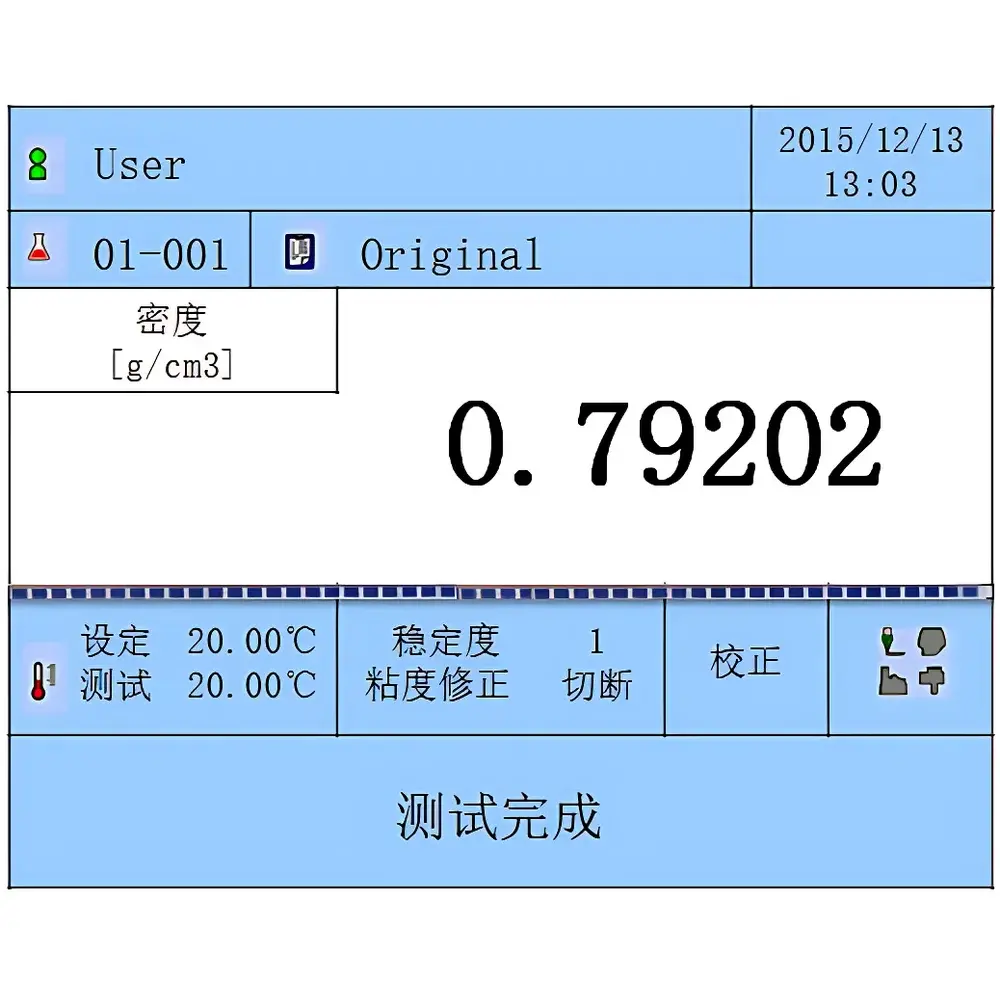
- High-brightness LED backlit 5.7-inch TFT display provides real-time visualization of oscillation frequency, temperature, density, API gravity, relative density, and diagnostic status indicators.
- GLP-compliant data handling: All measurements, calibration events, maintenance logs, and user actions are time-stamped and stored with audit trail capability, satisfying FDA 21 CFR Part 11 and ISO/IEC 17025 documentation requirements.
Sample Compatibility & Compliance
The DA-series meters are validated for use with volatile and non-volatile petroleum liquids meeting the scope defined in GB/T 29617–2013—including but not limited to gasoline, diesel fuel, aviation turbine fuel (Jet A-1), naphthas, kerosene, crude oil fractions, lubricating base stocks, and industrial glycols. The instrument complies with multiple international standards governing density measurement methodology and reporting: ASTM D4052–22 (general liquids), ASTM D5002–22 (crude oils), ASTM D5931–20 (engine coolants), EN ISO 12185:1996 (petroleum products), EN ISO 15212-1:1999 (oscillation-type density meters), and SH/T 0604–2000 (U-tube method for crude and refined products). Each unit undergoes factory verification against NIST-traceable density standards and includes documented uncertainty budgets aligned with ISO/IEC 17025 Clause 6.4. For regulated environments, optional IQ/OQ documentation packages and electronic signature modules support GMP and GLP validation protocols.
Software & Data Management
KEM’s proprietary DA-System software (v3.x) provides comprehensive instrument control, method configuration, and data export functionality via USB, RS-232C, or Ethernet (LAN). Up to 100 user-defined measurement methods—including temperature setpoints, equilibration thresholds, viscosity compensation settings, and auto-dilution parameters—can be stored onboard. The system supports direct conversion between density, relative density (ρSG), and API gravity using the standard equation °API = (141.5 / ρSG) − 131.5, where ρSG is referenced to water at 15.56 °C. Concentration calculation is enabled via user-input density-concentration lookup tables or polynomial equations (e.g., for ethanol-in-gasoline blends). Statistical processing includes automatic mean, standard deviation (SD), and relative standard deviation (RSD) computation. Raw data exports comply with ASTM E1382–21 format and are compatible with LIMS integration through CSV, XML, or ASTM WK29317-compliant structured output.
Applications
These analyzers serve critical roles in petroleum product quality assurance, custody transfer verification, formulation development, and regulatory submission workflows. In refinery laboratories, they verify batch conformity to ASTM D975 (diesel), D439 (gasoline), or D7462 (biodiesel blend stock) specifications. In terminal and blending facilities, they support real-time density-based volume correction per API MPMS Chapter 11.1 (ASTM D1250–25). Research applications include thermal expansion coefficient derivation, compositional modeling (e.g., n-d-M analysis per SH/T 0729–2004), and phase behavior studies of heavy ends. The DA-640/645/650 series is also deployed in independent testing labs accredited to CNAS (China), UKAS (UK), and A2LA (USA) for issuing ISO/IEC 17025-compliant test reports on fuels, lubricants, and specialty solvents.
FAQ
What is the difference between DA-650, DA-645, and DA-640 models?
The distinction lies exclusively in metrological performance: DA-650 offers the highest density resolution (1×10⁻⁶ g/cm³) and lowest uncertainty (±2×10⁻⁵ g/cm³); DA-645 delivers mid-tier precision (1×10⁻⁵ g/cm³ resolution); DA-640 provides economical accuracy (1×10⁻⁴ g/cm³ resolution) while retaining identical hardware, temperature control, and software architecture.
Does the instrument require external calibration standards for daily use?
No—each unit ships with two certified reference materials (air and water) for daily verification. Full calibration uses KEM-provided NIST-traceable density standards; calibration intervals are determined by risk assessment per ISO/IEC 17025 Clause 7.7.
Can the DA-series measure viscous or semi-solid samples such as bitumen or asphalt?
Per ASTM D8188–23, the DA-650/645/640 may be used for heated semi-solid bituminous materials when maintained above their pour point and filtered to remove particulates; however, dedicated high-temperature viscometric density systems are recommended for routine bitumen testing.
Is the instrument compatible with 21 CFR Part 11 requirements?
Yes—when configured with optional electronic signature and audit trail modules, the DA-system supports role-based access control, biometric or token-based authentication, and immutable record retention compliant with FDA 21 CFR Part 11 Subpart C.
How is air bubble formation prevented during U-tube filling?
The combination of low-flow peristaltic pumping, smooth-walled quartz cells, and real-time oscillation monitoring allows the system to detect incomplete filling or entrapped gas; measurement initiation is blocked until stable resonance is confirmed.
Related Products