
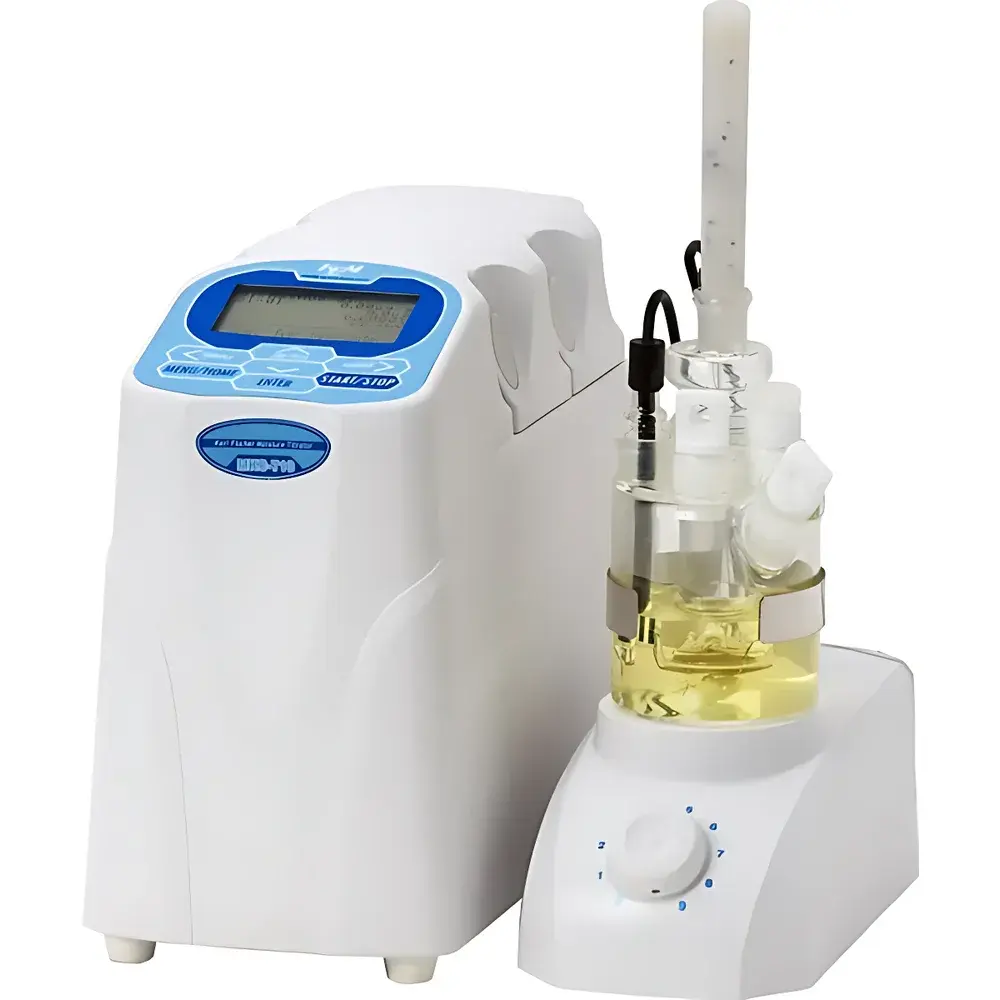
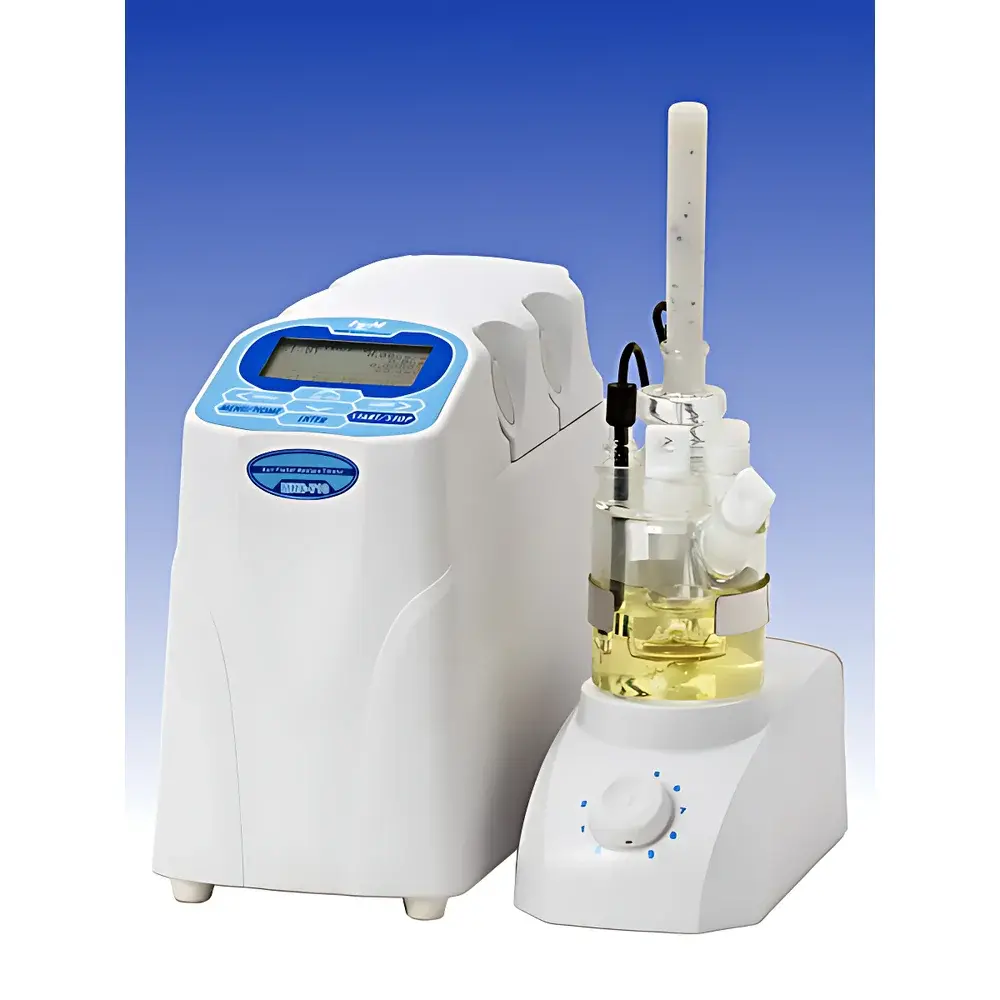
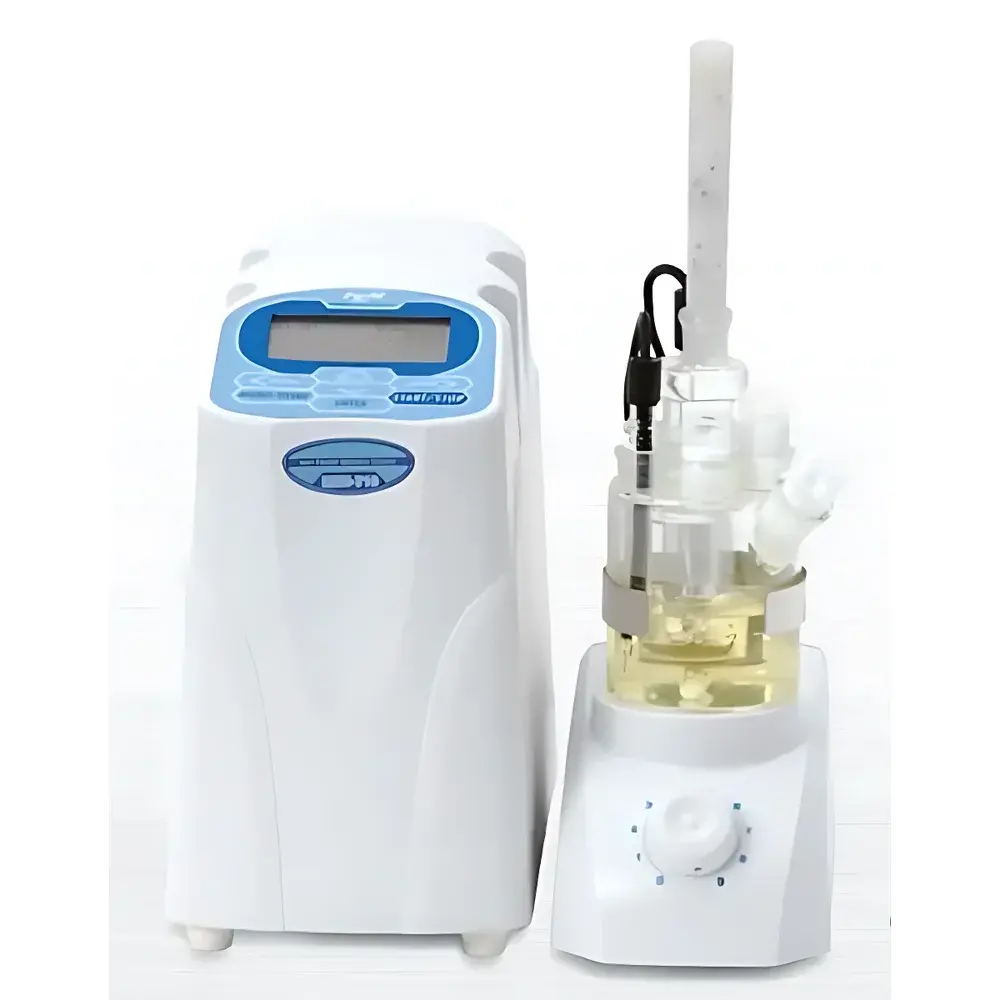
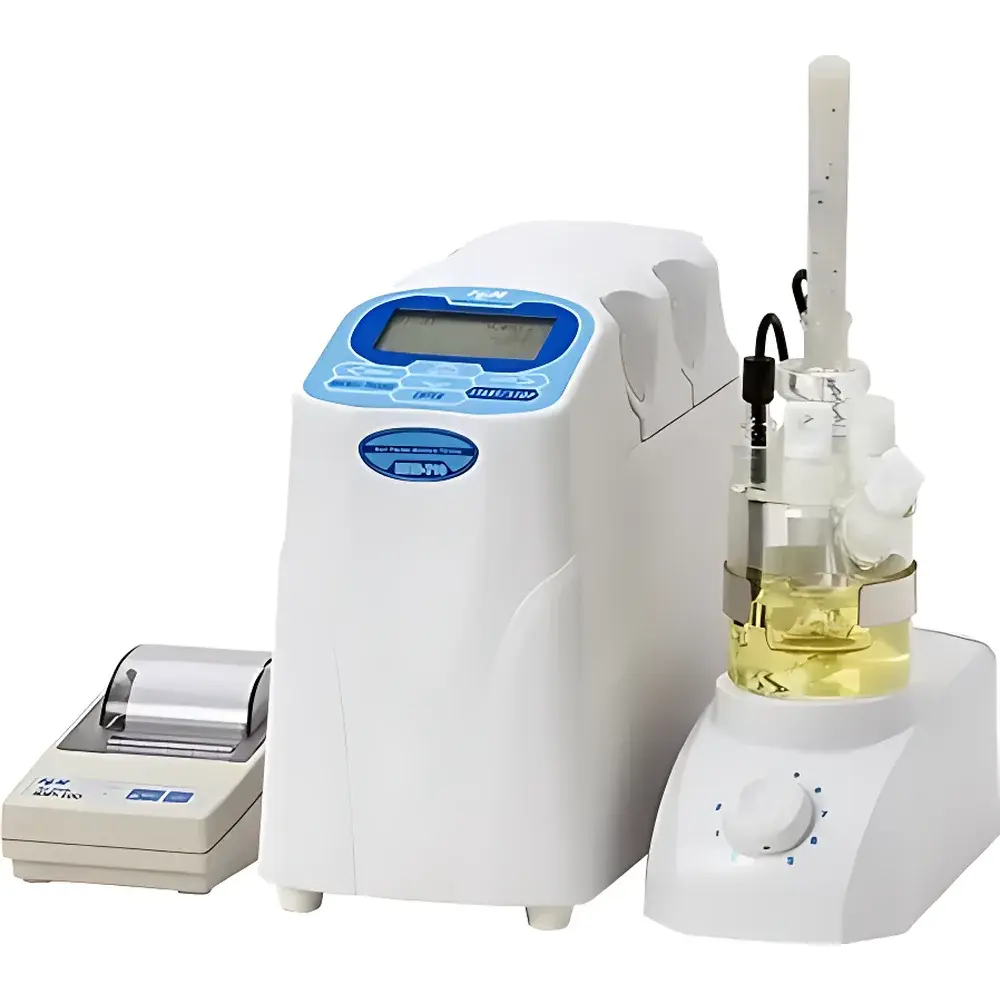
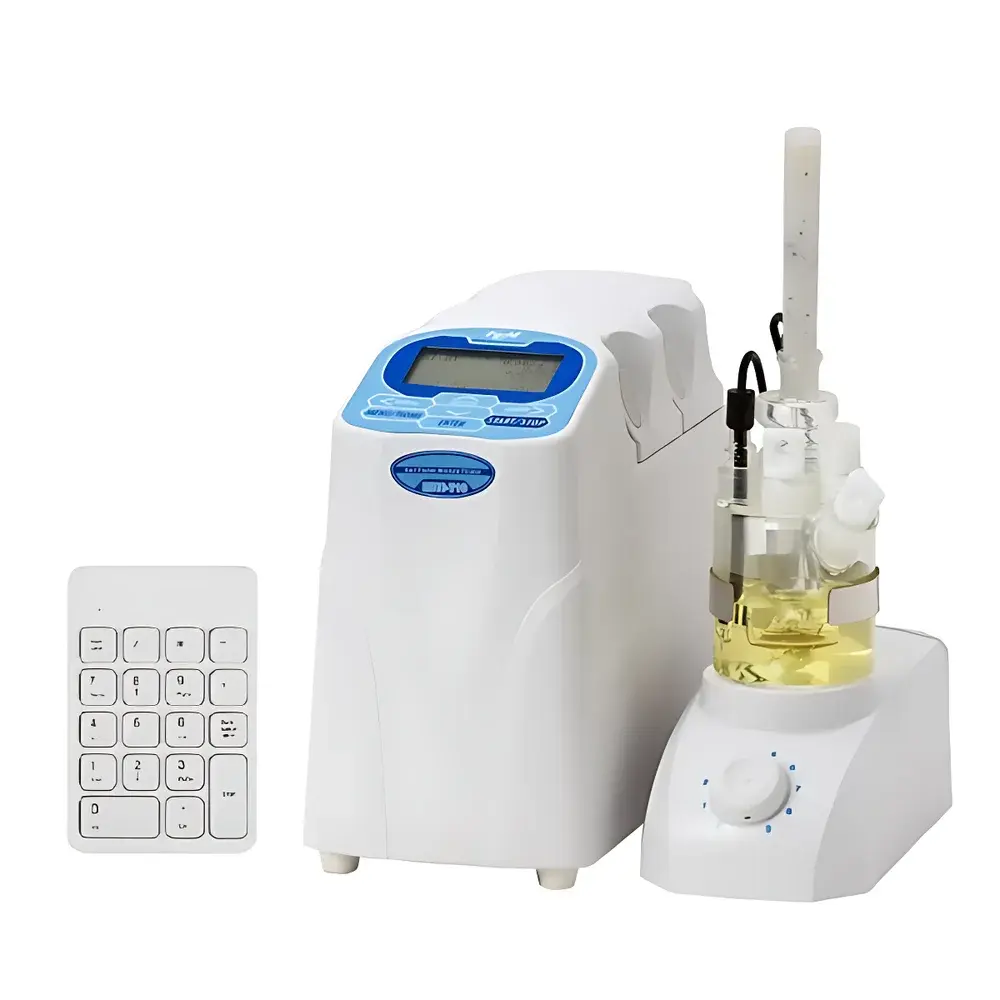
KEM MKC-710B Coulometric Karl Fischer Moisture Titrator
| Brand | KEM (Kyoto Electronics Manufacturing) |
|---|---|
| Origin | Japan |
| Manufacturer Type | Original Equipment Manufacturer (OEM) |
| Product Category | Imported Instrument |
| Model | MKC-710B |
| Titration Mode | Fully Automated Coulometric Titration |
| Instrument Type | Coulometric Karl Fischer Moisture Analyzer |
| Measurement Resolution | 0.1 µg |
| Water Content Range | 1 µg – 300 mg H₂O (equivalent to 100 ppb – 100% w/w) |
| Accuracy | ≤ 0.3% RSD (n = 10, per ASTM E1064 & GB/T 26793-2011) |
| Minimum Dosing Resolution | 0.1 µg |
| Titration Control Precision | ±0.3% of set current pulse duration |
Overview
The KEM MKC-710B Coulometric Karl Fischer Moisture Titrator is a high-precision, fully automated analytical instrument engineered for trace-level water quantification in organic solvents, pharmaceuticals, petrochemicals, polymers, and electrochemical materials. It operates on the fundamental principle of coulometric Karl Fischer titration—where iodine (I₂) is electrogenerated in situ at the anode via controlled electrolysis of iodide ions (I⁻), and reacts stoichiometrically with water according to the classic Karls Fischer reaction: H₂O + I₂ + SO₂ + 3C₅H₅N → 2C₅H₅N·HI + C₅H₅N·SO₃. The amount of water is determined by measuring the total charge (coulombs) required to generate the exact quantity of iodine consumed—applying Faraday’s law of electrolysis (1 mole H₂O ≡ 2 × 96,485 C). Unlike volumetric KF systems, the MKC-710B eliminates reagent calibration drift and delivers intrinsic accuracy through direct electrochemical quantification, making it ideal for samples containing <100 µg water or exhibiting low water solubility.
Key Features
- Compact benchtop footprint (A4-sized: 141 mm × 292 mm × 244 mm), optimized for space-constrained QC laboratories and regulated manufacturing environments.
- Intuitive dual-button operation: PRE-TITR. initiates solvent conditioning and background current stabilization; START triggers full coulometric analysis—minimizing operator training time and procedural variability.
- Dual-electrode architecture: Separate platinum measurement electrodes (AC polarization mode) and electrolysis electrodes ensure robust endpoint detection and stable baseline control—even in viscous or conductive matrices.
- Configurable dual-chamber electrolyte management: Independent adjustment of anolyte (up to 150 mL) and catholyte (5 mL) volumes enables extended runtime and method-specific optimization for low- or high-water-content samples.
- Integrated GLP-compliant data governance: Operator ID registration, group-based access control, reagent lot tracking, performance verification logs, and timestamped audit trails meet FDA 21 CFR Part 11 and ISO/IEC 17025 requirements.
- Real-time measurement speed up to 2.6 mg H₂O/min, supported by adaptive current-pulse control and drift-stabilized endpoint determination (user-selectable drift threshold or fixed-duration assay).
Sample Compatibility & Compliance
The MKC-710B accommodates a broad spectrum of sample types—including hygroscopic solids (e.g., APIs, excipients), volatile organics (e.g., acetone, THF), high-boiling solvents (e.g., DMF, NMP), and reactive intermediates—via sealed vial injection or direct syringe introduction into the dual-compartment cell. It supports both membrane-separated and membrane-free cell configurations, enabling method flexibility across ISO 8533, ASTM E1064, JIS K 0068, JIS K 0113, and GB/T 6324.8–2014. All firmware and data handling protocols conform to ICH Q2(R2) validation guidelines for analytical procedures, with built-in system suitability checks (e.g., blank current stability, repeatability of standard additions) documented in each PDF report.
Software & Data Management
Measurement results are stored internally (100 sample records) and exportable via USB to U-disk in native PDF format—including chromatogram-like current-time profiles, endpoint confirmation curves, statistical summaries (mean, SD, RSD), and GLP metadata. Optional KEM Data Collection Software (DCS) enables bidirectional RS-232 communication with analytical balances and external printers, and converts raw .kem files into editable Excel (.xlsx) or machine-readable CSV formats. The software supports batch reporting, trend analysis across multiple batches, and integration with LIMS via standardized ASCII output—ensuring seamless alignment with enterprise quality management systems (QMS) under GMP/GLP frameworks.
Applications
- Pharmaceutical QC: Residual moisture in lyophilized injectables, active pharmaceutical ingredients (APIs), and excipients per USP & Ph. Eur. monographs.
- Petrochemical testing: Water content in jet fuels (ASTM D6304), lubricants, and biodiesel blends where trace water impacts oxidation stability.
- Electrolyte formulation: Quantification of ppm-level water in Li-ion battery electrolytes (e.g., LiPF₆ in EC/DMC), where H₂O induces HF generation and cathode degradation.
- Polymers & composites: Moisture assessment in polyamide (PA6, PA66), polybutylene terephthalate (PBT), and epoxy resins prior to melt processing.
- Electronic chemicals: Ultra-trace water analysis in photoresist solvents, etchants, and cleaning agents used in semiconductor fabrication.
FAQ
What standards does the MKC-710B comply with for regulatory submissions?
It meets ASTM E1064, ISO 8533, JIS K 0068/K 0113, GB/T 26793–2011, and GB/T 6324.8–2014—fully supporting data integrity requirements under FDA 21 CFR Part 11 and EU Annex 11.
Can the MKC-710B be integrated with other KEM instruments?
Yes—it synchronizes seamlessly with the MCU-710 automatic sample changer for unattended multi-sample analysis, and interfaces with KEM’s DA-6xx series density meters for combined physical-chemical characterization.
Is method validation support available?
KEM provides IQ/OQ documentation templates, certified reference standards (e.g., 1.00 mg/g and 10.00 mg/g water-in-methanol standards), and application notes aligned with ICH Q2(R2) parameters (accuracy, precision, LOD/LOQ, linearity, robustness).
How is electrode maintenance handled in routine operation?
The dual-platinum electrode system requires only periodic cleaning with ethanol and ultrasonic bath treatment; no polishing or replacement is needed under normal use—verified by daily blank current monitoring (<1 µA typical).
Does the instrument support multi-language operation beyond English?
Yes—the LCD interface supports six languages: English, Chinese, Japanese, Korean, Russian, and Spanish—facilitating global deployment without software localization overhead.





