
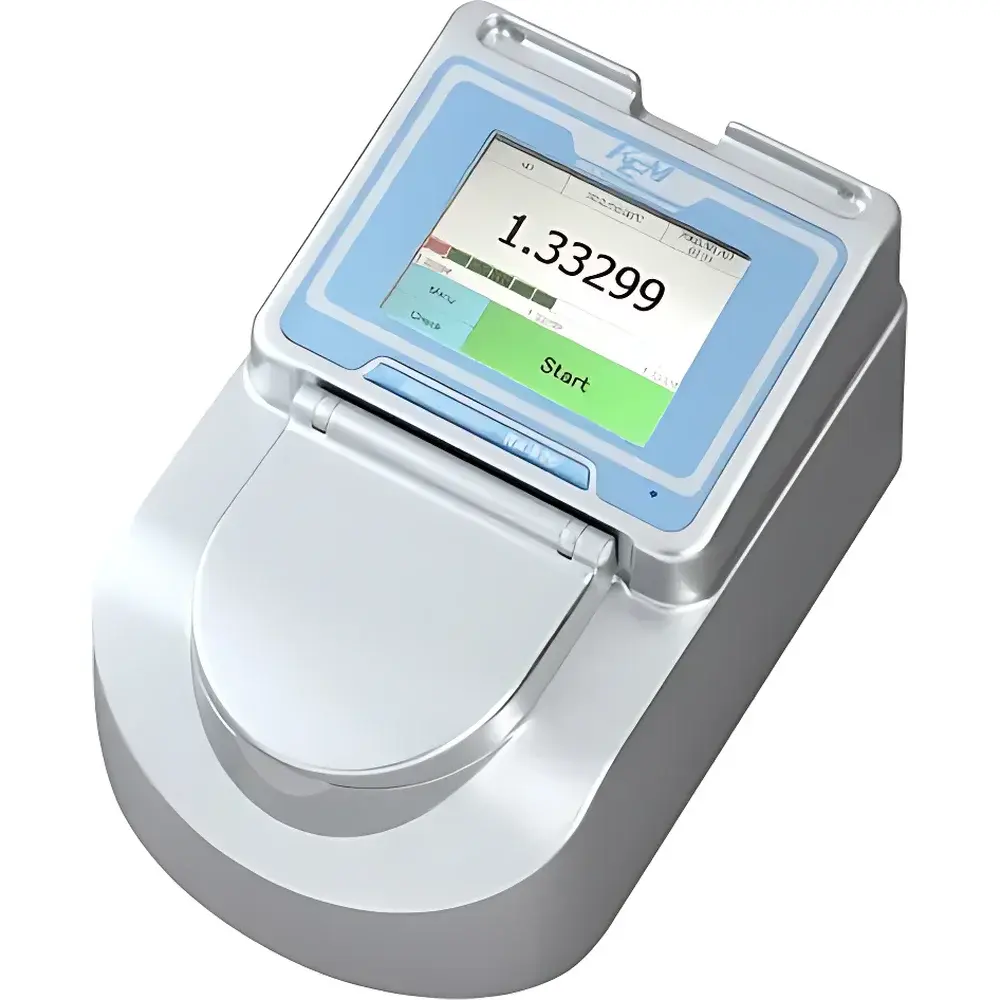
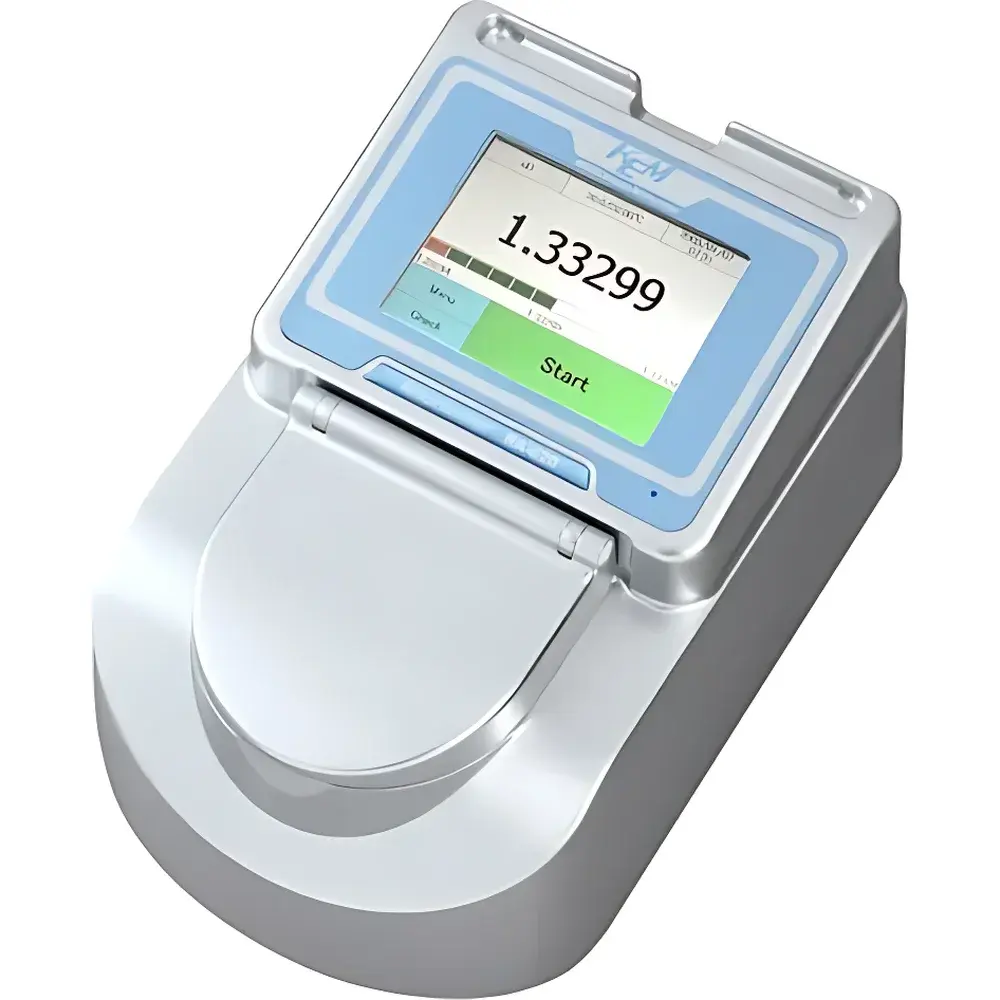
KEM RA-620/RA-600 Automatic Digital Refractometer for Petroleum Products (ASTM D1218 Compliant)
| Brand | KEM (Kyoto Electronics Manufacturing) |
|---|---|
| Origin | Japan |
| Manufacturer Type | Original Equipment Manufacturer (OEM) |
| Product Origin | Imported |
| Model | RA-620 / RA-600 |
| Price | Upon Request |
Overview
The KEM RA-620 and RA-600 Automatic Digital Refractometers are precision optical instruments engineered for the accurate, repeatable measurement of refractive index (nD) and related derived parameters—including concentration, hydrocarbon composition, and non-volatile content—in petroleum products, lubricants, fuels, insulating oils, and related hydrocarbon liquids. Based on the critical-angle detection principle of total internal reflection, these instruments employ a monochromatic LED light source calibrated to the sodium D-line (589.3 nm), ensuring metrological traceability and compliance with ASTM D1218–21, ASTM D1747–09(2019), ASTM D5006–25, and multiple ISO, GB/T, SH/T, and NB/SH/T standards. Designed for laboratory and quality control environments, the RA-series refractometers integrate Peltier-based temperature control, sapphire prism optics, and digital signal processing to deliver high reproducibility across diverse sample matrices—from volatile naphthas to viscous base oils—without requiring manual calibration or lamp replacement.
Key Features
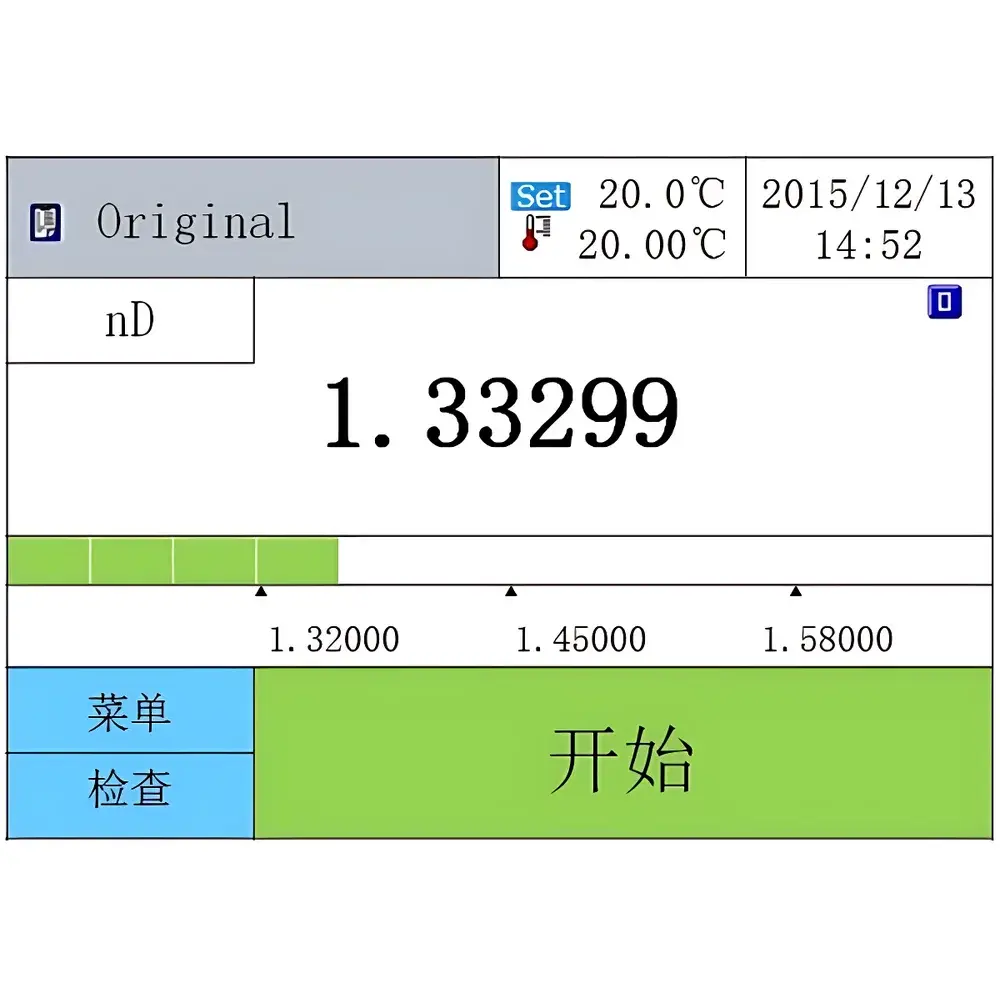
- High-resolution digital display (4.7-inch color LCD) with intuitive touch-screen interface supporting multilingual operation (English, Chinese, Japanese)
- Integrated Peltier thermoelectric module enabling precise temperature control from 5 °C to 75 °C (RA-600 optionally extends to 100 °C) with resolution of 0.01 °C (RA-620) or 0.1 °C (RA-600)
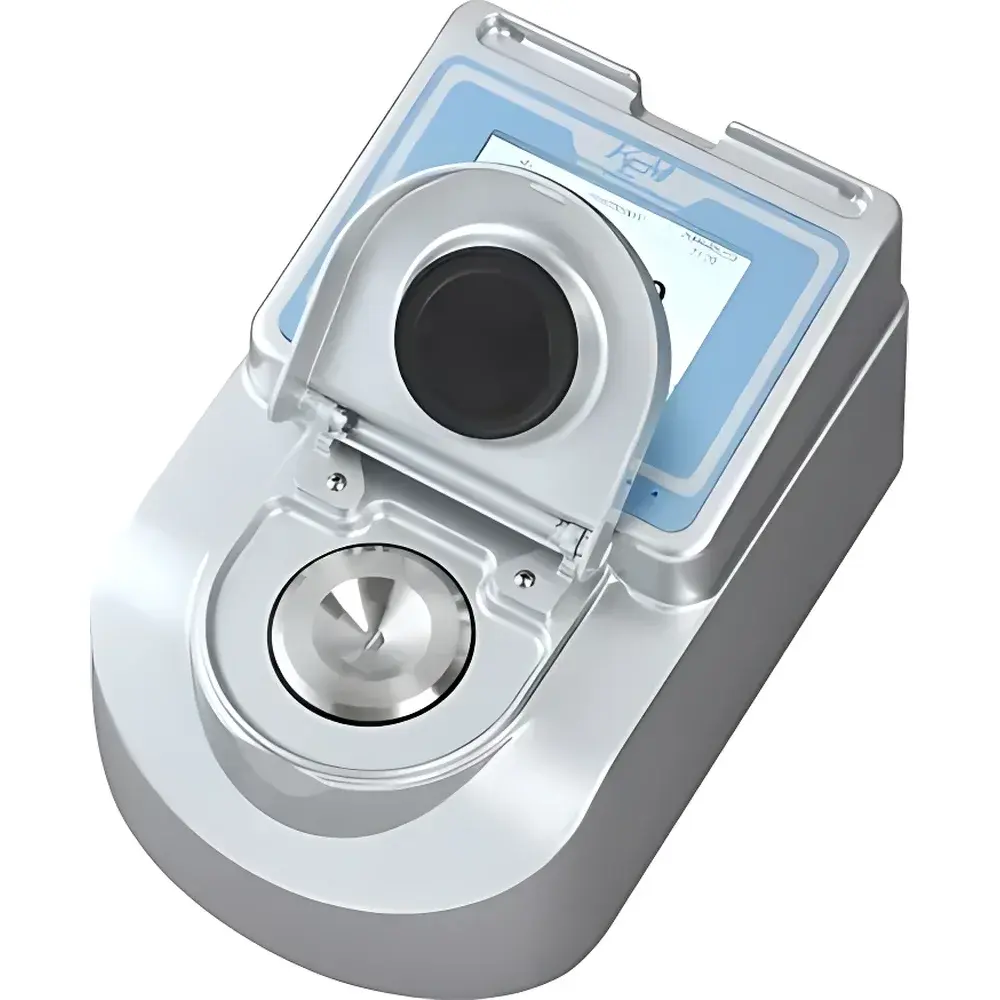
- Optical path built around a wear-resistant sapphire measuring prism and SUS316 stainless steel sample stage, ensuring long-term stability and chemical compatibility with aggressive hydrocarbons and solvents
- LED-based illumination at 589.3 nm (D-line), eliminating spectral drift and lamp aging concerns associated with halogen or sodium vapor sources
- Automated refractive index–temperature compensation using user-defined or preloaded nD/T lookup tables per ASTM D1218 Annex A1
- Concentration conversion capability via customizable nD–% w/w correlation tables (e.g., for Brix, hydrocarbon fractions, or PCA content per NB/SH/T 0838)
- Volatility-suppressing hinged cover minimizes evaporation artifacts during analysis of low-boiling-point samples such as aviation fuel or naphtha
- GLP-compliant data handling: full audit trail for measurements, calibration events, and system checks; timestamped storage of up to 1,000 results internally
Sample Compatibility & Compliance
The RA-620/RA-600 accommodates liquid hydrocarbon samples with viscosities ranging from 100 cSt (e.g., unused lubricant base stocks), requiring only 0.2 mL per measurement. Its sapphire prism and stainless-steel contact surfaces resist corrosion from aromatic solvents, chlorinated compounds, and sulfur-containing distillates. The instrument meets the physical and procedural requirements of ASTM D1218 (hydrocarbon liquids), ASTM D1747 (viscous materials), ASTM D5006 (aviation fuel FSI quantification), and SH/T 0724 (refractive dispersion in liquid hydrocarbons). It supports regulatory workflows aligned with ISO/IEC 17025, USP , and FDA 21 CFR Part 11 when connected to validated LIMS or electronic lab notebook (ELN) systems via LAN or RS-232C.
Software & Data Management
Data export is supported via USB mass storage mode, LAN (TCP/IP), or RS-232C serial interface, enabling seamless integration into enterprise QA/QC platforms. Internal memory retains measurement metadata—including sample ID, operator ID, temperature setpoint, measured nD, calculated concentration, and calibration status—with automatic time/date stamping. All system events (e.g., zero calibration, temperature stabilization confirmation, error logs) are recorded in a tamper-evident format compliant with GLP documentation requirements. Optional PC software (KEM WinCT-Refracto) provides advanced reporting, statistical process control (SPC) charting, and batch-level trend analysis for routine QC monitoring.
Applications
- Quantitative determination of saturates, naphthenes, and aromatics (S–n–A) in petroleum fractions using nD-based n-d-M correlations (SH/T 0729)
- PCA (polycyclic aromatic compound) screening in base oils via DMSO extract refractive index (NB/SH/T 0838)
- Verification of aviation fuel composition and FSI (fuel system icing inhibitor) concentration (ASTM D5006)
- Refractive dispersion profiling for hydrocarbon structural group analysis (ASTM D1218 Annex A2)
- Non-volatile solids estimation in specialty fluids (e.g., floor polishes, hydraulic fluids) per ASTM D4095
- Quality release testing of electrical insulating oils, transformer fluids, and heat transfer media
- Batch-to-batch consistency verification for refinery intermediates and finished products
FAQ
What standards does the RA-620/RA-600 explicitly support?
ASTM D1218–21, D1747–09(2019), D5006–25, D4095–97(2020), SH/T 0724, SH/T 0205 (withdrawn but referenced for legacy data), GB/T 6488–2022, GB/T 614–2021, and NB/SH/T 0838–2010.
Is temperature control mandatory for ASTM D1218 compliance?
Yes—ASTM D1218 specifies measurement at 20 °C ± 0.1 °C; the Peltier-controlled thermal regulation ensures strict adherence to this requirement.
Can the instrument measure highly volatile samples without error?
Yes—the included anti-evaporation cover, combined with rapid (<10 s) measurement cycle and temperature-stabilized prism surface, mitigates refractive index drift caused by surface cooling or compositional change.
How is calibration traceability maintained?
Calibration uses NIST-traceable certified reference materials (e.g., water, bromonaphthalene); all calibration events—including date, standard used, deviation, and operator—are logged with digital signatures in accordance with GLP.
What is the minimum sample volume required?
0.2 mL—sufficient for single-point analysis of precious or limited-availability refinery samples.





