
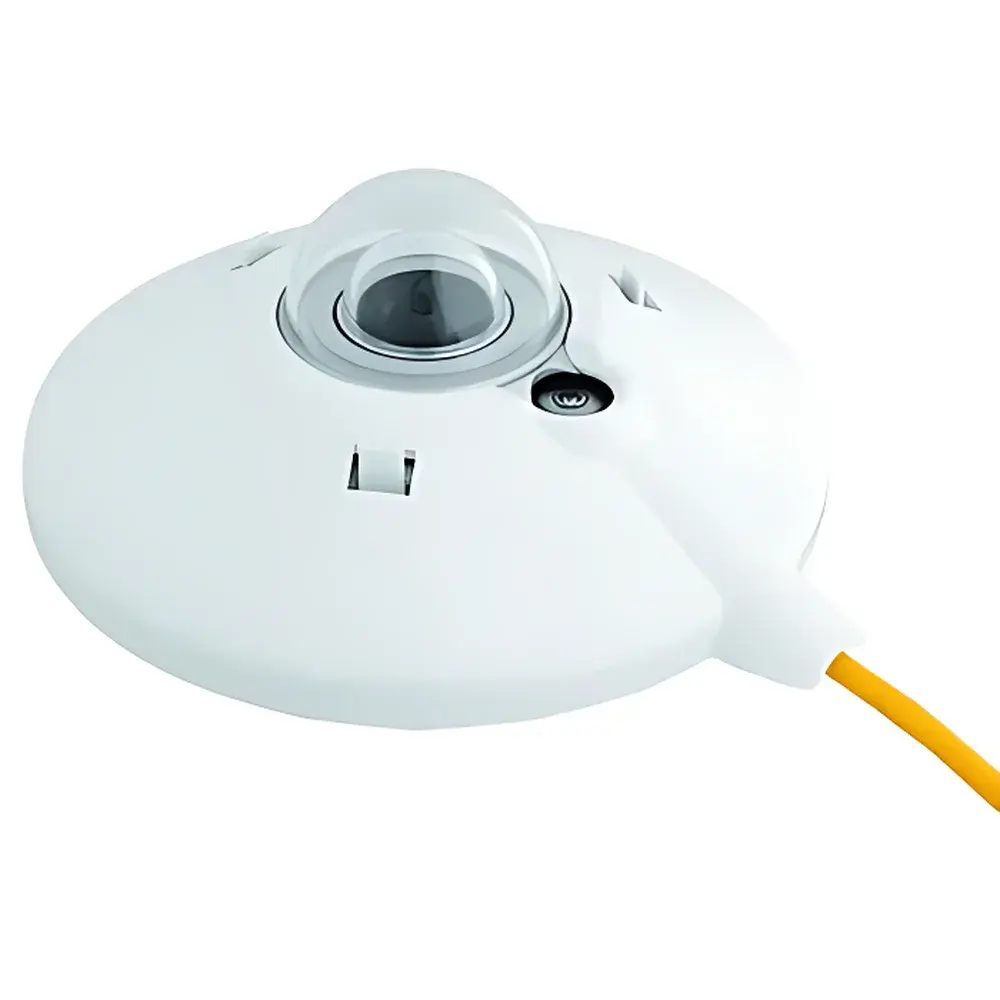
Kipp & Zonen CMP Series Shortwave Radiation Sensor
| Brand | Kipp & Zonen |
|---|---|
| Origin | Netherlands (manufactured in Vlaardingen) |
| Model | CMP3 / CMP6 / CMP11 / CMP21 / CMP22 |
| ISO 9078 Classification | Secondary Standard (CMP3, CMP11, CMP21, CMP22), First Class (CMP6) |
| Response Time (95%) | 18 s (CMP3/CMP6), 5 s (CMP11/CMP21/CMP22) |
| Thermal Offset (200 W/m²) | ±15 to ±3 W/m² |
| Temperature Offset (5 K/h) | ±5 to ±1 W/m² |
| Long-term Stability (annual) | ±1% to ±0.5% |
| Non-linearity (0–1000 W/m²) | ±2.5% to ±0.2% |
| Directional Error (80°, 1000 W/m²) | ±20 to ±5 W/m² |
| Spectral Range (50% points) | 310–2800 nm (CMP3/CMP6), 200–3600 nm (CMP11/CMP21/CMP22) |
| Max. Irradiance | 2000 W/m² (CMP3/CMP6/CMP11), 4000 W/m² (CMP21/CMP22) |
| Sensitivity | 5–20 µV/(W/m²) (CMP3), 7–14 µV/(W/m²) (CMP6/CMP11/CMP21/CMP22) |
| Output Signal | 0–15 mV |
| Operating Temperature | −40 to +80 °C |
| Tilt Accuracy | ±3% to ±0.2% |
| Leveling Accuracy | 1° (CMP3), 0.5° (CMP6/CMP11), 0.1° (CMP21/CMP22) |
| Optional Cable Lengths | 10 m (standard), 25 m, 50 m |
| Optional Temperature Sensor | 10 kΩ thermistor or PT-100 (CMP21/CMP22) |
Overview
The Kipp & Zonen CMP Series Shortwave Radiation Sensors are thermopile-based pyranometers engineered for precise measurement of global solar irradiance across the shortwave spectrum (typically 300–3000 nm, extended to 200–3600 nm in higher-tier models). These instruments operate on the principle of thermal detection: incident radiation is absorbed by a blackened thermopile junction, generating a voltage proportional to the temperature gradient between the hot and cold junctions. This analog output—linear, drift-resistant, and inherently stable—enables traceable, calibration-maintainable measurements compliant with the World Meteorological Organization (WMO) Guide to Instruments and Methods of Observation and ISO 9060:2018 classification standards. The CMP family comprises five distinct models—CMP3, CMP6, CMP11, CMP21, and CMP22—each optimized for specific performance tiers: from routine meteorological monitoring to high-stability research-grade networks requiring long-term reproducibility under variable environmental stressors.
Key Features
- Thermopile detector architecture with black-coated absorber surface ensuring spectrally flat response and minimal angular dependence
- Hermetically sealed housing with quartz or precision-ground optical glass domes (model-dependent), providing IP67-rated environmental protection and submersion capability (CMP3 certified for underwater operation)
- Integrated temperature compensation circuitry (passive in CMP11; active, independently calibrated in CMP21/CMP22) minimizing thermal offset errors across wide ambient ranges (−20 to +50 °C)
- Optimized dome geometry and internal thermal mass design reducing response time to 5 seconds (95% rise time) in CMP11 and above
- High-precision leveling base with integrated bubble vial (accuracy: 0.1° in CMP21/CMP22; 0.5° in CMP6/CMP11; 1° in CMP3) enabling accurate cosine-corrected irradiance integration
- Standard 10-meter low-noise shielded cable with BNC or LEMO connector; optional 25 m and 50 m lengths available for remote installation
- Optional integrated temperature sensing via 10 kΩ thermistor or PT-100 RTD (CMP21/CMP22), supporting simultaneous irradiance and ambient temperature logging per IEC 61724-1:2021 requirements
Sample Compatibility & Compliance
The CMP Series is designed for continuous outdoor deployment in uncontrolled environments—including desert, alpine, marine, and agricultural settings—without degradation in metrological integrity. All models meet ISO 9060:2018 classification criteria: CMP6 is designated First Class; CMP3, CMP11, CMP21, and CMP22 are Secondary Standard. Each sensor ships with individual calibration certificate traceable to the World Radiometric Reference (WRR) maintained at PMOD/WRC, Davos. The series supports compliance with key international observational frameworks: WMO No. 8 (Guide to Meteorological Instruments), ASTM E892 (Standard Test Method for Spectral Match of Solar Simulators), and IEC 61724-1 (Photovoltaic system performance monitoring). For regulated environments, data acquisition systems interfacing with CMP sensors may be configured to satisfy FDA 21 CFR Part 11 audit trail requirements when paired with validated software platforms.
Software & Data Management
Kipp & Zonen provides the free Solys 2 Configuration Tool and the enterprise-grade MeteoView software suite for configuration, real-time visualization, and post-processing of CMP sensor data. Raw mV outputs are converted to W/m² using model-specific sensitivity coefficients (e.g., 12.5 µV/(W/m²) for CMP21), with automatic temperature compensation applied where enabled. MeteoView supports automated QC flagging per WMO guidelines—including detection of dew/frost contamination, excessive tilt deviation (>1°), and signal saturation beyond 4000 W/m². Export formats include CSV, NetCDF, and CF-compliant metadata structures suitable for ingestion into FAO Penman-Monteith evapotranspiration models or PVsyst energy yield simulations. Calibration history, maintenance logs, and sensor-level uncertainty budgets (k=2) are stored within the instrument’s embedded memory and retrievable via serial command protocol.
Applications
- Meteorological observatories and national weather service networks requiring multi-year stability and inter-site comparability
- Agricultural research stations measuring photosynthetically active radiation (PAR) proxies and calculating crop water use efficiency (WUE)
- Solar resource assessment for utility-scale photovoltaic site feasibility studies (IEC 61724-1 Class A compliance)
- Material testing laboratories evaluating spectral reflectance and solar absorptance of coatings, glazings, and façade systems
- Climatology field campaigns requiring ruggedized instrumentation capable of operation in extreme cold (−40 °C) or high-irradiance desert conditions (up to 4000 W/m²)
- Ecosystem flux towers integrating shortwave irradiance with eddy covariance CO₂/H₂O measurements for net ecosystem exchange modeling
FAQ
What is the difference between ISO 9060:2018 “Secondary Standard” and “First Class” classifications?
Secondary Standard pyranometers exhibit lower thermal offset, directional error, and non-linearity than First Class devices, making them suitable for reference stations and calibration transfer. First Class (e.g., CMP6) offers enhanced thermal mass for reduced diurnal drift but retains slightly higher uncertainty in fast-changing irradiance conditions.
Can CMP sensors measure PAR directly?
No—they measure broadband shortwave irradiance (200–3600 nm). PAR (400–700 nm) must be derived via spectral weighting or co-located quantum sensor validation; Kipp & Zonen recommends pairing CMP21/CMP22 with a PQS 1 PAR Quantum Sensor for dual-parameter agronomic studies.
Is recalibration required, and how often?
Kipp & Zonen recommends recalibration every two years for research-grade applications (CMP11 and above) and every three years for operational networks (CMP3/CMP6), following WMO best practices and ISO/IEC 17025-accredited laboratories.
Do CMP sensors require desiccant replacement or dome cleaning?
Yes. The internal desiccant cartridge should be inspected annually and replaced if discolored; optical domes require bi-weekly cleaning in dusty environments using lens-grade tissue and isopropanol to maintain cosine response fidelity.
Are CMP sensors compatible with Campbell Scientific, Delta-T, or HOBO data loggers?
Yes—all models output a passive mV signal compatible with any high-impedance differential analog input channel. Kipp & Zonen provides detailed wiring schematics and scaling equations for CR1000X, DL6, and U30-series loggers in Application Note AN-012.






