
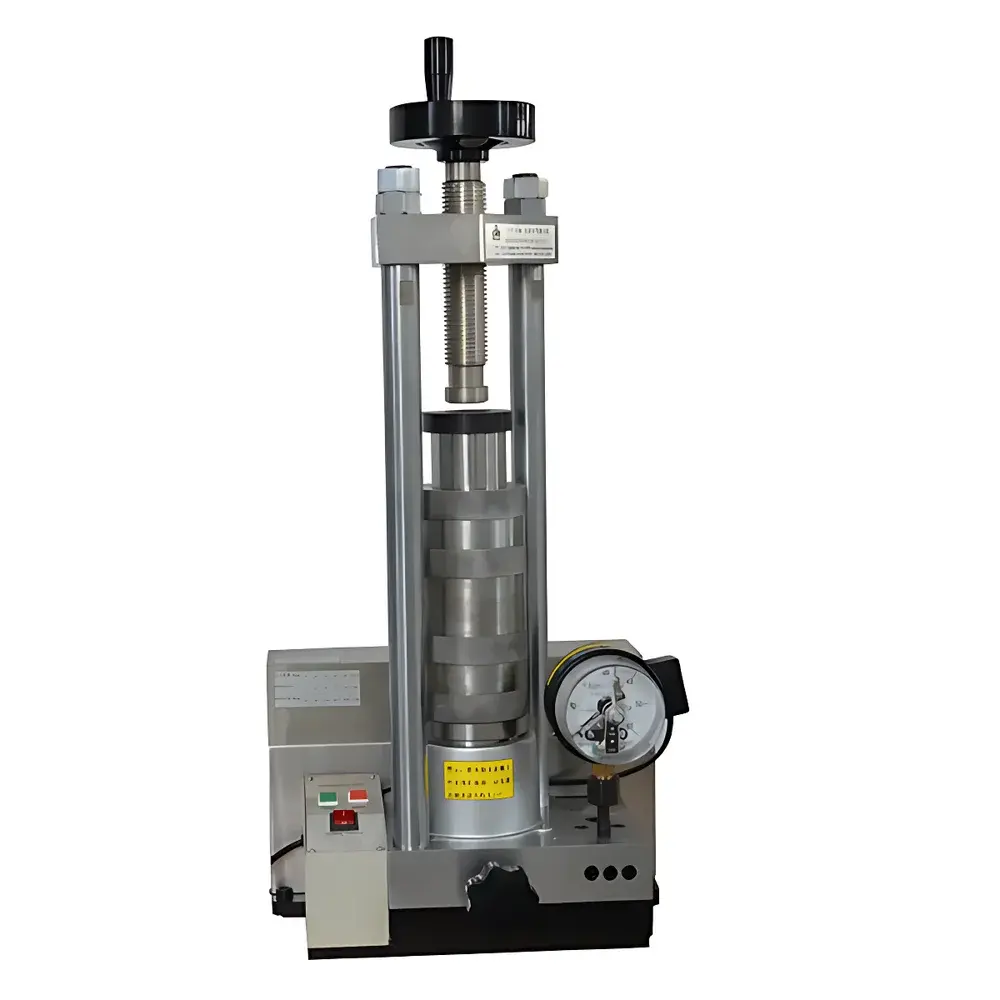
KJ GROUP CIP Series Miniature Isostatic Press
| Brand | KJ GROUP |
|---|---|
| Origin | Liaoning, China |
| Manufacturer Type | Authorized Distributor |
| Country of Origin | China |
| Model | CIP-22M / CIP-30M / CIP-50M |
| Instrument Type | Manual Isostatic Press |
| Maximum Hydraulic Force | 15 T / 24 T / 60 T |
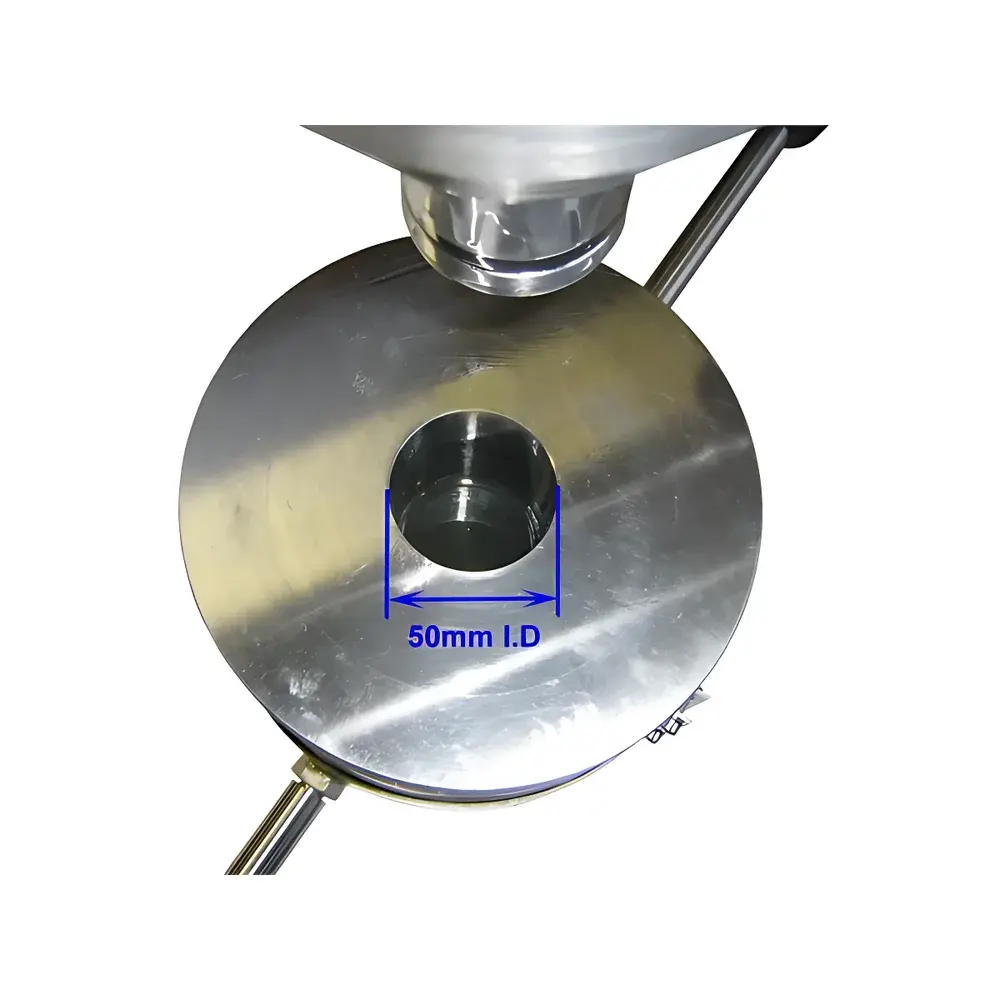
| Isostatic Chamber Dimensions | Ø22 mm × 70 mm / Ø30 mm × 110 mm / Ø50 mm × 150 mm |
| Maximum Chamber Pressure | 300 MPa (customizable to 400–500 MPa upon request) |
| Pressure Gauge Range | 20 MPa / 35 MPa / 40 MPa |
| Operating Ambient Temperature | 10–40 °C |
| Net Weight | 40 kg / 100 kg / 150 kg |
| Dimensions (W×D×H) | 260×160×550 mm / 260×240×650 mm / 450×350×860 mm |
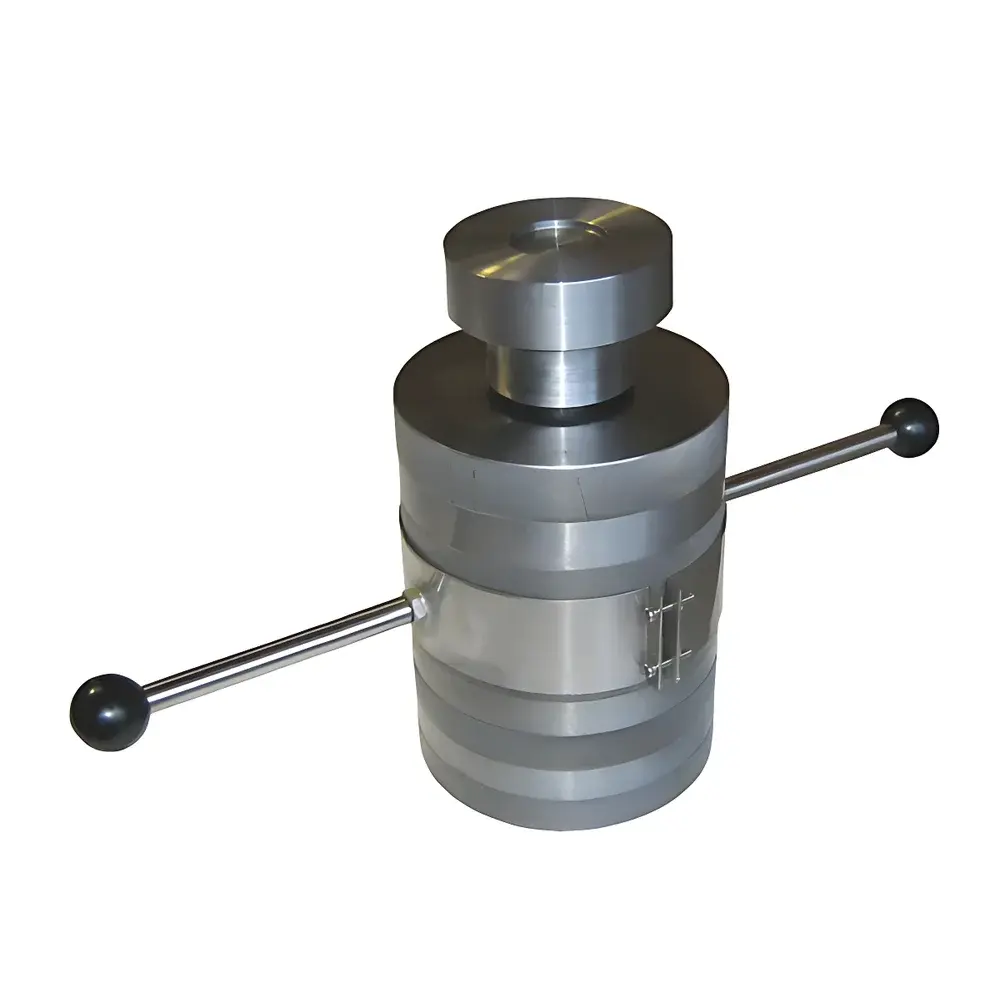
| Standard Accessories | 1 set of dedicated tooling |
| Optional Upgrade | Electric actuation system available on request |
Overview
The KJ GROUP CIP Series Miniature Isostatic Press is a manually operated cold isostatic pressing (CIP) system engineered for precision densification of small-volume powder specimens under uniform hydrostatic pressure. Unlike uniaxial pressing, which applies force along a single axis and introduces density gradients, the CIP Series utilizes an incompressible fluid medium—typically hydraulic oil or silicone-based fluid—to transmit pressure equally in all directions (Pascal’s principle). This isotropic compression ensures homogeneous green density distribution, minimal internal stress, and superior geometric fidelity in pressed compacts. Designed specifically for academic laboratories and R&D centers, the system supports early-stage materials development where reproducible, low-volume sample preparation is critical—particularly for ceramic, carbide, nitride, and composite powder systems requiring controlled microstructural evolution prior to sintering.
Key Features
- Compact benchtop footprint optimized for space-constrained university labs and analytical core facilities
- Three scalable configurations (CIP-22M, CIP-30M, CIP-50M) accommodating specimen diameters from Ø22 mm to Ø50 mm and heights up to 150 mm
- Manually actuated hydraulic intensifier with calibrated pressure gauge and dual-stage safety relief valve
- Stainless steel isostatic chamber with O-ring sealed closure, rated for continuous operation at ≤300 MPa (certified per ISO 9001 manufacturing protocols)
- Robust structural frame constructed from high-tensile steel alloy with vibration-damped base plate for long-term mechanical stability
- Integrated pressure-hold function enabling dwell times from 30 seconds to 30 minutes without operator intervention
- Tooling compatibility with standard die sets for cylindrical, disc, and annular geometries—fully interchangeable across model variants
Sample Compatibility & Compliance
The CIP Series accommodates a broad range of inorganic and composite powders including alumina, zirconia, silicon carbide, tungsten carbide-cobalt blends, ferrites, and polymer-bonded ceramics. It supports both dry and slurry-based loading methods, with chamber dimensions permitting direct placement of pre-assembled green bodies or encapsulated powder-filled molds. All models comply with ISO 13350:2012 (Cold Isostatic Pressing — Terminology and General Requirements) and meet mechanical safety requirements outlined in EN 692:2005+A1:2009 (Mechanical Presses). Pressure calibration certificates traceable to NIM (National Institute of Metrology, China) are provided with each unit. For GLP/GMP-aligned workflows, optional documentation packages include equipment qualification templates (IQ/OQ) and raw data logs compatible with 21 CFR Part 11-compliant electronic record systems.
Software & Data Management
While the base configuration operates via manual pressure control, optional digital instrumentation kits enable analog-to-digital conversion of pressure transducer output (0–5 V or 4–20 mA signal), allowing real-time logging via third-party DAQ software (e.g., LabVIEW, MATLAB, or custom Python scripts). The electric upgrade option includes a programmable logic controller (PLC) with preset pressure ramps, dwell timing, and automatic depressurization sequences—supporting repeatable process parameter archiving and audit-ready export (CSV/Excel). All firmware adheres to IEC 61131-3 standards, and system diagnostics report fault codes aligned with ISO 13849-1 PLr classification.
Applications
- Pre-sintering densification of research-scale ceramic and hardmetal compacts for XRD, SEM, and dilatometry analysis
- Manufacture of standardized reference pellets for XRF and LIBS calibration
- Consolidation of nanocomposite powders where shear-induced particle alignment must be avoided
- Development of gradient porosity structures using layered powder packing techniques
- Prototyping of solid-state battery electrode architectures with binder-free active material compaction
- Validation of powder rheology models by correlating green density with applied isostatic pressure (via Archimedes’ principle measurement)
FAQ
What is the maximum recommended operating pressure for routine use?
The standard operational limit is 300 MPa; exceeding this requires factory recalibration and chamber integrity verification.
Can the system be integrated into an inert atmosphere glovebox?
Yes—the CIP-22M and CIP-30M models fit within standard 1200 mm wide gloveboxes; external hydraulic lines may be routed through feedthroughs with compatible sealing.
Is tooling included for non-cylindrical geometries?
Standard tooling supports only cylindrical compacts; custom dies for rectangular or toroidal shapes are available under separate quotation.
Does the unit support vacuum-assisted loading?
Vacuum de-airing is not built-in but can be implemented externally using a vacuum chamber prior to chamber insertion.
What maintenance intervals are recommended for hydraulic fluid and seals?
Hydraulic oil should be replaced every 1,500 operating hours or biannually; O-rings require inspection and replacement after 500 press cycles or annually, whichever occurs first.



