
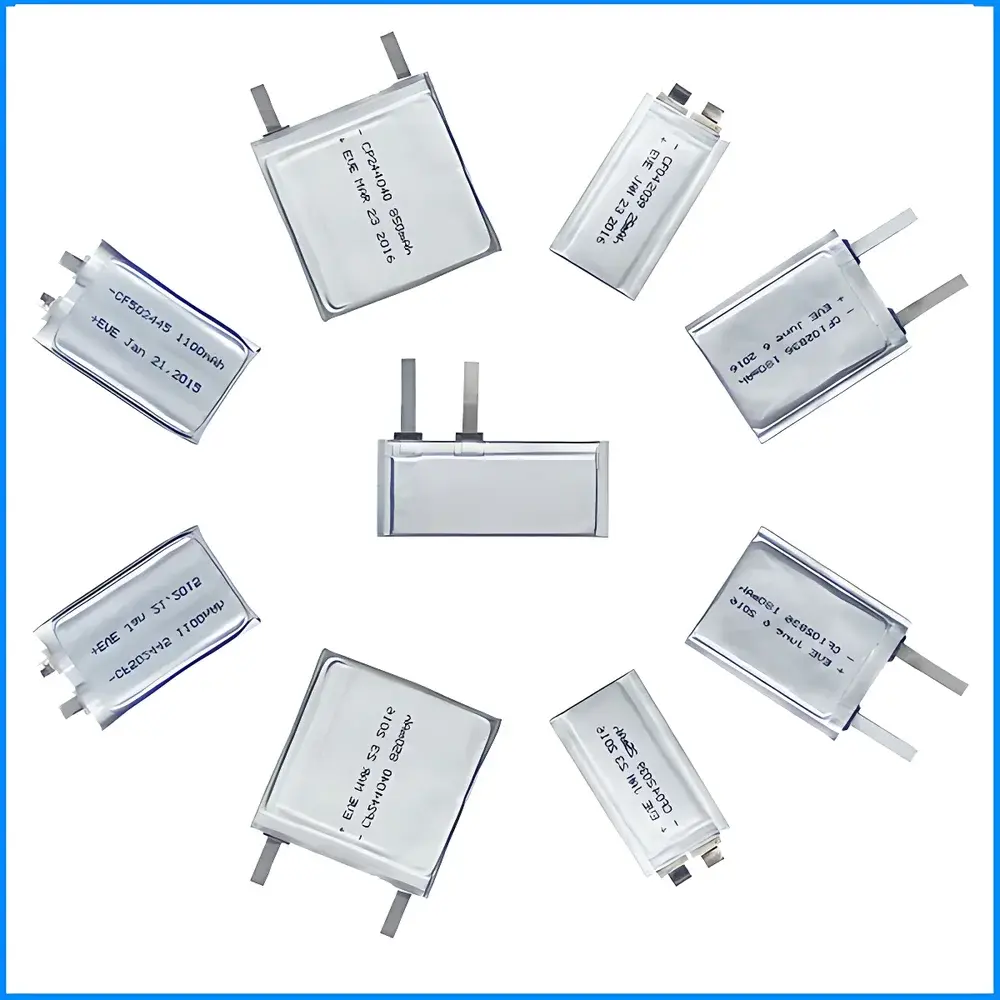
KJ GROUP Pouch Cell Laboratory Research System
| Brand | KJ GROUP |
|---|---|
| Origin | Liaoning, China |
| Manufacturer Type | Authorized Distributor |
| Country of Origin | China |
| Model | Pouch Cell Laboratory Research System |
| Pricing | Available Upon Request |
Overview
The KJ GROUP Pouch Cell Laboratory Research System is a fully integrated, modular platform engineered for reproducible, scalable development of lithium-ion polymer pouch cells in academic laboratories, R&D centers, and pilot-scale battery prototyping facilities. Unlike cylindrical or prismatic formats, pouch cells utilize flexible aluminum-laminated foil packaging—enabling higher volumetric and gravimetric energy density, customizable form factors, and reduced mechanical constraints during electrochemical cycling. This system implements standardized, sequential unit operations aligned with industrial cell manufacturing workflows: electrode slurry formulation and rheological characterization, coated electrode fabrication and calendering, stack assembly (via stacking or winding), tab welding, vacuum drying, electrolyte filling and sealing under inert atmosphere, and electrochemical validation. The architecture supports full traceability across process steps and is designed to meet the foundational requirements of GLP-compliant battery research—ensuring data integrity, operator safety, and alignment with ISO 17025–aligned laboratory practices.
Key Features
- Modular workflow integration: Dedicated stations for slurry preparation (vacuum mixer, viscosity analyzer, filtration unit), electrode coating & drying (slot-die or doctor blade coater with convection oven), calendering (precision roll press with force feedback), stack assembly (manual stacking jig or semi-automated winding module), tab welding (ultrasonic spot welder with impedance monitoring), vacuum drying (programmable vacuum oven ≤10⁻³ mbar), and glovebox-integrated cell assembly (dual-atmosphere N₂/Ar glovebox with integrated vacuum filling station and pre-sealing unit).
- Material compatibility: Supports aqueous and NMP-based slurries; compatible with LiCoO₂, NMC, LFP, silicon-carbon composites, graphite anodes, and ceramic-coated polyolefin separators.
- Process control & repeatability: Digital PID temperature controllers on ovens and dryers; programmable vacuum profiles for drying and degassing; calibrated torque settings on calendering rolls; real-time current/voltage monitoring during formation cycling.
- Safety engineering: Integrated gas detection (O₂/H₂), emergency purge protocols, explosion-proof electrical enclosures, and interlocked glovebox access doors compliant with IEC 61000-6-4 EMC standards.
- Scalability pathway: Equipment dimensions and throughput parameters align with DOE’s Battery Manufacturing Roadmap Stage 1 (lab-to-pilot transition), enabling direct correlation between small-format pouch data (e.g., 50 × 80 mm) and larger prototype cells.
Sample Compatibility & Compliance
The system accommodates standard pouch cell formats ranging from 30 × 50 mm to 120 × 200 mm, supporting both single-layer and multi-layer stacks up to 10 Ah nominal capacity. All wet-process modules (mixing, coating, drying) are constructed from 316L stainless steel and electropolished surfaces to prevent metal ion contamination—critical for high-nickel cathode development. The glovebox environment maintains O₂ and H₂O levels <0.1 ppm, satisfying ASTM D1922 and USP environmental control guidelines for electrochemical testing. Vacuum drying parameters comply with ISO 12100:2010 risk assessment protocols for thermal processing equipment.
Software & Data Management
Each instrument module includes native control software with USB/Ethernet connectivity and optional OPC UA integration for centralized lab data acquisition. The system supports CSV export of time-stamped process logs (temperature, vacuum pressure, torque, current, voltage), enabling linkage to LIMS or ELN platforms. Formation cycling data adheres to IEEE 1625–2019 metadata tagging conventions. Audit trails—including user login, parameter changes, and calibration events—are retained for ≥36 months, meeting FDA 21 CFR Part 11 electronic record requirements when deployed in regulated environments.
Applications
- Electrode formulation optimization: Slurry rheology mapping (viscosity vs. shear rate), binder distribution analysis, and solid loading effect studies.
- Interface engineering: Solid-electrolyte interphase (SEI) stability evaluation under controlled formation protocols.
- Degradation mechanism studies: Correlating calendaring pressure, porosity, and tortuosity (via post-mortem SEM/CT) with cycle life and impedance growth.
- Novel chemistry validation: Safe screening of lithium metal anodes, sulfur cathodes, and solid-state composite electrolytes in pouch format.
- Process–performance modeling: Generating empirical datasets for digital twin development in battery manufacturing simulation frameworks (e.g., COMSOL Multiphysics® coupling with experimental boundary conditions).
FAQ
Does this system support solid-state electrolyte integration?
Yes—compatible with slurry-cast sulfide/oxide composite electrolytes and dry-film lamination via heated roll press (optional upgrade).
Can the glovebox accommodate coin-cell assembly alongside pouch workflows?
Yes—the chamber volume and port configuration allow concurrent operation of CR2032 crimping stations and pouch sealing tools.
Is calibration documentation provided for all metrology-critical instruments?
Yes—NIST-traceable calibration certificates are included for viscometers, thickness gauges, and four-point probe conductivity meters.
What level of technical support is available outside China?
KJ GROUP partners with regional service hubs in Germany, South Korea, and the USA offering remote diagnostics, on-site commissioning, and ISO/IEC 17025–accredited calibration services.
Are SOP templates included for GLP-aligned reporting?
Yes—system-supplied documentation includes editable SOPs for electrode coating QC, formation cycling, and failure mode logging, aligned with ICH M7 and ISO 14001 environmental management frameworks.



