
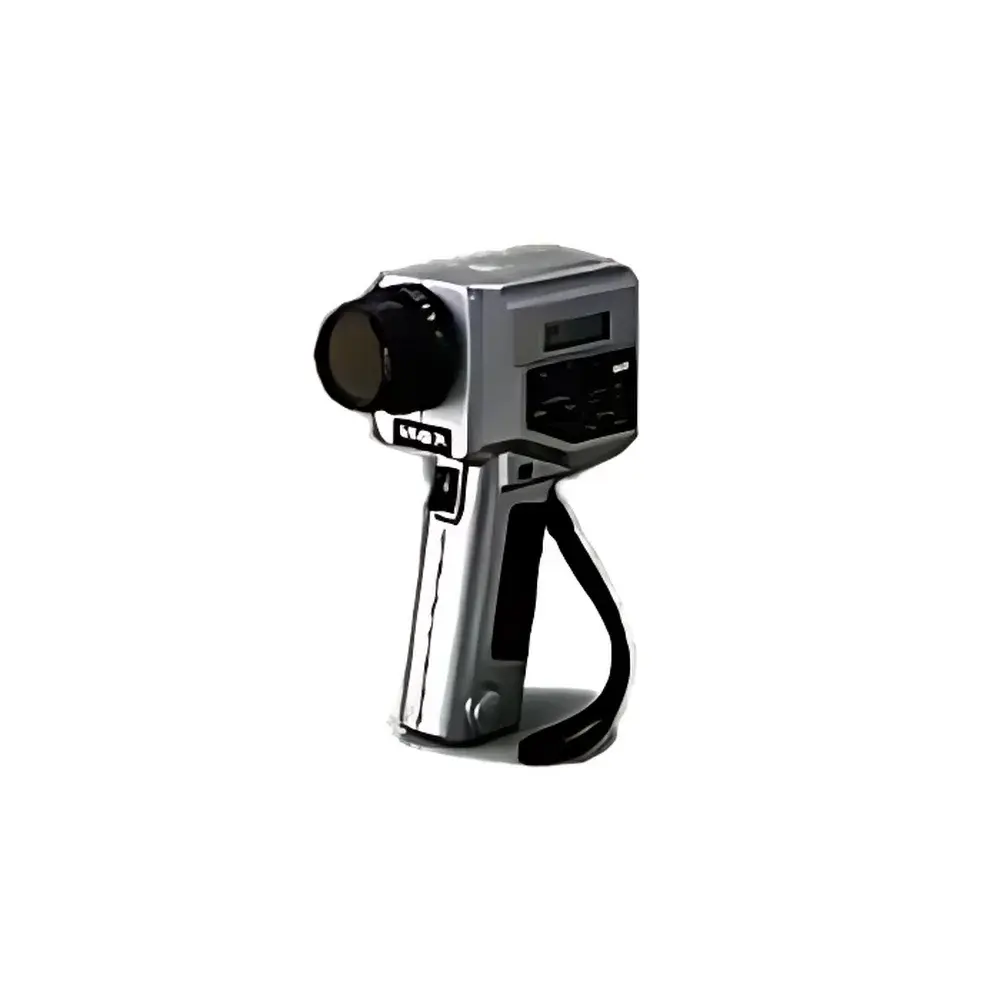
Konica Minolta LS-100 / LS-110 Luminance Meter
| Origin | Japan |
|---|---|
| Manufacturer Type | Authorized Distributor |
| Origin Category | Imported |
| Model | LS-100 / LS-110 |
| Pricing | Available Upon Request |
| Measurement Angle | 1° (LS-100) / 0.33° (LS-110) |
| Optical System | 85 mm f/2.8 SLR Lens with Stray Light Suppression <1.5% |
| Minimum Measurable Area | Φ14.4 mm (LS-100) / Φ4.8 mm (LS-110) |
| Spectral Response Compliance | Within ±8% f₁′ error vs. CIE Photopic Luminosity Function (V(λ)) |
| Sensor | Silicon Photodiode |
| Luminance Units | cd/m² or foot-lambert (fL), selectable |
| Measurement Range (FAST) | 0.001–299,900 cd/m² (LS-100) / 0.01–999,900 cd/m² (LS-110) |
| Measurement Range (SLOW) | 0.001–49,990 cd/m² (LS-100) / 0.01–499,900 cd/m² (LS-110) |
| Accuracy | ±2% ± digit (A-source, 20–30°C) |
| Repeatability | ±0.2% ± digit (A-source) |
| Operating Temp. | 0–40°C, RH ≤85% (non-condensing) |
| Power | 9 V alkaline battery (typ. 16 mA during measurement) |
| Dimensions | 79 × 208 × 150 mm |
| Weight | 850 g (excl. battery) |
Overview
The Konica Minolta LS-100 and LS-110 are precision handheld luminance meters engineered for photometric measurement of surface and source luminance under laboratory, industrial, and field conditions. Based on the fundamental principle of photometric brightness measurement—quantifying luminous intensity per unit projected area (cd/m²)—these instruments employ a calibrated silicon photodiode sensor aligned with the CIE 1931 standard photopic luminosity function V(λ). Their single-lens reflex (SLR) optical architecture enables direct visual targeting and high-fidelity spatial resolution, minimizing stray light interference (<1.5%) through optimized lens baffling and spectral filtering. The LS-100 features a 1° field-of-view (FOV), while the LS-110 offers enhanced spatial discrimination with a 1/3° FOV—corresponding to minimum measurable spot diameters of Φ14.4 mm and Φ4.8 mm at 1 m, respectively. Both models support dual luminance units (cd/m² and fL), FAST/SLOW integration modes, and real-time display of instantaneous, peak, or ratio-based luminance values—making them suitable for evaluating emissive displays (OLED, LED, CRT), transportation signage, architectural lighting, and R&D validation protocols requiring traceable photometric data.
Key Features
- True SLR optical path with 85 mm f/2.8 lens ensures accurate visual alignment and minimal parallax error during targeted measurements.
- Stray light suppression <1.5% achieved via internal baffle design and anti-reflection coatings—critical for high-contrast environments such as tunnel lighting or aviation signage assessment.
- Two field-of-view options: LS-100 (1°) for general-purpose surface luminance; LS-110 (1/3°) for micro-area evaluation of small LEDs, pixel elements, or high-resolution displays.
- Configurable measurement modes: luminance (cd/m² or fL), luminance ratio (e.g., uniformity analysis), and peak luminance capture—enabling compliance verification against ISO/CIE lighting standards.
- Calibration flexibility: supports Konica Minolta factory calibration reference or user-defined standard, with programmable color correction factor (0.001–9.999) for non-standard spectral emitters.
- Integrated RS-232C interface (4800 bps) enables automated data logging, external trigger control, and integration into QC workflows compliant with GLP/GMP documentation requirements.
Sample Compatibility & Compliance
The LS-100/LS-110 is validated for measuring luminance across diverse emissive and reflective surfaces—including self-luminous devices (LED panels, OLED screens, EL backlights), retroreflective traffic signs, illuminated airport runway markings, roadway luminaires, and outdoor advertising displays. Its spectral response conforms to the CIE V(λ) curve within an f₁′ error margin of ±8%, satisfying the metrological basis required by ISO/CIE 11664-1:2019 (Colorimetry – Part 1: CIE Standard Colorimetric Observers) and ASTM E1316 (Standard Terminology for Nondestructive Examinations). While not inherently FDA 21 CFR Part 11–compliant, its audit-trail-capable data export (via RS-232C) supports integration into validated systems where electronic records must meet ALCOA+ principles (Attributable, Legible, Contemporaneous, Original, Accurate). Operating temperature range (0–40°C) and humidity tolerance (≤85% RH, non-condensing) align with IEC 60529 IP20 environmental classification for indoor and sheltered outdoor use.
Software & Data Management
No proprietary software is bundled with the LS-100/LS-110; however, its RS-232C serial output permits seamless integration with third-party data acquisition platforms—including LabVIEW, MATLAB, or custom Python-based scripts—using standard ASCII protocol commands. Each measurement transmission includes timestamp (if externally synchronized), luminance value, unit designation, mode identifier (INST/PEAK/RATIO), and status flags. Battery-powered operation (9 V alkaline, ~16 mA active draw) ensures uninterrupted field deployment without dependency on AC infrastructure. Internal memory is not present; all data must be captured in real time via host system—supporting traceability frameworks where raw instrument outputs are archived alongside operator ID, location metadata, and calibration certificate references.
Applications
- Display manufacturing QA: luminance uniformity mapping of LCD/OLED modules, pixel-level brightness grading, and Mura defect detection.
- Transportation safety compliance: photometric verification of railway signal lamps, airport taxiway edge lights, and highway variable message signs per ICAO Annex 14 or EN 12899-1.
- Architectural lighting design: in-situ luminance assessment of façade lighting, interior ambient fixtures, and emergency exit signage against EN 12464-1 illumination requirements.
- R&D laboratories: characterization of novel light sources (micro-LEDs, quantum dot emitters), spectral power distribution cross-validation, and human factors studies involving mesopic vision thresholds.
- Regulatory testing: preparation of technical dossiers for CE marking, ENERGY STAR certification, or DLC Qualified Products List submissions requiring luminance reporting in cd/m².
FAQ
What is the difference between LS-100 and LS-110?
The LS-110 features a narrower 1/3° measurement angle versus the LS-100’s 1°, enabling higher spatial resolution for smaller targets—ideal for micro-LED arrays or fine-pitch display evaluation.
Can the LS-100/LS-110 measure luminance of non-Lambertian surfaces?
Yes, but results require application-specific geometric correction; the instrument assumes ideal diffuse emission unless compensated using the programmable color correction factor.
Is NIST-traceable calibration available?
Konica Minolta provides factory calibration traceable to JCSS (Japan Calibration Service System), which maintains mutual recognition agreements with NIST under the ILAC MRA framework.
Does the device support averaging over multiple readings?
No—averaging must be performed externally via host software; the meter outputs discrete instantaneous or peak values only.
How often should recalibration be performed?
Annual recalibration is recommended for ISO/IEC 17025–accredited labs; frequency may increase under heavy field use or after mechanical shock exposure.





