
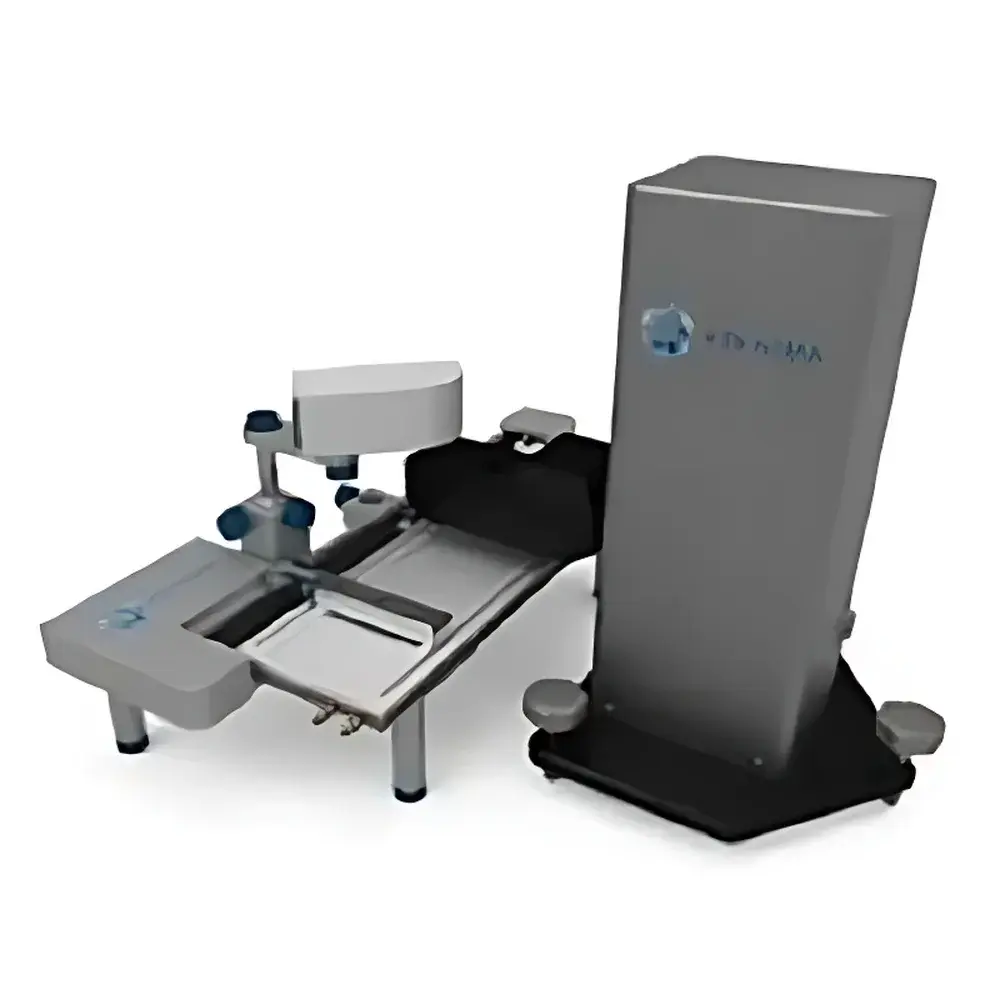
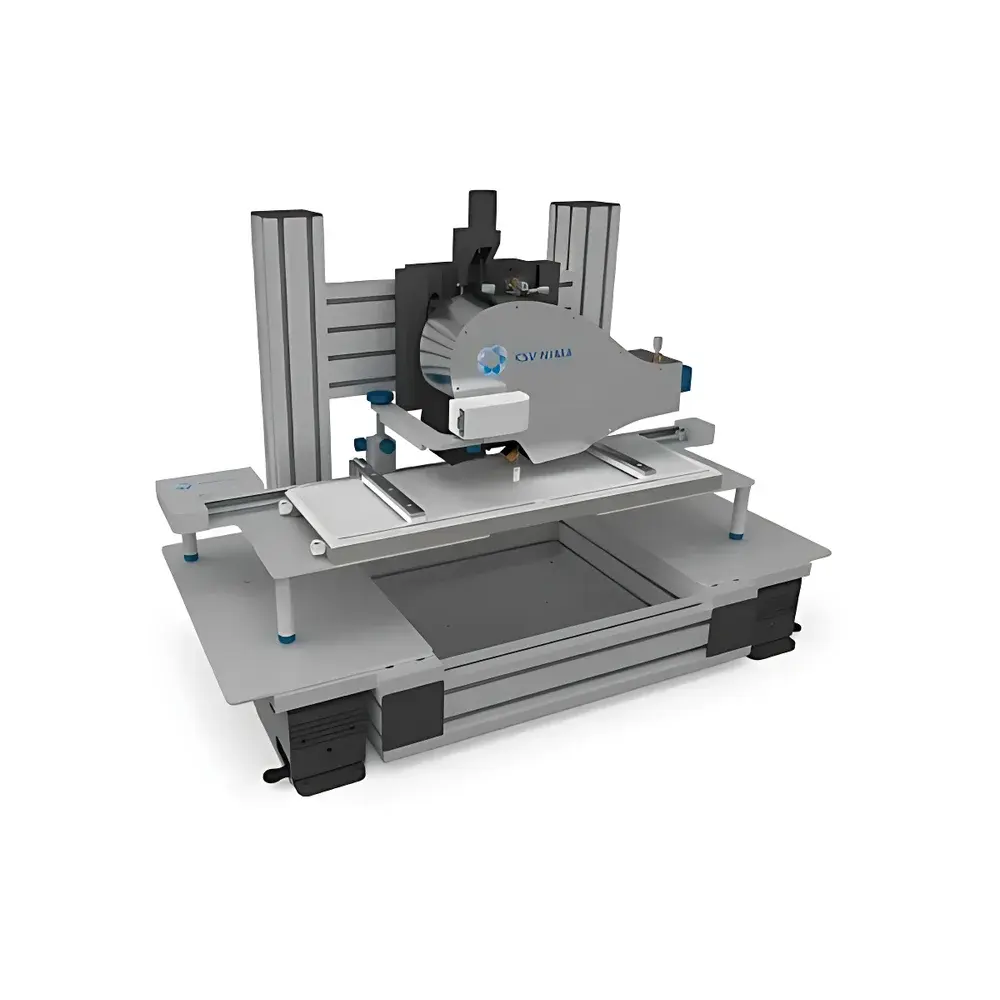
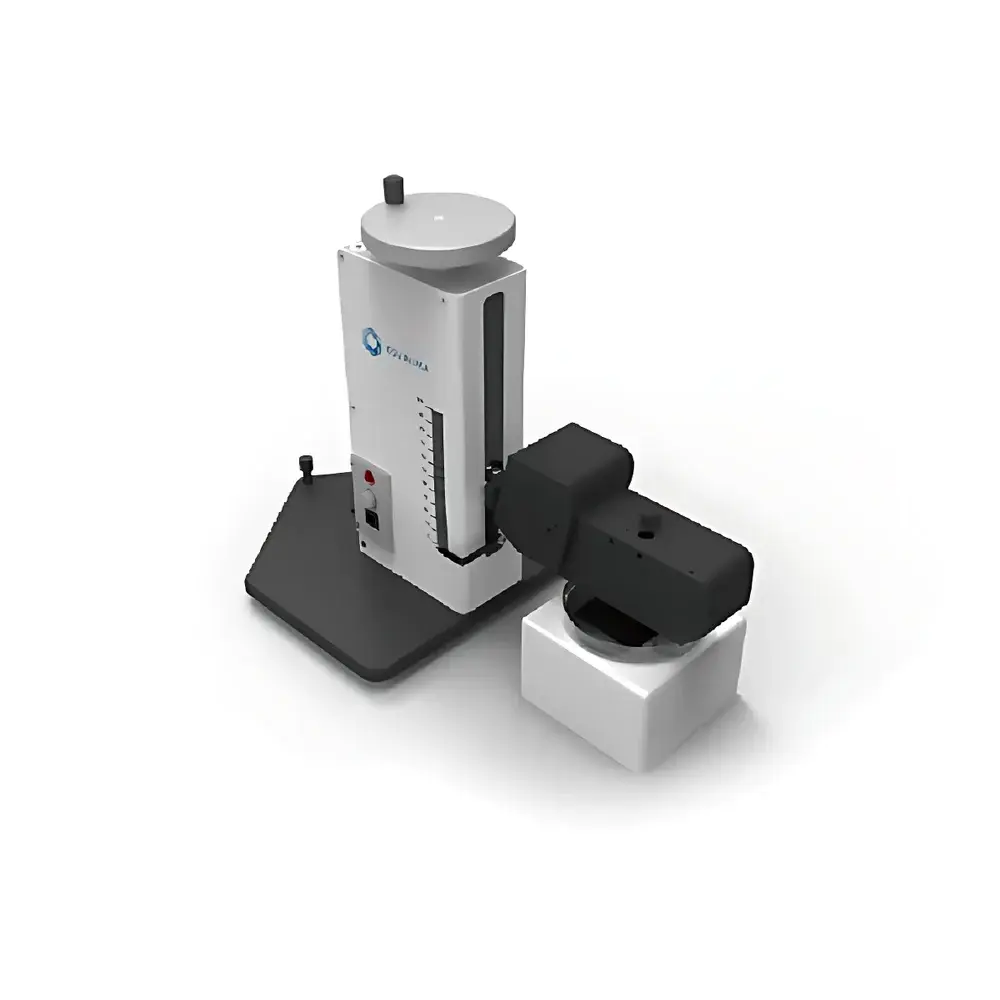
KSV NIMA MicroBAM Standalone Brewster Angle Microscope
| Brand | KSV NIMA |
|---|---|
| Origin | Finland |
| Manufacturer Type | Original Equipment Manufacturer (OEM) |
| Origin Category | Imported Instrument |
| Model | MicroBAM |
| Price Range | USD 2,800 – 7,000 |
Overview
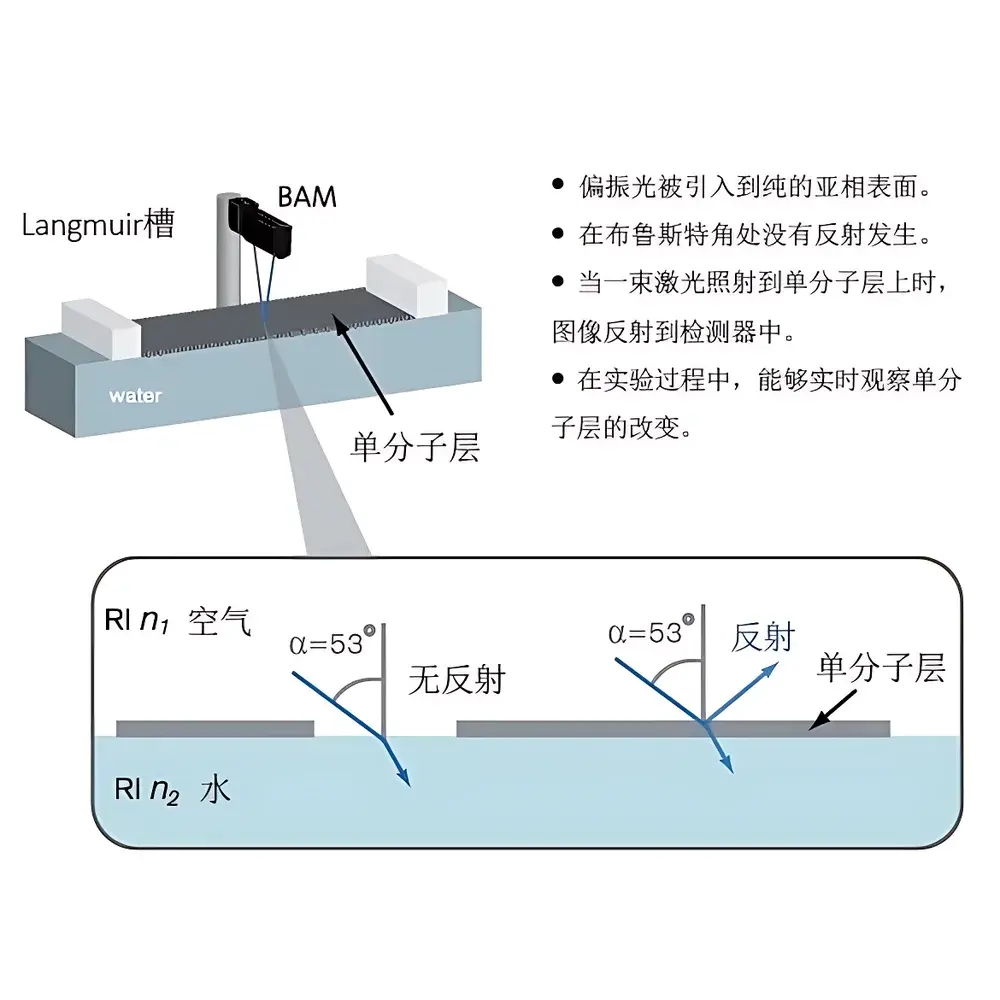
The KSV NIMA MicroBAM Standalone Brewster Angle Microscope is a precision optical instrument engineered for non-invasive, label-free visualization and quantitative analysis of monolayers at air–liquid interfaces. It operates on the fundamental principle of Brewster angle reflectivity: when p-polarized light impinges on a dielectric interface—such as air–water—at the Brewster angle (≈53° for air/water), reflectance from the bare interface vanishes. Any molecular adsorption or film formation alters local refractive index contrast, inducing measurable reflected intensity proportional to surface density, molecular orientation, and domain morphology. Unlike fluorescence or interference-based techniques, BAM imposes no photobleaching, labeling requirements, or substrate constraints—making it ideal for studying native biomolecular films, amphiphilic polymers, nanoparticle monolayers, and responsive surfactant systems under physiologically relevant subphase conditions.
Key Features
- Standalone compact design with minimal footprint (W × D × H: 280 × 220 × 310 mm), enabling rapid deployment on standard lab benches or integration into existing Langmuir trough setups.
- Motorized angular adjustment (52°–57°) for precise alignment across diverse dielectric interfaces—including air–water, air–buffer, air–organic solvent, and air–glass/quartz substrates—supporting comparative interfacial studies.
- Dual-resolution imaging capability: high-fidelity real-time video capture at up to 35 fps with 2 µm lateral resolution (full-focus mode); entry-level configuration delivers robust 12 µm resolution optimized for routine uniformity and phase-behavior assessment.
- Integrated active vibration damping system mitigates environmental perturbations (e.g., HVAC airflow, footfall), ensuring stable optical path integrity during long-duration compression–expansion cycles.
- USB 3.0 interface with native Windows driver support (Windows XP through Windows 10); no external frame grabber or proprietary hardware required.
- Real-time background subtraction and auto-exposure control enable reproducible quantitative reflectivity mapping without manual recalibration between experiments.
- Interlock-enabled laser safety system compliant with IEC 60825-1 Class 1 requirements; physical key switch prevents unauthorized operation.
Sample Compatibility & Compliance
The MicroBAM is compatible with all standard KSV NIMA Langmuir and Langmuir–Blodgett troughs—including medium-, large-, and high-compression-ratio configurations—as well as third-party troughs (e.g., Nima, Kibron, AppliPhys) and open-sample vessels (e.g., Petri dishes, custom cuvettes). Its non-contact nature permits in situ monitoring of dynamic processes under controlled subphase conditions: pH (2–12), ionic strength (0–500 mM NaCl/KCl), temperature (15–45 °C), and redox environment. Data acquisition supports GLP/GMP-aligned workflows via timestamped metadata embedding (date/time, operator ID, trough parameters, environmental logs). While not certified for FDA 21 CFR Part 11 compliance out-of-the-box, audit-trail functionality—including user-access logs and image version history—is fully configurable within the bundled software suite for regulated environments.
Software & Data Management
The included KSV NIMA BAM Studio software provides a unified platform for instrument control, live imaging, and advanced post-processing. Core capabilities include region-of-interest (ROI) selection with automated area/shape/contrast quantification; time-series reflectivity profiling synchronized with surface pressure (π–A) isotherms; anisotropy mapping via sequential angular scans; and batch export of calibrated TIFF/AVI files with embedded EXIF metadata. All image processing algorithms are traceable, with full parameter logging for method validation. Export formats comply with FAIR data principles (Findable, Accessible, Interoperable, Reusable), supporting direct import into MATLAB, Python (OpenCV, scikit-image), ImageJ/Fiji, and commercial data analysis packages (OriginPro, GraphPad Prism).
Applications
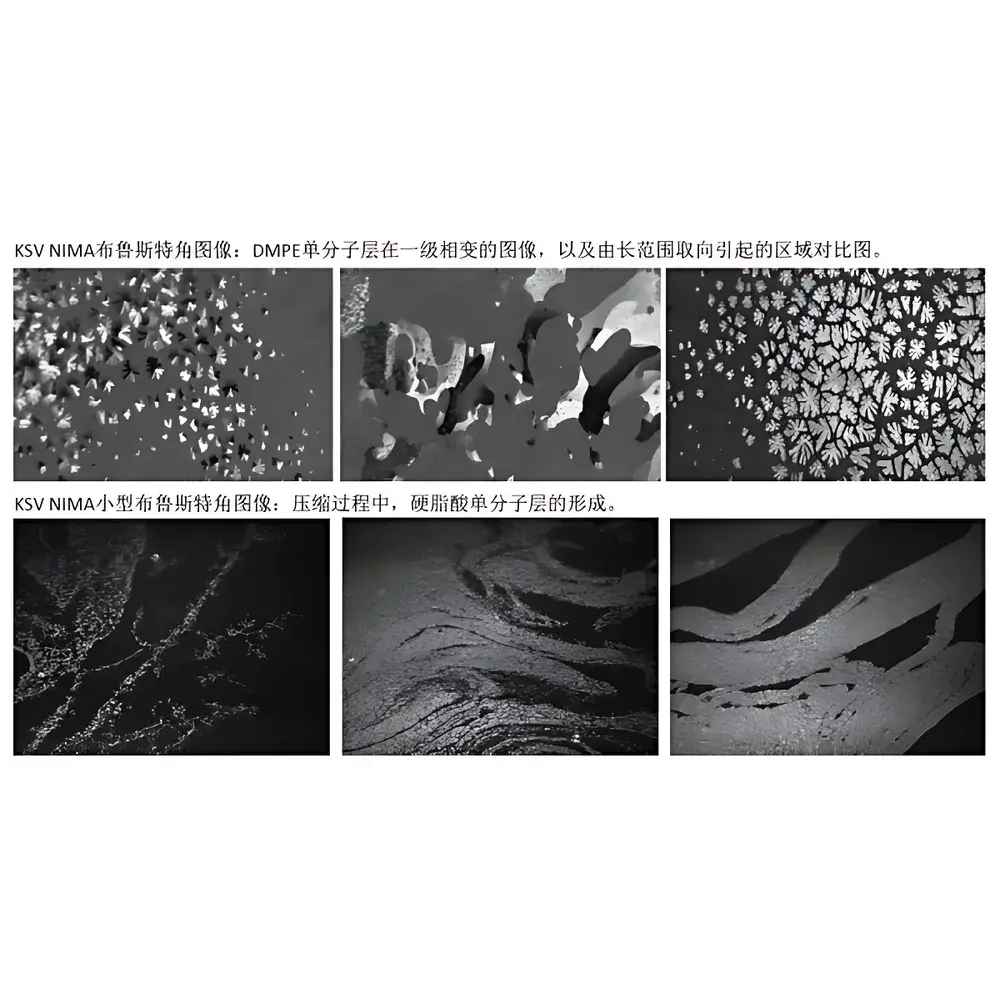
- Phase behavior analysis of lipid monolayers (e.g., DPPC, POPC) during compression, including domain nucleation, coalescence, and collapse mechanisms.
- Real-time tracking of protein adsorption kinetics (e.g., BSA, fibrinogen, lysozyme) and conformational reorganization at air–buffer interfaces.
- Characterization of polymer surfactants and stimuli-responsive amphiphiles under variable pH, salt, or temperature gradients.
- Monitoring photochemical crosslinking, enzymatic hydrolysis, or oxidative degradation at monolayer level with millisecond temporal resolution.
- Validation of Langmuir–Blodgett transfer fidelity by correlating pre-transfer BAM morphology with post-transfer AFM/XRR structural metrics.
- Screening colloidal stability and interfacial activity of functionalized nanoparticles (e.g., silica, gold, quantum dots) in biorelevant media.
FAQ
Can the MicroBAM be used with non-KSV Langmuir troughs?
Yes—its modular optical head mounts mechanically and optically to most commercially available troughs using standard kinematic rails or custom adapters. Synchronization with external pressure sensors is achieved via analog voltage input or digital TTL trigger signals.
Is quantitative thickness estimation possible?
While absolute thickness requires calibration against reference standards (e.g., ellipsometry), relative thickness changes and packing density gradients are quantitatively resolved via calibrated reflectivity mapping using the built-in calibration algorithm.
What is the minimum detectable surface coverage?
Under optimal conditions (clean subphase, low-noise camera gain), surface pressure shifts ≥0.1 mN/m correlate with detectable reflectivity contrast—corresponding to ~0.1–0.3 molecules/nm² for typical amphiphiles.
Does the system support multi-angle polarization analysis?
No—the MicroBAM uses fixed p-polarized illumination at tunable incidence angles. For full Mueller matrix characterization, a dedicated ellipsometric module is recommended as a complementary technique.
How is software updated and supported?
Firmware and software updates are delivered quarterly via secure customer portal access; remote desktop support (with user consent) is available for troubleshooting and method optimization.



