
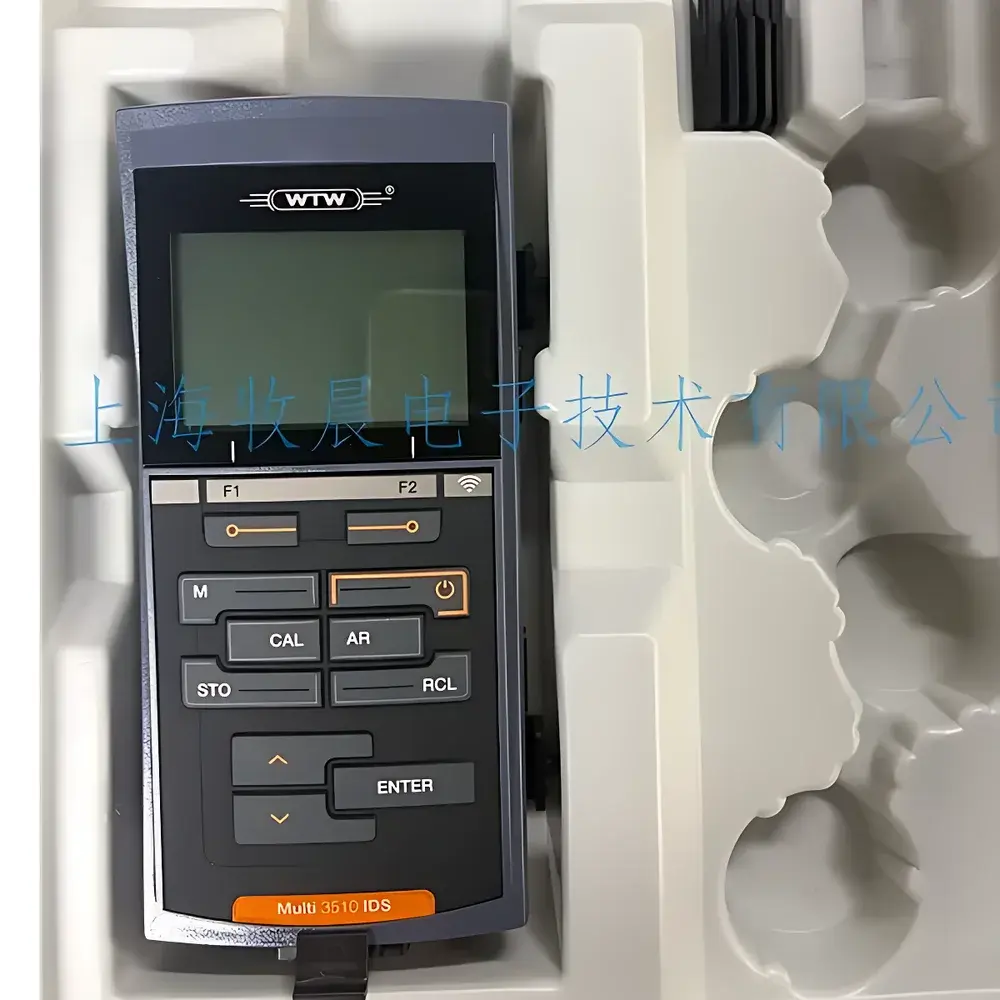
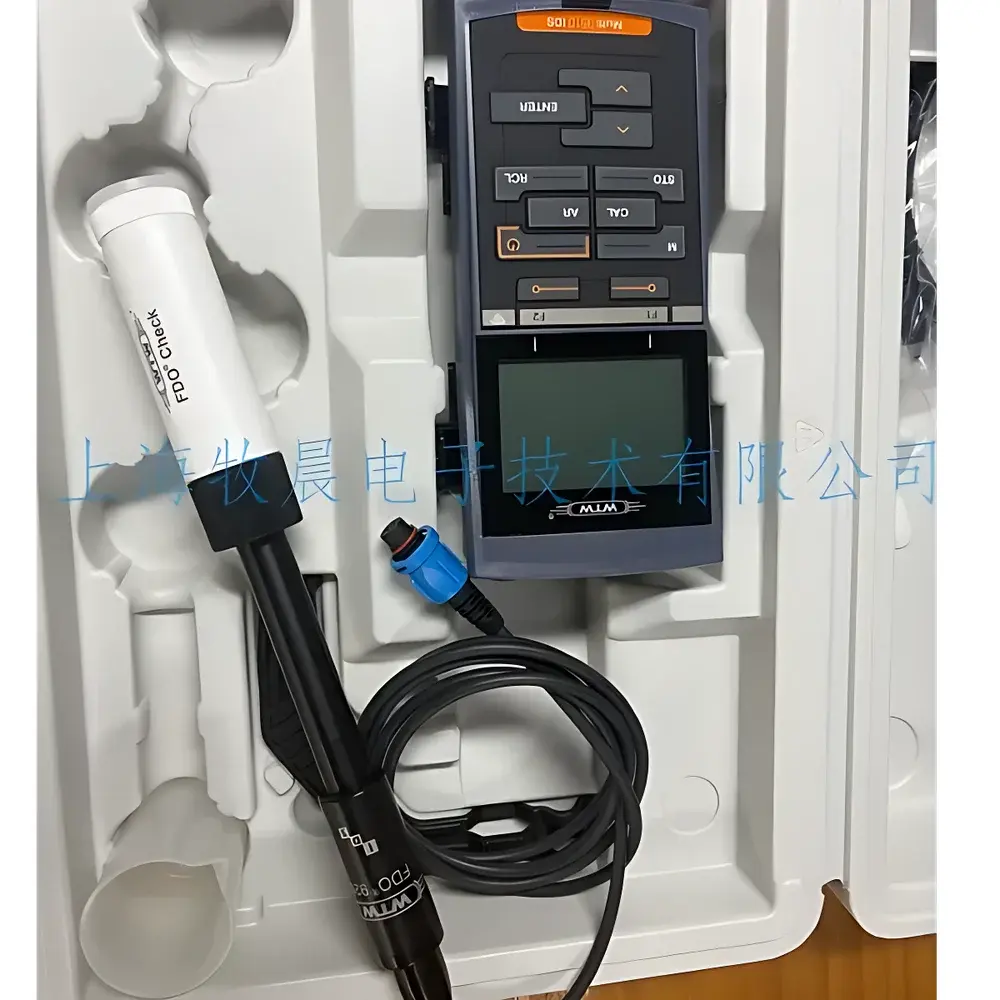
WTW Multi 3510 IDS Portable Multiparameter Water Quality Analyzer
| Brand | WTW |
|---|---|
| Origin | Germany |
| Model | Multi 3510 IDS |
| Instrument Type | Portable / Handheld Water Quality Analyzer |
| Detection Principle | Electrochemical (for DO, pH, ORP, conductivity) & Optical (for turbidity) |
| Measured Parameters | Dissolved Oxygen (DO), pH, ORP, Conductivity, Turbidity |
| Repeatability | <1% |
| Display | Graphical LCD |
| Data Storage | Up to 10,000 datasets (manual + auto) |
| Interface | Micro-USB-B |
| Protection Rating | IP67 |
| Power Supply | 4 × AA alkaline or 4 × 1.2 V NiMH rechargeable batteries (USB charging supported) |
| Probe Communication | Digital IDS (Intelligent Digital Sensor) interface with automatic recognition and embedded calibration memory |
Overview
The WTW Multi 3510 IDS is a high-precision, field-deployable multiparameter water quality analyzer engineered for rigorous environmental monitoring, wastewater management, drinking water verification, and limnological research. Built upon WTW’s Intelligent Digital Sensor (IDS) platform, it employs electrochemical sensing principles for pH, ORP, dissolved oxygen (DO), and conductivity—using galvanic or optical fluorescence-based FDO technology for DO—and nephelometric measurement at 860 nm for turbidity. Its modular architecture supports plug-and-play digital probes, eliminating manual sensor configuration and ensuring traceable, ISO/IEC 17025-aligned calibration data storage directly within each probe’s memory. Designed for operation in harsh outdoor conditions, the instrument meets IP67 ingress protection standards and features galvanic isolation between probe inputs and internal electronics to suppress electromagnetic interference—a critical requirement for reliable measurements near pumps, motors, or radio-frequency sources.
Key Features
- Digital IDS interface enabling automatic probe identification, real-time firmware updates, and secure on-probe storage of calibration history, serial numbers, and user-defined settings
- Graphical LCD display with intuitive menu navigation, configurable data logging intervals (1 s to 24 h), and simultaneous multi-parameter readouts
- Integrated rechargeable NiMH battery system with USB charging capability and low-power optimization for >100 hours of continuous operation
- Micro-USB-B port for direct data export to PC, external storage, or printers; compatible with WTW LabX® software for advanced reporting and audit trail generation
- Current-isolated analog signal paths and shielded digital bus architecture to ensure signal integrity in electrically noisy environments
- Support for single- or dual-channel configurations (Multi 3510 IDS), scalable to triple-sensor deployment via MPP 910 IDS or MPP 930 IDS deep-water probes
Sample Compatibility & Compliance
The Multi 3510 IDS is validated for use across freshwater, estuarine, seawater, wastewater effluents, groundwater, and industrial process streams. Its IDS probes comply with DIN EN ISO 5814 (optical DO), DIN EN ISO 7888 (conductivity), DIN EN ISO 7027 (turbidity), and ASTM D1293 (pH). When used with certified reference materials and documented calibration procedures, the system supports GLP-compliant data acquisition. Full traceability is maintained through embedded timestamps, operator IDs (via optional RFID login), and encrypted calibration certificates stored per probe. The instrument itself carries CE marking and conforms to IEC 61000-6-2 (immunity) and IEC 61000-6-3 (emissions) standards.
Software & Data Management
Data collected by the Multi 3510 IDS can be exported in CSV or XML formats via USB connection. For regulated environments—including municipal utilities operating under EPA Clean Water Act requirements or laboratories adhering to FDA 21 CFR Part 11—the optional LabX® software provides electronic signature support, role-based access control, and immutable audit trails. All calibration events, measurement logs, and instrument diagnostics are time-stamped and digitally signed. The device also supports wireless telemetry when paired with WTW’s optional Bluetooth module (not included), enabling remote probe interrogation and live data streaming to mobile devices running the WTW MobileConnect app.
Applications
- Field verification of compliance with EU Bathing Water Directive (2006/7/EC) and US EPA Method 360.1 (DO), 150.1 (pH), and 120.1 (conductivity)
- In-situ profiling of stratified lakes and reservoirs using MPP 930 IDS with integrated pressure-compensated depth sensing (0.05–100 m)
- Wastewater treatment plant monitoring: aeration basin DO control, influent/effluent pH and turbidity trending, and salinity assessment in coastal outfalls
- Drinking water distribution network surveillance, including disinfectant residual correlation with ORP and early detection of biofilm-related turbidity spikes
- Academic and regulatory field campaigns requiring NIST-traceable, temperature-compensated measurements under variable ambient conditions
FAQ
Does the Multi 3510 IDS require manual calibration entry for each probe?
No. Each IDS probe contains an embedded EEPROM that stores its unique calibration coefficients, date stamps, and sensor-specific parameters. Upon connection, the instrument auto-reads and applies this information.
Can the device log data without user intervention?
Yes. It supports time-controlled automatic logging with programmable intervals from 1 second to 24 hours, and stores up to 10,000 readings internally.
Is the FDO925 optical DO probe suitable for long-term immersion in seawater?
Yes—the FDO925 features a POM housing and stainless-steel wetted parts rated for continuous submersion in saline media up to 50 °C, with pressure compensation enabled via optional depth sensors.
How is measurement traceability ensured during regulatory audits?
Each measurement record includes probe ID, calibration status flag, temperature, timestamp, and operator ID (if configured). Calibration certificates are stored per probe and exportable as PDF or XML.
What power options are available in remote field locations without USB infrastructure?
The unit operates on standard AA alkaline cells (4×1.5 V) or rechargeable NiMH batteries (4×1.2 V); no external power supply is required for basic operation.







