
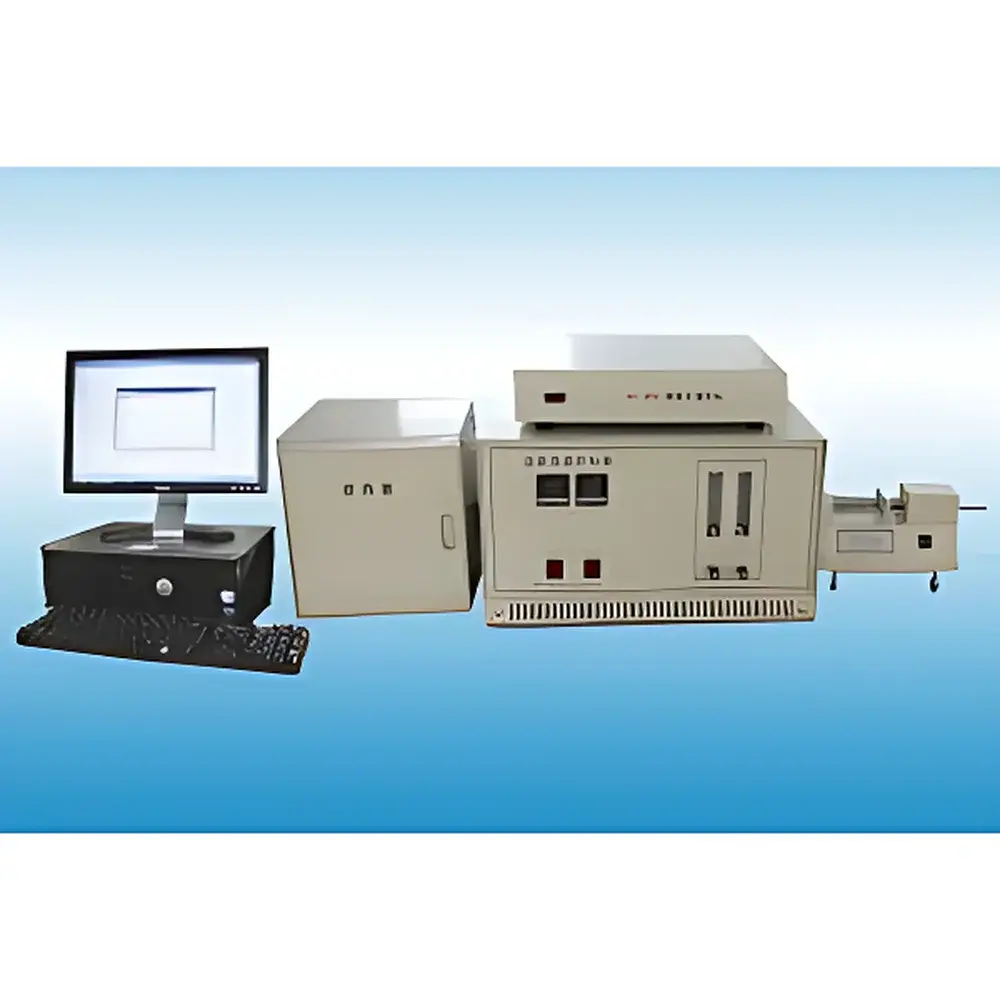
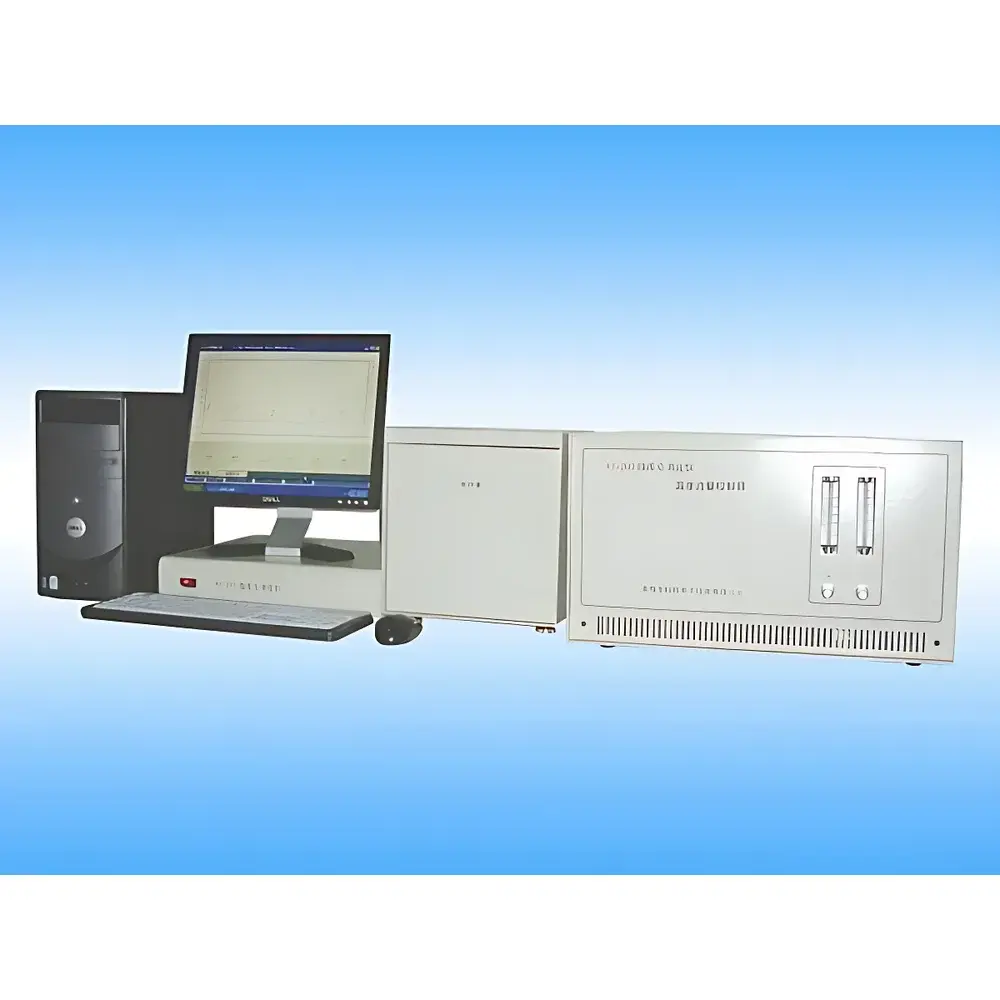
Kyoyuan KY-200S Microcoulometric Sulfur Analyzer
| Brand | Kyoyuan |
|---|---|
| Origin | Jiangsu, China |
| Manufacturer Type | Direct Manufacturer |
| Country of Origin | China |
| Model | KY-200S |
| Detection Target | Total Sulfur |
| Measurement Principle | Microcoulometric Titration (ASTM D3227, SH/T 0253, GB/T 11061.4, SH/T 0222, GB/T 3208) |
| Sample Forms | Liquid, Solid, Gas (with optional injectors) |
| Sulfur Range | 0.1 mg/L to 10,000 mg/L |
| Detection Limit | 0.1 mg/L (as S) |
| Repeatability | ≤30% RSD (x < 0.5 mg/L) |
| Temperature Control Range | Ambient to 1100 °C |
| Temperature Stability | ±1 °C |
| Power Requirement | 1500 W |
| Carrier Gases | Industrial-grade N₂ and O₂ |
| Cooling Method | Intelligent Fan-based Air Cooling |
Overview
The Kyoyuan KY-200S Microcoulometric Sulfur Analyzer is a dedicated trace sulfur quantification system engineered for precision and regulatory compliance in petroleum refining, petrochemical quality control, and upstream/downstream laboratory environments. It operates on the fundamental principle of microcoulometric titration: sample matrix—whether liquid hydrocarbon, solid catalyst, or gaseous feedstock—is combusted at high temperature (up to 1100 °C) under controlled N₂/O₂ flow, converting all sulfur species quantitatively to SO₂. The evolved SO₂ is swept into a dual-electrode titration cell where electrogenerated iodine (I₂) reacts stoichiometrically with SO₂. The charge consumed during iodine regeneration is measured in real time; applying Faraday’s law (1 mole electrons ≡ 1 equivalent reaction), the instrument calculates total sulfur concentration directly from coulombs passed. This method ensures absolute quantification without reliance on calibration curves—critical for method validation under GLP, ISO/IEC 17025, and refinery internal QA protocols.
Key Features
- Full digital microcoulometric architecture with embedded PID temperature control and real-time current/voltage monitoring across combustion and titration zones
- Automated thermal management: intelligent fan cooling activates only when furnace temperature exceeds preset thresholds, minimizing thermal drift and extending heater lifetime
- Modular sample introduction: compatible with liquid autosamplers (1–100 µL loop), solid boat injectors (for catalysts, polymers), and gas sampling valves (with pressure regulation)
- Integrated combustion furnace with dual-zone heating profile: optimized pyrolysis zone (800–1100 °C) and catalytic oxidation zone ensuring complete sulfur conversion—even for refractory organosulfur compounds (e.g., dibenzothiophenes)
- High-stability Ag/AgCl reference electrode and Pt working electrode pair with auto-zero compensation to eliminate baseline drift during extended batch runs
- Compliance-ready hardware design: analog signal isolation, EEPROM-stored method parameters, and non-volatile audit trail memory for FDA 21 CFR Part 11 alignment (when paired with validated software)
Sample Compatibility & Compliance
The KY-200S accommodates diverse petroleum matrices per industry-standard test methods: light distillates (gasoline, naphtha), middle distillates (diesel, jet fuel), heavy fractions (residues, bitumen), LPG, natural gas, and solid-phase materials including spent hydrotreating catalysts and sulfur-impregnated adsorbents. Its measurement validity is anchored in formal equivalence to SH/T 0253 (light petroleum products), GB/T 11061.4 (natural gas), SH/T 0222 (LPG), and GB/T 3208 (aromatics). All system components—including quartz combustion tubes, titration cells, and gas flow controllers—meet ASTM D3227 material compatibility requirements for sulfur analysis. The analyzer supports full traceability via unique run IDs, operator login stamps, and timestamped raw coulombic data export—enabling direct integration into LIMS environments compliant with ISO 17025 clause 7.7 (result reporting) and refinery QA/QC documentation workflows.
Software & Data Management
Control and data acquisition are managed via Kyoyuan’s proprietary Windows-based KyoSulfur v4.x application. The interface provides live visualization of combustion temperature, cell potential, electrolysis current, and integrated charge—allowing real-time troubleshooting of incomplete oxidation or electrode fouling. Quantitative reports include sample ID, injection volume/mass, calculated sulfur concentration (mg/L or ppm w/w), relative standard deviation (RSD), method ID, analyst name, and instrument serial number. Raw data files (.kys) store unprocessed current-time integrals and are exportable as CSV or ASCII for third-party statistical review (e.g., JMP, Minitab). Audit trail logs record all parameter changes, calibration events, and user actions with immutable timestamps—supporting 21 CFR Part 11 electronic signature readiness when deployed with domain-authenticated Windows accounts and encrypted database storage.
Applications
- Refinery process monitoring: sulfur breakthrough detection in FCC gasoline desulfurization units and hydrotreater effluent streams
- Fuel certification: verification of ultra-low-sulfur diesel (ULSD, ≤10 ppm) and marine fuel compliance (IMO 2020, ≤0.5% m/m)
- Research & development: kinetic studies of sulfur removal efficiency across novel catalyst formulations
- Environmental testing: sulfur speciation in crude oil weathering experiments and sediment pore water analysis
- Contract laboratories: accredited testing per CNAS-CL01 (equivalent to ISO/IEC 17025) for commercial custody transfer and regulatory submission
FAQ
What sample types can be analyzed without modification?
Liquid hydrocarbons (e.g., gasoline, kerosene) and gaseous samples (LPG, natural gas) are supported out-of-the-box using standard liquid autosampler and gas valve modules. Solid samples require optional ceramic boat injector and modified combustion protocol.
Is the instrument compatible with nitrogen/oxygen gas blends other than industrial grade?
Yes—while industrial-grade gases meet routine operation specifications, high-purity gases (99.999% N₂, 99.995% O₂) are recommended for sub-1 mg/L quantification to minimize background interference from trace impurities.
How is system performance verified between calibrations?
Daily system suitability is confirmed using certified sulfur standards (e.g., DBT in xylene, SRM 2723a) with acceptance criteria defined by SH/T 0253: recovery must fall within 85–115% of certified value and RSD ≤5% for triplicate injections.
Can the KY-200S quantify chlorine simultaneously?
No—the KY-200S is configured exclusively for sulfur detection. Chlorine analysis requires electrode chemistry reconfiguration and separate method validation; Kyoyuan offers the KY-200X variant for halogen-specific applications.
What maintenance intervals are recommended for sustained accuracy?
Quartz combustion tube cleaning every 200 injections; titration cell electrolyte replacement every 30 days or after 500 analyses; reference electrode refilling quarterly; full system leak check and flow calibration semiannually per ISO 8573-1 Class 4 air purity requirements.





