
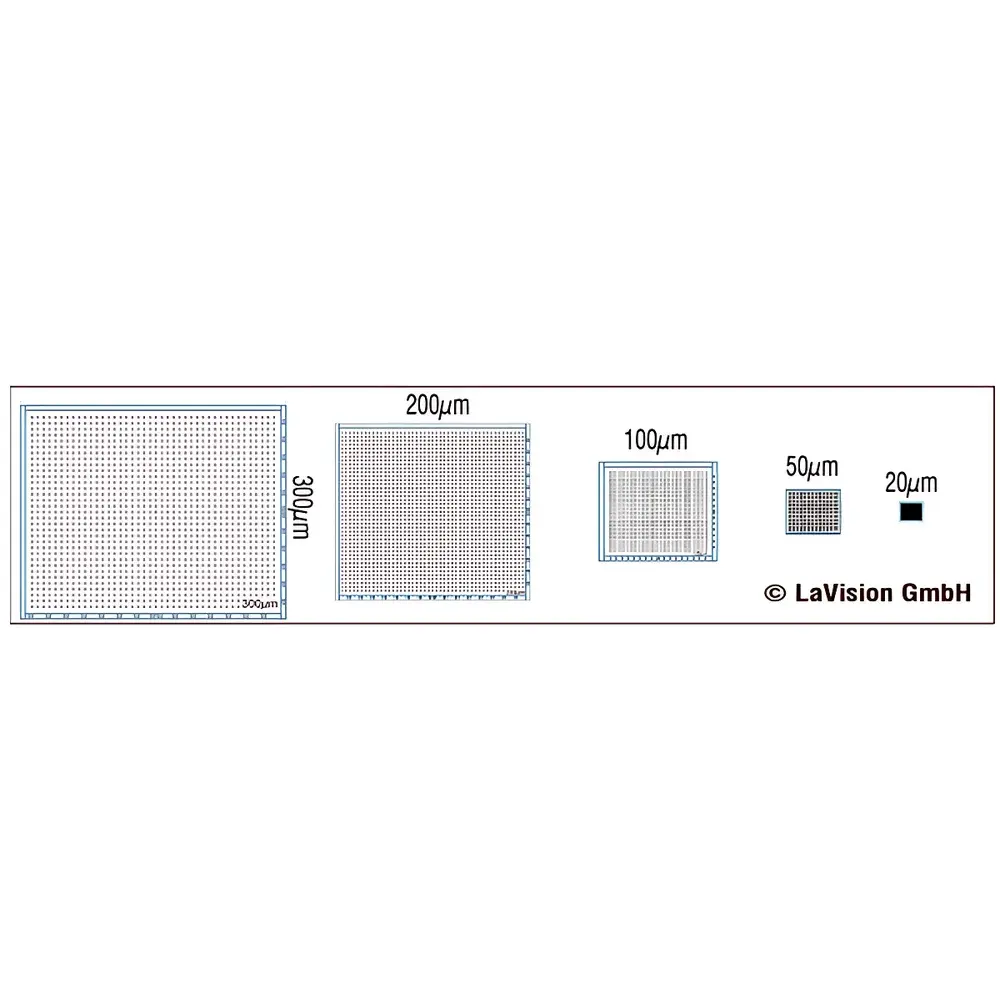
LaVision StrainMaster 3D Calibration Plate
| Brand | LaVision GmbH |
|---|---|
| Origin | Germany |
| Model | Calibration Plates |
| Type | Empirical Multi-Plane Stereo Camera Calibration Target |
| Material | Precision-Coated Optical Glass or Fluorescent Orange Glass (Green-Light Excitable) |
| Compliance | Designed for VDI 2626-compliant uncertainty quantification |
| Application Domain | Digital Image Correlation (DIC), Full-Field Strain & Displacement Measurement |
Overview
The LaVision StrainMaster 3D Calibration Plate is an engineered optical reference standard designed for high-fidelity empirical calibration of stereoscopic and multi-camera Digital Image Correlation (DIC) systems. Unlike geometric calibration methods relying on measured physical angles or ruler-based distances, this plate implements a fully empirical bundle adjustment framework—leveraging known spatial relationships between precisely deposited fiducial marks across defined calibration planes. Its core function is to establish a robust, volume-wide mapping between pixel coordinates in dual (or multi-) camera images and real-world 3D Cartesian coordinates (X, Y, Z), enabling sub-pixel displacement resolution and micron-level strain accuracy in full-field deformation analysis.
Key Features
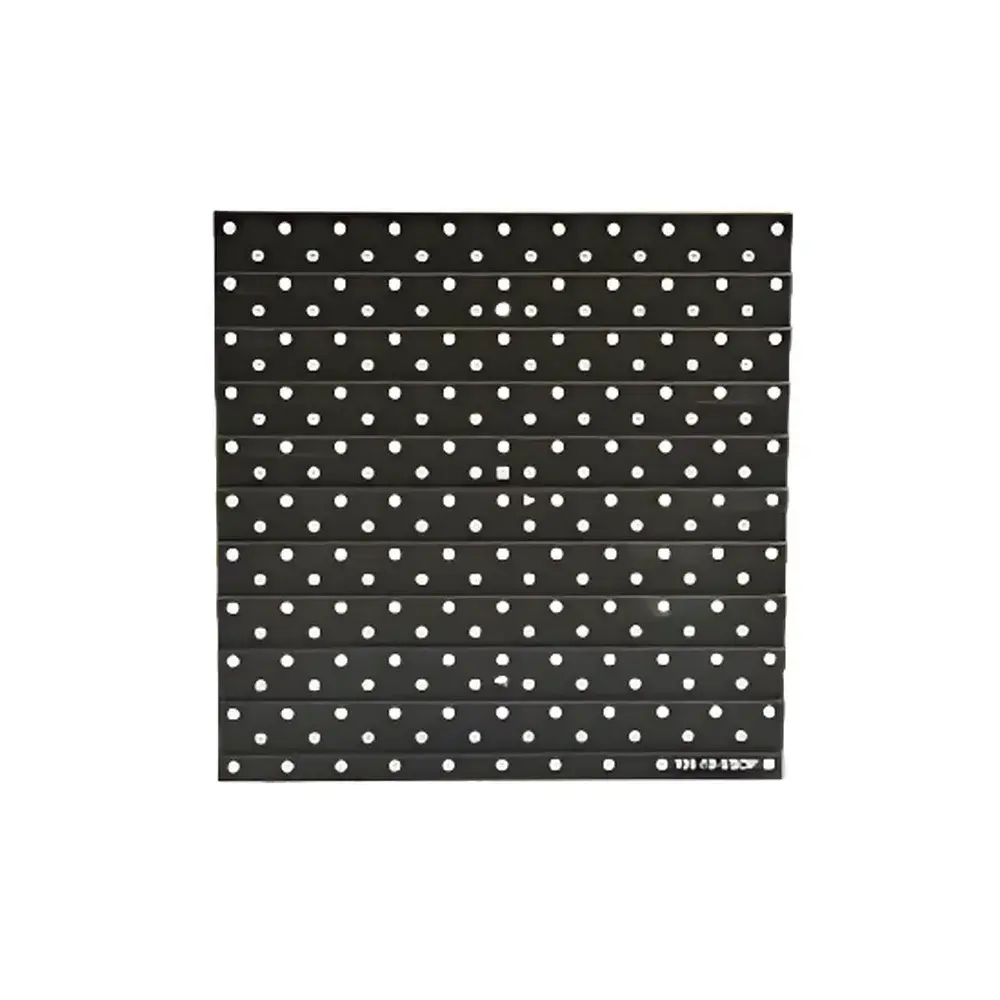
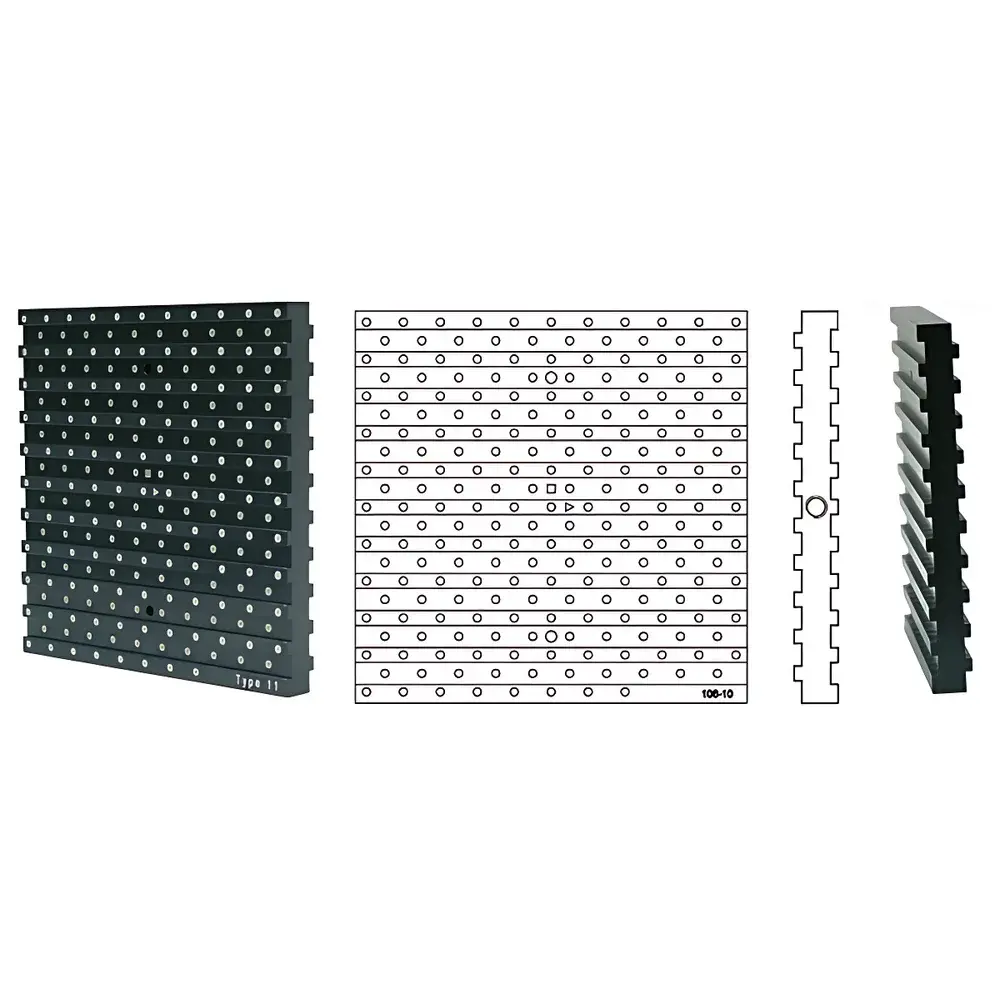
- Two-level, double-sided dot pattern with rigorously controlled inter-plane separation and intra-plane mark spacing—enabling simultaneous stereo calibration from opposing viewpoints without repositioning.
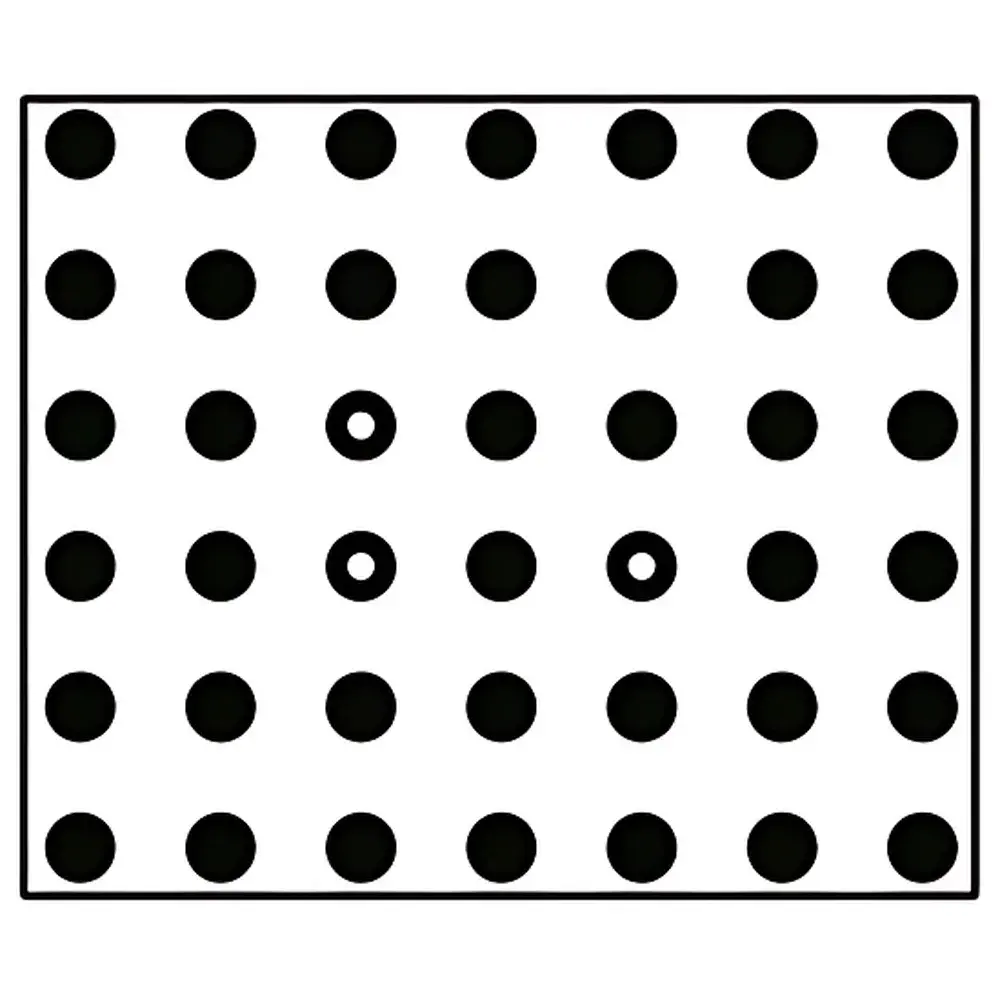
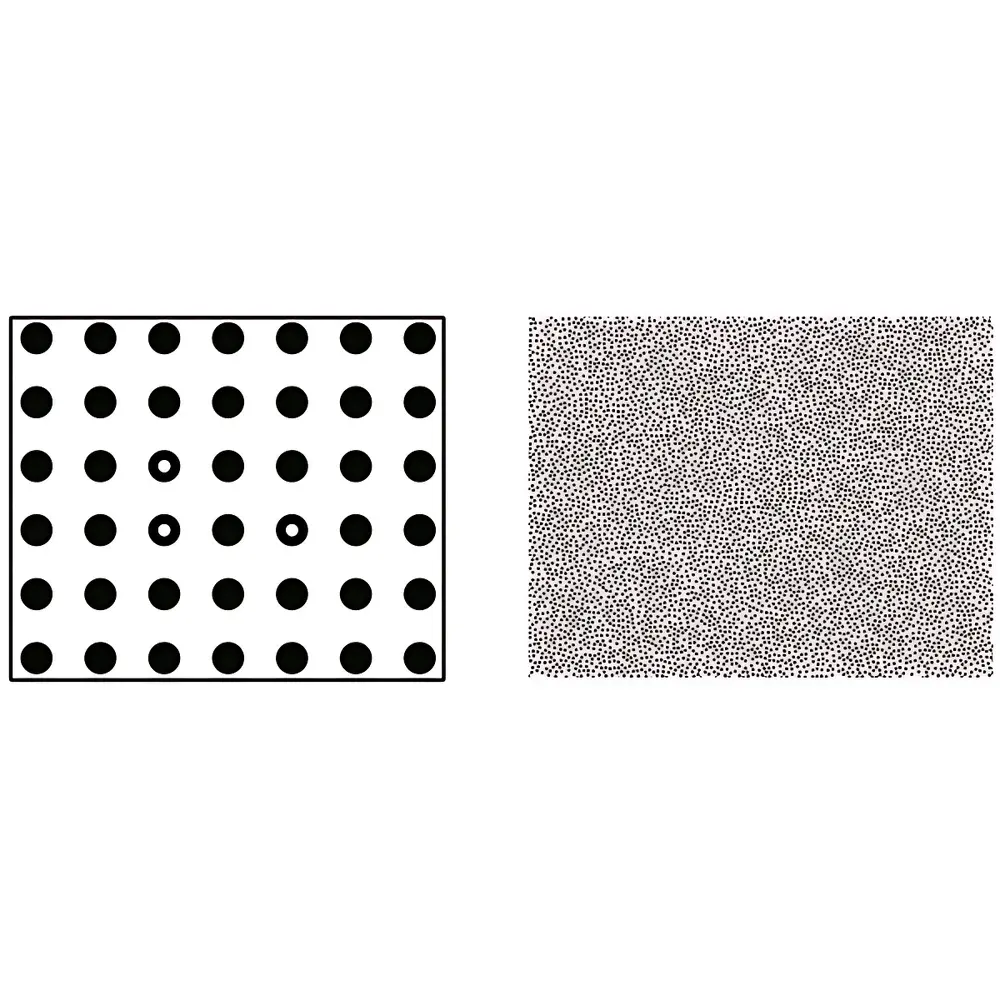
- High-precision photolithographically defined dot array (diameter tolerance ≤ ±0.5 µm; positional accuracy ≤ ±1 µm), deposited on optically flat, low-thermal-expansion glass substrates.
- Dedicated fiducial markers at three corners for unambiguous orientation detection—supporting automatic front/back side identification during automated mark search routines in DaVis software.
- Integrated M4 threaded mounting holes along the perimeter—facilitating rigid, repeatable fixation in constrained environments such as vacuum chambers, environmental test enclosures, or high-temperature furnaces.
- Optional orange-fluorescent glass variant: emits narrow-band orange luminescence under 532 nm green laser excitation—ideal for background suppression in high-ambient-light or reflective-surface applications.
Sample Compatibility & Compliance
The 3D Calibration Plate is compatible with all LaVision StrainMaster DIC hardware configurations—including high-speed CMOS cameras (e.g., Imager sCMOS), telecentric and macro lenses, and synchronized LED or laser illumination setups. It supports both near-field (micro-DIC) and large-volume (structural-scale) measurement domains when paired with appropriate optical magnification. Calibration data generated using this plate satisfies traceability requirements outlined in VDI/VDE 2626 Part 2 (Optical Deformation Measurement) and aligns with ISO/IEC 17025 principles for measurement uncertainty estimation. The printed rear-side speckle pattern (on SSSP variants) enables zero-strain rigid-body validation per VDI 2626 Section 5.3, supporting GLP-compliant system verification prior to experimental campaigns.
Software & Data Management
Calibration workflows are natively integrated into LaVision’s DaVis 10+ software platform. The plate’s fiducial geometry is pre-registered in the calibration library, enabling one-click auto-detection and iterative bundle adjustment. All calibration parameters—including intrinsic (focal length, principal point, radial/tangential distortion coefficients) and extrinsic (rotation matrix, translation vector) parameters—are stored in XML-based project files with full metadata tagging (timestamp, operator ID, environmental conditions). Audit trails comply with FDA 21 CFR Part 11 requirements when configured with electronic signature modules and role-based access control. Exportable calibration reports include residual reprojection error maps, condition numbers, and confidence ellipsoids for each reconstructed 3D point.
Applications
- Full-field strain mapping of aerospace composites under thermo-mechanical loading in climate-controlled chambers.
- Microscale deformation analysis of MEMS devices and thin-film substrates using μDIC with ×10–×50 telecentric optics.
- Validation of finite element model boundary conditions via direct comparison of simulated vs. experimentally derived displacement fields.
- In situ calibration of multi-camera arrays deployed inside synchrotron beamlines or neutron imaging facilities where physical access is restricted.
- Uncertainty quantification for ISO 10360-8 compliant coordinate measuring machine (CMM) cross-validation studies.
FAQ
Is the 3D Calibration Plate compatible with non-LaVision DIC software?
Yes—the plate’s geometric specifications (dot spacing, plane separation, fiducial layout) are documented in NIST-traceable calibration certificates; users may import these parameters into open-source or third-party DIC toolchains (e.g., Ncorr, DICe) via custom configuration files.
Can I use the same plate for both micro-DIC and macro-DIC setups?
Plate selection must match field-of-view (FoV) and resolution requirements: Micro Calibration Plates (with 5–25 µm dot diameters) are specified for FoVs 1 m.
Does the orange-fluorescent variant require special illumination hardware?
It requires only a stable 532 nm continuous-wave or pulsed laser source—commonly available in LaVision’s standard lighting kits—and a long-pass filter (550 nm cutoff) to suppress reflected excitation light.
How often should recalibration be performed?
Recalibration is recommended after any optical path modification (lens change, refocusing), mechanical shock, or temperature excursion exceeding ±5 °C from the initial calibration ambient; routine verification using the rear-side speckle pattern is advised before each test series.



