
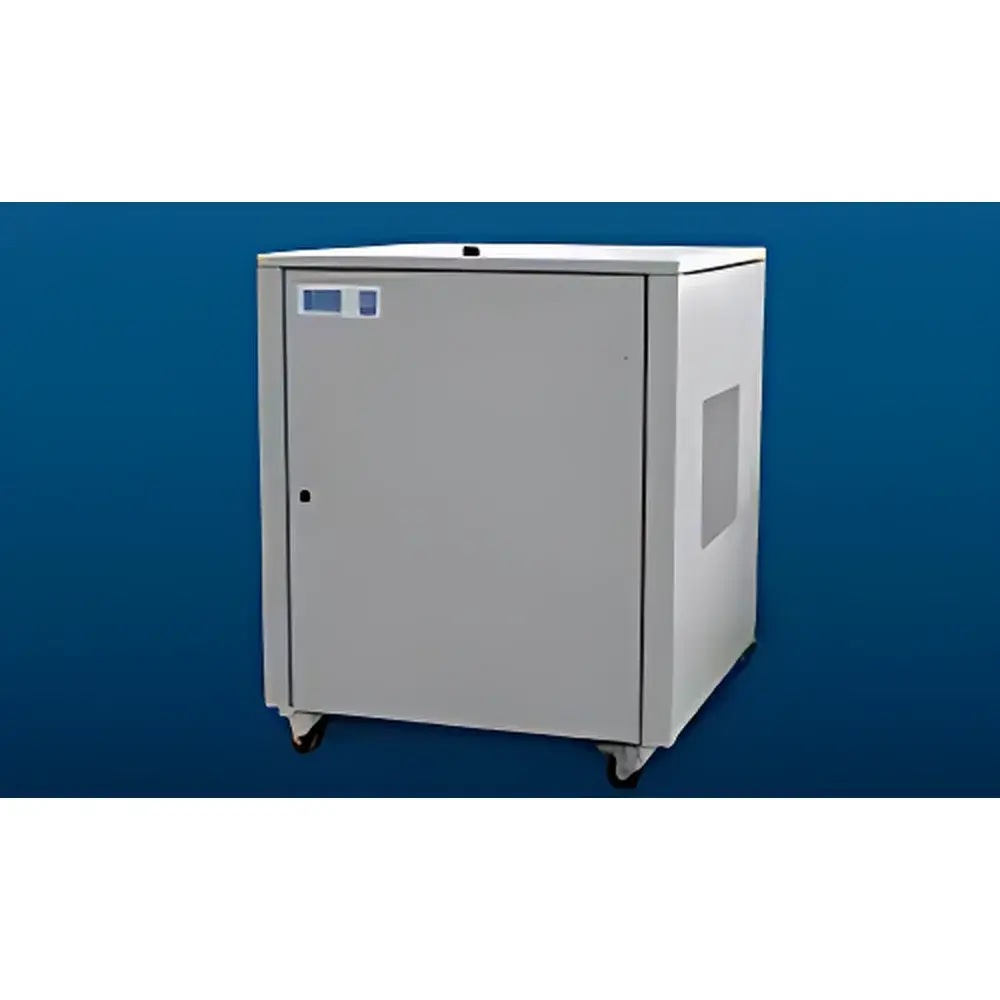

Q-Lab CRH600 Combined Salt Spray and Humidity Corrosion Test Chamber
| Brand | Q-Lab |
|---|---|
| Origin | USA |
| Model | CRH600 |
| Chamber Volume | 640 L |
| Salt Spray Deposition Rate | Adjustable per ASTM B117 / ISO 9227 |
| Temperature Range | 10–70 °C (operational), with RH control from 10% to 95% RH |
| Humidity Control Method | Pre-conditioned air + ultrasonic misting + forced-air circulation |
| Compliance | GMW 14872, SAE J2334, Ford CETP, ISO 16701, VW PV1210, Renault D17 2025, Volvo VCS 1027, Chrysler MSFC-100, GB/T 10125, ISO 9227, ASTM G85 Annex A5 (Prohesion) |
Overview
The Q-Lab CRH600 Combined Salt Spray and Humidity Corrosion Test Chamber is an engineered solution for accelerated corrosion testing under dynamically controlled environmental conditions. Unlike conventional salt fog chambers limited to static temperature and saturation-based humidity, the CRH600 integrates a proprietary air pre-conditioning system that enables precise, independent regulation of relative humidity (RH) and temperature across wide operational ranges—without requiring saturated air or steam generation. This architecture implements a dual-path conditioning strategy: ambient air is first thermally and hygrically adjusted upstream via a dedicated pre-conditioner module, then delivered into the test chamber alongside atomized deionized water mist and compressed air-saturated salt solution. The result is repeatable, traceable, and standards-compliant simulation of complex real-world corrosion drivers—including cyclic wet/dry transitions, variable RH ramping, and targeted saline deposition—critical for validating automotive, aerospace, and industrial coating systems.
Key Features
- Full compliance with major automotive OEM corrosion protocols—including GMW 14872 (cyclic corrosion testing), SAE J2334 (multi-phase corrosion exposure), and ISO 16701 (electrochemical corrosion under thin electrolyte layers)
- Independent RH control (10–95% RH) and temperature control (10–70 °C), both programmable with ramp/soak profiles and synchronized timing logic
- Dual-mode corrosion delivery: standard ASTM B117-compliant salt fog generation (via air-saturated brine atomization) and programmable high-volume spray shower (per ISO 16701 Annex A and Ford CETP 00.00-L-467)
- Self-cleaning nozzle design with quick-release mounting—eliminates clogging associated with crystallized NaCl deposits during extended cycling
- Integrated deionized water supply system with level monitoring and auto-refill capability for stable RH performance
- 640-liter stainless steel test chamber with reinforced viewing window, corrosion-resistant interior surfaces, and optimized airflow distribution for uniform exposure
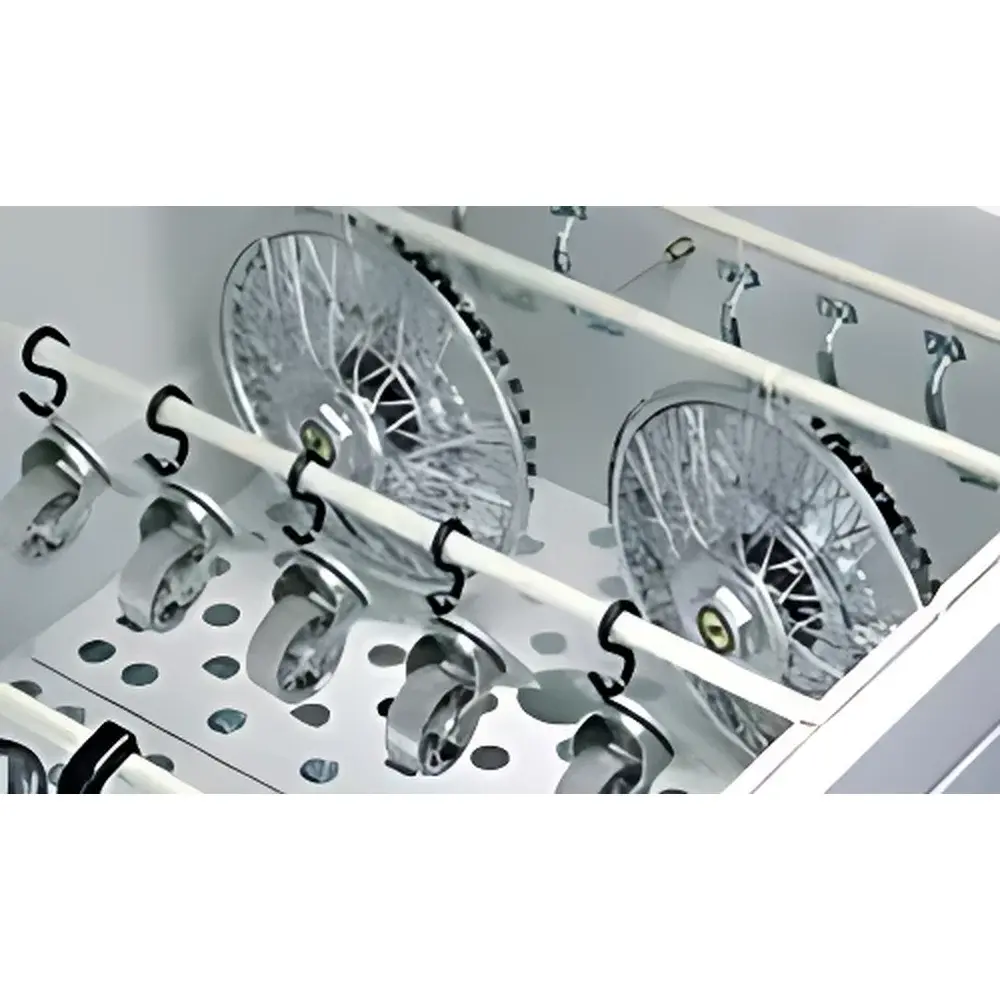
- Modular accessory support including F-9011-K 15° tilt panel rack (for standardized specimen orientation per ISO 9227) and F-9017-K 20 mm hanging rod kit for three-dimensional components
Sample Compatibility & Compliance
The CRH600 accommodates flat panels up to 102 mm × 304 mm on standard racks, or irregularly shaped parts via custom suspension on 20 mm diameter rods. Its chamber geometry and airflow design ensure spatial uniformity of salt deposition rate (±15% across working volume per ISO 9227 Annex B) and RH distribution (±3% RH at steady state). All operational parameters—including spray duration, dwell time, RH ramp rate, and temperature setpoint transitions—are fully programmable and logged with timestamped audit trails. The system meets GLP/GMP data integrity requirements when paired with Q-Lab’s optional Q-TRAK™ software, supporting 21 CFR Part 11-compliant electronic signatures, user access controls, and immutable event history. It is validated against ASTM E2653 (Standard Guide for Validation of Environmental Chambers) and referenced in ISO/IEC 17025-accredited laboratory quality manuals for corrosion testing scope.
Software & Data Management
Control and monitoring are managed through Q-Lab’s intuitive touchscreen interface running embedded firmware with multi-level password protection. Real-time chamber status—including actual vs. setpoint RH, temperature, salt solution level, compressed air pressure, and spray/shower cycle phase—is displayed graphically and archived locally. Exportable CSV logs include all controller variables at user-defined intervals (minimum 1-minute resolution). For enterprise integration, optional Q-TRAK™ software provides remote supervision, centralized fleet management, automated report generation (PDF/Excel), and secure cloud backup. All data records conform to FDA 21 CFR Part 11 requirements when configured with electronic signature workflows, role-based permissions, and full audit trail retention (minimum 10 years).
Applications
- Validation of electrocoat, primer, topcoat, and zinc-nickel plating systems per OEM specifications
- Development and qualification of corrosion-inhibiting packaging materials and vapor-phase inhibitors (VCI)
- Accelerated aging of fasteners, brake components, chassis subassemblies, and EV battery enclosures
- Comparative evaluation of galvanic corrosion behavior between dissimilar metal couples (e.g., Al/steel, Mg/Al)
- Supporting ISO 12944 C5-M and C5-I corrosion category certification for marine and offshore infrastructure coatings
- Research into atmospheric corrosion mechanisms under variable dew point and chloride loading conditions
FAQ
What standards does the CRH600 explicitly support?
The CRH600 is factory-configured and validated for GMW 14872, SAE J2334, Ford CETP 00.00-L-467, ISO 16701, VW PV1210, Renault D17 2025, Volvo VCS 1027, Chrysler MSFC-100, and GB/T 10125. Full test method libraries are available in Q-TRAK™.
Is deionized water mandatory for RH operation?
Yes. The humidification system requires ≤1 µS/cm resistivity water to prevent mineral scaling in the ultrasonic misting nozzles and maintain RH accuracy over long-term operation.
Can the CRH600 perform Prohesion testing?
Yes. It supports ASTM G85 Annex A5 (Prohesion) cycles with alternating acidified salt fog and dry-off phases, using its independent temperature and RH control to replicate the required 2-hour dry segments without manual intervention.
What maintenance is required for the air pre-conditioning system?
The pre-conditioner’s heat exchangers and desiccant modules require biannual inspection; filter elements should be replaced every 6 months or after 2,000 operating hours—whichever occurs first.
Does the CRH600 include calibration documentation?
Each unit ships with NIST-traceable as-found/as-left calibration certificates for temperature, RH, and salt deposition rate, performed per ISO/IEC 17025-accredited procedures at Q-Lab’s Orlando facility.



