
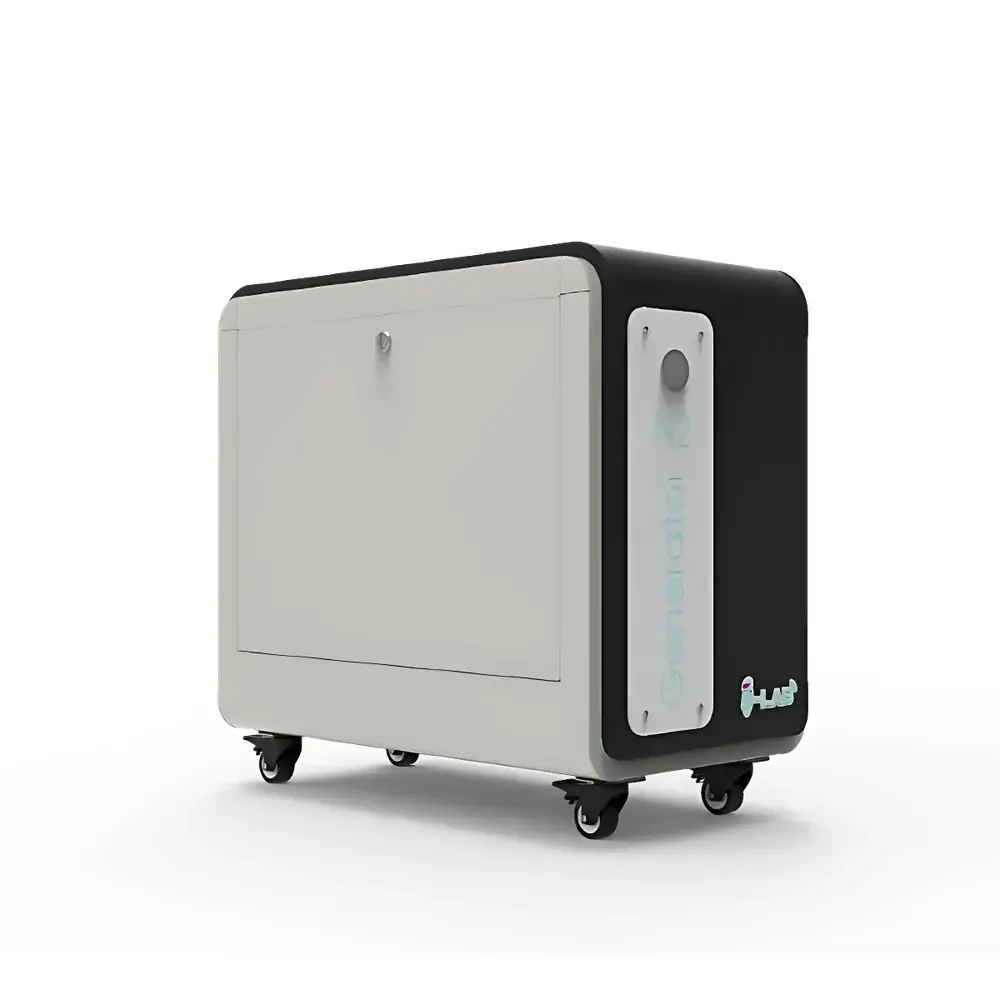
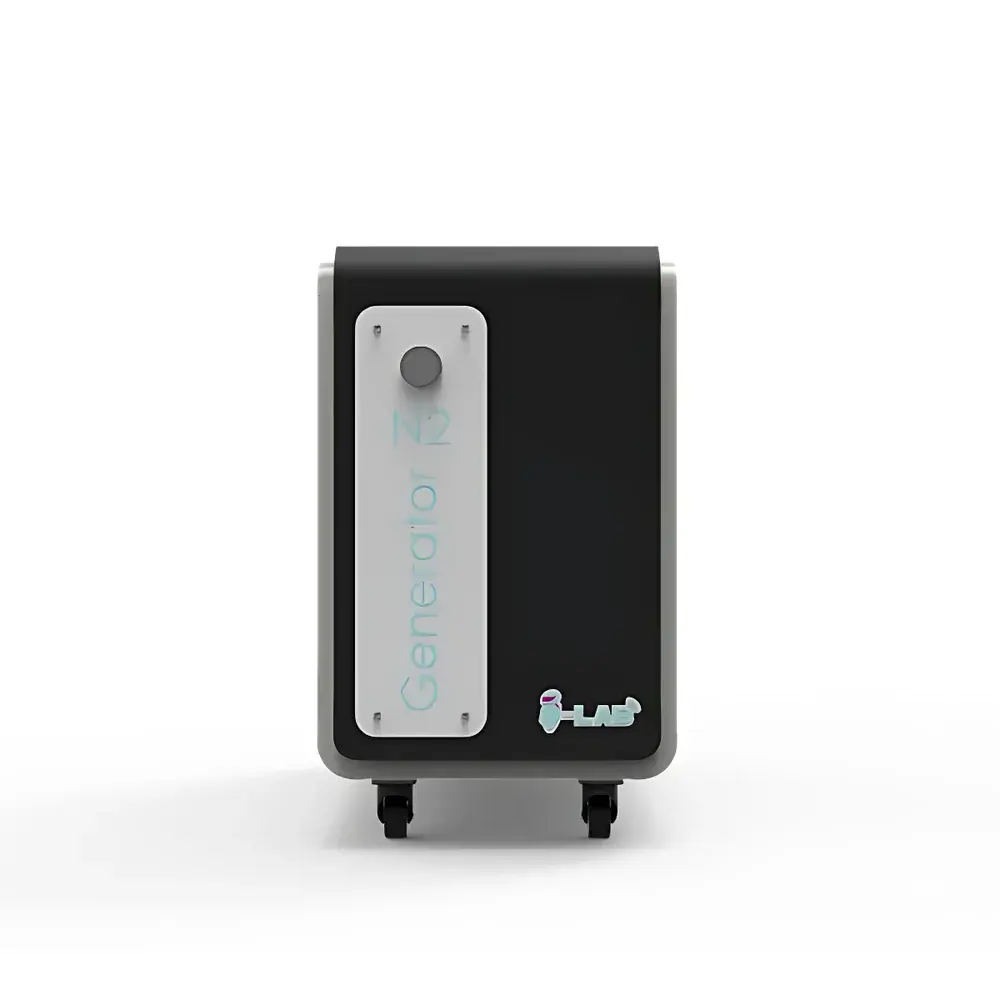
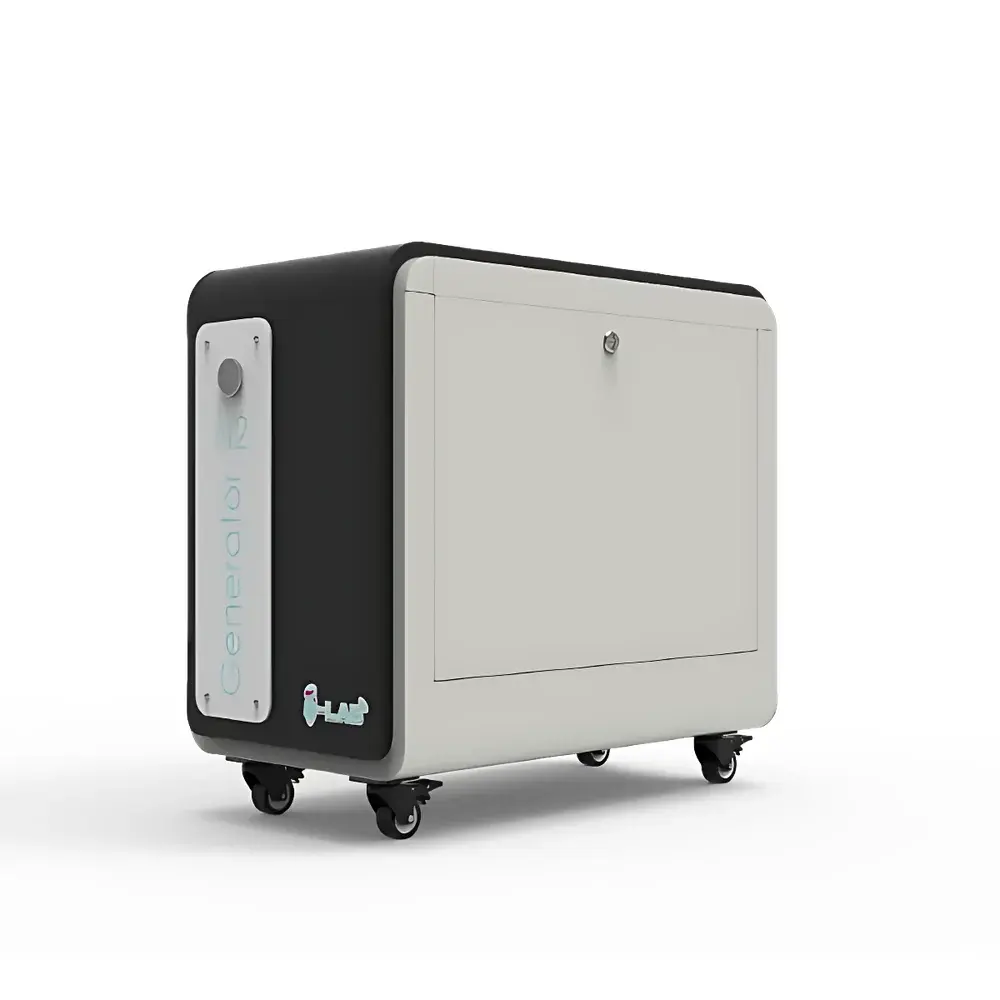
i-Lab KLDC20-1 Nitrogen Generator
| Brand | i-Lab |
|---|---|
| Origin | Shanghai, China |
| Manufacturer Type | OEM Manufacturer |
| Region of Origin | Domestic (China) |
| Model | KLDC20-1 |
| Instrument Type | Nitrogen Generator |
| Nitrogen Generation Principle | Hollow Fiber Membrane Separation |
| Output Flow Rate | 20 L/min |
| Output Pressure Range | 0–5 bar (adjustable) |
| Nitrogen Purity | ≥99.9% |
| Noise Level | ≤55 dB(A) |
| Air Compressor | Oil-Free Piston Compressor (Imported from Europe) |
| Filtration Stages | 4-Stage Purification (Water, Hydrocarbons, Particulates, Microorganisms) |
| Dew Point | −40 °C |
| Hydrocarbon Removal | <0.1 ppm |
| Particle Removal Efficiency | ≥99.999% at 0.01 µm |
| Power Consumption in Standby Mode | ≤50 W |
| Compressor Lifespan | ≥8,000 hours |
| Storage Tank | Stainless Steel Buffer Vessel |
Overview
The i-Lab KLDC20-1 Nitrogen Generator is an engineered solution for laboratories requiring continuous, high-purity nitrogen gas at stable flow and pressure—specifically optimized for sample preparation workflows including nitrogen blow-down evaporation, solid-phase extraction (SPE), and LC-MS interface protection. It employs hollow fiber membrane separation technology, a pressure-driven gas separation process where compressed air passes through semi-permeable polymeric membranes; oxygen, water vapor, CO₂, and other fast-permeating gases diffuse preferentially through the fiber walls, while nitrogen—being slower-diffusing—is retained in the permeate stream. This principle enables consistent on-demand nitrogen generation without cryogenic or chemical consumption, delivering ≥99.9% N₂ purity at up to 20 L/min under adjustable output pressure (0–5 bar). Designed for integration into regulated analytical environments, the KLDC20-1 meets baseline requirements for ISO 8573-1:2010 Class 2:2:2 compressed air quality and supports GLP-compliant documentation when paired with external audit trail logging.
Key Features
- Hollow fiber membrane module sourced from a Tier-1 European supplier, ensuring long-term flux stability and resistance to plasticizer leaching and humidity-induced performance drift
- Oil-free piston air compressor (European origin) rated for ≥8,000 hours MTBF, eliminating downstream oil contamination risk and enabling direct coupling to sensitive instrumentation such as mass spectrometers
- Four-stage purification architecture: coalescing pre-filter (5 µm), desiccant dryer (−40 °C dew point), catalytic hydrocarbon scrubber (<0.1 ppm total hydrocarbons), and sub-micron particulate + microbial barrier filter (0.01 µm retention efficiency)
- Stainless steel buffer tank with integrated pressure regulation reduces compressor cycling frequency by ≥70%, extending mechanical service life and minimizing pressure pulsation during critical nitrogen delivery phases
- Intelligent AutoSave mode lowers standby power draw to ≤50 W and activates automatic shutdown after configurable idle periods—reducing annual energy consumption by >30% versus conventional fixed-run generators
- Laboratory-grade acoustic enclosure with triple-layer damping structure achieves ≤55 dB(A) operational noise—compatible with open-plan lab layouts and adjacent instrument rooms
Sample Compatibility & Compliance
The KLDC20-1 delivers nitrogen meeting ASTM D6349-22 specifications for carrier and purge gas in chromatographic applications. Its purified output satisfies USP requirements for non-sterile pharmaceutical nitrogen and aligns with ISO 8573-1:2010 Class 2 for particulate content and Class 2 for moisture. While not certified to ISO 13485 or FDA 21 CFR Part 11 out-of-the-box, the system supports third-party validation protocols—including IQ/OQ/PQ—and integrates seamlessly with laboratory information management systems (LIMS) via analog 4–20 mA output and Modbus RTU communication. All wetted materials comply with USP Class VI biocompatibility standards, and the stainless steel reservoir meets ASME BPVC Section VIII Div. 1 design criteria.
Software & Data Management
The KLDC20-1 features an embedded microcontroller with real-time monitoring of inlet pressure, membrane differential pressure, outlet purity (via thermal conductivity sensor), flow rate, and temperature. Local display provides immediate diagnostics including filter saturation alerts and compressor runtime tracking. Optional RS-485/Modbus RTU interface enables centralized logging of operational parameters into existing SCADA or LIMS platforms. Audit-ready event logs—including start/stop timestamps, pressure excursions, and maintenance reminders—are timestamped and stored internally for ≥90 days. No proprietary cloud platform is required; data export is supported via CSV over USB-C or serial dump.
Applications
- Nitrogen blow-down concentration for pesticide residue analysis (AOAC 2007.01), pharmaceutical impurity profiling, and environmental PFAS quantification
- Carrier and make-up gas supply for LC-MS/MS and GC-MS systems—eliminating cylinder logistics and purity variability
- Inert atmosphere maintenance in gloveboxes used for battery electrode synthesis or oxygen-sensitive organometallic chemistry
- Food packaging line blanketing where nitrogen must meet EC No. 1333/2008 food-grade gas specifications
- HPLC mobile phase sparging and solvent degassing prior to gradient elution
- DNA/RNA precipitation and protein lyophilization support requiring particle-free, low-hydrocarbon nitrogen
FAQ
What is the expected service life of the hollow fiber membrane module?
Under typical lab conditions (20 °C, 40–60% RH inlet air), the membrane stack is rated for ≥12,000 operating hours before replacement—approximately 5 years at 8 h/day usage.
Can the KLDC20-1 be used as a backup source for GC carrier gas?
Yes—provided system pressure and flow are validated against the GC manufacturer’s specified inlet requirements (e.g., Agilent 8890/8860: 60–100 psi, 1–3 mL/min); a calibrated inline flowmeter and pressure regulator are recommended for method transfer.
Is routine calibration required for the built-in purity sensor?
The thermal conductivity sensor is factory-calibrated and drift-compensated; annual verification using traceable N₂ standard gas (99.995%) is advised per ISO/IEC 17025 clause 6.6.
Does the unit require external cooling or ventilation?
No active cooling is needed; however, ambient airflow ≥150 m³/h around the rear exhaust grille is required to maintain internal component temperatures within ASME B31.3 allowable limits.
How often must the filtration cartridges be replaced?
Pre-filter: every 6 months or 2,000 hours; desiccant: every 12 months or 4,000 hours; hydrocarbon scrubber: every 18 months or 6,000 hours—condition-based replacement is supported via ΔP monitoring.



