
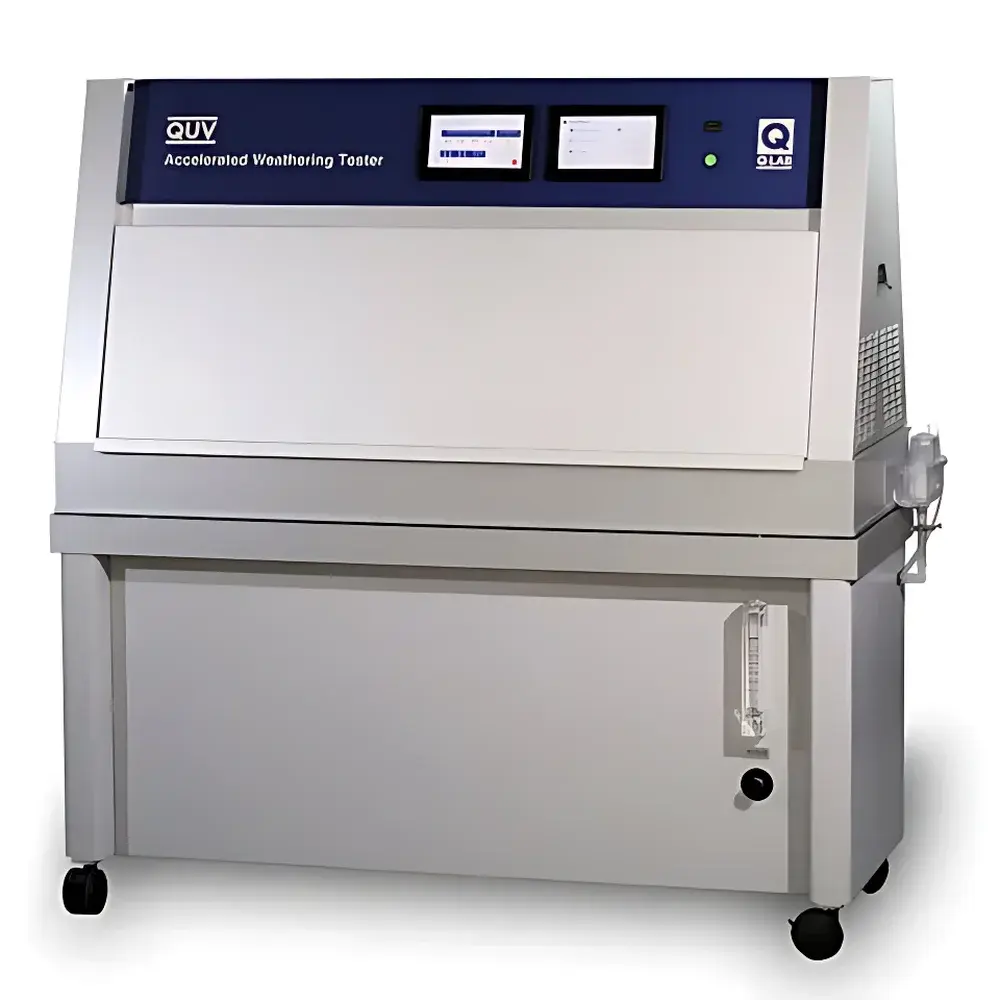
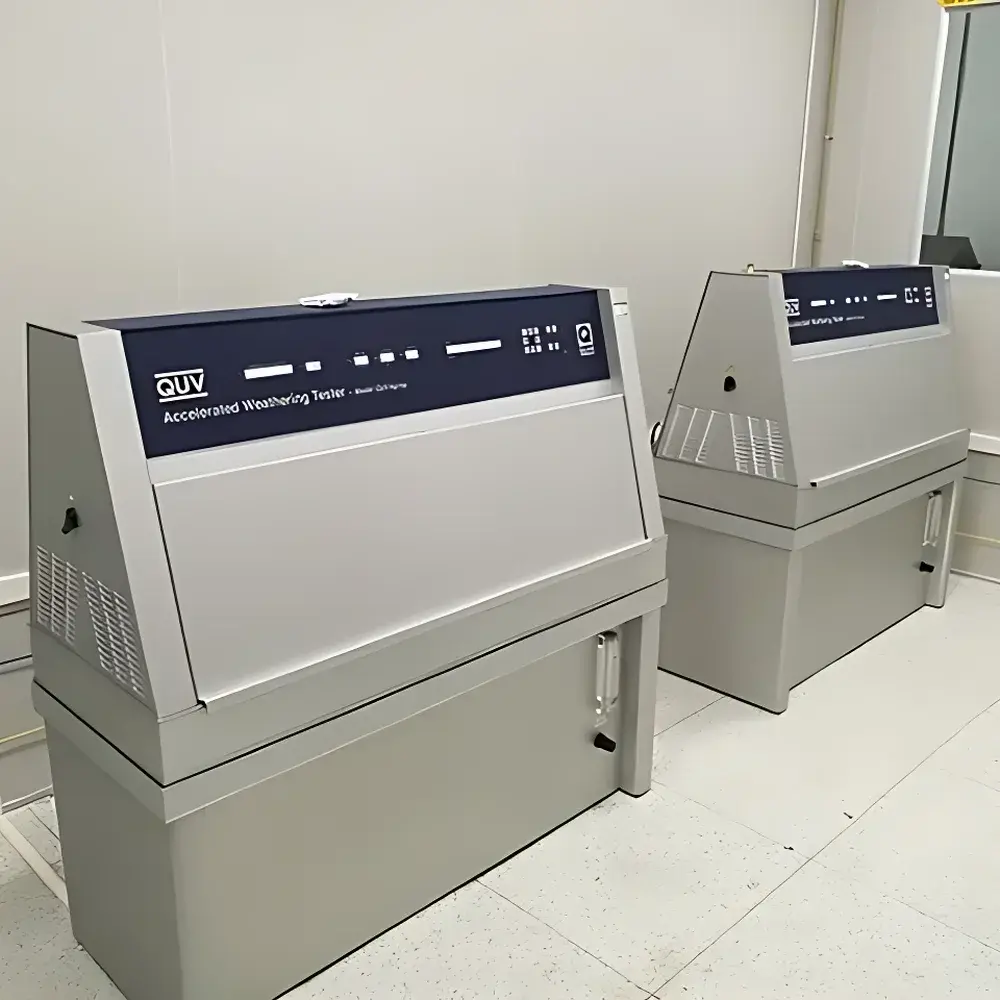
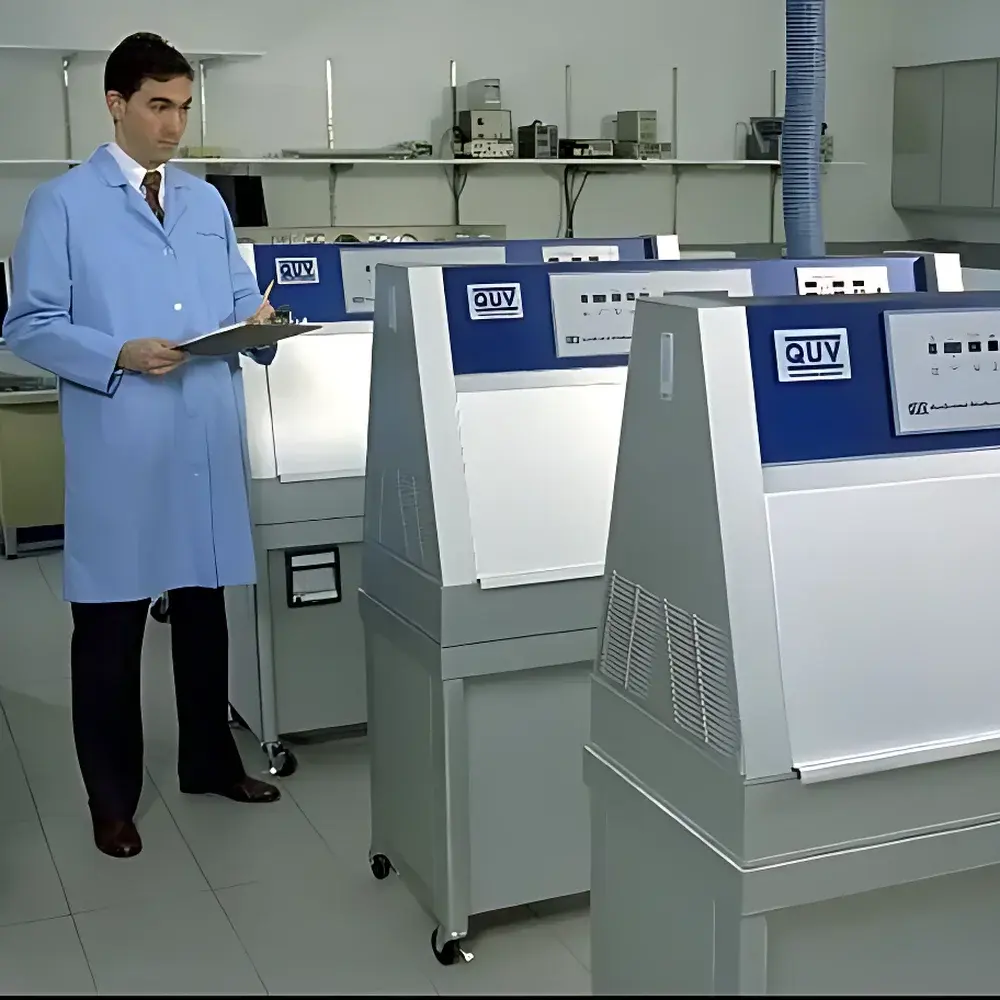
Q-Lab QUV Accelerated UV Weathering Tester
| Brand | Q-Lab |
|---|---|
| Origin | USA |
| Model | QUV |
| Test Duration | 1–5000 h |
| Irradiance Range | 10 W/m² |
| UV Wavelength Range | 295–400 nm (configurable via lamp type) |
| Black Panel Temperature Range | 35–80 °C |
| Chamber Humidity Range | 10–100 % RH (condensation cycle enabled) |
| Illuminated Chamber Volume | 65 L (L×W×H: 114 × 45 × 127 cm) |
| Lamp Type Compatibility | UVA-340, UVA-351, UVB-313EL, QFS-40 |
Overview
The Q-Lab QUV Accelerated UV Weathering Tester is an industry-standard benchtop environmental test chamber engineered for rapid, reproducible simulation of solar ultraviolet (UV) radiation effects on polymeric materials, coatings, inks, textiles, and plastics. Unlike full-spectrum xenon arc testers, the QUV system isolates and intensifies the most photochemically aggressive portion of sunlight—the short-wave UV region (295–400 nm)—based on the well-established principle that UV photons below 365 nm drive the majority of photodegradation mechanisms in durable outdoor materials. Its design adheres to ASTM G154, ISO 4892-3, and JIS D0205 standards, making it a validated tool for comparative durability assessment, formulation screening, and quality control in R&D and manufacturing environments. The QUV operates through controlled cyclic exposure to UV irradiation, condensation humidity, and optional thermal dark periods—mimicking diurnal weathering stressors without requiring months or years of natural outdoor exposure.
Key Features
- Fluorescent UV lamp architecture with spectral selectivity: Supports interchangeable lamp types—including UVA-340 (best match to terrestrial solar UV cutoff at 295 nm), UVA-351 (simulates UV transmitted through window glass), UVB-313EL (enhanced short-wave output for accelerated QC testing), and QFS-40 (legacy automotive exterior paint standard)—enabling application-specific irradiance profiles.
- Sun-eye® irradiance control system: A calibrated silicon photodiode sensor continuously monitors and automatically adjusts lamp power to maintain user-defined irradiance setpoints (e.g., 0.68 W/m² @ 340 nm or 1.36 W/m² @ 340 nm), compensating for lamp aging and voltage fluctuations to ensure inter-laboratory reproducibility.
- Condensation humidity generation: Uses heated water reservoirs and controlled chamber cooling to produce realistic dew formation on test specimens—replicating the dominant moisture mechanism observed in outdoor exposure (8–12 h/day average dew duration), rather than relying solely on spray or humidification.
- Black panel temperature control: Precise PID-regulated heating maintains specimen surface temperature within ±1.5 °C across the 35–80 °C range, critical for accelerating photochemical reaction kinetics while avoiding thermal degradation artifacts.
- Rugged stainless-steel chamber construction with quartz UV-transmitting lamps and optimized reflector geometry ensures uniform irradiance distribution (±15% across specimen plane per ASTM G154 Annex A1) and long-term operational stability.
Sample Compatibility & Compliance
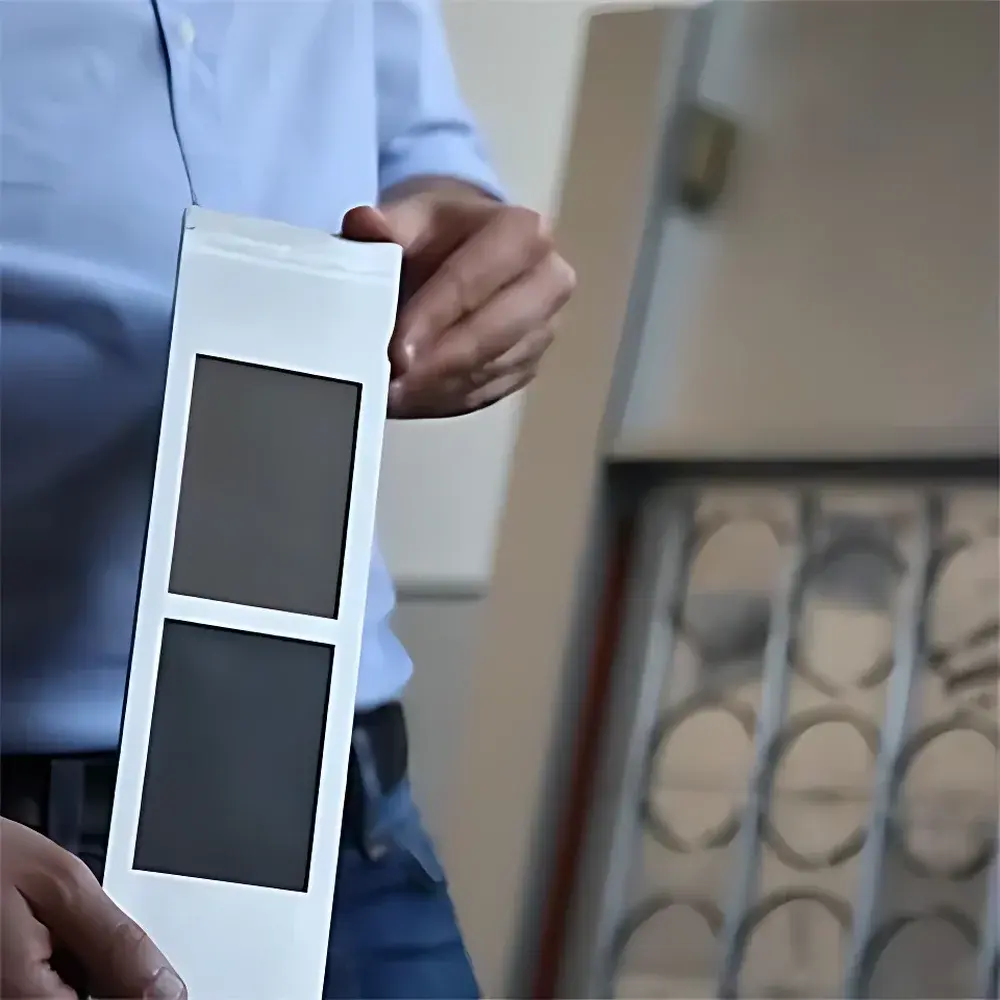
The QUV accommodates flat-panel specimens up to 75 mm × 150 mm × 6 mm (standard rack configuration), with optional multi-tier racks supporting higher throughput. It is widely used for ASTM D4329 (plastics), ASTM D4587 (coatings), ISO 11507 (paints and varnishes), and SAE J2020 (automotive exterior materials). All QUV models comply with IEC 61000-4 electromagnetic compatibility requirements and are designed for GLP-compliant operation: full audit trail capability (via optional Q-Lab’s QUV Software Suite), electronic signature support, and configurable alarm logging meet FDA 21 CFR Part 11 data integrity expectations when deployed in regulated QC labs.
Software & Data Management
The Q-Lab QUV Software Suite (Windows-based, optional) provides real-time monitoring of irradiance, black panel temperature, chamber humidity, and cycle timing. It supports automated method storage, scheduled test initiation, and export of time-stamped CSV/Excel reports compliant with ISO/IEC 17025 documentation requirements. Calibration certificates traceable to NIST standards are issued with each irradiance sensor and temperature probe. For enterprise integration, the software offers OPC UA connectivity and RESTful API endpoints for LIMS and MES synchronization—ensuring seamless alignment with digital quality management systems.
Applications
- Formulation development: Screening pigment dispersions, UV absorbers, HALS stabilizers, and polymer blends for relative resistance to chalking, gloss loss, color shift (ΔE), and tensile property retention.
- Supplier qualification: Verifying incoming raw material compliance against internal weathering specifications prior to production release.
- Regulatory submission support: Generating accelerated aging data for FDA 510(k) biocompatibility dossiers (e.g., polymer packaging), EPA pesticide container certification, and UL 746C polymeric material ratings.
- Failure analysis: Correlating laboratory-induced embrittlement, cracking, or adhesion loss with field-failure patterns using calibrated UVA-340 cycles.
- Standards conformance testing: Executing ISO 4892-3 Method A (UV/condensation) or Method B (UV/dark) protocols under accredited laboratory conditions.
FAQ
What is the difference between UVA-340 and UVB-313EL lamps?
UVA-340 lamps replicate the solar UV spectrum from 295 nm to 365 nm and are recommended for outdoor durability correlation. UVB-313EL emits significant energy below 295 nm, producing faster degradation but lower field correlation—ideal for rapid QC pass/fail screening.
Does the QUV meet ASTM G154 requirements?
Yes—every QUV model is designed and verified to satisfy all performance criteria in ASTM G154, including irradiance uniformity, black panel temperature accuracy, and condensation cycle repeatability.
Can the QUV simulate wet/dry cycling like natural exposure?
Yes—its patented condensation cycle generates dew directly on specimen surfaces for extended durations (typically 4 h), closely matching the moisture absorption kinetics observed in real-world outdoor exposure.
How often must the UV lamps be replaced?
Lamp replacement intervals depend on cumulative irradiance dose; typical service life is 1,600–2,000 hours for UVA-340 and 5,000 hours for UVB-313EL when operated under Sun-eye® control.
Is calibration traceable to national standards?
All irradiance sensors and temperature probes ship with individual calibration certificates traceable to NIST or equivalent national metrology institutes, with recalibration recommended annually or per ISO/IEC 17025 quality system requirements.



