
Q-LAB QUV UV Accelerated Weathering Tester
| Brand | Q-LAB |
|---|---|
| Origin | USA |
| Model | QUV |
| Compliance | ASTM G154, ISO 4892-3, JIS D0205, SAE J2020 |
| UV Lamp Options | UVA-340 (300–365 nm), UVB-313 (280–315 nm) |
| Black Panel Temperature Range | 30–75 °C |
| Irradiance Control | Solar-eye® feedback-controlled system |
| Chamber Dimensions (L×W×H) | See datasheet |
| Operating Modes | UV irradiation + condensation / UV irradiation + water spray |
Overview
The Q-LAB QUV UV Accelerated Weathering Tester is an industry-standard benchtop environmental test chamber engineered for rapid, reproducible simulation of solar ultraviolet (UV) radiation and associated climatic stressors—primarily UV exposure, thermal cycling, and moisture condensation. Unlike full-spectrum xenon arc testers, the QUV leverages fluorescent UV lamp technology to isolate and intensify the short-wavelength UV band (280–400 nm), which is empirically established as the dominant driver of photodegradation in durable polymeric materials such as coatings, plastics, automotive trim, and architectural finishes. Its design adheres to the fundamental principle that UV photons induce bond scission and free-radical chain reactions in organic matrices; elevated temperature accelerates secondary oxidative degradation pathways; and cyclic condensation—mimicking nocturnal dew formation—promotes hydrolytic cleavage and interfacial delamination. By decoupling and precisely controlling these three synergistic stress factors, the QUV enables accelerated aging protocols that correlate strongly with real-world outdoor exposure—particularly in high-UV environments such as Florida or Arizona—while delivering test durations measured in days or weeks rather than years.
Key Features
- Fluorescent UV lamp architecture with spectral options: UVA-340 lamps closely replicate terrestrial solar UV down to 365 nm; UVB-313 lamps extend output into the more aggressive 280–315 nm range for highly accelerated screening.
- Solar-eye® irradiance control system: A calibrated silicon photodiode sensor continuously monitors UV intensity at specimen plane and dynamically adjusts lamp power to maintain user-specified irradiance setpoints (e.g., 0.68 W/m² @ 340 nm), compensating automatically for lamp aging, voltage drift, and quartz sleeve fouling.
- Black panel temperature control: Independent PID-regulated heating ensures precise maintenance of black standard or black panel thermometer (BPT) temperatures between 30 °C and 75 °C, critical for simulating surface thermal loading under solar exposure.
- Condensation cycle capability: Water is heated in a reservoir beneath the specimen plane to generate saturated humid air; controlled cooling of specimens induces realistic dew formation for 4–16 hours per cycle—matching field-observed diurnal moisture duration.
- Optional water spray function: Available on select QUV/se models to simulate thermal shock and mechanical erosion from rainfall, particularly relevant for evaluating coating adhesion, wash-off resistance, and substrate swelling.
- Robust stainless-steel construction with corrosion-resistant interior, integrated safety interlocks, and NIST-traceable calibration documentation support GLP/GMP compliance requirements.
Sample Compatibility & Compliance
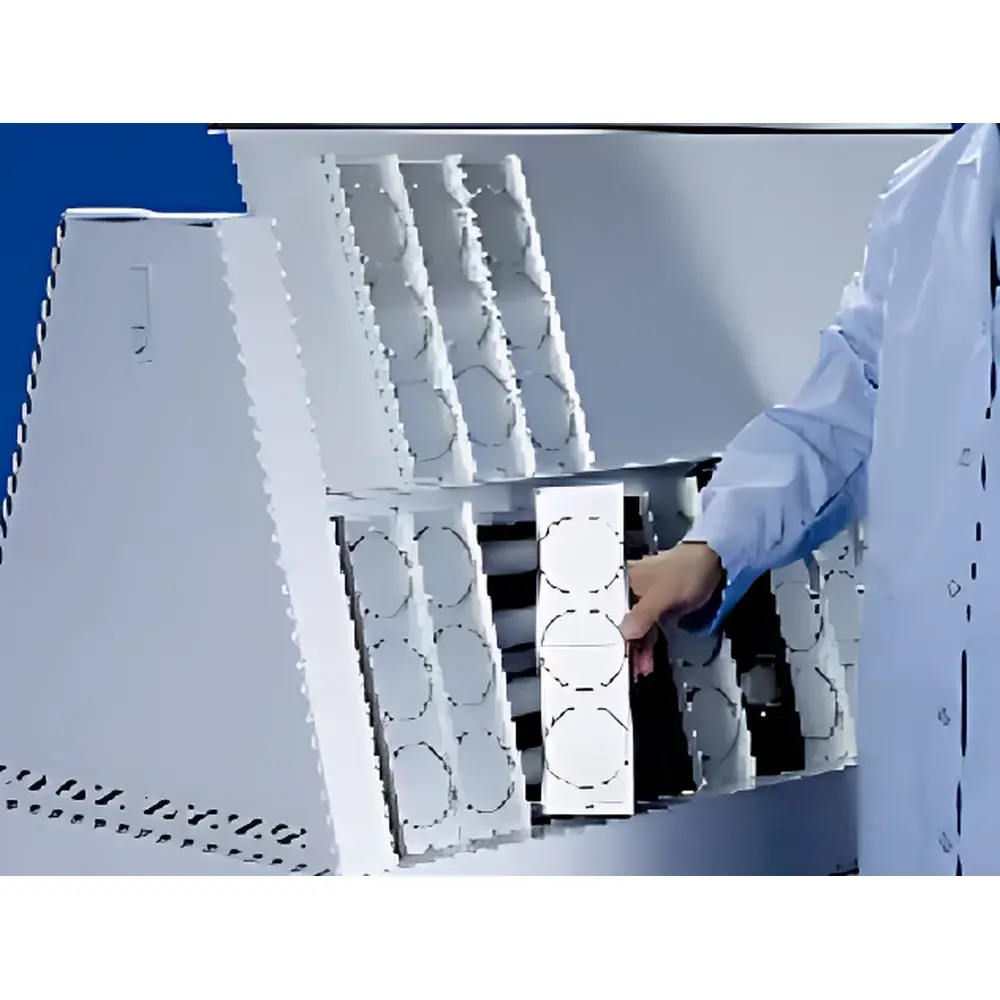
The QUV accommodates flat-panel specimens up to 150 mm × 75 mm × 13 mm (standard rack configuration), with optional multi-rack and custom fixture solutions for irregular geometries. It supports standardized sample mounting per ASTM D4141 and ISO 11341. Regulatory and industry-standard test methods explicitly validated for the QUV include ASTM G154 (practice for exposing non-metallic materials in fluorescent UV-condensation devices), ASTM D4329 (standard practice for fluorescent UV exposure of plastics), ISO 4892-3 (plastics—methods of exposure to laboratory light sources—Part 3: Fluorescent UV lamps), JIS D0205 (automotive exterior materials), and SAE J2020 (automotive paint systems). Its operational parameters and control fidelity meet the technical prerequisites for data submission under FDA 21 CFR Part 11 when paired with compliant software logging and audit trail functionality.
Software & Data Management
While the base QUV operates via intuitive front-panel controls with programmable time/temperature/irradiance profiles, integration with Q-LAB’s optional SOLAR-EYE™ Software enables comprehensive test orchestration, real-time monitoring, automated report generation, and long-term data archival. The software logs timestamped irradiance, black panel temperature, chamber humidity, and cycle phase transitions with configurable sampling intervals. All entries are stored with electronic signatures, version-controlled revision history, and tamper-evident audit trails—fully aligned with GLP and 21 CFR Part 11 requirements for regulated laboratories. Raw data exports comply with ASTM E2913 (standard guide for electronic records and electronic signatures in regulated environments) and support CSV, PDF, and XML formats for LIMS integration.
Applications
The QUV serves as a primary tool for comparative durability assessment across R&D, quality assurance, and supplier qualification workflows. Typical use cases include: evaluating UV stabilizer package efficacy in polyolefins and PVC formulations; benchmarking gloss retention and color shift (ΔE*ab) in automotive clearcoats per OEM specifications; validating weatherability claims for roofing membranes and façade cladding systems; assessing ink fade resistance in packaging films per ISO 12040; and screening adhesive bond integrity in laminated glass under cyclic UV/moisture stress. Its predictive capability is strongest for materials whose failure mode is dominated by photooxidative degradation—less suitable for thermally driven creep or purely mechanical fatigue mechanisms.
FAQ
How does QUV differ from xenon arc weatherometers like Q-Sun?
The QUV uses fluorescent UV lamps to emphasize the short-wave UV region (280–400 nm), making it ideal for testing UV-sensitive polymers where photolysis dominates degradation. Q-Sun employs xenon lamps to reproduce the full solar spectrum (UV through IR), better suited for evaluating visible-light fading, heat-related deformation, or infrared absorption effects.
Can QUV data be directly correlated to outdoor service life?
No single acceleration factor applies universally. Correlation requires empirical mapping against concurrent Florida or Arizona outdoor exposure data for each material class and formulation. QUV provides robust relative ranking—not absolute lifetime prediction.
What maintenance is required for consistent irradiance output?
Lamp replacement every 1,600–2,000 hours of operation is recommended. Quartz lamp sleeves must be cleaned weekly with isopropyl alcohol to prevent UV attenuation. The Solar-eye sensor requires annual recalibration using Q-LAB’s certified reference standard.
Is the QUV compliant with ISO/IEC 17025 for accredited testing labs?
Yes—when operated with documented procedures, traceable calibration records, environmental monitoring, and trained personnel, the QUV meets the technical competence requirements of ISO/IEC 17025:2017 for materials weathering testing.
Can I run ASTM D4587 and ISO 4892-3 simultaneously on the same instrument?
Yes—the QUV’s programmable controller supports both standards’ defined irradiance setpoints, temperature profiles, and cycle sequences. However, method-specific lamp types (e.g., UVA-340 for ISO 4892-3 vs. UVB-313 for ASTM D4587) require manual lamp substitution and recalibration.



