
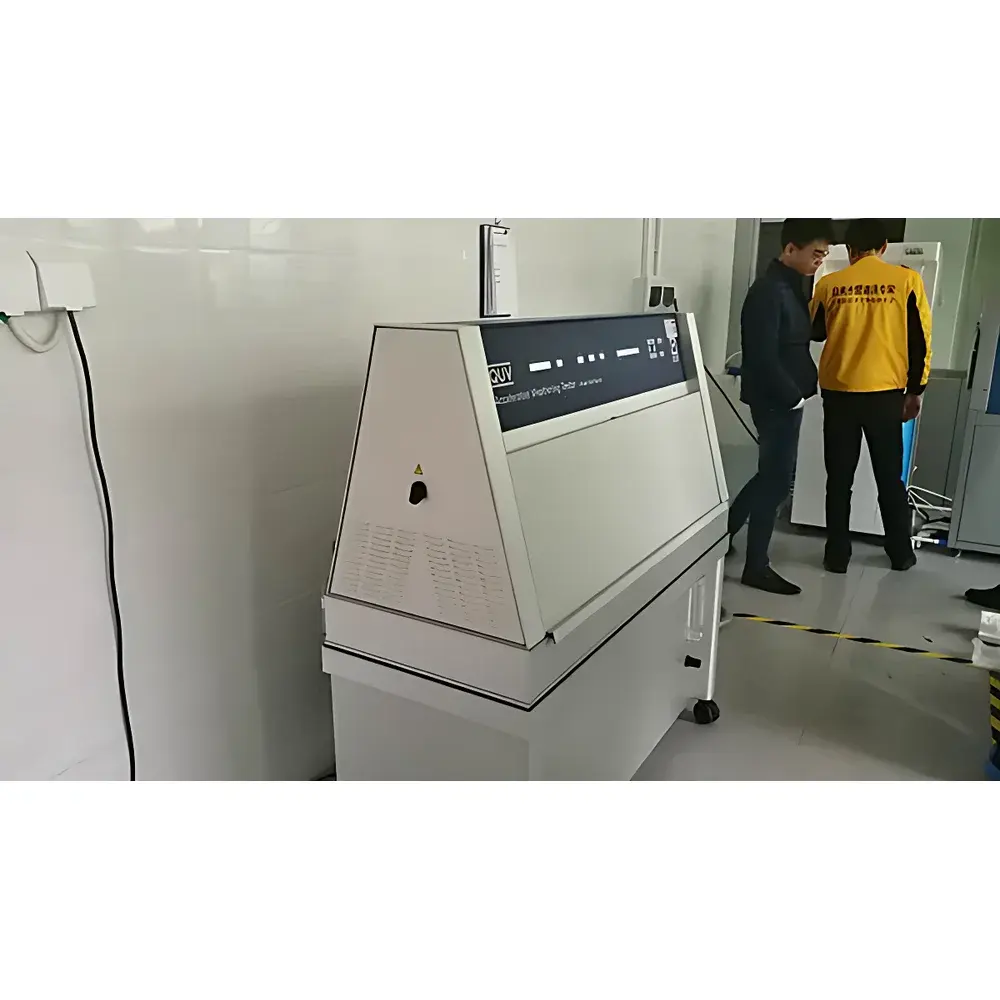
Q-LAB QUV UV Aging Test Chamber
| Brand | Q-LAB |
|---|---|
| Origin | USA |
| Model | QUV |
| UV Wavelength Range | 295–400 nm (UVA-340: 295–365 nm |
| UVB-313 | 280–360 nm) |
| Sample Capacity | 48 specimens (75 mm × 150 mm) or 24 specimens (75 mm × 300 mm) |
| Black Panel Temperature Range | 30–80 °C (adjustable, ±0.5 °C stability) |
| Condensation Humidity Control | 100% RH via water condensation cycle |
| Irradiance Control | Closed-loop solar-eye® sensor with CR-10 traceable calibration |
| Lamp Lifetime | 5,000 hours (warranty-backed) |
| Compliance | ASTM G154, ISO 4892-3, SAE J2020, GB/T 14522, IEC 61215 (UV pre-conditioning), FDA 21 CFR Part 11 ready (with optional software) |
Overview
The Q-LAB QUV UV Aging Test Chamber is an industry-standard accelerated weathering instrument engineered for precision simulation of short-wave ultraviolet radiation exposure under controlled thermal and hygrothermal conditions. Unlike broad-spectrum xenon arc or carbon arc systems, the QUV employs fluorescent UV lamps—specifically UVA-340, UVB-313, UVA-351, QFS-40, or cold white lamp types—to replicate the most photochemically active portion of terrestrial sunlight (295–400 nm). This spectral selectivity enables high-fidelity acceleration of polymer degradation mechanisms including photooxidation, chain scission, chromophore bleaching, and surface embrittlement. The system integrates three synergistic environmental stressors: UV irradiance, black panel temperature control, and condensation-driven humidity cycling—mimicking diurnal dew formation without requiring complex steam generation or pressurized water delivery. Its robust architecture, factory-calibrated optical feedback loop, and NIST-traceable irradiance monitoring make it suitable for GLP-compliant laboratories, ISO/IEC 17025-accredited test facilities, and regulatory submission support per ASTM D4329, ISO 4892-3, and IEC 61215-2.
Key Features
- Patented solar-eye® irradiance control system with real-time closed-loop feedback and automatic recalibration using CR-10 reference standard—ensuring ±5% irradiance stability over lamp lifetime.
- Black panel temperature sensor (BPT) mounted directly behind specimen plane for accurate, reproducible thermal profiling; range: 30–80 °C with ±0.5 °C uniformity across sample rack.
- Condensation cycle replicates natural dew formation via reverse thermal gradient: chamber walls cooled below dew point while specimen surface remains warm—no mist nozzles, no compressed air required.
- Modular lamp compatibility: interchangeable UVA-340 (sunlight-cutoff simulation), UVB-313 (high-acceleration research), UVA-351 (window-filtered indoor exposure), QFS-40 (legacy automotive protocols), and cold white (indoor lighting simulation).
- Self-diagnostic controller with Ethernet interface supports remote status monitoring, maintenance scheduling, and fault logging compliant with FDA 21 CFR Part 11 requirements when paired with Q-LAB’s optional “Virtual Strip Chart” software.
- Low-maintenance design: lamp replacement interval rated at 5,000 hours; stainless steel chamber construction; corrosion-resistant sample racks; no oil-lubricated moving parts.
Sample Compatibility & Compliance
The QUV accommodates flat-panel specimens up to 20 mm thick on adjustable aluminum sample holders—supporting standard formats (75 mm × 150 mm, up to 48 units; or 75 mm × 300 mm, up to 24 units) without trimming or adhesive mounting. Optional custom fixtures enable testing of curved surfaces, optical lenses, molded automotive trim, and 3D-printed polymer components. All operational modes comply with internationally recognized standards including ASTM G154 (Cycle A1–A5), ISO 4892-3 (Method A/B), SAE J2020 (for automotive coatings), and GB/T 14522 (Chinese national standard for paint and plastic aging). The system meets GLP audit requirements for data integrity, with timestamped irradiance logs, temperature history, and condensation cycle metadata stored internally and exportable via CSV or XML.
Software & Data Management
Standard Ethernet connectivity enables integration into enterprise laboratory networks. The optional Virtual Strip Chart™ PC software provides automated acquisition of irradiance (W/m² @ 340 nm), black panel temperature, chamber ambient temperature, and condensation duration—synchronized to millisecond resolution. Data files include digital signatures and are structured for direct import into LIMS platforms or statistical analysis tools (e.g., JMP, Minitab). When enabled, the software supports 21 CFR Part 11 compliance through user authentication, electronic signatures, and immutable audit trails—including all parameter changes, calibration events, and alarm triggers. Raw sensor data can be emailed directly to Q-LAB Technical Support for remote diagnostics, eliminating downtime during troubleshooting.
Applications
The QUV is widely deployed in R&D, quality assurance, and regulatory validation workflows across aerospace composites, architectural coatings, photovoltaic encapsulants, medical device polymers, automotive interior trim, and packaging films. It is specified in material qualification protocols for UL 746C (polymeric materials), IEC 61215-2 (PV module UV preconditioning), and MIL-STD-810H (Method 505.6, Solar Radiation). Its ability to decouple UV dose from thermal load enables mechanistic studies of photostabilizer efficacy, pigment fade kinetics, and hydrolytic degradation pathways in polyesters, polyolefins, and acrylics. For comparative benchmarking, Q-LAB maintains a global database of historical QUV exposure data correlated to real-world service life—accessible to licensed users via Q-LAB’s Atlas Weathering Services portal.
FAQ
What UV lamp type should I select for outdoor durability testing?
UVA-340 lamps are recommended for general outdoor exposure simulation, as their spectral output closely matches terrestrial solar UV between 295 nm and 365 nm.
Can the QUV replicate window-filtered indoor exposure?
Yes—UVA-351 lamps are specifically designed to simulate UV transmission through standard float glass, making them ideal for testing office interiors, museum displays, and automotive cabin materials.
Is irradiance calibration traceable to national standards?
All CR-10 calibrators are certified to NIST-traceable standards, and Q-LAB provides calibration certificates with each unit shipment.
How does condensation differ from water spray in weathering tests?
Condensation mimics nocturnal dew formation via thermal gradient—producing uniform, non-erosive moisture film critical for hydrolysis-driven degradation; spray cycles introduce mechanical stress not present in natural dew.
Does the QUV meet FDA 21 CFR Part 11 requirements?
With Virtual Strip Chart™ software and configured user access controls, the system satisfies electronic record and signature requirements for regulated pharmaceutical and medical device testing environments.



