
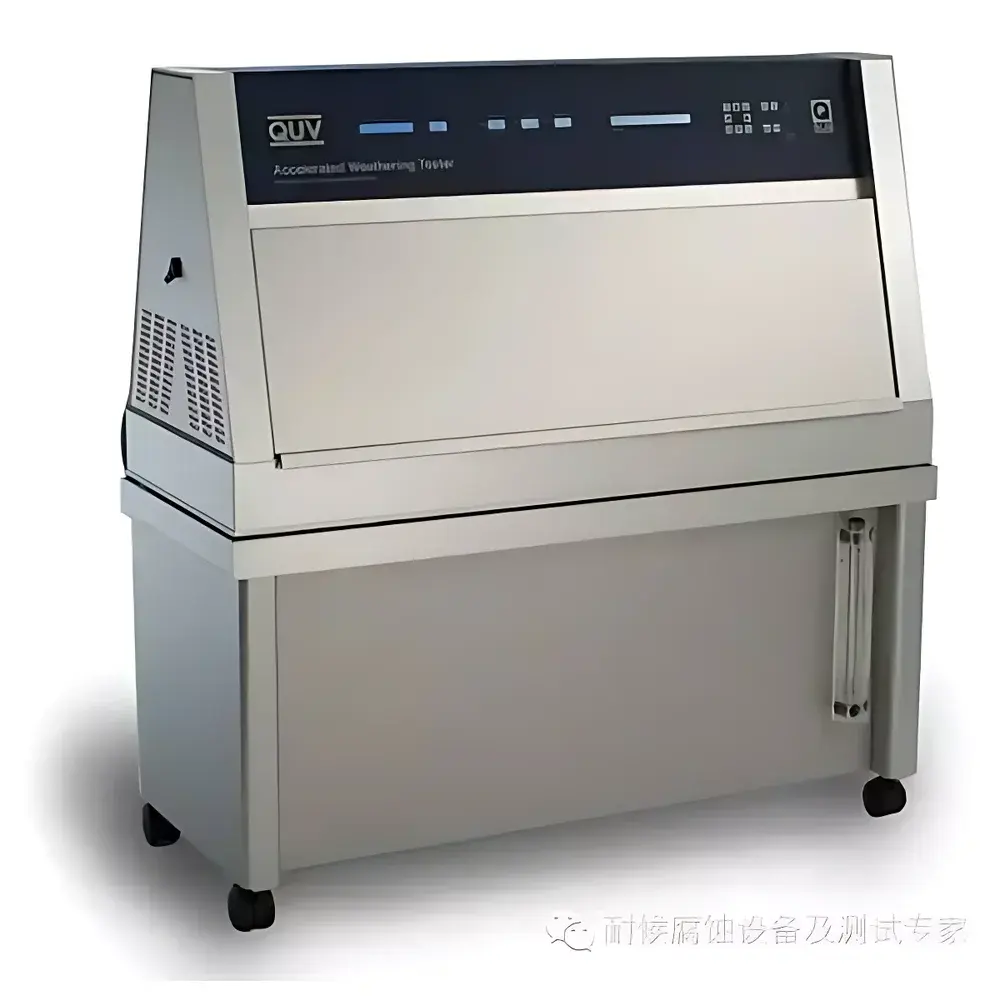
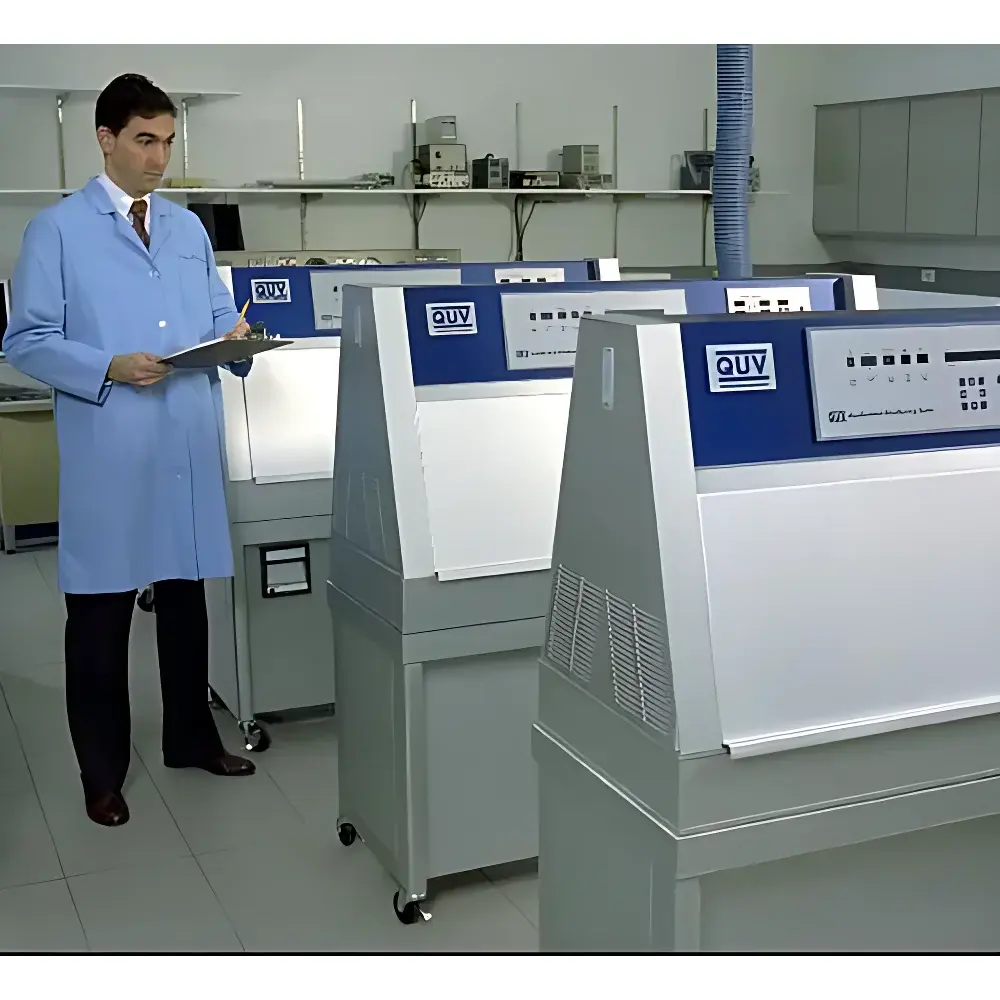
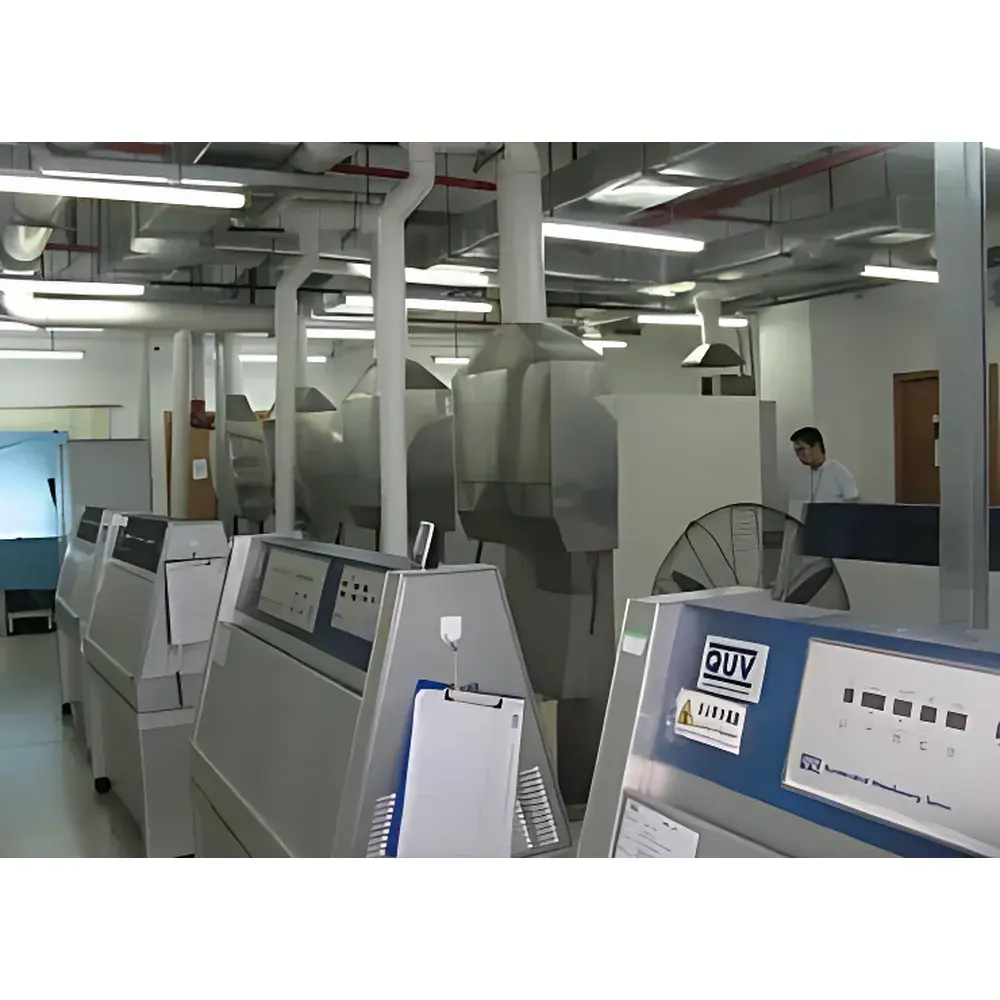
Q-LAB QUV UV Aging Test Chamber
| Brand | Q-LAB |
|---|---|
| Origin | USA |
| Model | QUV UV Aging Test Chamber |
| UV Wavelength Range | 320–400 nm |
| Sample Capacity | Up to 48 specimens (75 mm × 150 mm) |
| Lamp Life | 5,000 hours |
| Compliance | ASTM G154, ISO 4892-3, IEC 61215, SAE J2020, AATCC TM186, GB/T 14522 |
| Control System | SOLAR EYE irradiance feedback control (optional on QUV/se, QUV/spray, QUV/cw) |
| Cooling Method | Air-cooled condensation system |
| Water Source | Deionized water recommended for spray function |
| Enclosure Material | Stainless steel interior with aluminized steel exterior |
| Safety | Self-diagnostic alarms, maintenance reminders, overtemperature protection |
Overview
The Q-LAB QUV UV Aging Test Chamber is an industry-standard accelerated weathering instrument engineered for precision simulation of solar ultraviolet (UV) radiation and moisture-induced degradation mechanisms. Based on the fundamental principles of photochemical degradation, the QUV chamber employs fluorescent UV lamp technology to replicate the most damaging portion of terrestrial sunlight—specifically the 320–400 nm spectral band—while integrating controlled condensation and optional water spray to emulate natural dew formation and rain exposure. Unlike broad-spectrum xenon arc or carbon arc systems, the QUV platform delivers high-intensity, spectrally stable UV output with minimal infrared interference, enabling reproducible acceleration of surface-level polymer degradation pathways including photolysis, oxidation, chain scission, and crosslinking. Its design adheres to core photostability testing paradigms defined in ASTM G154 and ISO 4892-3, making it a primary reference instrument for material qualification in automotive, aerospace, coatings, plastics, and photovoltaic industries.
Key Features
- Three distinct operational configurations: QUV/basic (UV + condensation, no irradiance control), QUV/se (UV + condensation + SOLAR EYE irradiance feedback control), QUV/spray (UV + condensation + spray + SOLAR EYE), and QUV/cw (cool white visible light + condensation + SOLAR EYE for indoor light stability testing)
- SOLAR EYE irradiance monitoring and closed-loop power regulation ensures consistent UV intensity across lamp life—critical for inter-laboratory comparability and regulatory submissions
- Patented AUTOCAL system enables rapid, traceable calibration without external sensors or service visits, supporting GLP-compliant audit trails
- Air-cooled condensation system replicates nocturnal dew cycles via temperature-controlled humidification—no external chiller required
- Modular sample rack accommodates up to 48 standard 75 mm × 150 mm specimens; adjustable fixtures support samples up to 20 mm thick; optional specialized holders for lenses, textiles, 3D components, and vials
- Self-diagnostic firmware continuously monitors lamp output, chamber temperature, condensate level, and system voltage—triggering real-time alerts and scheduled maintenance prompts
- Multi-language touchscreen interface (English, French, Spanish, Italian, German) with persistent display of real-time exposure parameters (UV irradiance, black panel temperature, condensation time, cycle phase)
Sample Compatibility & Compliance
The QUV chamber supports diverse substrate geometries and material classes—including thermoplastics, elastomers, paints, adhesives, composites, and thin-film photovoltaic encapsulants—without requiring destructive sample preparation. Its standardized specimen mounting system eliminates edge effects common in non-uniform irradiation setups. All models comply with internationally recognized test standards governing UV exposure methodology: ASTM G154 (standard practice for operating fluorescent UV-condensation apparatus), ISO 4892-3 (plastics—methods of exposure to laboratory light sources—fluorescent UV lamps), IEC 61215 (photovoltaic module qualification), SAE J2020 (automotive exterior materials), AATCC TM186 (textile colorfastness), and GB/T 14522 (Chinese national standard for mechanical product UV resistance). The SOLAR EYE–equipped variants are validated for ISO/IEC 17025-accredited laboratories and support FDA 21 CFR Part 11–compliant electronic records when integrated with Q-Lab’s QUVA software suite.
Software & Data Management
QUV instruments operate natively with Q-Lab’s QUVA software platform, which provides full-cycle test method definition, real-time data logging, automated report generation, and secure user access controls. QUVA enforces role-based permissions, electronic signatures, and immutable audit trails—meeting requirements for GLP and GMP environments. Raw irradiance, temperature, and cycle timing data are timestamped at 1-second intervals and stored in encrypted SQLite databases. Export formats include CSV, PDF, and XML for integration into LIMS or enterprise QA systems. Optional cloud-enabled remote monitoring allows authorized users to receive SMS/email alerts for alarm events or cycle completion, while maintaining full data sovereignty within on-premise infrastructure.
Applications
- Accelerated evaluation of UV stabilizers and HALS additives in polyolefins and PVC formulations
- Correlation studies between QUV exposure and field performance of automotive clearcoats and headlamp lenses
- Qualification of backsheet materials for bifacial PV modules under cyclic UV/humidity stress
- Stability screening of pharmaceutical packaging films per ICH Q1B guidelines (supplemental UV testing)
- Comparative aging of architectural sealants and joint compounds per ASTM C719
- Validation of textile dye fastness in outdoor awning and marine upholstery applications
- Development of UV-curable resins and dental composites requiring precise radiant exposure dosimetry
FAQ
What UV lamp types are supported, and how do they differ in spectral output?
The QUV platform accepts two primary lamp families: UVB-313 lamps (peak emission at 313 nm, high-energy short-wave UV for aggressive acceleration) and UVA-340 lamps (closely matching solar UV below 365 nm, preferred for correlation with real-world exposure). Both are rated for 5,000 hours of operation under continuous use.
Is black panel temperature control available on all QUV models?
Yes—all QUV variants feature independent black panel temperature control (typically 35–80 °C range), calibrated per ASTM G151 requirements. The black panel sensor directly measures surface temperature of irradiated specimens, not ambient air.
Can the QUV chamber be used for corrosion testing or salt fog simulation?
No—the QUV is specifically designed for UV-driven photodegradation and moisture cycling. For salt spray or cyclic corrosion testing, Q-Lab’s Q-SUN xenon test chambers or dedicated salt fog cabinets are recommended.
Does the QUV/spray model require deionized water for operation?
Yes—deionized or distilled water is mandatory for the spray function to prevent mineral deposits on specimens and nozzle clogging. Tap water is acceptable only for condensation mode.
How frequently must UV lamps be replaced, and is recalibration required after replacement?
Lamps should be replaced every 5,000 hours or per manufacturer-recommended calendar interval. AUTOCAL automatically compensates for lamp aging; however, post-replacement verification using a NIST-traceable radiometer is advised for ISO 17025 compliance.



