
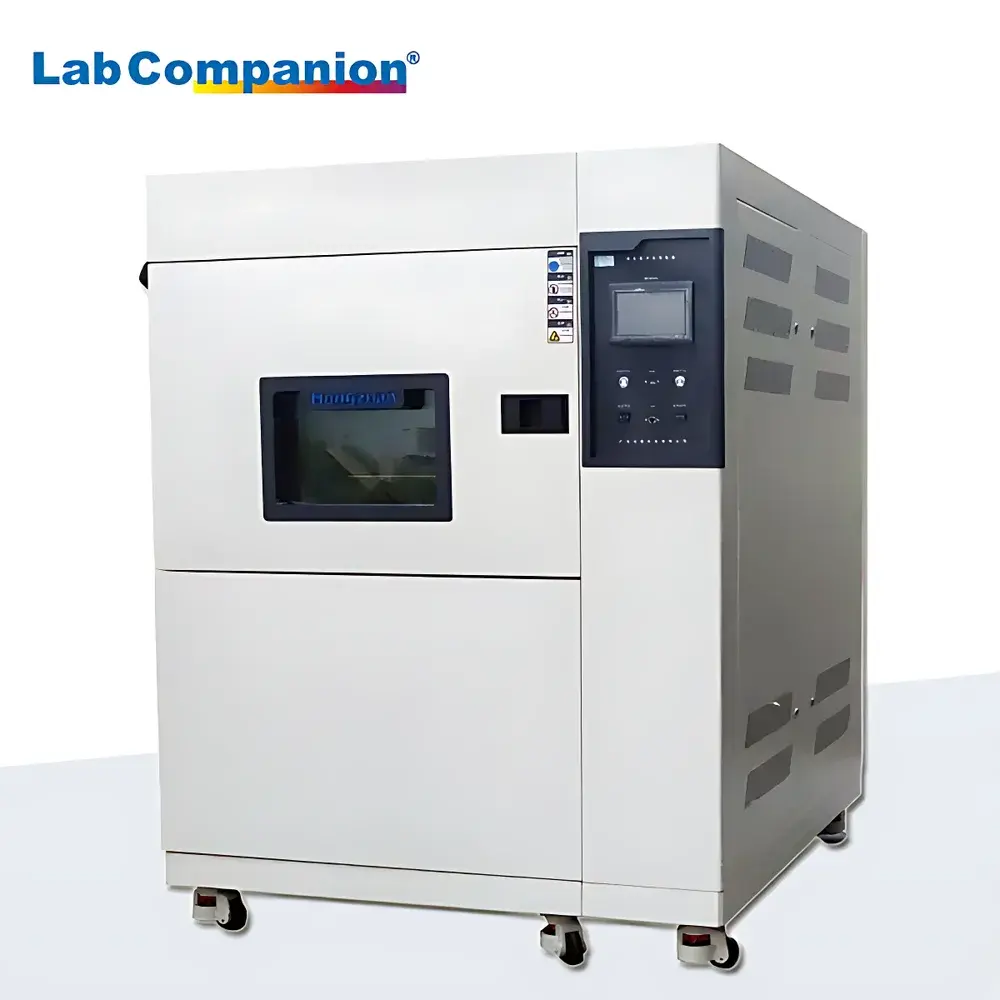
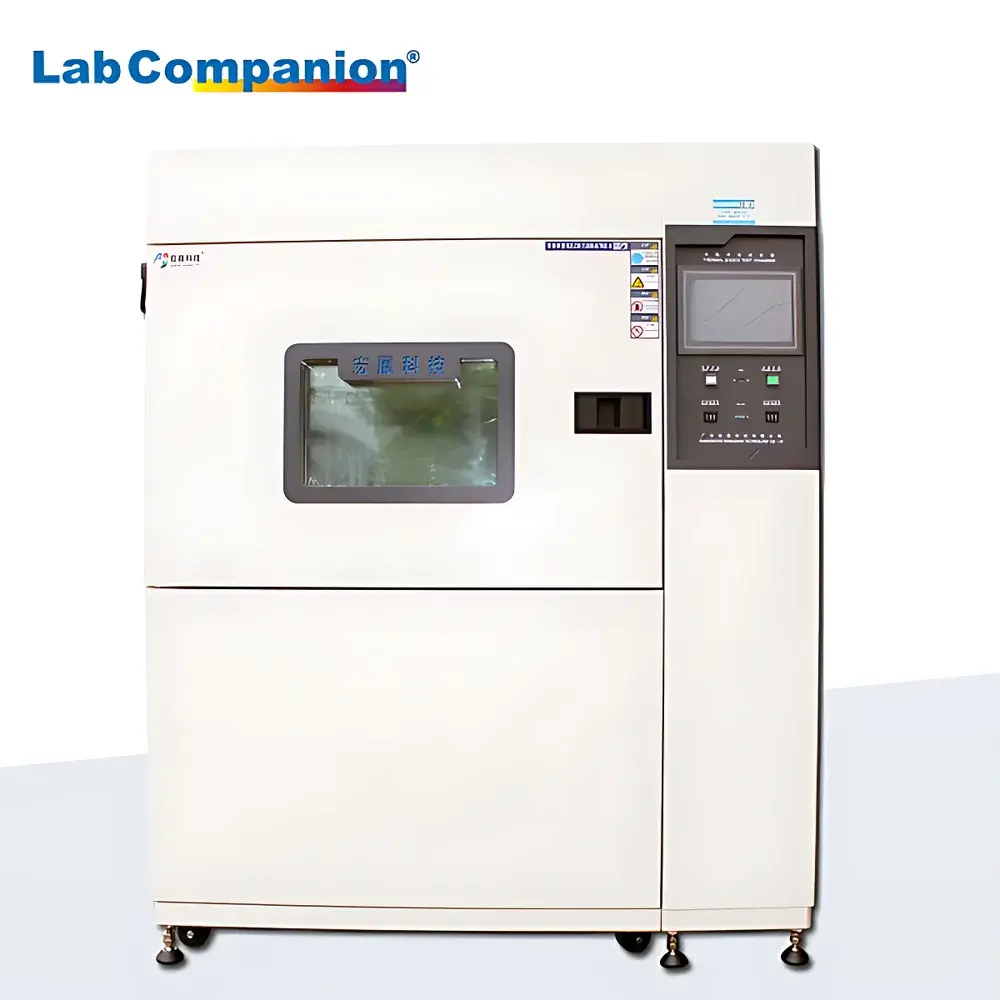
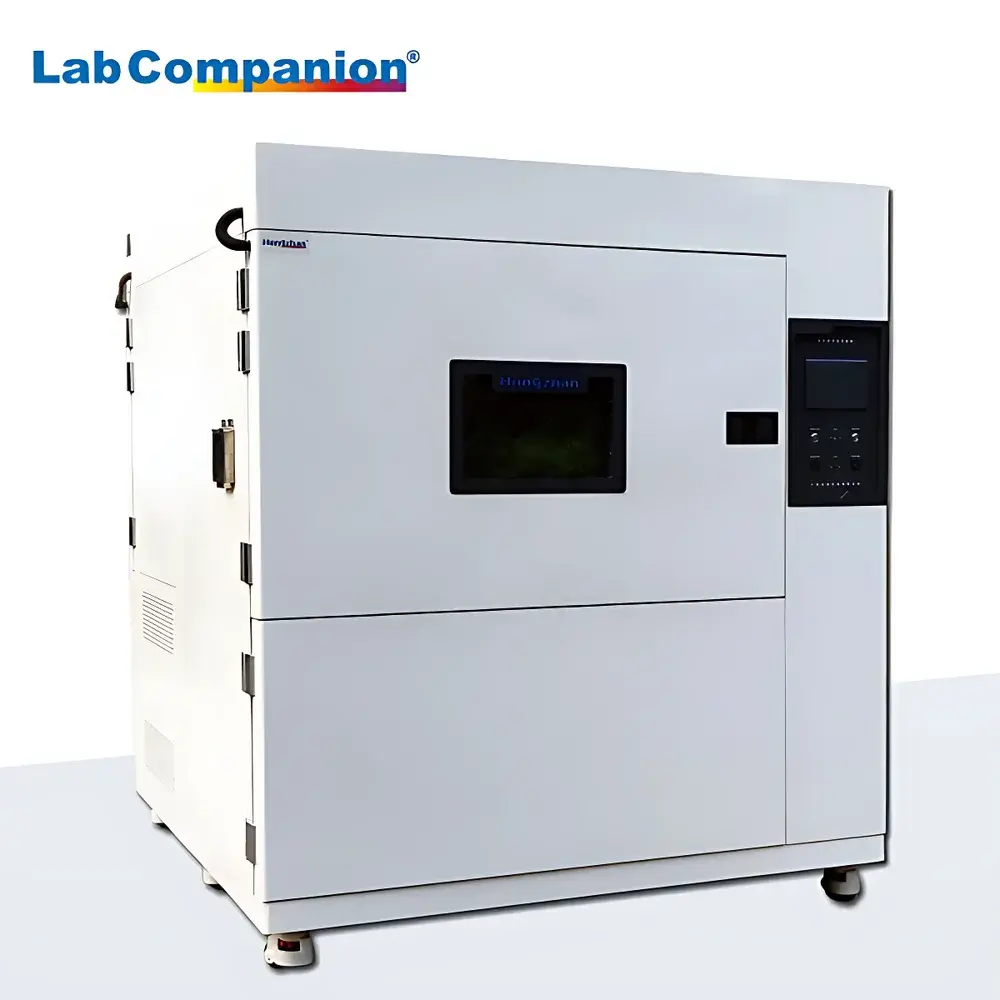
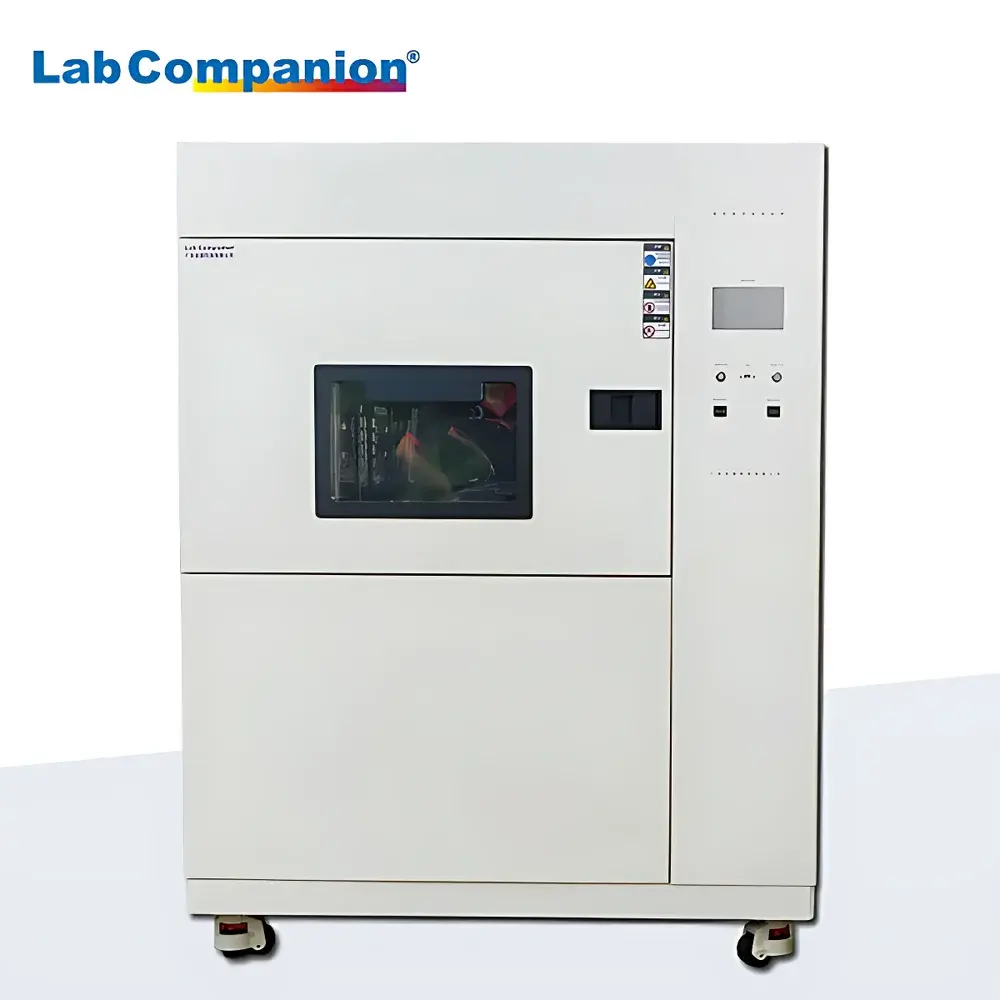
LabCompanion TSL-150W Three-Zone Thermal Shock Test Chamber
| Brand | LabCompanion |
|---|---|
| Origin | Guangdong, China |
| Manufacturer Type | Direct Manufacturer |
| Model | TSL-150W |
| High-Temperature Range | +60 °C to +200 °C |
| Low-Temperature Range | −78 °C to 0 °C |
| Thermal Shock Range | −40 °C to +150 °C |
| Temperature Stability | ±2 °C |
| Heating Rate | +60 °C to +200 °C ≤ 20 min |
| Cooling Rate | +20 °C to −75 °C ≤ 60 min |
Overview
The LabCompanion TSL-150W is a precision-engineered three-zone thermal shock test chamber designed for accelerated reliability assessment of electronic components, aerospace materials, automotive modules, and polymer-based assemblies under rapid, repetitive temperature transitions. Unlike two-chamber (hot/cold) systems, the TSL-150W employs a dedicated high-temperature zone, low-temperature zone, and insulated test chamber—enabling true zero-dwell-time transfer via pneumatically actuated air doors. This architecture eliminates thermal lag and ensures strict adherence to industry-standard thermal shock profiles defined in MIL-STD-810H Method 503.7, IEC 60068-2-14, and JESD22-A104E. The chamber operates on the principle of forced convection with independent PID-controlled heating and cryogenic cooling circuits, delivering reproducible thermal transients critical for identifying latent defects such as intermetallic delamination, solder joint fatigue, and coefficient-of-thermal-expansion (CTE) mismatch failure.
Key Features
- Three physically isolated zones: independent high-temp (+60 °C to +200 °C), low-temp (−78 °C to 0 °C), and test compartment—ensuring minimal thermal cross-contamination and precise dwell control.
- Pneumatic air-door switching mechanism with <5 s transfer time between zones, validated per ASTM F1912-22 Annex A2 for mechanical repeatability.
- Temperature stability maintained at ±2 °C across full operating range, verified by NIST-traceable Class A PT100 sensors mounted at multiple spatial locations.
- Heating rate of ≥6 °C/min (from +60 °C to +200 °C in ≤20 min) and cooling rate of ≥1.2 °C/min (from +20 °C to −75 °C in ≤60 min), measured under no-load conditions per IEC 60068-3-5.
- Stainless steel 304 interior chamber (W600 × H500 × D500 mm), seamless welded construction with electropolished finish for corrosion resistance and ease of cleaning.
- Integrated safety interlocks including over-temperature cut-off, liquid nitrogen low-level alarm (when LN₂ option installed), door position verification, and emergency stop circuit compliant with EN 60204-1.
Sample Compatibility & Compliance
The TSL-150W accommodates specimens up to 7.5 kg mass and 30 kg static load on its adjustable stainless-steel test rack. Compatible with JEDEC-standard trays, QFP/BGA packages, PCBAs, molded plastic housings, and elastomeric seals. All operational parameters meet requirements for GLP-compliant environmental stress screening (ESS) protocols. The system supports audit-ready documentation per ISO/IEC 17025:2017 clause 7.8.2, with configurable pass/fail criteria logging for each thermal cycle. Optional LN₂ precooling module enables extension to −78 °C without mechanical compressor limitations—critical for qualifying wide-bandgap semiconductor devices per AEC-Q101 Rev D.
Software & Data Management
Controlled via LabCompanion’s TC-Studio v4.2 software suite, the TSL-150W provides real-time multichannel temperature monitoring (up to 16 external thermocouple inputs), programmable multi-step shock sequences (including ramp-hold-soak profiles), and automatic cycle counting with timestamped CSV export. Data integrity complies with FDA 21 CFR Part 11 requirements through role-based user authentication, electronic signature capture, and immutable audit trail generation. Raw sensor data is stored locally on an industrial-grade SSD with RAID 1 redundancy; optional Ethernet/IP or Modbus TCP integration enables centralized fleet monitoring in MES or SCADA environments.
Applications
- Qualification testing of automotive ECUs per ISO 16750-4 (electrical loads and environmental conditions).
- Failure mode analysis of MEMS sensors and RF front-end modules subjected to thermal cycling-induced stress migration.
- Process validation for conformal coating adhesion and potting compound cure integrity under extreme ΔT conditions.
- Reliability screening of battery management systems (BMS) and Li-ion cell modules in EV powertrain development.
- Accelerated aging studies of optical adhesives and lens assemblies used in LIDAR and ADAS camera systems.
FAQ
What standards does the TSL-150W support for thermal shock qualification?
The chamber meets test condition requirements for MIL-STD-810H Method 503.7, IEC 60068-2-14, JESD22-A104E, and GB/T 2423.22—fully configurable for both “air-to-air” and “liquid-to-air” shock variants.
Can the system operate continuously for extended HALT/HASS profiles?
Yes—rated for uninterrupted operation up to 1,000 hours with scheduled maintenance intervals aligned to ISO 13374-2 condition monitoring guidelines.
Is remote monitoring and calibration traceability available?
All units ship with factory calibration certificate traceable to NIM (China National Institute of Metrology); optional UKAS-accredited recalibration service and cloud-based telemetry via LabCompanion Connect are available upon request.
How is thermal uniformity validated across the test volume?
Uniformity mapping is performed per IEC 60068-3-5 using 9-point sensor array; typical deviation remains ≤±1.5 °C at setpoint during steady-state operation.
Does the system support custom profile scripting beyond built-in templates?
TC-Studio supports Python-based script injection for complex conditional logic, dynamic parameter adjustment, and external trigger synchronization with oscilloscopes or power analyzers.



