
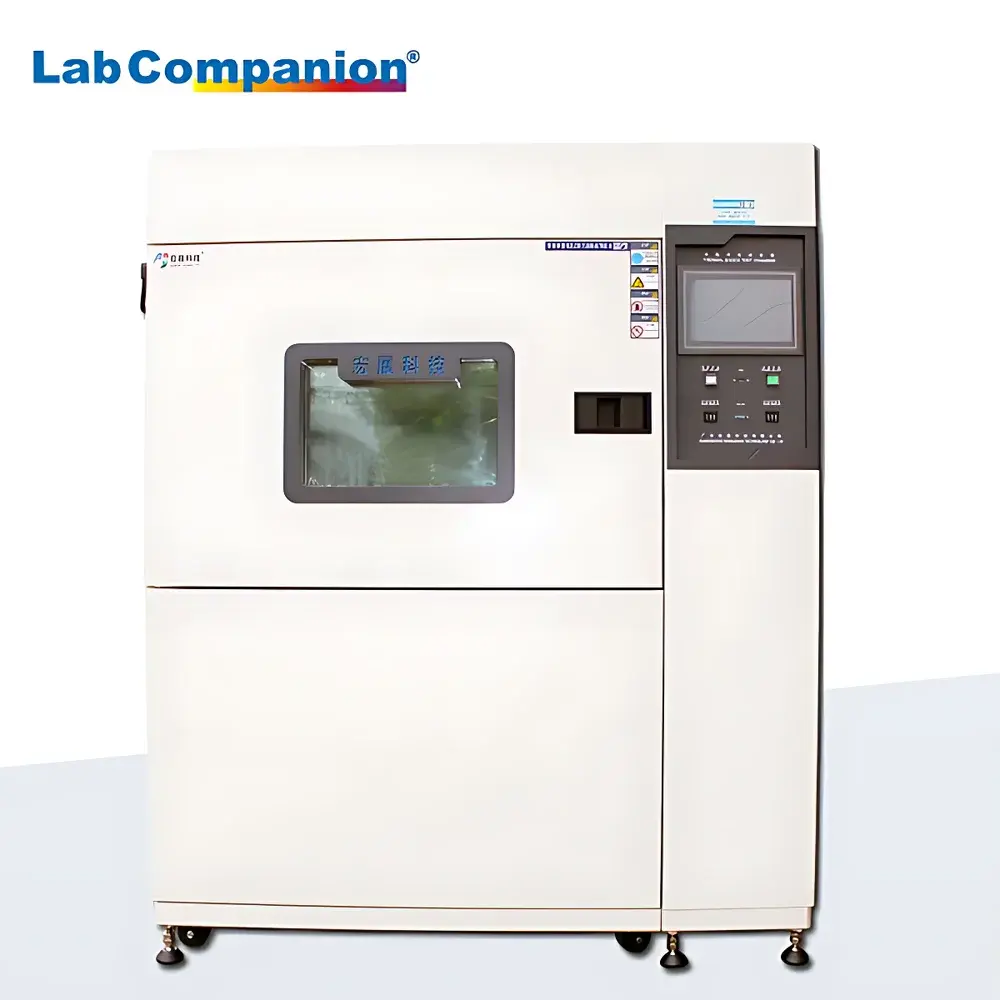
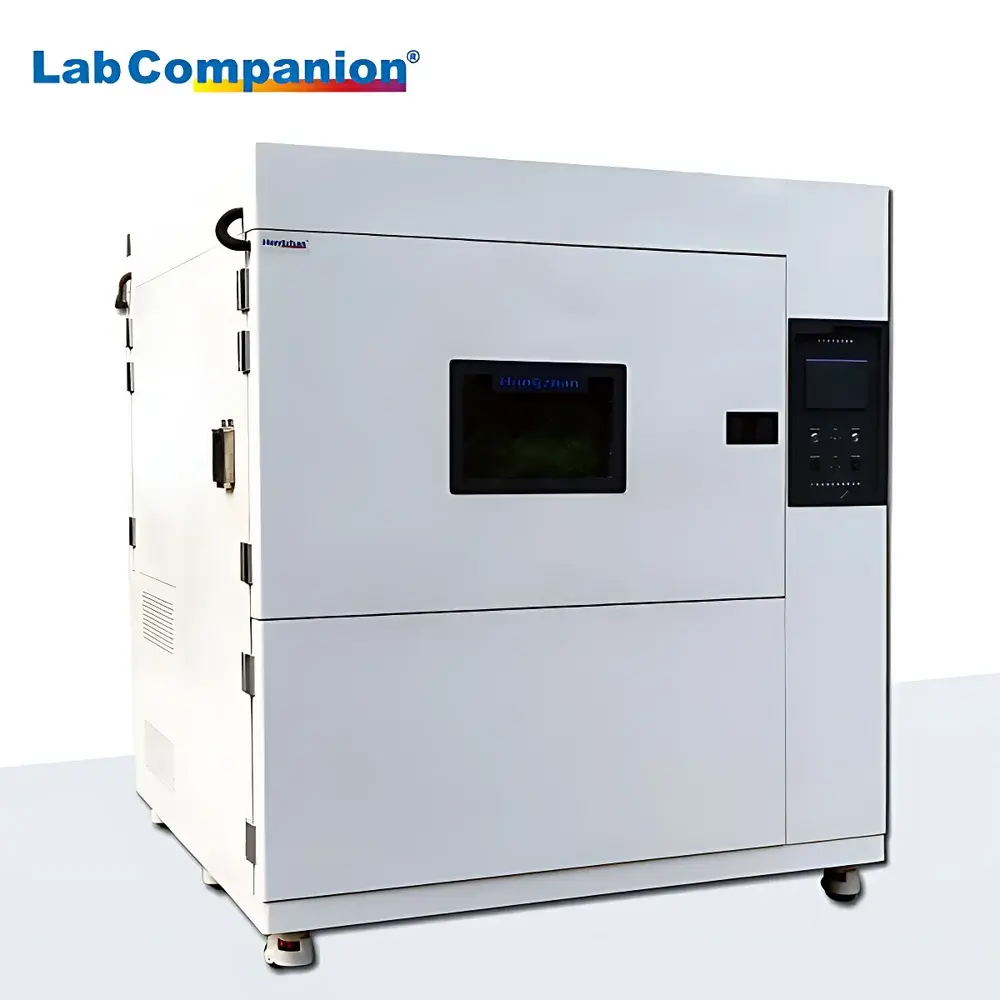
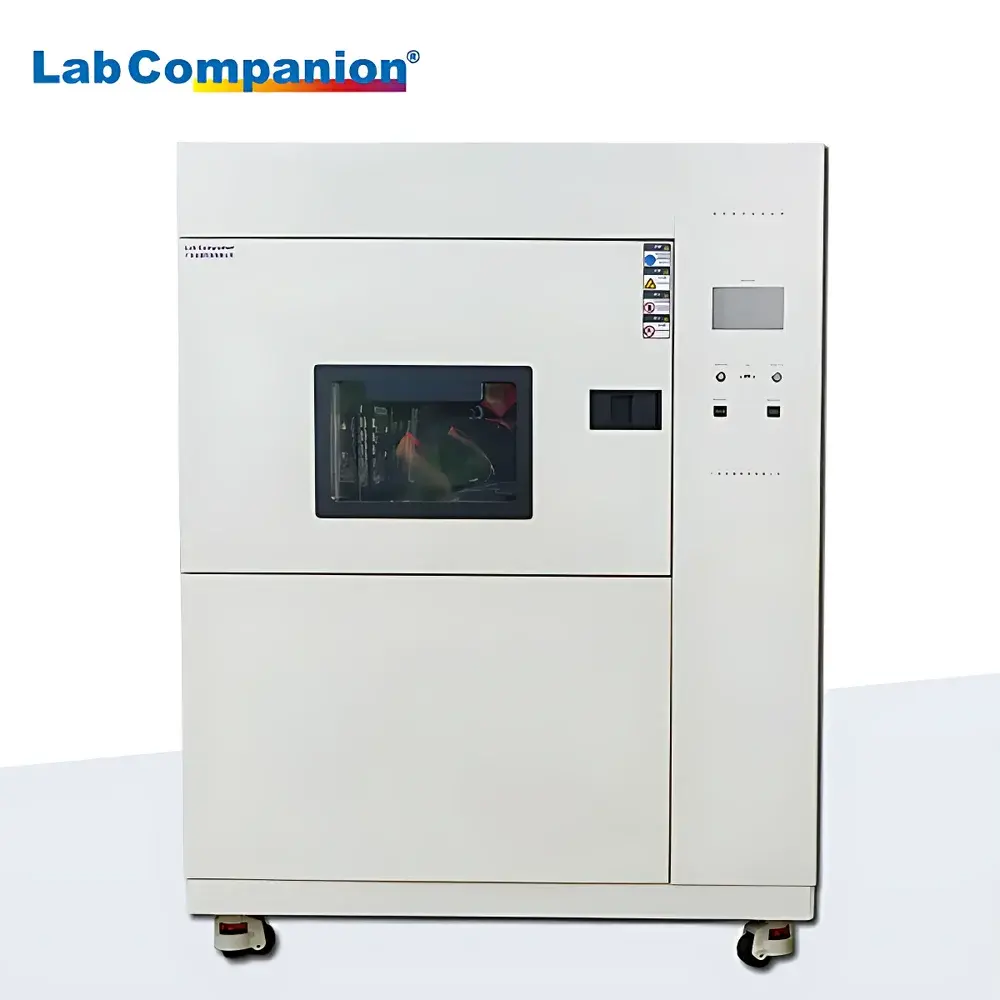
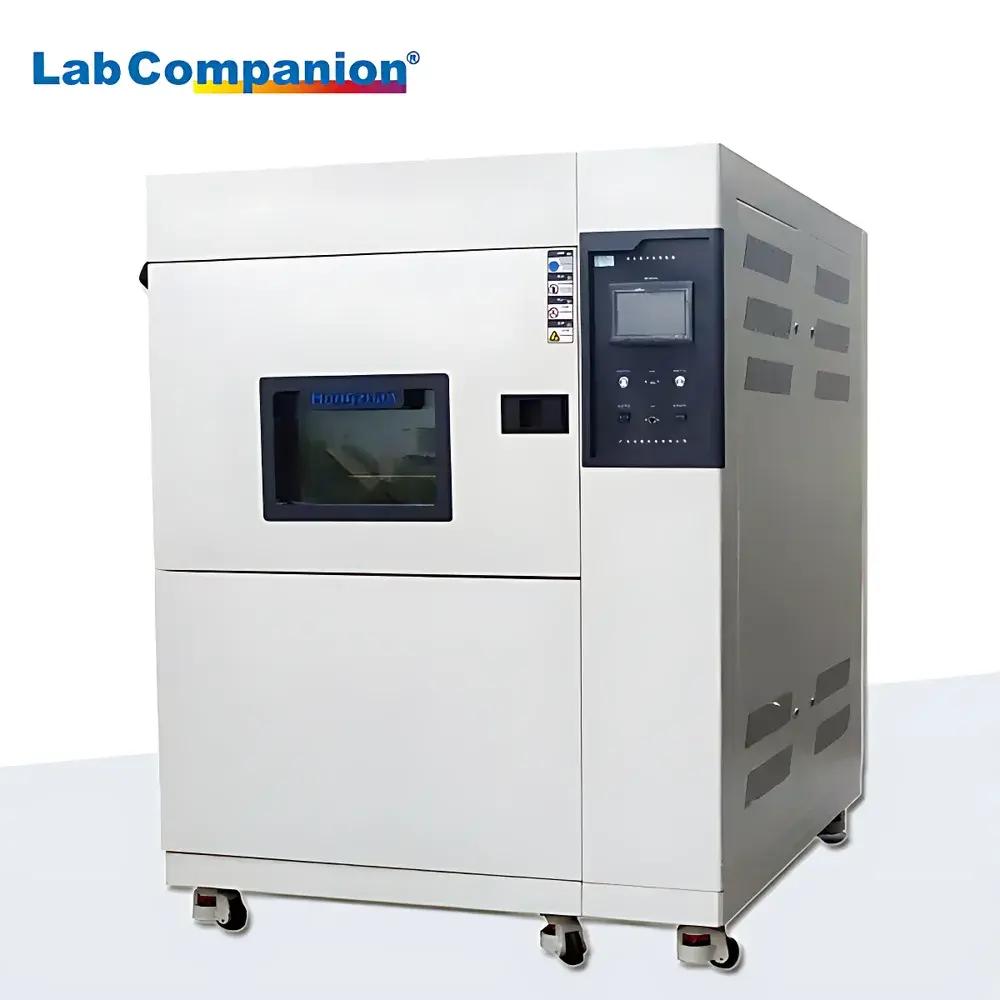
LabCompanion TSL-225W Thermal Shock Test Chamber
| Brand | LabCompanion |
|---|---|
| Origin | Guangdong, China |
| Manufacturer Type | Direct Manufacturer |
| Model | TSL-225W |
| High-Temperature Range | +60 °C to +200 °C |
| Low-Temperature Range | −78 °C to 0 °C |
| Thermal Shock Range | −40 °C to +150 °C |
| Temperature Stability | ±2 °C |
| Heating Rate | +60 °C to −200 °C ≤ 20 min |
| Cooling Rate | +20 °C to −75 °C ≤ 60 min |
Overview
The LabCompanion TSL-225W Thermal Shock Test Chamber is an engineered environmental test system designed for accelerated reliability assessment of electronic components, automotive modules, aerospace assemblies, and polymer-based packaging under rapid, repetitive temperature transitions. It operates on a two-zone (hot/cold) pneumatic door-switching architecture—eliminating thermal mass interference from a single-chamber design—and delivers controlled, high-fidelity thermal shock profiles compliant with IEC 60068-2-14, MIL-STD-810H Method 503.7, and JESD22-A104E. The chamber’s core function is to subject test specimens to abrupt transfers between pre-conditioned high- and low-temperature environments, inducing thermomechanical stress that reveals latent defects such as solder joint fatigue, die attach delamination, wire bond lift-off, or seal integrity failure. Its dual-zone configuration ensures minimal temperature overshoot and precise dwell control, enabling repeatable qualification testing in accordance with GLP and internal quality audit requirements.
Key Features
- Two-zone thermal shock architecture with independent hot and cold chambers, actuated by high-cycle pneumatic doors for sub-5-second transfer time
- Hot chamber temperature range: +60 °C to +200 °C; cold chamber range: −78 °C to 0 °C (using cascade refrigeration with environmentally compliant R507A/R23 refrigerant blend)
- Verified thermal shock operating envelope: −40 °C to +150 °C across standard test profiles (e.g., 30-min dwell per zone, 10-cycle minimum)
- Temperature uniformity and stability maintained at ±2 °C throughout the 750 × 500 × 600 mm (W × H × D) test volume, validated per ASTM E741 and IEC 60068-3-5
- Heating rate: +60 °C → +200 °C in ≤20 minutes (chamber-only, no load); cooling rate: +20 °C → −75 °C in ≤60 minutes (no-load, ambient 25 °C)
- Integrated real-time monitoring of chamber air temperature, specimen surface temperature (via optional thermocouple input), door position, and refrigeration stage status
- Robust stainless-steel interior (SUS304), insulated with 150 mm polyurethane foam (thermal conductivity < 0.022 W/m·K), and reinforced structural frame for long-term dimensional stability
Sample Compatibility & Compliance
The TSL-225W accommodates test specimens up to 10 kg mass and 30 kg static load on its adjustable, perforated stainless-steel shelf—optimized for airflow distribution and thermal equilibration. Compatible sample types include PCBAs, QFN/BGA packages, MEMS sensors, plastic-encapsulated ICs, battery modules, and composite housings. All operational parameters meet traceability requirements for ISO/IEC 17025-accredited laboratories. The system supports test execution under documented procedures aligned with IPC-9701A (performance qualification of interconnect systems), AEC-Q200 (passive component stress testing), and JEDEC J-STD-020 (moisture sensitivity level classification). Optional calibration certificates (NIST-traceable Pt100 sensors) and IQ/OQ documentation packages are available for GMP-regulated environments.
Software & Data Management
Equipped with LabCompanion’s TC-Link™ control software (v4.2+), the TSL-225W provides intuitive profile programming—including ramp-soak-shock sequences, multi-step cycles, and user-defined dwell times—with password-protected parameter locking. Real-time data logging records temperature (hot/cold zones + optional specimen point), door actuation timestamps, alarm events, and system power status at configurable intervals (1–60 s). Export formats include CSV and PDF reports with embedded digital signatures. Audit trail functionality complies with FDA 21 CFR Part 11 requirements when paired with network authentication and electronic signature modules. Remote monitoring via Ethernet (TCP/IP) enables integration into centralized lab management systems (LIMS) or MES platforms.
Applications
- Qualification testing of automotive ECUs per ISO 16750-4 (electrical loads and environmental conditions)
- Reliability screening of consumer electronics prior to field deployment (HAST pre-screening alternative)
- Failure analysis correlation studies linking thermal cycling history to microstructural degradation observed via SEM/EDS
- Process validation for conformal coating adhesion or underfill cure performance under thermal extremes
- Material selection support for encapsulants, adhesives, and thermal interface materials (TIMs) used in power electronics
- Supporting accelerated life testing (ALT) models requiring Arrhenius-based acceleration factors derived from controlled thermal shock exposure
FAQ
What standards does the TSL-225W comply with for thermal shock testing?
It meets the instrumentation and procedural requirements of IEC 60068-2-14, MIL-STD-810H Method 503.7, JESD22-A104E, and ASTM F1876—covering temperature transition rates, dwell stability, and measurement uncertainty specifications.
Can the chamber operate continuously for extended qualification runs (e.g., 1,000 cycles)?
Yes—its industrial-grade compressors, redundant safety interlocks (high-temp cutout, low-refrigerant pressure lock, door-open inhibition), and predictive maintenance alerts enable unattended operation over multi-day test campaigns.
Is external water cooling required for the refrigeration system?
No—the TSL-225W uses air-cooled condensers optimized for ambient temperatures up to 35 °C; optional water-cooled condenser kits are available for installations in high-ambient or confined spaces.
How is temperature uniformity verified across the working volume?
Uniformity mapping is performed using nine calibrated PT100 sensors per zone during factory acceptance testing (FAT), with results documented in the supplied Uniformity Validation Report per IEC 60068-3-5 Annex B.
Does LabCompanion provide installation and operational qualification (IQ/OQ) support?
Yes—comprehensive IQ/OQ protocols, executed by certified field application engineers, are available as optional services including sensor calibration, door transfer timing verification, and alarm response validation.



