
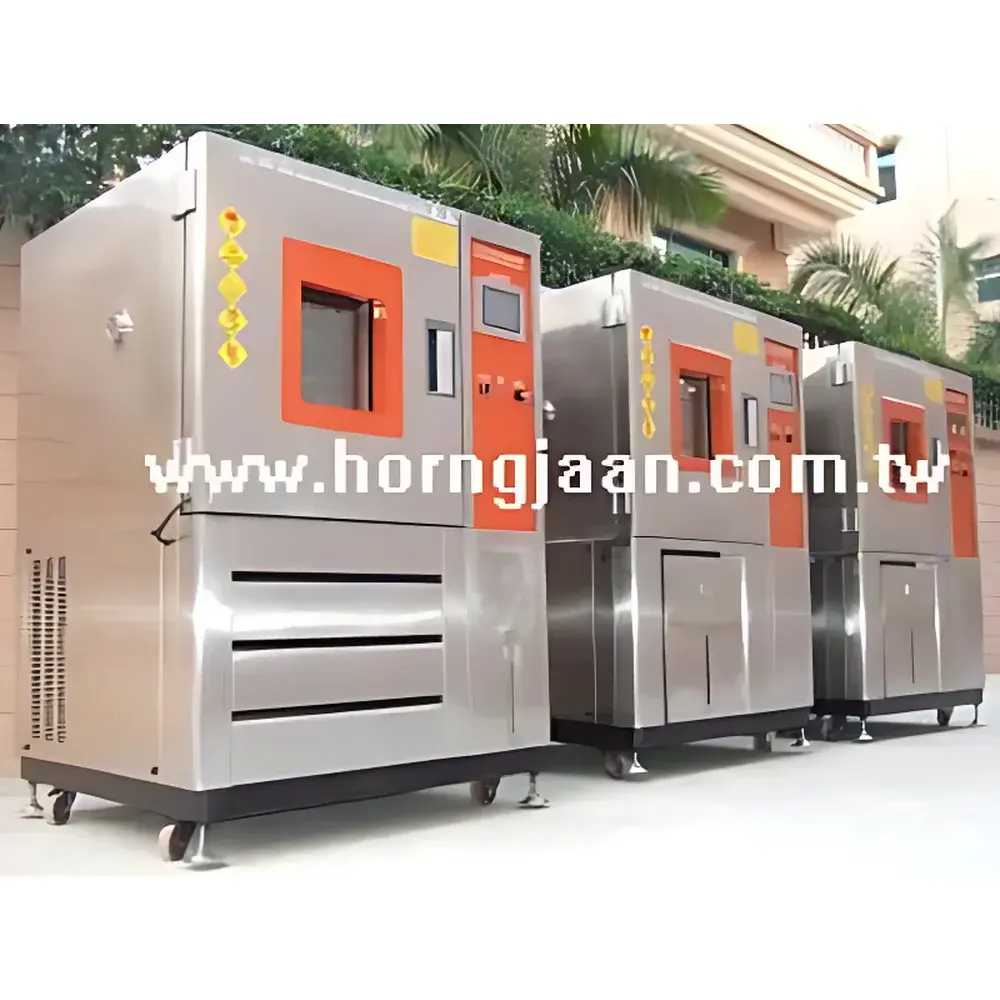
LabCompanion WGD/SH Series Constant Temperature & Humidity Environmental Test Chamber
| Brand | LabCompanion |
|---|---|
| Model | WGD/SH Series |
| Origin | Guangdong, China |
| Manufacturer | LabCompanion (OEM/ODM Producer) |
| Compliance | GB/T 2423.3 (Constant Damp Heat Test) |
| Construction | Exterior – Powder-Coated Cold-Rolled Steel |
| Temperature Control System | Fuji Electric PXR Series PID Controller |
| Refrigeration System | Imported Hermetic Scroll Compressor |
| Safety Protections | Thermal Fuse, Earth Leakage Circuit Breaker (ELCB), Fan Overheat Protection, Compressor High-Temperature Cut-off, Motor Overvoltage/Overcurrent/Overheat Protection |
| Integration Capability | Compatible with Tensile Testing Machines (e.g., Instron, MTS) via I/O interface or standalone operation |
Overview
The LabCompanion WGD/SH Series Constant Temperature & Humidity Environmental Test Chamber is an engineered solution for standardized evaluation of material and product stability under controlled thermal and hygrothermal stress conditions. Designed in strict accordance with GB/T 2423.3—China’s national implementation of IEC 60068-2-78 for constant damp heat testing—the chamber provides a reproducible, traceable environment for accelerated aging, reliability screening, and pre-compliance verification across electronics, automotive components, packaging materials, polymers, and coated substrates. Its operational principle relies on dual-loop climate control: a high-efficiency refrigeration circuit (using R404A or R507 refrigerant) coupled with precision steam-based humidification and PID-regulated air circulation to maintain setpoint stability within ±0.5 °C temperature uniformity (±2 % RH uniformity) across the working volume. The chamber’s structural integrity supports long-duration exposure protocols (up to 999 hours continuous operation), making it suitable for both QC laboratories and R&D validation workflows.
Key Features
- Robust dual-wall construction: exterior cold-rolled steel with electrostatic powder coating; interior 304 stainless steel chamber for corrosion resistance and cleanability
- Fuji Electric PXR-series digital PID temperature/humidity controller with programmable ramp-soak profiles, real-time data logging (optional SD card module), and RS485 Modbus RTU communication interface
- Imported hermetic scroll compressor refrigeration system ensuring stable low-temperature performance down to −40 °C (model-dependent) and rapid recovery after door opening
- Steam-type humidification system with stainless steel water reservoir and auto-drain function to minimize mineral buildup and microbial growth
- Comprehensive safety architecture: ELCB-rated leakage protection, thermal fuses on heating elements and fan motors, compressor discharge temperature monitoring, and multi-stage overcurrent/overvoltage cutoffs
- Modular I/O interface (dry contact & analog 0–10 V) enabling synchronized operation with external mechanical testers—including universal tensile machines—for combined thermo-mechanical stress assessment
Sample Compatibility & Compliance
The WGD/SH chamber accommodates samples up to 500 mm × 500 mm × 500 mm (custom volumes available), with adjustable shelf spacing and non-corrosive stainless-steel sample trays. It supports passive and active sample monitoring: thermocouple feedthrough ports (PT100 or K-type) allow real-time internal surface temperature tracking during test cycles. From a regulatory standpoint, the system meets the environmental conditioning requirements specified in GB/T 2423.3, IEC 60068-2-78, and JIS C 0068. While not certified to ISO/IEC 17025 calibration standards out-of-box, its control system supports third-party verification per ISO 17025 Annex A.2 for laboratory accreditation readiness. For GMP/GLP environments, optional audit-trail-enabled firmware (with user access logs and parameter change history) aligns with FDA 21 CFR Part 11 data integrity expectations when paired with validated SOPs.
Software & Data Management
The embedded Fuji controller provides local setpoint configuration, cycle programming (up to 99 segments), and real-time graphing of temperature and humidity trends on a 4.3-inch TFT LCD. Optional PC-based software (LabCompanion ClimateLink™ v3.2) enables remote supervision via Ethernet/Wi-Fi, automated report generation (PDF/CSV), alarm event timestamping, and integration into LIMS or MES platforms through OPC UA or RESTful API. All logged data includes metadata: operator ID, chamber serial number, calibration due date, and ambient lab conditions (if external sensors are connected). Data export complies with ISO/IEC 17025 clause 7.5.2 for record retention integrity.
Applications
- Electronics: PCB solder joint reliability under 40 °C / 93 % RH (IEC 60068-2-78 Test Ca)
- Automotive: Sealing gasket compression set evaluation at elevated humidity
- Pharmaceutical packaging: moisture permeation rate validation of blister foil laminates
- Polymer science: hydrolytic degradation kinetics of polyesters and polyamides
- Aerospace composites: matrix swelling behavior in carbon fiber-reinforced epoxies
- Quality assurance: incoming inspection of hygroscopic raw materials (e.g., nylon pellets, lithium battery cathodes)
FAQ
What is the standard calibration interval recommended for this chamber?
LabCompanion recommends annual verification against NIST-traceable reference standards for temperature (±0.3 °C) and humidity (±2 % RH) per ISO/IEC 17025 guidance.
Can the chamber operate continuously at 85 °C / 85 % RH?
Yes—models equipped with enhanced condensate management and high-temp-resistant gaskets support extended 85/85 testing per JEDEC JESD22-A101, subject to proper maintenance and water purity (deionized water required).
Is remote monitoring supported without additional hardware?
Basic Ethernet connectivity is built-in; full remote control and data streaming require optional ClimateLink™ license activation and network configuration.
Does the system include validation documentation (IQ/OQ/PQ templates)?
Factory-supplied IQ/OQ templates compliant with ISO 13485 and GMP Annex 15 are provided upon request; PQ execution requires site-specific sensor mapping and load studies.
How is condensate handled during dehumidification cycles?
An integrated hot-gas bypass system minimizes frost formation on evaporator coils, while automatic defrost drainage routes condensate to an external collection tank or floor drain via gravity-fed PVC tubing.
Related Products



