
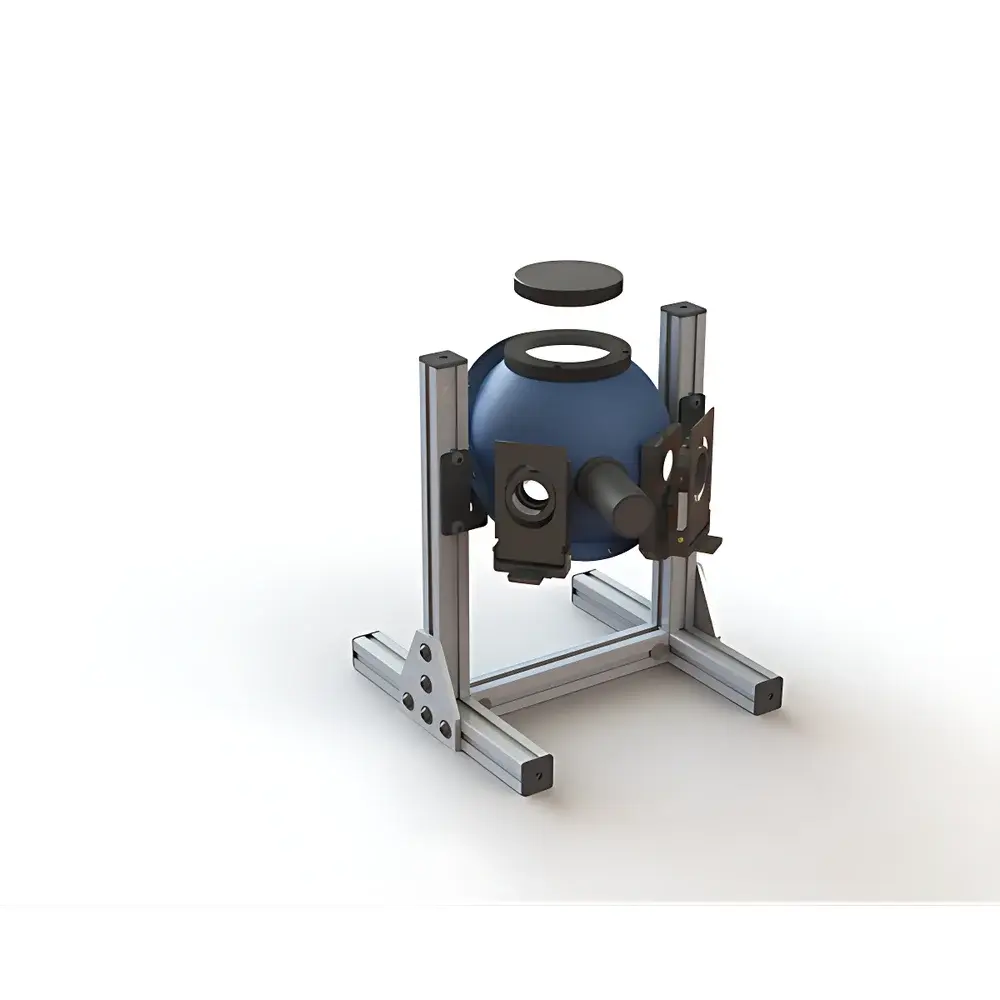
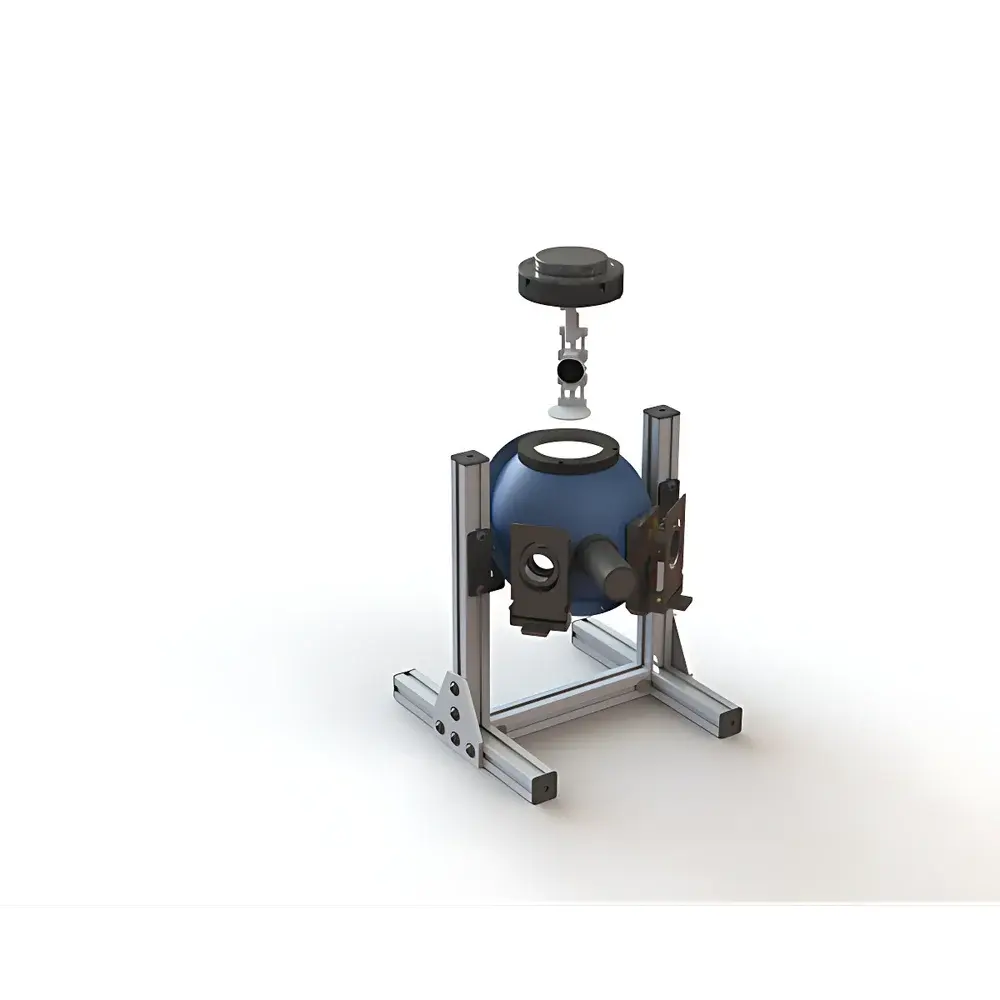
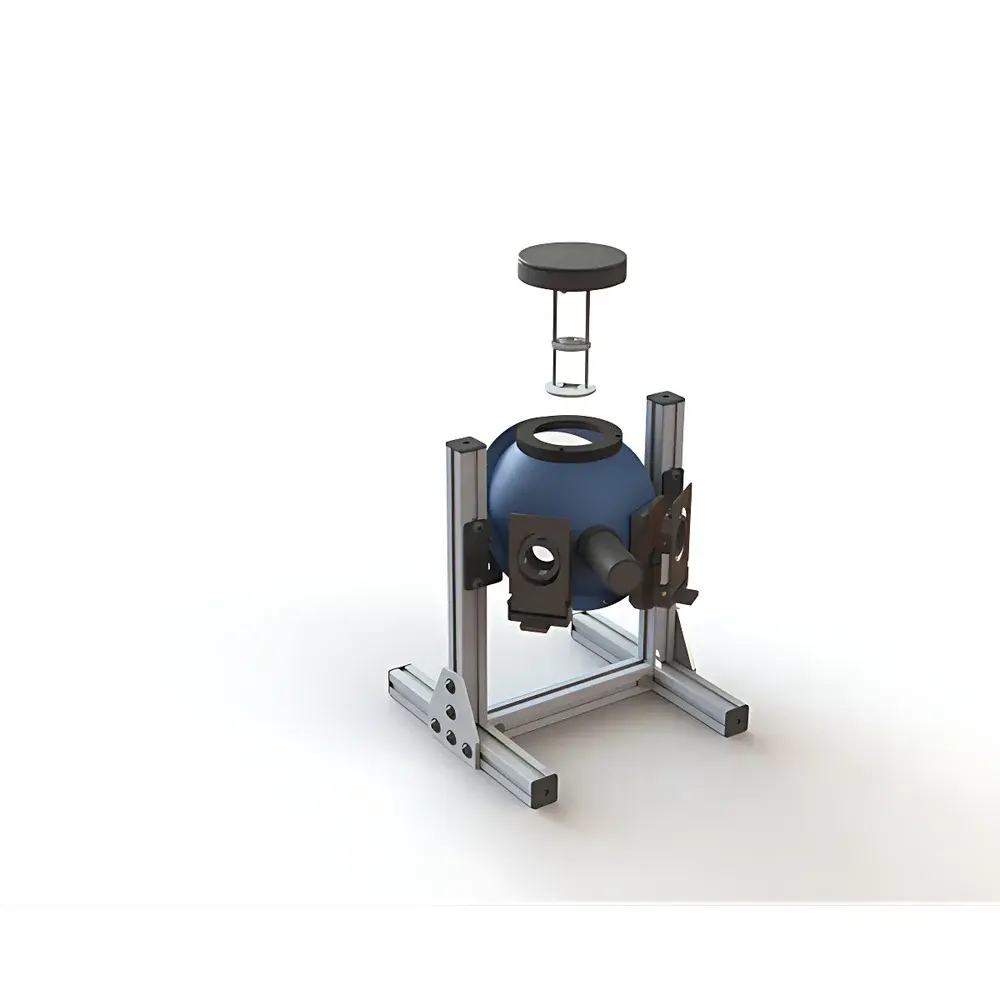
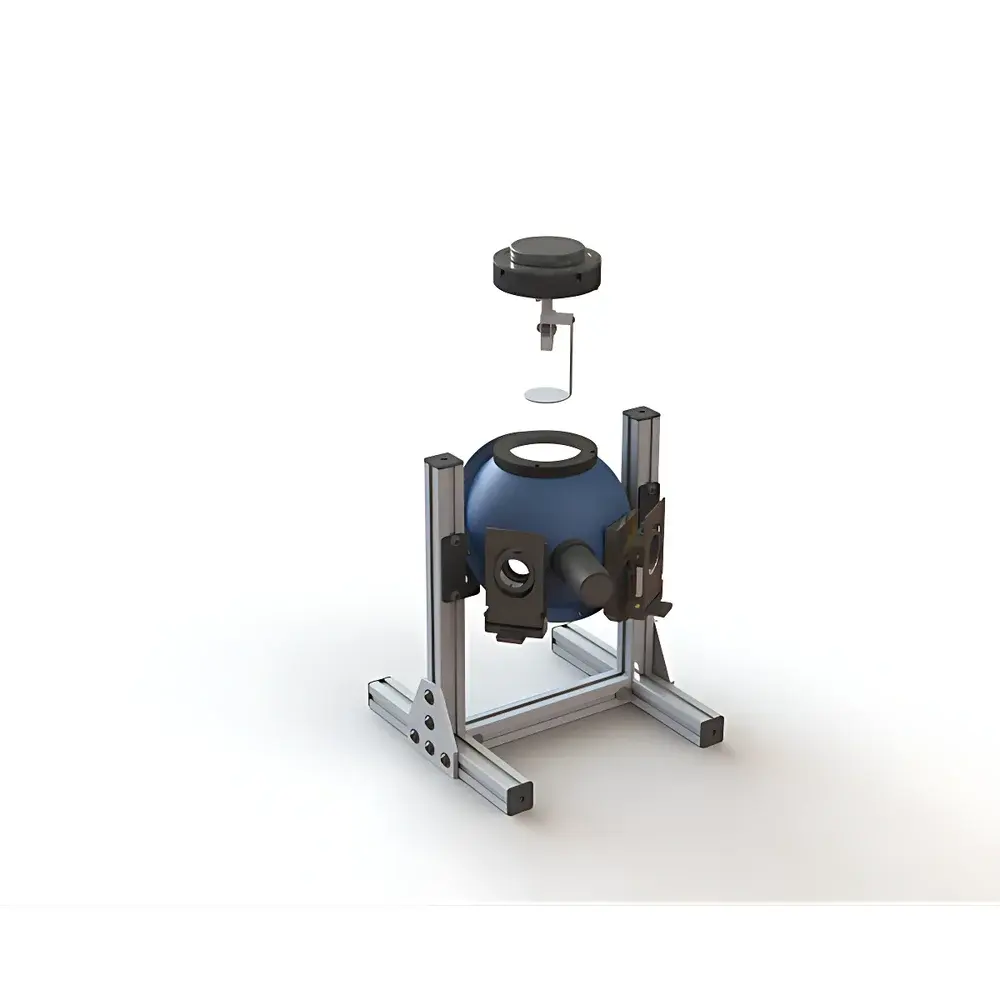
Labsphere LCA-XXXXX-XXX Dual-Beam Laboratory-Grade Transmittance and Reflectance Spectrophotometer
| Brand | Labsphere |
|---|---|
| Origin | Shanghai, China |
| Manufacturer Type | Authorized Distributor |
| Country of Origin | China |
| Model | LCA-XXXXX-XXX |
| Price | Upon Request |
| Wavelength Range | 300–1100 nm |
Overview
The Labsphere LCA-XXXXX-XXX is a dual-beam, laboratory-grade transmittance and reflectance spectrophotometer engineered for high-fidelity optical characterization of solid and thin-film materials. It operates on the principle of comparative photometric measurement using a paired beam architecture—one beam traverses the sample path while the other serves as a real-time reference—thereby eliminating systematic errors induced by source drift, detector instability, or mechanical perturbations associated with sample insertion into an integrating sphere. Unlike conventional single-beam sphere-based systems where sample placement alters the internal geometry and light distribution (a known source of spectral bias), this instrument maintains optical equivalence between measurement and reference states through synchronized, co-aligned beam paths. The system integrates a precision collimated broadband light source, a calibrated fiber-coupled spectrometer (300–1100 nm), and a modular integrating sphere platform compatible with both RT (2π hemispherical collection) and RTC (center-mounted angularly adjustable sample stage) configurations.
Key Features
- Dual-beam optical architecture ensures real-time compensation for lamp intensity fluctuation and detector responsivity drift, delivering superior photometric stability (<0.1% RMS over 1 hour).
- Modular integrating sphere design with interchangeable coatings: Spectraflect® (300–1800 nm), Spectralon® (200–2500 nm), and InfraGold® (900 nm–10 µm), each certified with NIST-traceable diffuse reflectance data sheets.
- Integrated collimated source mount eliminates need for external alignment fixtures; enables repeatable, operator-independent illumination geometry per ASTM E275 and ISO 9050 standards.
- Dedicated light trap assembly allows independent quantification of specular vs. diffuse reflectance components in accordance with ASTM E1331 and ISO 13468-2 methodologies.
- RT configuration supports total hemispherical transmittance/reflectance (2π solid angle); RTC variant includes motorized center-stage positioning for directional BRDF mapping at user-defined incidence and collection angles.
- Pre-aligned fiber-optic coupling to OEM-grade CCD-array spectrometer ensures consistent spectral sampling resolution (≤1.5 nm FWHM) and signal-to-noise ratio (>1000:1 at peak intensity).
Sample Compatibility & Compliance
The LCA-XXXXX-XXX accommodates flat, rigid samples up to 50 mm in diameter (standard) or custom-sized substrates via optional mounting adapters. Compatible with optical filters, AR/HR coatings, polymer films, semiconductor wafers, glass substrates, and ceramic tiles. All measurements adhere to internationally recognized optical metrology frameworks: compliance with ASTM E903 (solar absorptance), ASTM E1918 (solar reflectance), ISO/CIE S 017 (spectral irradiance), and EN 410 (glass optical properties) is achievable through appropriate calibration protocols. Spectralon® diffuse standards supplied with the system are certified under NVLAP Lab Code 200903-0, with calibration traceability documented to NIST SRM 2020 and SRM 990c. System design supports GLP-compliant operation, including audit-trail-enabled software logging and user-access controls aligned with FDA 21 CFR Part 11 requirements.
Software & Data Management
Bundled Labsphere SpectraSuite™ software provides full instrument control, spectral acquisition, and ISO/ASTM-compliant data reduction. Features include automated baseline correction, multi-point spectral averaging, configurable ROI analysis, and export to CSV, XML, and industry-standard .jdx formats. Calibration workflows support multi-wavelength validation using NIST-traceable standards, with digital signature capability for electronic record integrity. Raw spectral data retains full wavelength-intensity metadata—including integration time, slit width, and detector gain—for reproducible reprocessing. Software architecture complies with IEC 62304 Class B medical device software guidelines and supports IQ/OQ/PQ documentation packages for regulated environments.
Applications
- Quantitative evaluation of anti-reflective, high-reflective, and dichroic coating performance across UV-VIS-NIR bands.
- Optical quality assurance of architectural glazing, solar panel cover glass, and display cover materials.
- Development and validation of radiative cooling films and thermally functional surfaces.
- Characterization of scattering media including diffusers, opal glass, and white LED encapsulants.
- Support for ISO 11664-6 (CIE colorimetry) and CIE 15:2018-compliant tristimulus value computation.
- Research-grade BRDF/BTDF modeling input generation for optical simulation tools (e.g., LightTools, TracePro, Zemax OpticStudio).
FAQ
How does the dual-beam design improve measurement accuracy compared to single-beam integrating sphere systems?
It eliminates sphere geometry-induced errors caused by sample insertion, which alters internal baffle shadowing and wall illumination uniformity—common sources of spectral artifact in traditional setups.
Can the system measure both absolute and relative reflectance?
Yes—absolute reflectance is determined using NIST-traceable Spectralon® standards; relative measurements (e.g., sample vs. reference coating) are supported via normalized spectral ratio mode.
Is the spectrometer included in the base configuration?
Yes—the system ships with a factory-aligned, thermoelectrically cooled CCD-array spectrometer optimized for 300–1100 nm with onboard dark-current correction.
What level of angular resolution is achievable in RTC configuration?
The center-stage supports ±10° incremental adjustment in both incident and collection planes, enabling discrete angular scans at 1° steps under manual or script-driven control.
Does the software support automated compliance reporting for ISO or ASTM standards?
SpectraSuite includes preconfigured templates for ASTM E903, E1918, and ISO 9050, generating PDF reports with embedded calibration certificates, uncertainty budgets, and pass/fail indicators per test criterion.



