Labthink C650M Portable Headspace Oxygen Analyzer for Ampoules
| Brand | Labthink |
|---|---|
| Model | C650M Headspace |
| Origin | Shandong, China |
| Manufacturer Type | Direct Manufacturer |
| Regional Category | Domestic (China) |
| Price Range | USD 1,400 – 7,000 |
| O₂ Measurement Principle | Electrochemical Sensor |
| O₂ Range | 0–100% |
| O₂ Resolution | 0.01% |
| O₂ Accuracy | ±0.2% |
| CO₂ (Optional) | NDIR Absorption |
| CO₂ Range | 0–100% |
| CO₂ Resolution | 0.01% |
| CO₂ Accuracy | ±(0.03% + 5% of reading) |
| Sample Volume (O₂) | <2 mL |
| Sample Volume (CO₂) | 15 mL |
| Dimensions | 220 × 110 × 70 mm |
| Weight | 0.6 kg |
| Power | 220 VAC ±10%, 50 Hz / 120 VAC ±10%, 60 Hz |
Overview
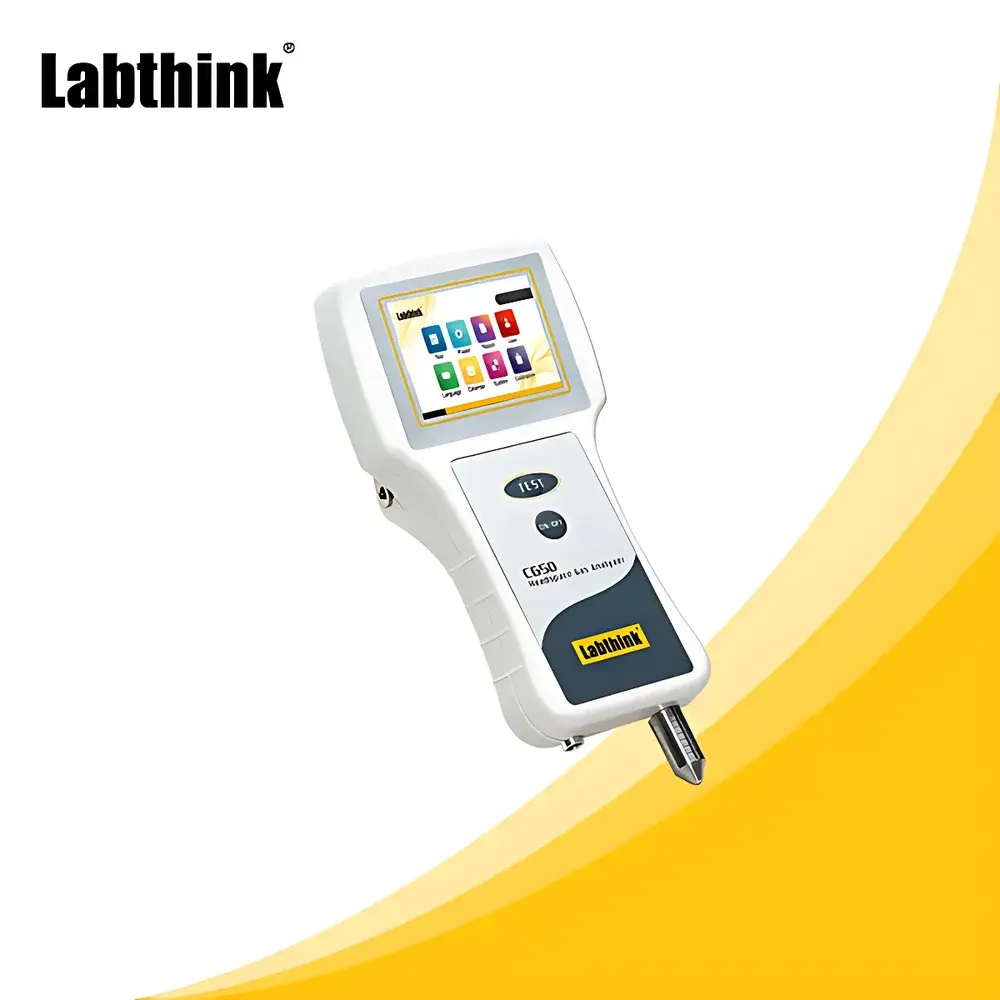
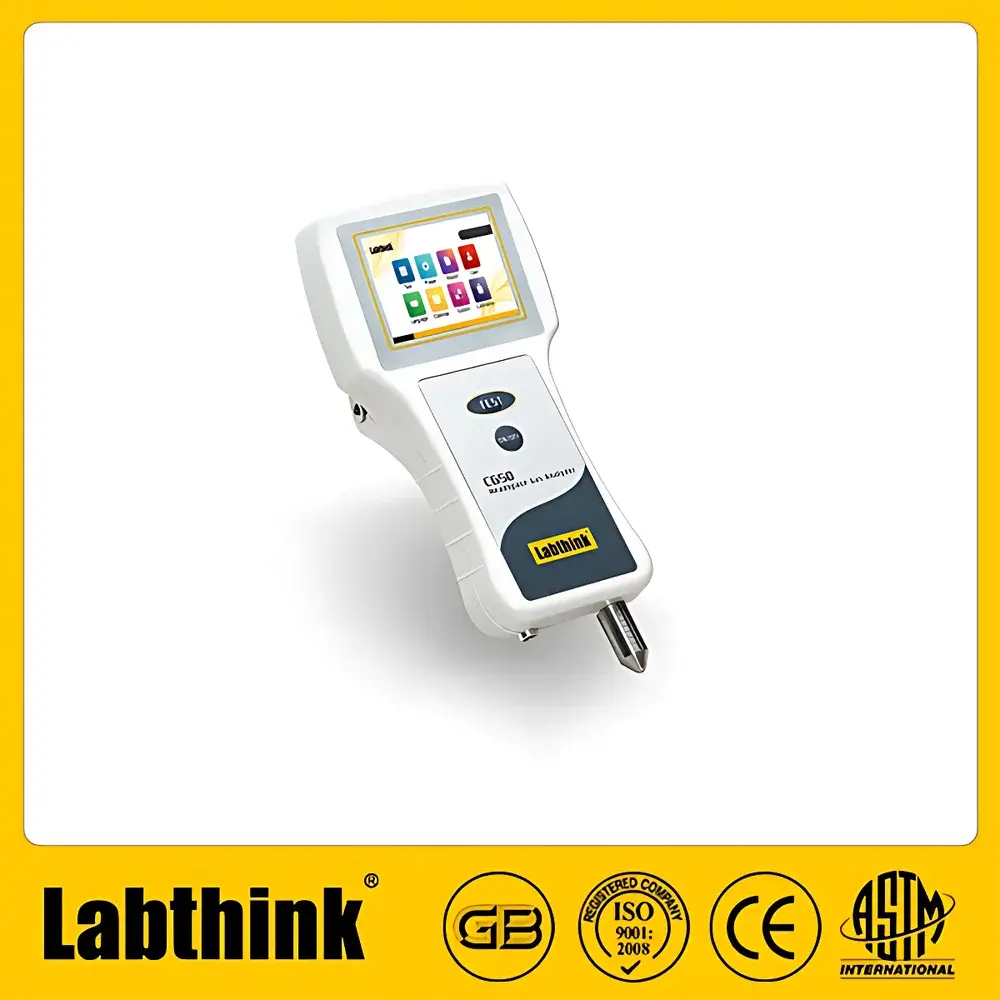
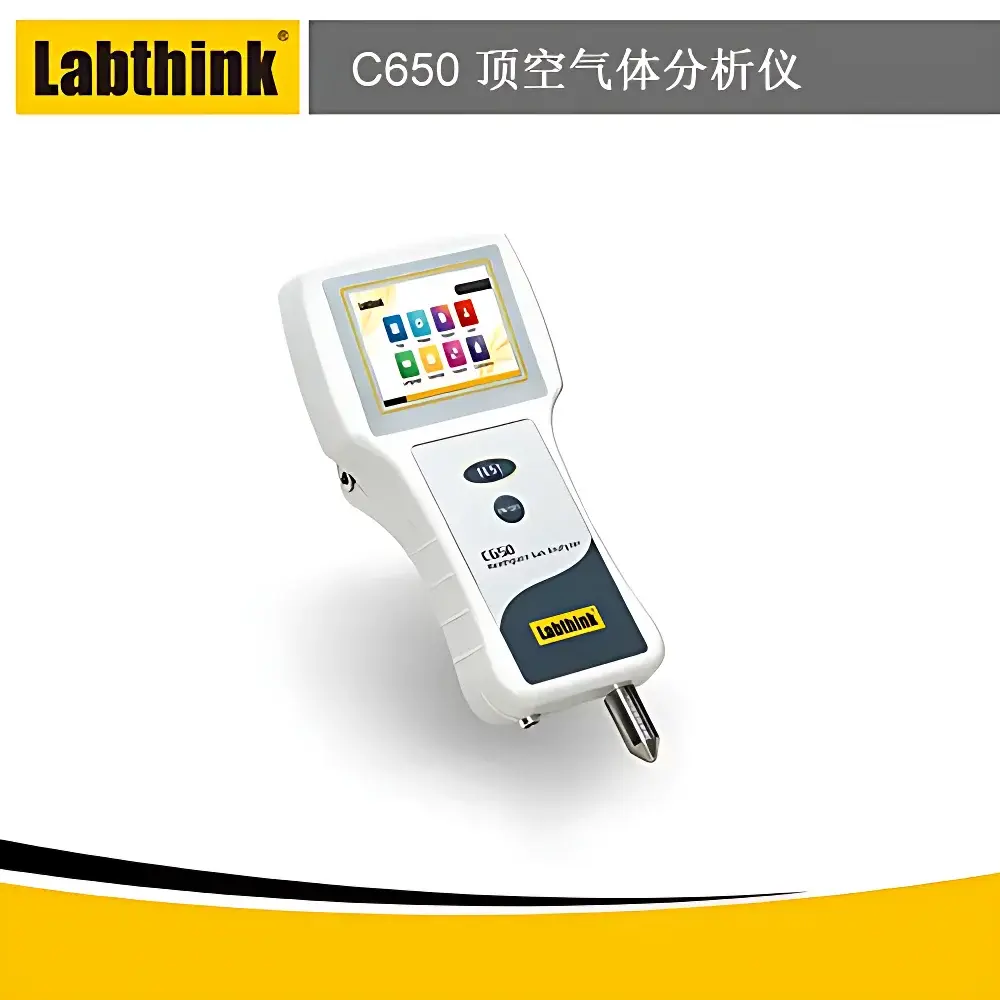
The Labthink C650M Portable Headspace Oxygen Analyzer is an engineered solution for rapid, field-deployable quantification of residual oxygen (O₂) and optional carbon dioxide (CO₂) concentrations in the headspace of sealed primary packaging—specifically designed to meet the stringent gas analysis requirements of pharmaceutical ampoules, vials, and other rigid or semi-rigid containers used in sterile drug manufacturing. Unlike benchtop gas chromatography or laser-based systems, the C650M employs a dual-sensor electrochemical (O₂) and non-dispersive infrared (NDIR) (CO₂) detection architecture, enabling real-time, in-situ measurement without sample preparation or carrier gas dependency. Its compact form factor and integrated micro-vacuum pump allow direct puncture sampling via a stainless-steel needle, minimizing dead volume and ensuring representative gas extraction from low-volume headspaces (<1 mL typical in 2–10 mL ampoules). The instrument complies with fundamental principles outlined in USP (Uniformity of Dosage Units), ISO 8536-1 (Glass Containers for Pharmaceutical Use), and supports data integrity practices aligned with FDA 21 CFR Part 11 when used with optional PC software and audit-trail-enabled firmware.
Key Features
- Handheld ergonomic design (0.6 kg net weight) optimized for one-handed operation in cleanroom corridors, filling line checkpoints, and warehouse QA stations.
- Auto-calibration sequence initiated with single button press—eliminates manual zero/span adjustments and reduces operator dependency.
- Dual-sensor capability: Standard electrochemical O₂ sensor (2-year typical service life in ambient air); optional solid-state NDIR CO₂ module with gold-coated optical path and LED/detector assembly (15+ year operational lifespan).
- Integrated pressure transducer enables simultaneous vacuum level assessment (e.g., for lyophilized vial integrity verification), supporting correlation between residual O₂ and container seal performance.
- Industrial-grade capacitive touchscreen interface with configurable language toggle (English/Chinese), on-device data storage (up to 1,200 test records), and auto-save with power-loss recovery.
- Modular connectivity: USB 2.0 port for firmware updates and CSV data export; optional Bluetooth-enabled thermal printer (B2227) for GMP-compliant hardcopy generation at point-of-test.
Sample Compatibility & Compliance
The C650M is validated for use across Class I–III medical device packaging and pharmaceutical primary containers including glass ampoules (1–25 mL), molded plastic vials, aluminum-sealed blister cavities, and composite pouches. Its puncture-based sampling method accommodates both positive-pressure (e.g., nitrogen-flushed ampoules) and sub-atmospheric headspaces (e.g., freeze-dried products). All sensor modules are calibrated traceably to NIST-certified gas standards. When operated with the B2226 underwater sampling module, the system extends compatibility to water-soluble or moisture-sensitive samples where headspace equilibration must be preserved prior to analysis. Instrument validation documentation—including IQ/OQ protocols, sensor drift logs, and repeatability reports (RSD <1.2% at 1% O₂)—is provided per ISO/IEC 17025 requirements.
Software & Data Management
Labthink’s proprietary C650M Control Suite (v3.2+) provides full remote instrument control, automated report generation (PDF/Excel), and role-based user access (admin/operator/auditor). The software enforces electronic signatures, time-stamped audit trails, and immutable record retention—meeting GLP/GMP data integrity expectations. Test parameters (sampling duration, purge cycles, alarm thresholds) are programmable per product SKU, enabling SOP-driven workflows. Data exports include raw voltage outputs from both sensors, calculated gas percentages, environmental temperature/pressure metadata, and operator ID—facilitating root-cause analysis during stability studies or deviation investigations.
Applications
- Pharmaceutical quality control: Residual O₂ monitoring in ampoules containing oxygen-sensitive biologics (e.g., monoclonal antibodies, vaccines) to verify inert gas flush efficacy pre-crimp.
- Parenteral packaging validation: Correlation of headspace O₂ levels with container closure integrity (CCI) test results per ASTM F2338.
- Stability program support: Periodic headspace analysis across accelerated and long-term storage conditions to assess oxidation kinetics.
- Process troubleshooting: Rapid diagnosis of filler nozzle misalignment, nitrogen purge flow inconsistency, or stopper seating defects affecting headspace composition.
- Contract manufacturing organization (CMO) audits: On-site verification of client-defined O₂ acceptance criteria (e.g., ≤0.5% O₂ in lyophilized products) without requiring off-site lab submission.
FAQ
What is the minimum headspace volume required for reliable O₂ measurement?
The C650M achieves stable readings with ≥0.3 mL headspace volume under standard sampling mode; for ampoules <2 mL, the B2226 underwater module is recommended to prevent atmospheric dilution.
Can the instrument differentiate between O₂ ingress and CO₂ outgassing in modified atmosphere packaging?
No—it reports static headspace composition only. Trend analysis across multiple timepoints (e.g., 0h/24h/7d) is required to infer permeation or chemical degradation mechanisms.
Is sensor cross-sensitivity compensated in the firmware?
Yes. The electrochemical O₂ sensor includes built-in humidity and temperature compensation algorithms; NDIR CO₂ measurement incorporates automatic baseline correction against ambient background interference.
Does the C650M meet regulatory requirements for electronic records in FDA-regulated environments?
When deployed with validated Control Suite software, configured audit trail logging, and controlled user permissions, it satisfies 21 CFR Part 11 Subpart B requirements for electronic records and signatures.
How often must the O₂ sensor be replaced under continuous production use?
Typical replacement interval is every 24 months at 8 hrs/day exposure to ambient air; extended life up to 36 months is achievable with intermittent use and proper storage in nitrogen-purged desiccator.