
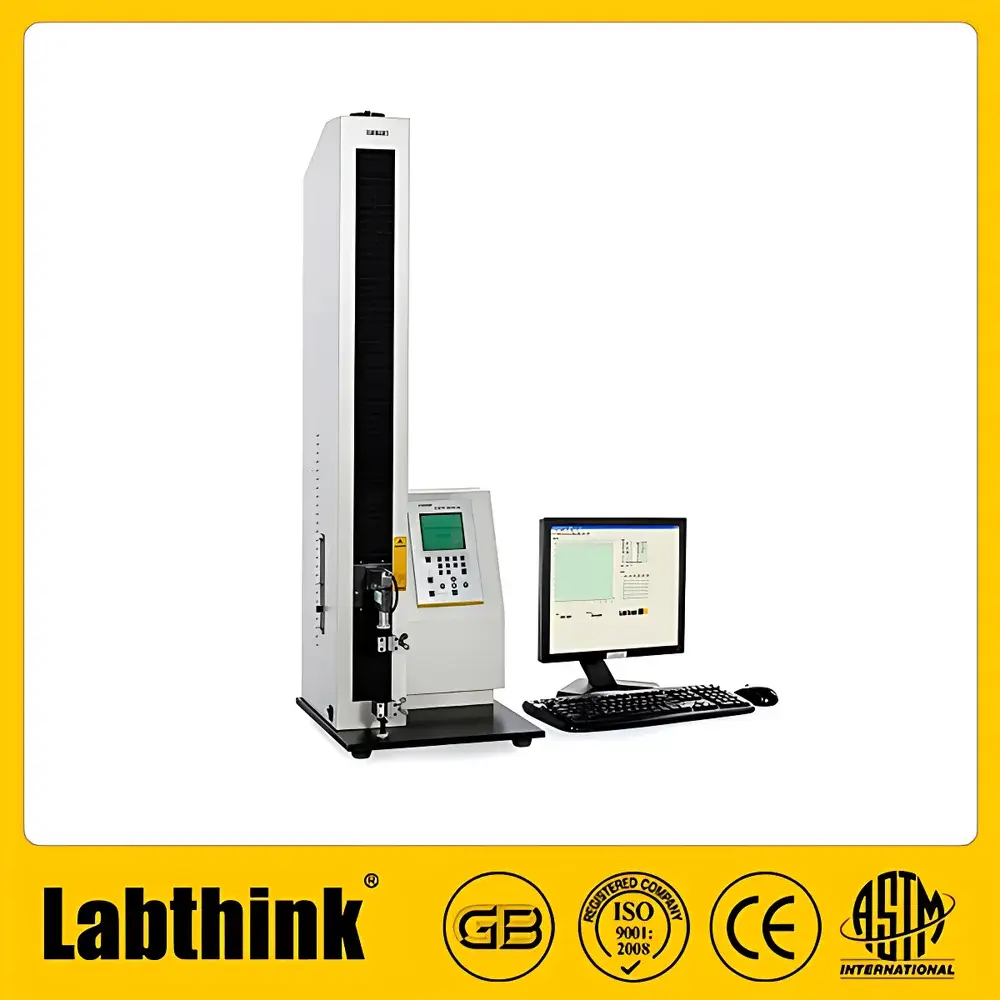
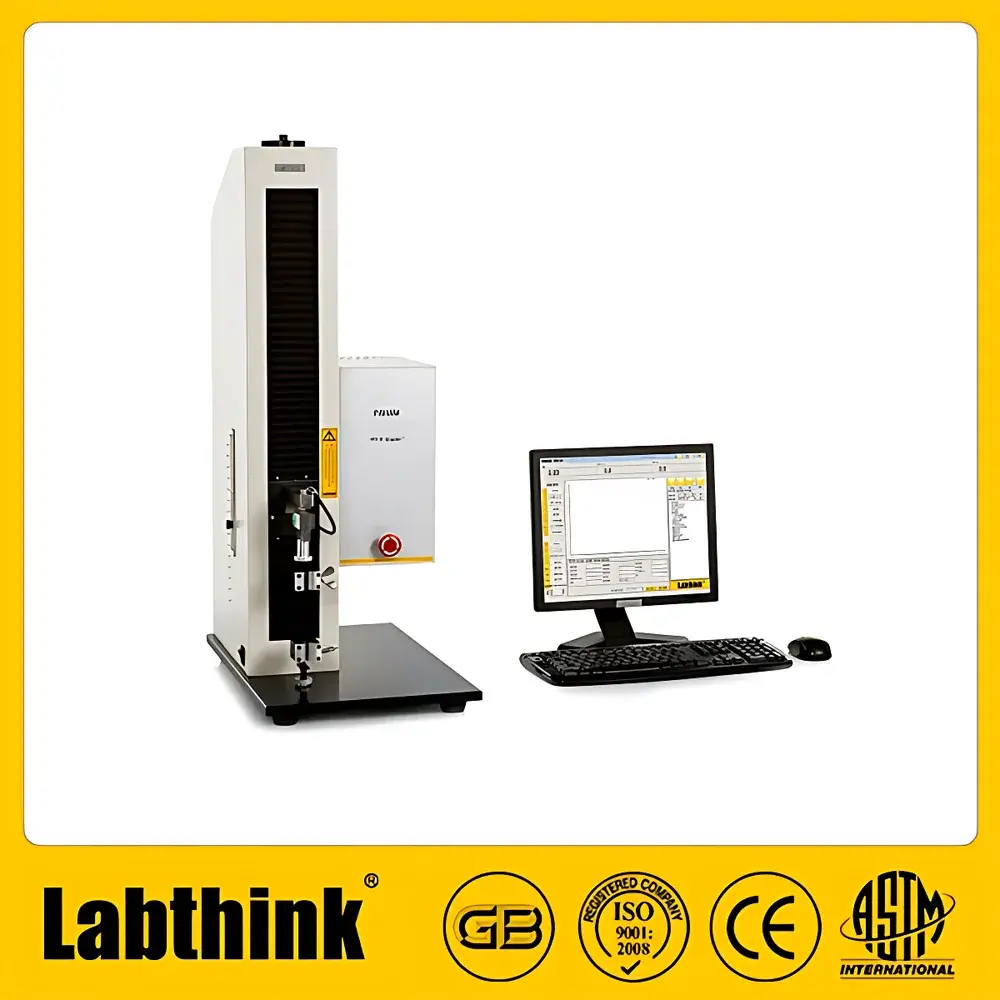
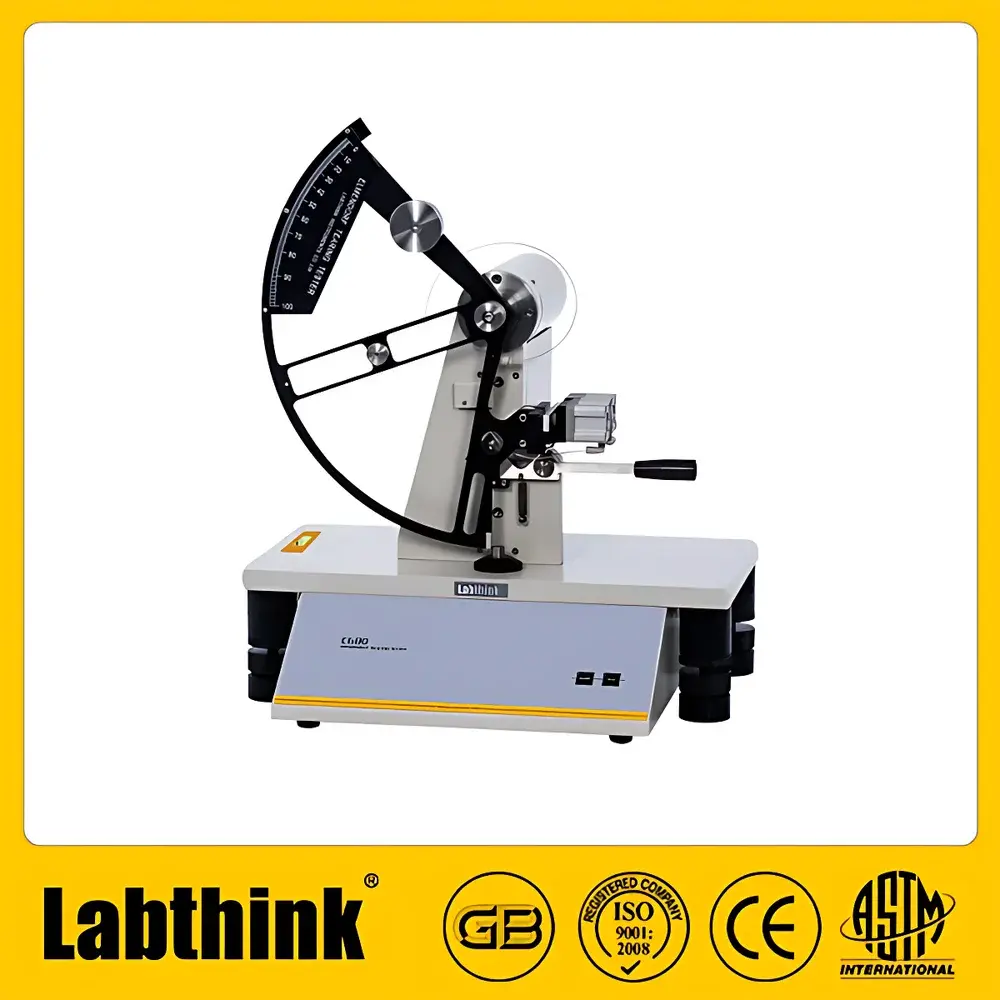
Labthink MED-01 & XLW Series Medical Gown Puncture Resistance and Fabric Tear Strength Tester
| Brand | Labthink |
|---|---|
| Origin | Shandong, China |
| Manufacturer Type | OEM/ODM Manufacturer |
| Region of Manufacture | Domestic (China) |
| Model | MED-01, XLW(PC), C680M |
| Pricing | Available Upon Request |
Overview
The Labthink MED-01 and XLW Series are dual-function mechanical testing platforms engineered for standardized evaluation of critical mechanical integrity parameters in medical protective apparel and technical textiles. These instruments operate on two complementary physical principles: quasi-static tensile puncture resistance measurement (per ASTM F1342 / ISO 13934-1 / GB 19082–2009) and pendulum-based tear propagation resistance (Elmendorf method per ISO 13937-1 / YY/T 1498–2016). The MED-01 is a dedicated puncture tester employing a rigid, hemispherically tipped probe driven at controlled displacement rates into clamped fabric specimens; the XLW(PC) is a microprocessor-controlled universal testing machine capable of executing seven distinct mechanical test modes—including tensile strength, elongation at break, tear force (grab & tongue methods), peel adhesion, and puncture resistance—within a single calibrated frame. Both systems comply with the essential performance verification requirements outlined in GB 19082–2009, which mandates minimum rupture strength ≥45 N and elongation ≥15% for critical zones of disposable medical gowns, and YY/T 1498–2016, which prescribes integrated assessment of tensile, tear, and puncture resistance for risk-informed PPE selection.
Key Features
- Modular architecture supporting interchangeable test fixtures: puncture probes (1.5 mm radius hemispherical tip), Elmendorf tear pendulums (C680M), grab/tongue tear jaws, and pneumatic clamping systems for consistent specimen alignment.
- XLW(PC) platform features a 1000 mm vertical travel range—enabling full characterization of highly extensible nonwovens and laminated composites without stroke limitation.
- Seven programmable crosshead speeds (0.05–500 mm/min) and multiple load cell options (1 N to 500 N full scale) ensure traceable force resolution across low-force tear initiation and high-force puncture events.
- Real-time force-displacement curve acquisition with ≥1 kHz sampling rate; automatic peak detection, yield point identification, and post-test modulus calculation per ISO 527-3.
- Compliance-ready firmware with user-level access control, electronic signature support, and audit trail logging aligned with FDA 21 CFR Part 11 and GLP/GMP documentation requirements.
Sample Compatibility & Compliance
The MED-01 and XLW series accommodate flat-sheet specimens up to 100 mm × 100 mm (puncture) or 63 mm × 75 mm (Elmendorf tear), including spunbond-meltblown-spunbond (SMS) nonwovens, polyethylene-laminated fabrics, coated Tyvek®, and multi-layer composite barrier materials. All test methodologies conform to national and international regulatory frameworks: GB 19082–2009 (Chinese standard for disposable medical gowns), YY/T 1498–2016 (PPE evaluation guidance), ISO 13937-1 (Elmendorf tear), ISO 13934-1 (strip tensile), ASTM F1342 (puncture resistance of protective clothing), and EN ISO 12947-2 (Martindale abrasion compatibility for durability correlation). Calibration certificates are traceable to CNAS-accredited reference standards.
Software & Data Management
Labthink’s proprietary TS2100 software provides ISO/IEC 17025-compliant data acquisition, analysis, and reporting. It supports customizable test templates preloaded with GB, YY, ISO, and ASTM method parameters; generates PDF/Excel reports with embedded force-displacement plots, statistical summaries (mean, SD, CV%), and pass/fail flags against user-defined specification limits. Raw data files (.tdms) retain full metadata—including operator ID, environmental conditions (optional hygrothermic sensor integration), calibration history, and instrument configuration—for full auditability. Export modules enable seamless integration with LIMS and enterprise QA databases.
Applications
- Verification of puncture resistance in surgical gowns, isolation gowns, and coveralls per GB 19082–2009 Clause 4.3.2.
- Quantification of tear propagation resistance in meltblown filtration layers using Elmendorf (C680M) or grab-tongue (XLW) methods per YY/T 1498–2016 Annex B.
- Comparative evaluation of material degradation after sterilization (EO, gamma, steam) or accelerated aging (ASTM F1980).
- Supplier qualification testing for raw material batches of SMS nonwovens, microporous films, and breathable laminates.
- Root cause analysis of field failures—correlating low tear strength with fiber entanglement density or calendering pressure deviations.
FAQ
Does the XLW(PC) meet ISO 13937-1 requirements for Elmendorf tear testing?
Yes—the XLW(PC) can be configured with certified Elmendorf pendulum fixtures and complies with ISO 13937-1 when operated in pendulum mode with verified mass moment of inertia and knife geometry.
Can the same instrument perform both GB 19082 puncture and YY/T 1498 tear testing?
Yes—the MED-01 is optimized for puncture; the XLW(PC) supports both puncture (with dedicated probe fixture) and tear (via pendulum or grab-jaw configurations); the C680M is dedicated Elmendorf-only.
Is calibration traceable to national metrology institutes?
All force and displacement sensors are calibrated using CNAS-accredited reference standards; full calibration certificates with uncertainty budgets are provided upon delivery.
What environmental conditions must be maintained during testing?
Per ISO 13934-1 and GB 19082–2009, conditioning shall be conducted at (20 ± 2) °C and (65 ± 4)% RH for ≥24 h prior to testing; optional climate chamber integration is available.
Does the system support 21 CFR Part 11 compliance for regulated laboratories?
Yes—TS2100 software includes role-based access control, electronic signatures, immutable audit trails, and data integrity safeguards validated per Part 11 Annex A guidelines.



