
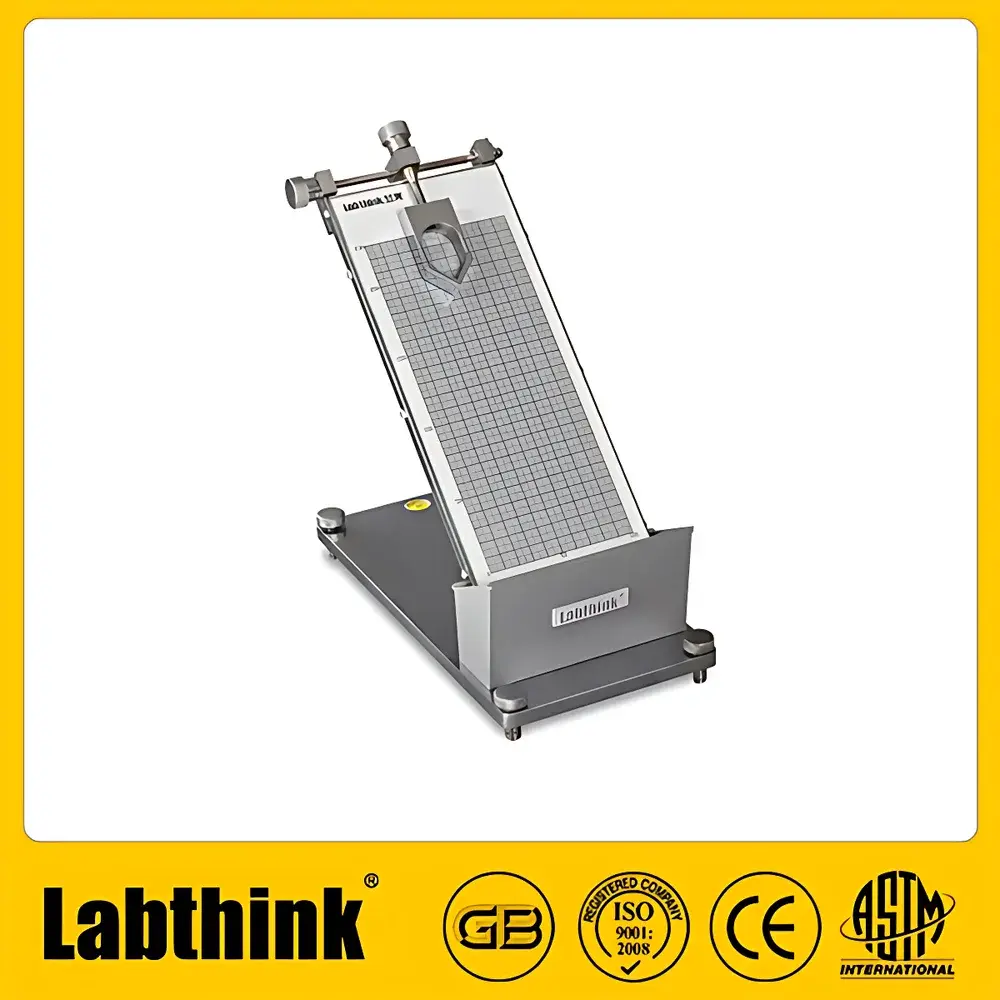
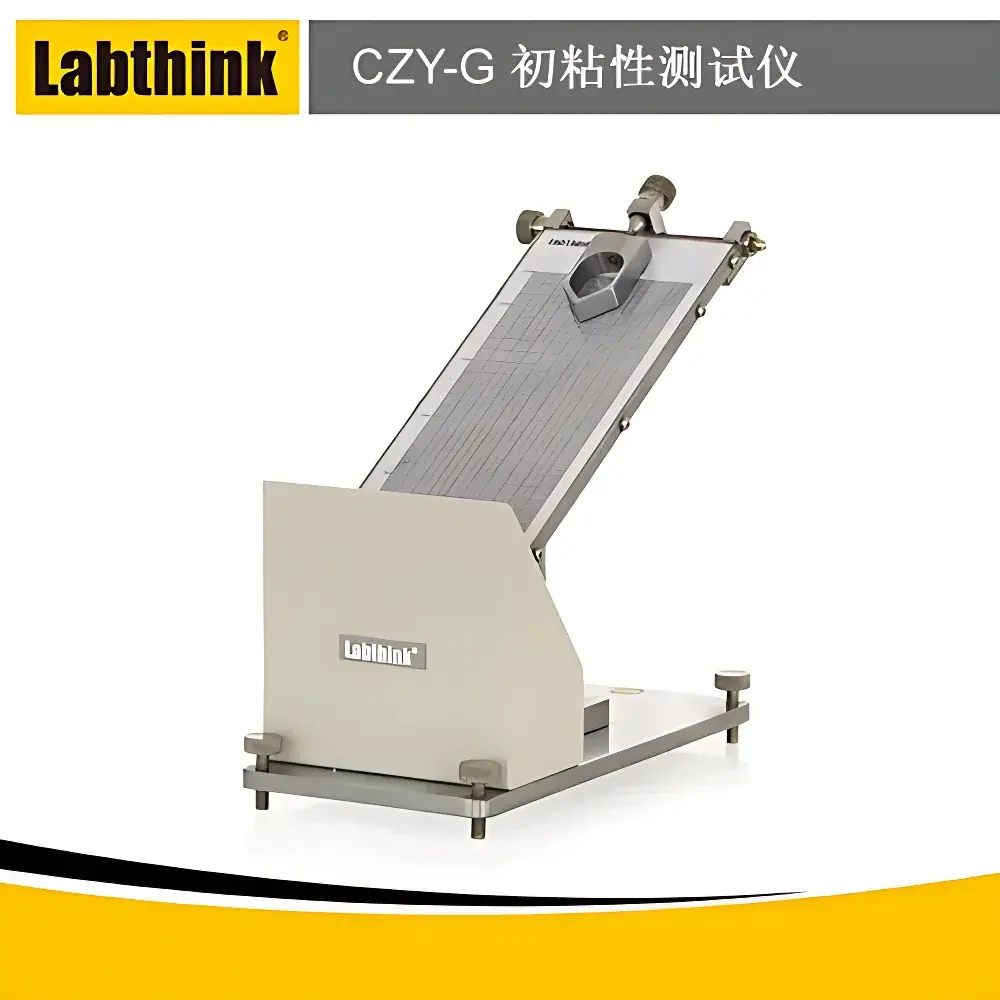
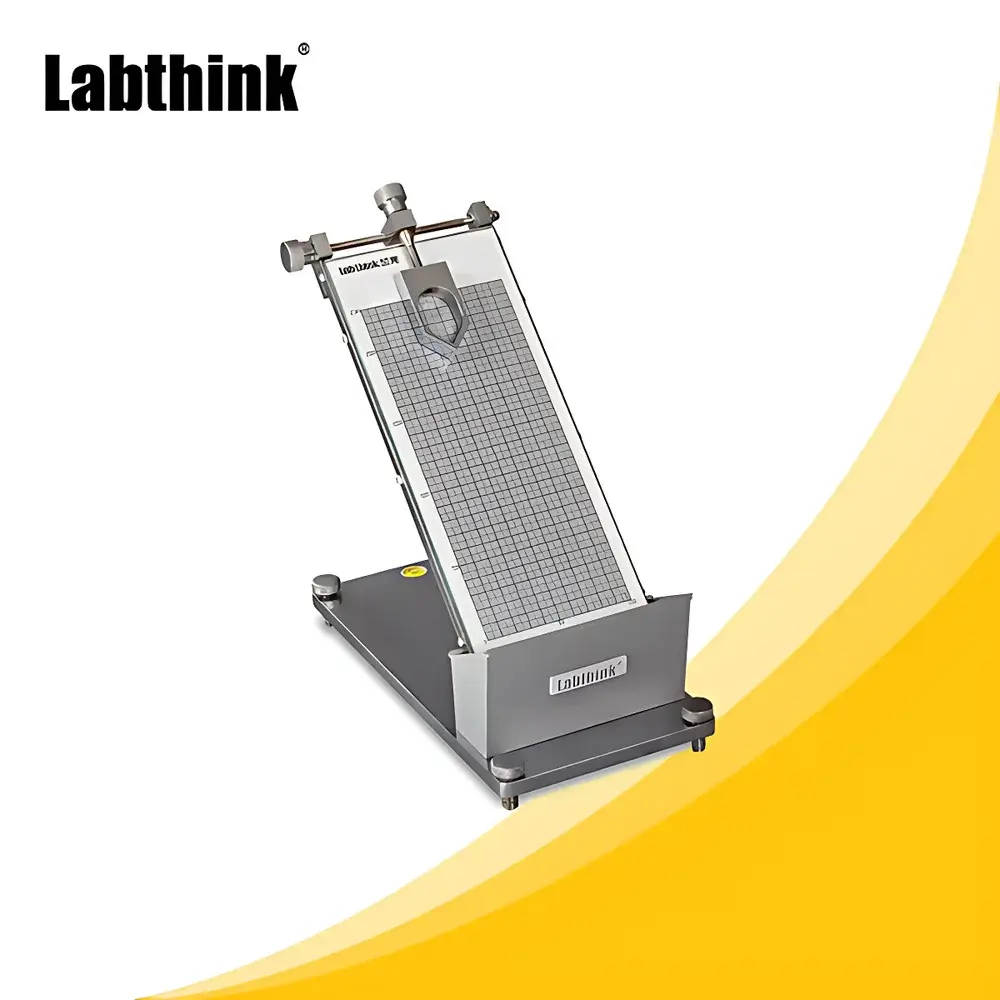
Labthink CYZ-G Initial Adhesion Tester for Pressure-Sensitive Tapes and Protective Films
| Brand | Labthink |
|---|---|
| Origin | Shandong, China |
| Manufacturer Type | Direct Manufacturer |
| Country of Origin | China |
| Model | Labthink CYZ-G |
| Pricing | Upon Request |
| Test Principle | Inclined Plane Rolling Ball Method |
| Adjustable Incline Angle | 0–60° |
| Tabletop Width | 120 mm |
| Test Zone Width | 80 mm |
| Standard Steel Balls | 1/32″ to 1″ (0.794 mm to 25.4 mm) |
| Dimensions (L×W×H) | 320 × 140 × 180 mm |
| Net Weight | 6 kg |
Overview
The Labthink CYZ-G Initial Adhesion Tester is an engineered precision instrument designed for quantitative evaluation of the initial tack—i.e., the instantaneous, low-resistance adhesion—of pressure-sensitive adhesive (PSA) materials under controlled mechanical contact conditions. It operates on the internationally recognized inclined plane rolling ball method, a standardized physical test principle that quantifies the maximum diameter of a steel ball retained by the adhesive surface after brief, gravity-driven contact along a defined incline. This method reflects real-world handling behavior during manual or automated application, where rapid, non-sustained contact precedes full bonding development. The CYZ-G is not a peel or shear tester; rather, it isolates the earliest stage of interfacial interaction between PSA and substrate—critical for quality control in high-speed converting, labeling, medical device assembly, and protective film lamination processes.
Key Features
- Compliance-driven mechanical design: Fully aligned with GB/T 4852–2002 (Chinese National Standard) and JIS Z 0237:2019 (Japanese Industrial Standard), ensuring regulatory traceability for domestic and export-oriented manufacturing facilities.
- Precisely adjustable inclination mechanism: A calibrated vernier scale enables fine-tuned angle setting from 0° to 60° in 0.5° increments, supporting method optimization across diverse PSA chemistries—including acrylics, rubber-based, and silicone adhesives.
- Standardized steel ball set: Supplied with traceable, ISO 3290-compliant hardened steel balls ranging from 1/32″ (0.794 mm) to 1″ (25.4 mm) in diameter, each individually certified for sphericity (≤0.5 µm deviation) and surface roughness (Ra ≤ 0.05 µm).
- Dedicated test zone geometry: 80 mm wide × 120 mm long active testing area ensures consistent ball trajectory and eliminates edge effects; polished stainless-steel guide rails minimize frictional interference.
- Modular, benchtop architecture: Compact footprint (320 × 140 × 180 mm) and lightweight construction (6 kg net) enable seamless integration into QC labs, R&D workstations, or production line sampling stations without structural reinforcement.
Sample Compatibility & Compliance
The CYZ-G accommodates a broad spectrum of PSA-coated substrates, including but not limited to: solvent- or water-based acrylic tapes, hot-melt rubber labels, silicone-release liners, PET/PE/PVC protective films, transdermal drug delivery patches, and surgical skin markers. Sample mounting requires no clamping fixtures—specimens are simply affixed flat onto the test surface using minimal double-sided tape at non-active edges, preserving native surface energy and eliminating pre-stress artifacts. All operational procedures conform to Good Laboratory Practice (GLP) documentation requirements. While the instrument itself does not generate electronic audit trails, its mechanical repeatability supports full compliance with ISO/IEC 17025:2017 clause 7.2.2 (method validation) when paired with documented calibration records and operator training logs.
Software & Data Management
The CYZ-G is a fully manual, analog-operated instrument with no embedded electronics or software interface. This design philosophy prioritizes metrological stability, eliminates firmware-related drift, and ensures long-term calibration integrity without dependency on proprietary drivers or operating system updates. Test outcomes are recorded as discrete pass/fail determinations per ball size (e.g., “retained at 30° incline” or “rolled off at 25°”), enabling direct mapping to ASTM D3330 Annex A1 classification tiers. Laboratories integrating the CYZ-G into LIMS or ELN environments may digitize results via structured templates compliant with 21 CFR Part 11—provided handwritten logbooks or scanned observation sheets are retained as primary records per FDA guidance on legacy instrumentation.
Applications
- Quality assurance of release liner compatibility in roll-to-roll converting operations.
- Batch-to-batch consistency verification for medical-grade adhesive tapes prior to sterilization validation.
- Formulation screening of novel PSA dispersions during polymer synthesis R&D.
- Supplier qualification testing for OEMs specifying minimum initial tack thresholds in automotive interior trim bonding specifications.
- Educational use in polymer science laboratories to demonstrate viscoelastic transition effects on early-stage adhesion kinetics.
FAQ
Does the CYZ-G require periodic recalibration?
Yes—annual verification against NIST-traceable angle gauges and certified steel ball sets is recommended per ISO/IEC 17025 Clause 6.5.2.
Can the instrument be used for non-standard ball diameters?
Only standard sizes specified in GB/T 4852 and JIS Z 0237 are validated; custom spheres invalidate conformance claims.
Is temperature or humidity control required during testing?
Testing must be conducted per ISO 291 (23 ± 2°C, 50 ± 5% RH) unless otherwise specified in material-specific test protocols.
What maintenance is necessary for long-term accuracy?
Monthly cleaning of guide rails with isopropyl alcohol and inspection for surface scratches; no lubrication is permitted.
How many replicate tests are recommended per sample?
Minimum of three independent trials per angle/ball combination, as stipulated in GB/T 4852 Section 6.3.



