
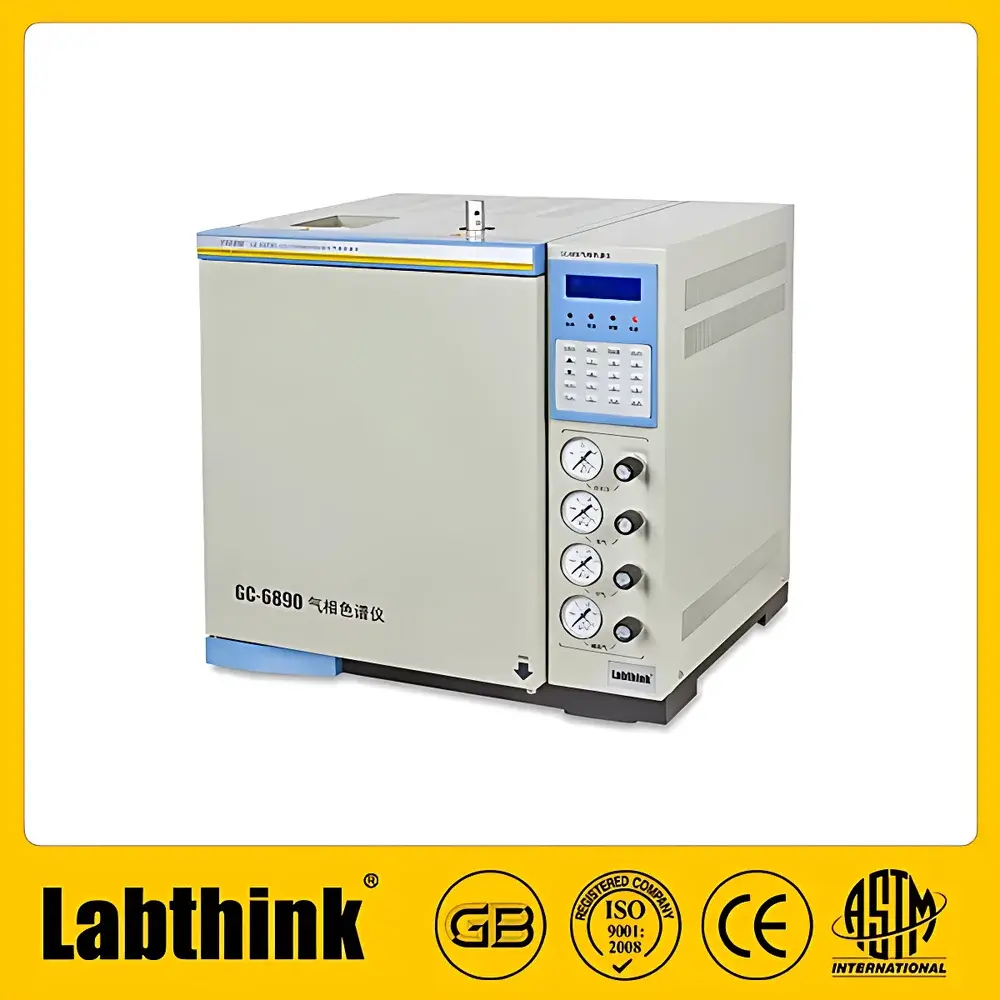
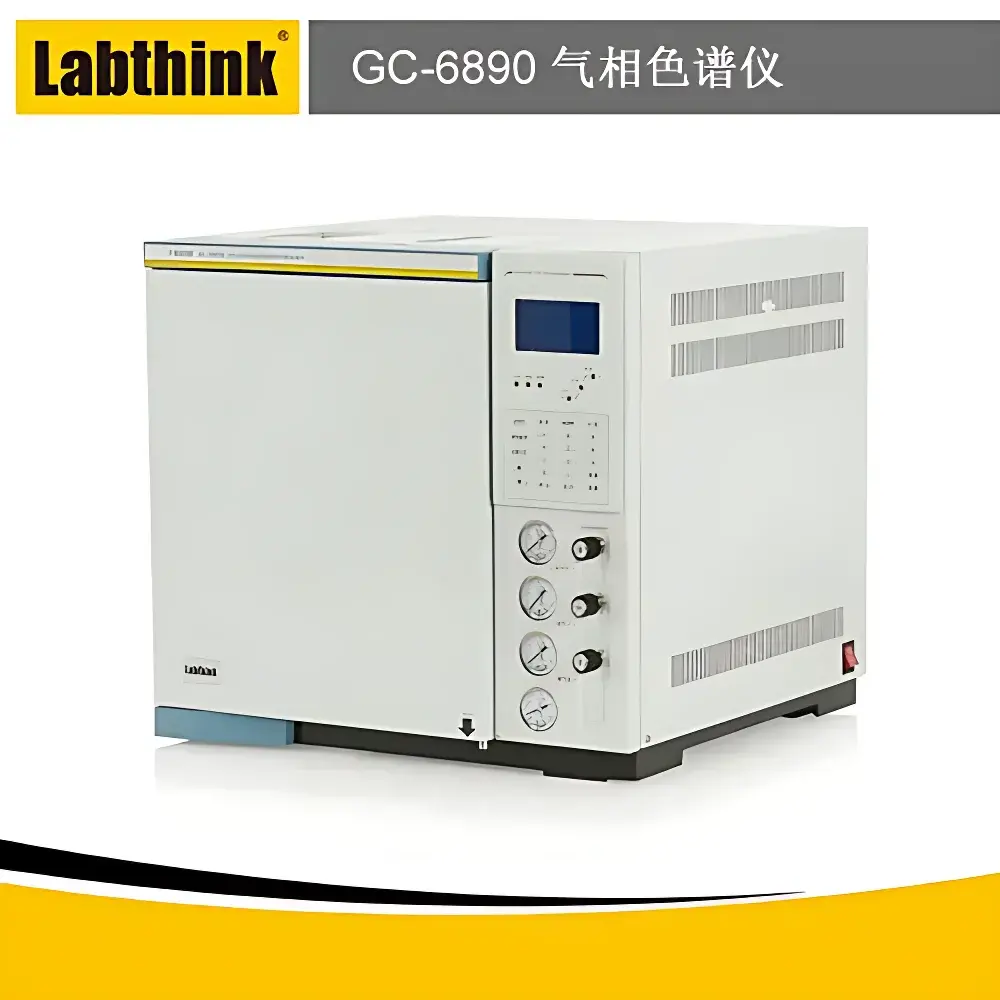
Labthink GC-6890 Packaging-Specific Gas Chromatograph for Solvent Residue Analysis in Printing Inks
| Brand | Labthink |
|---|---|
| Origin | Shandong, China |
| Manufacturer Type | Direct Manufacturer |
| Instrument Type | Laboratory Gas Chromatograph |
| Model | GC-6890 |
| Temperature Control Range | Ambient + 3°C to 399°C |
| Heating Rate | 0.1–30°C/min |
| Cooling Rate | ≤15 min (from 300°C to 50°C) |
| Carrier Gas Flow Range & Control | 0–10 mL/min |
| Carrier Gas Pressure Range & Control | 0–10 kPa |
| Injector Maximum Operating Temperature | 200°C |
| Injector Pressure Setting Range | 0–10 kPa |
| Injector Total Flow Setting Range | 0–10 mL/min |
Overview
The Labthink GC-6890 is a dedicated laboratory gas chromatograph engineered specifically for solvent residue analysis in packaging and printing applications—particularly for quantifying residual organic solvents (e.g., benzene, toluene, ethyl acetate, isopropanol, xylene) in gravure and flexographic inks, laminating adhesives, and composite film structures. It operates on the principle of capillary or packed-column gas chromatography using a carrier gas (typically nitrogen or helium) to transport vaporized sample components through a thermally stable stationary phase. Separation occurs based on differential partitioning coefficients between the mobile gas phase and the liquid/solid stationary phase, enabling high-resolution elution and detection of volatile and semi-volatile compounds. Designed for compliance-driven quality control environments, the GC-6890 supports method development and validation aligned with ISO 10934-1 (packaging—determination of residual solvents), ASTM D7299 (standard practice for residual solvent analysis in flexible packaging), and relevant sections of USP and FDA 21 CFR Part 11 when paired with compliant data acquisition software.
Key Features
- Optimized thermal architecture: oven temperature programmability from ambient + 3°C to 399°C with precision better than ±0.1°C over the range 50–200°C; column temperature gradient uniformity maintained within ≤2% across active zone.
- Modular detector compatibility: factory-integrated hydrogen flame ionization detector (FID) with detection limit ≤5 × 10⁻¹¹ g/s (benzene), low baseline noise (≤1% full-scale recorder deflection), and drift stability ≤3% full-scale/hour.
- Dual independent temperature zones: separately controlled injector (up to 200°C, ±0.1°C accuracy at ≤200°C) and detector compartments ensure reproducible vaporization and signal stability.
- Intelligent gas control system: digitally regulated carrier gas pressure (0–10 kPa) and total flow (0–10 mL/min), supporting both constant-pressure and constant-flow operational modes.
- Compact benchtop design (470 × 430 × 455 mm; 30 kg) with integrated microprocessor-based controller, real-time run status display, and full-keyboard parameter entry for oven ramp rates (0.1–30°C/min), hold times, and multi-step temperature programs.
- Comprehensive hardware protection: automatic shutdown upon abnormal temperature excursion, pressure surge, or flame-out event; built-in leak detection logic during startup sequence.
Sample Compatibility & Compliance
The GC-6890 accommodates headspace vials (10–20 mL), liquid syringe injections (1–10 µL), and optional thermal desorption units for solid-phase extraction of printed film substrates. It is routinely deployed for testing according to GB/T 10004–2008 (Chinese national standard for plastic composite films), ISO 11843-2 (capability of detection estimation), and internal QC protocols requiring GLP-compliant documentation. When operated with validated methods—including certified reference standards traceable to NIST SRMs—the system meets repeatability requirements (<3% RSD for retention time, <5% RSD for peak area) essential for audit readiness under ISO/IEC 17025-accredited laboratories.
Software & Data Management
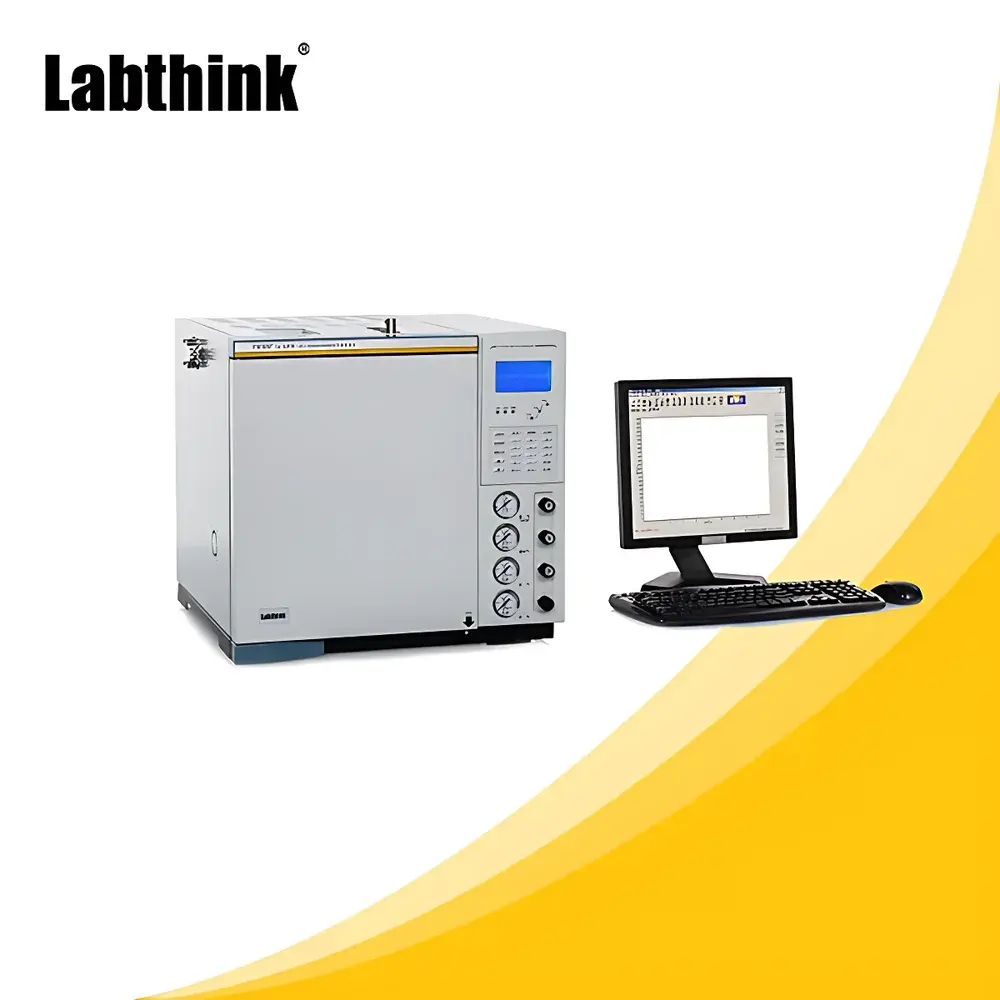
The instrument ships with Labthink Chromatography Workstation software—a Windows-based platform supporting automated peak integration, calibration curve generation (linear, quadratic, or polynomial), multi-level standard bracketing, and audit-trail-enabled data archiving. Raw data files (.cdf or .dx format) are stored with embedded metadata (operator ID, method name, injection sequence, instrument conditions). The software complies with ALCOA+ principles (Attributable, Legible, Contemporaneous, Original, Accurate, Complete, Consistent, Enduring, Available) and supports export to CSV, PDF, and LIMS-compatible XML formats. Optional 21 CFR Part 11 compliance packages include electronic signatures, role-based access control, and immutable audit logs for regulated pharmaceutical or food-contact packaging labs.
Applications
- Quantitative determination of residual solvents in printed plastic films, aluminum foil laminates, and paper-based packaging per regulatory thresholds (e.g., EU Directive 2002/72/EC, Swiss Ordinance SR 817.023.21).
- Verification of solvent removal efficiency after drying ovens in rotogravure and flexo printing lines.
- Assessment of ink formulation stability and batch-to-batch consistency in R&D settings.
- Odor profiling support via retention index matching against Wiley/NIST spectral libraries (when coupled with mass spectrometric detection as an upgrade path).
- Raw material screening of incoming solvents and thinners for purity verification and contaminant identification.
FAQ
What types of detectors can be installed on the GC-6890?
The base configuration includes a hydrogen flame ionization detector (FID). Optional detectors—such as thermal conductivity detectors (TCD) and electron capture detectors (ECD)—can be retrofitted depending on analyte polarity and sensitivity requirements.
Is method development support included with purchase?
Yes. Labthink’s Chromatography Applications Lab provides no-cost initial method setup—including column selection, temperature program optimization, and calibration protocol drafting—for common packaging-related solvents.
Can the GC-6890 be integrated into an existing LIMS environment?
Absolutely. The workstation software supports ODBC connectivity and configurable data export templates compatible with major LIMS platforms including Thermo Fisher SampleManager, LabVantage, and STARLIMS.
What consumables require regular replacement?
Typical maintenance items include inlet septa (every 100 injections), liner (every 500 injections), FID jet cleaning (quarterly), and column trimming (as needed per manufacturer guidelines); carrier gas filters should be replaced every 6 months.
Does the system meet international electrical safety standards?
The GC-6890 conforms to IEC 61010-1:2010 for laboratory electrical equipment, with CE marking valid for operation in EU markets and compatible with 220 V / 50 Hz supply infrastructure.




