
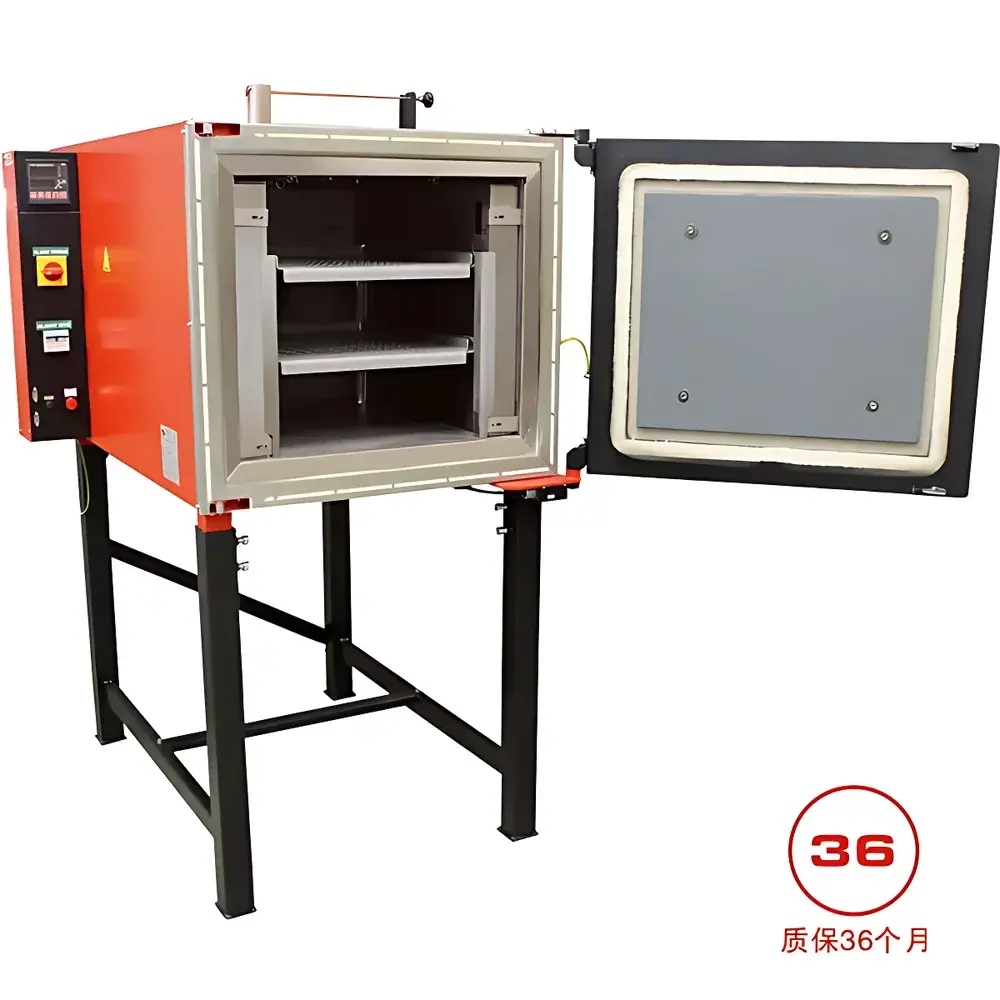
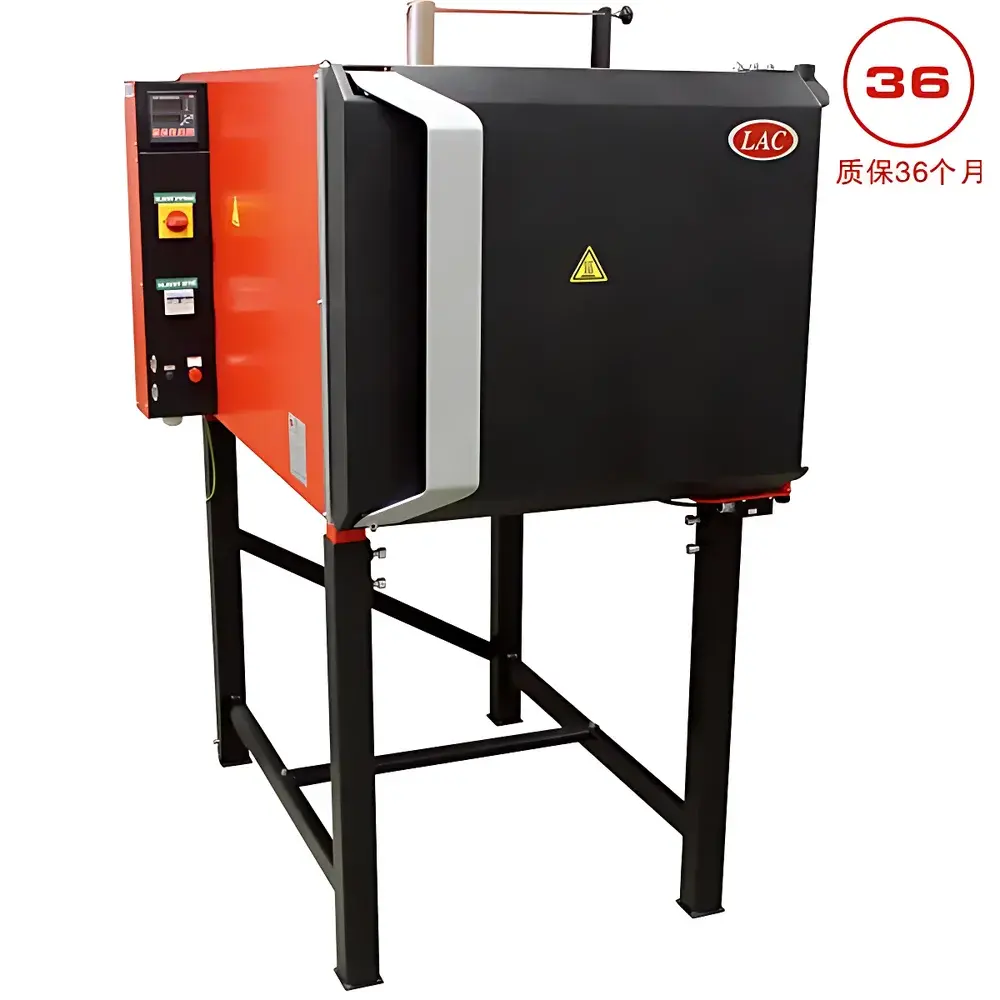
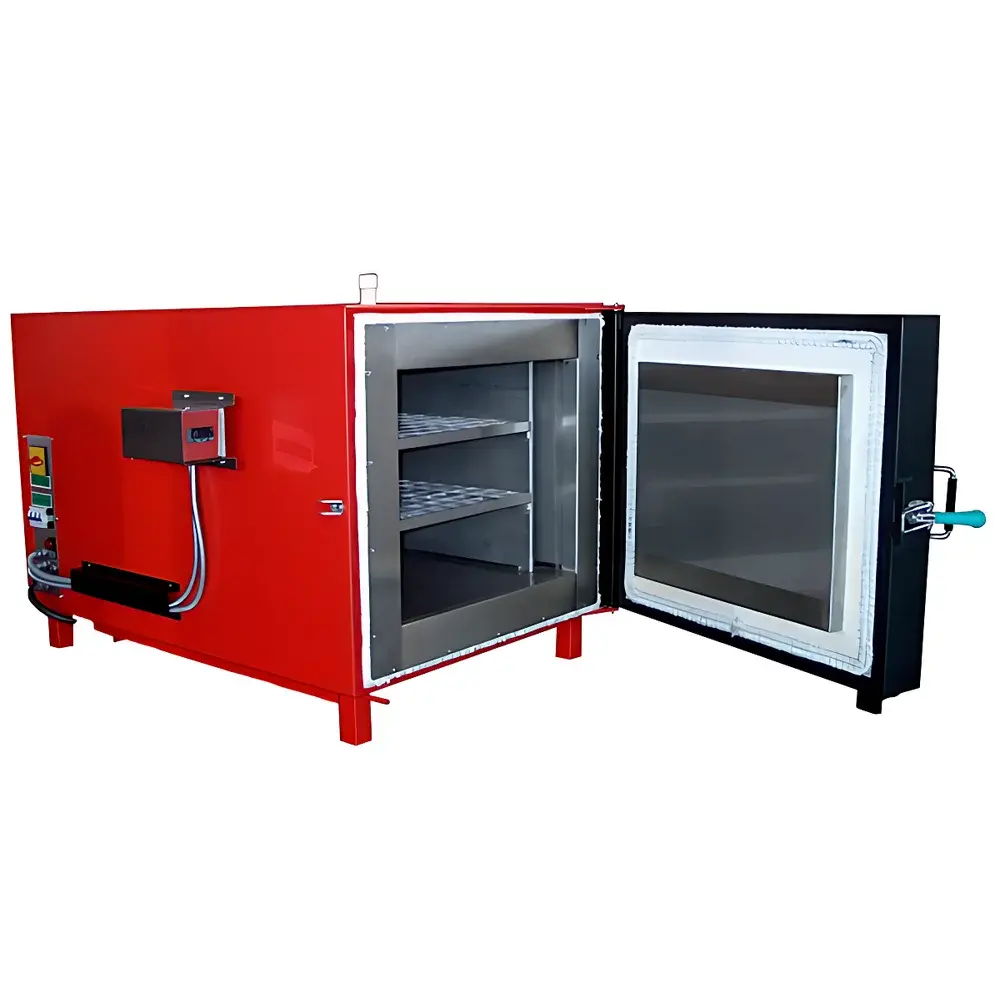
LAC PP20/65 Air-Circulating Box-Type Muffle Furnace (Retort Furnace)
| Brand | LAC |
|---|---|
| Origin | Czech Republic |
| Model | PP20/65 |
| Max Temperature | 650 °C |
| Temperature Uniformity | ≤ ±1 °C (per DIN 17052-1, ΔT ≤ 10 °C) |
| Heating Method | Resistance Wire |
| Internal Chamber Dimensions | 300 × 200 × 350 mm (W × H × D) |
| Max Power | 3 kW |
| Ramp-to-Max Time | ~80 min |
| Controller | HT205 (30 programs, 15 steps each, LAN interface) |
| Cooling | Uncontrolled forced-air cooling (optional, not compatible with semi-hermetic configuration) |
| Construction | Stainless steel chamber, recirculating fan, high-resistance stainless steel baffle plates, mechanical safety interlock, manual side-hinged door |
| Compliance | Designed to meet DIN 17052-1 for industrial heat treatment and laboratory thermal processing |
Overview
The LAC PP20/65 is a precision-engineered air-circulating box-type muffle furnace developed in the Czech Republic for controlled thermal processing in both laboratory and light-industrial environments. It operates on the principle of forced convection via an integrated axial recirculation fan, ensuring homogeneous temperature distribution across the entire working chamber — a critical requirement for repeatable annealing, tempering, stress-relieving, and aging treatments. Unlike static-heating furnaces, the PP20/65 maintains thermal stability within ±1 °C at setpoint (verified per DIN 17052-1), with measured spatial uniformity (ΔT) consistently ≤10 °C across the defined hot zone. Its robust construction — including a double-walled insulated housing, high-grade stainless steel chamber lining, and corrosion-resistant baffle system — supports long-term operational integrity under cyclic thermal loading. The furnace is rated for continuous operation up to 650 °C and is engineered for compliance with GLP-aligned thermal validation protocols.
Key Features
- Forced-air circulation architecture with axial fan and optimized stainless steel baffle plates to minimize thermal stratification and ensure uniform heating
- HT205 programmable controller with 30 independent thermal profiles, each supporting up to 15 discrete ramp/soak segments; full LAN connectivity for remote monitoring and integration into centralized lab management systems
- Dual-stage overtemperature protection: primary PID control loop plus independent mechanical safety cutoff
- Integrated K- or N-type thermocouple with cold-junction compensation and optional traceable calibration certificate
- Zero-contact solid-state relay switching for silent, low-noise operation and extended component lifespan
- Manual side-hinged door with positive mechanical interlock that de-energizes heaters upon opening — compliant with IEC 61000-6-2 EMC and EN 60519-1 safety standards
- Compact footprint (300 × 200 × 350 mm internal volume) suitable for benchtop (PP20 variant) or floor-standing configurations
Sample Compatibility & Compliance
The PP20/65 accommodates a wide range of metallic and ceramic samples, including steel alloys, aluminum components, tooling inserts, and sintered powders. Its semi-hermetic optional configuration supports inert atmosphere processing using nitrogen or argon feed (manual or automated via mass flow controller). While standard operation is conducted in ambient air, optional gas inlet ports and pressure-rated sealing enable partial atmosphere control — subject to user-provided gas supply infrastructure. The furnace design conforms to DIN 17052-1 for temperature uniformity classification (Class T10), and its controller firmware supports audit-trail logging when used with HTMonit software — facilitating adherence to ISO/IEC 17025, ASTM E220, and FDA 21 CFR Part 11 requirements where electronic records are mandated.
Software & Data Management
The HT205 controller provides native LAN-based communication (TCP/IP), enabling direct integration with LAC’s HTMonit universal monitoring platform — included with all units. HTMonit supports real-time parameter visualization, event-triggered data export (CSV/Excel), alarm history review, and secure user-level access control (administrator/operator roles). Optional RS232 or EIA-485 interfaces allow legacy SCADA or PLC interfacing. All thermal profiles, execution logs, and calibration metadata are timestamped and stored onboard with non-volatile memory retention (>10 years). For regulated environments, HTMonit can be configured to generate ALCOA+ compliant records including operator ID, instrument ID, signature fields, and change history — satisfying GxP documentation expectations.
Applications
- Tempering of hardened steels and tool steels (e.g., AISI D2, H13) to achieve target hardness-toughness balance
- Stress relief of welded or machined components prior to dimensional inspection or surface finishing
- Aging treatments for precipitation-hardened aluminum alloys (e.g., 2024, 7075)
- Pre-heat and post-weld heat treatment (PWHT) qualification per ASME BPVC Section IX
- Calibration reference oven for secondary temperature sensor validation (in conjunction with traceable reference thermocouples)
- Thermal cycling tests for electronic packaging and ceramic substrates under controlled air environment
FAQ
Is the PP20/65 suitable for use in a certified GLP laboratory?
Yes — when equipped with HT205 controller, HTMonit software, and documented calibration records, it meets core GLP requirements for instrument qualification (IQ/OQ/PQ), data integrity, and audit trail generation.
Can the furnace operate under inert gas atmosphere?
Yes, but only with the optional semi-hermetic configuration and external gas supply system; standard models are open-air only.
What is the expected service life under daily laboratory use?
With proper maintenance (fan cleaning, thermocouple verification, door gasket inspection every 6 months), typical operational lifespan exceeds 15 years based on LAC field data from European academic and industrial users.
Does the unit include validation documentation?
Factory-assembled units ship with a Declaration of Conformity (DoC) and optional UKAS-accredited calibration certificate (NIST-traceable); full 3Q validation packages are available upon request.
Is remote firmware update supported?
Firmware updates require local USB connection and LAC-certified engineering tools; no over-the-air (OTA) capability is implemented for security and regulatory compliance reasons.



