Lake Shore HR Series High-Reliability Cryogenic Temperature Sensors
| Brand | Lake Shore |
|---|---|
| Origin | USA |
| Manufacturer Status | Authorized Distributor |
| Origin Category | Imported |
| Model | HR Series |
| Pricing | Upon Request |
Overview
The Lake Shore HR Series High-Reliability Cryogenic Temperature Sensors are engineered for mission-critical low-temperature measurement applications where sensor failure is not an option. Built upon Lake Shore’s decades of expertise in precision cryogenic thermometry, the HR Series leverages Cernox® thin-film resistance temperature detector (RTD) technology—known for exceptional stability, reproducibility, and sensitivity across wide cryogenic ranges. These sensors operate on the fundamental principle that electrical resistance of the Cernox® sensing element varies predictably and monotonically with temperature, enabling high-accuracy calibration traceable to NIST standards. Designed specifically for systems where thermal monitoring directly impacts functional integrity—such as superconducting magnet instrumentation, quantum computing dilution refrigerators, or space-borne scientific payloads—the HR Series integrates rigorous qualification protocols into standard manufacturing, eliminating the need for customer-initiated destructive testing while maintaining full compliance with aerospace- and physics-lab-grade reliability requirements.
Key Features
- Full 15-year batch-level material traceability—from raw wafer lot to final assembly documentation
- Comprehensive pre-delivery test report included at no additional cost: includes resistance vs. temperature data, sensitivity coefficients, and full qualification history
- Standardized MIL-compliant qualification protocol applied to every production lot—not just sample units
- Zero hidden qualification costs: no requirement for customer-purchased sacrificial units for destructive physical analysis (DPA)
- Reduced lead time via strategic inventory stocking of qualified sensors; delivery parity with commercial-grade Cernox® devices
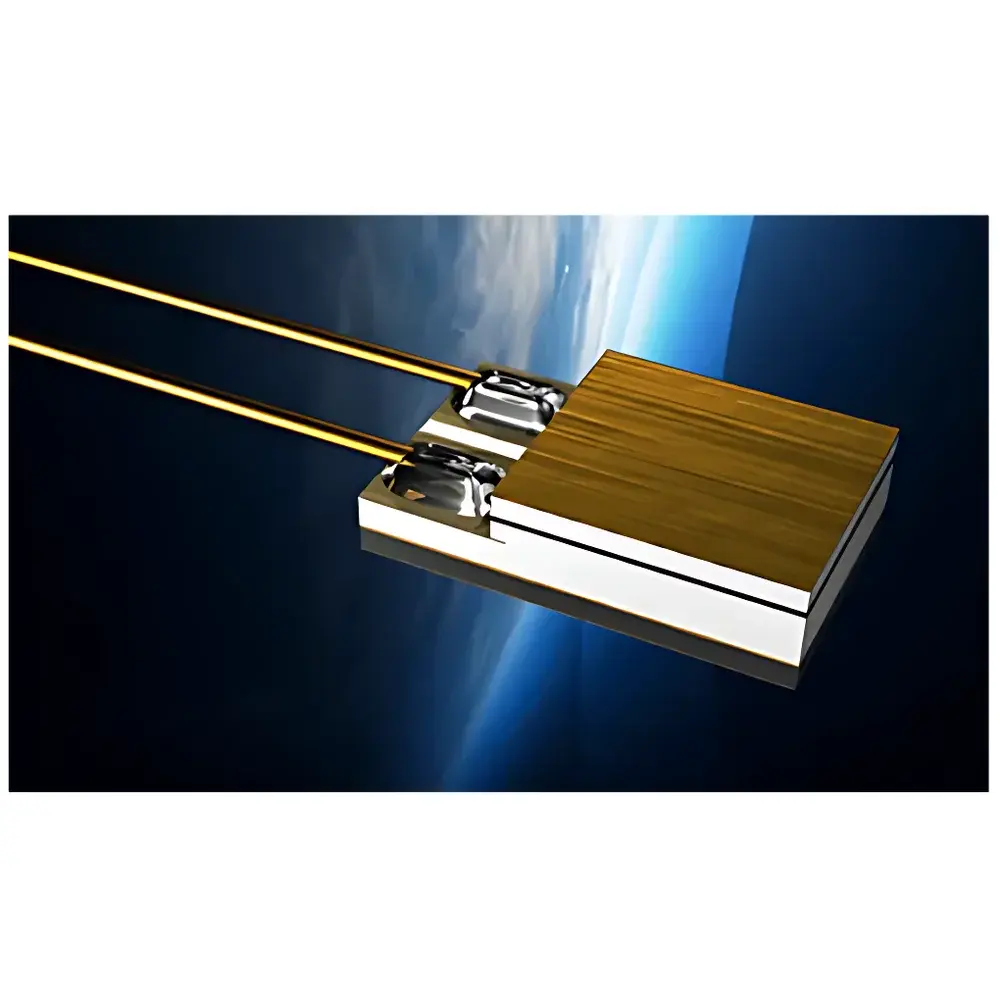
- Robust hermetic packaging options: SD-HT (high-temperature solderable die) and CU-HT (copper-encased high-thermal-conductivity package)
- Integrated mechanical and environmental stress screening: PIND, X-ray inspection, 20,000 g constant acceleration, thermal cycling (4.2 K ↔ 298 K), thermal shock (100 cycles), vibration, mechanical shock, and 2000-hour life testing
Sample Compatibility & Compliance
The HR Series is compatible with standard cryogenic wiring practices and vacuum-compatible mounting techniques. All sensors meet MIL-STD-883 Class B visual inspection criteria and are suitable for integration into ultra-high-vacuum (UHV), magnetic confinement, and radiation-hardened environments. While not certified to a single overarching regulatory framework, the qualification methodology aligns with requirements defined in NASA GSFC-STD-7000A (Mechanical Parts Selection and Control), ESA ECSS-Q-ST-60-13C (Qualification of Electronic Components), and IEEE 1620-2004 (for reliability assessment of cryogenic instrumentation). Documentation supports GLP/GMP-aligned audit trails and satisfies traceability mandates under ISO/IEC 17025 for accredited calibration laboratories.
Software & Data Management
HR Series sensors do not include embedded firmware or onboard digital interfaces; they are analog passive devices requiring external excitation and signal conditioning. However, Lake Shore provides comprehensive resistance–temperature (R–T) calibration tables (in ASCII and Excel formats) covering the full 20 K to 420 K range, referenced to ITS-90. These datasets integrate seamlessly with Lake Shore’s CrossBridge™ software suite and third-party platforms including LabVIEW, Python (via PyVISA), MATLAB, and EPICS-based control systems. All calibration files include metadata headers specifying test date, bath stability, excitation voltage (<10 mV DC), measurement uncertainty (k=2), and sensor-specific TCR coefficients—enabling automated interpolation and uncertainty propagation in real-time control loops.
Applications
- Space-based observatories (e.g., James Webb Space Telescope instrument thermal management)
- High-energy physics infrastructure: superconducting RF cavities, beamline cryostats, and collider magnet quench detection
- Fusion energy research: tokamak divertor and blanket temperature monitoring under neutron flux
- Quantum information systems: qubit refrigerator stage mapping and feedback stabilization
- Advanced transportation: cryogenically cooled maglev propulsion and levitation control systems
- National metrology institutes: primary reference thermometry in fixed-point cells and adiabatic demagnetization refrigerators
FAQ
Are HR Series sensors supplied with individual calibration certificates?
Yes—each sensor ships with a unique, non-repudiable test report containing full R–T data, sensitivity curves, and qualification summary. No additional fee applies.
Can I specify custom lead wire configurations or lengths?
Yes—standard options include bare gold pads, 32 AWG tinned copper leads (3 mm), or 36 AWG Formvar-insulated ribbon cables (2 m or 5 m). Custom绞合 or shielded variants are available with minimal impact on lead time and cost.
What is the recommended excitation method for optimal accuracy?
DC excitation <10 mV is specified to minimize self-heating error. Four-wire (Kelvin) measurement is strongly advised to eliminate lead resistance effects, especially below 50 K.
Is the HR Series compliant with FDA 21 CFR Part 11 or similar regulatory frameworks?
As analog passive components without electronic storage or user-accessible software, HR sensors fall outside the scope of Part 11. However, their test documentation supports audit-ready data integrity workflows in regulated GxP environments.
How does the HR Series differ from standard Cernox® sensors like CX-1080?
While sharing the same core Cernox® thin-film composition and nominal R–T curve, HR devices undergo full-lot qualification—including DPA, hermeticity validation, and accelerated life testing—whereas standard units are subject only to sampling-based acceptance testing.