
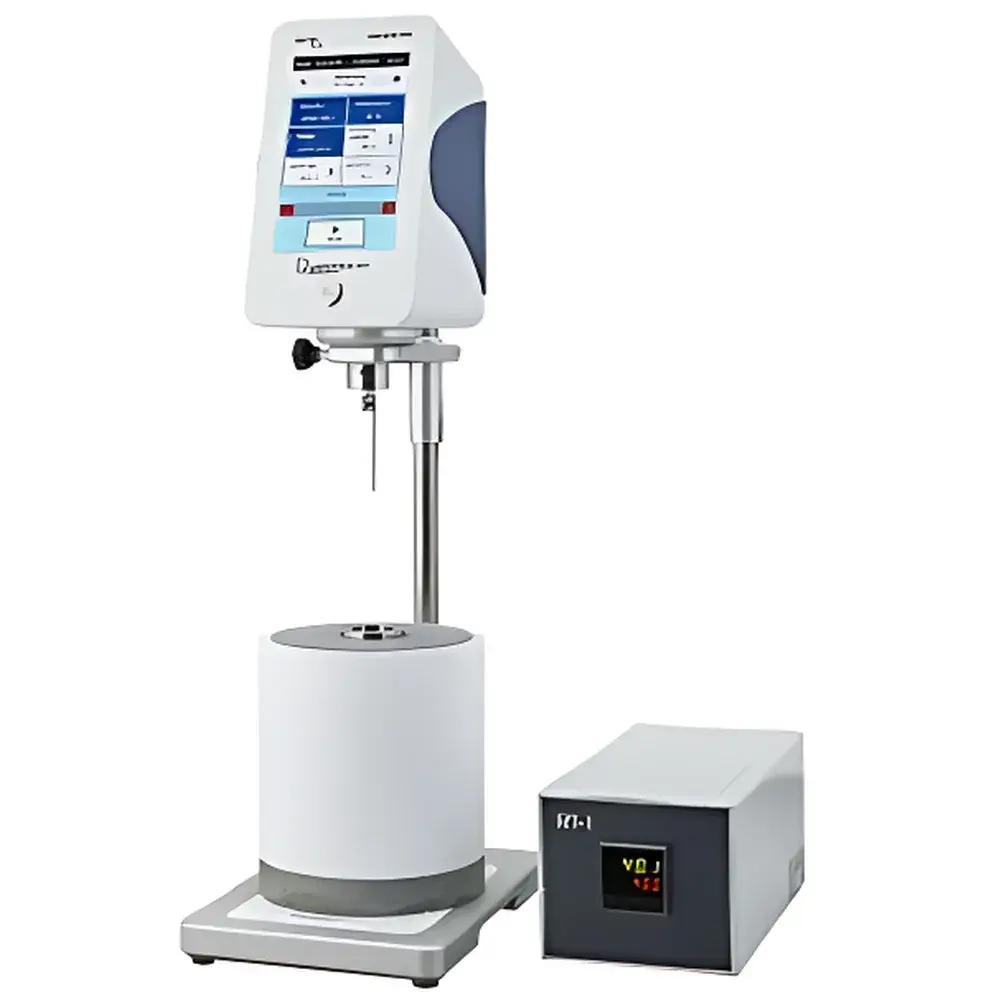
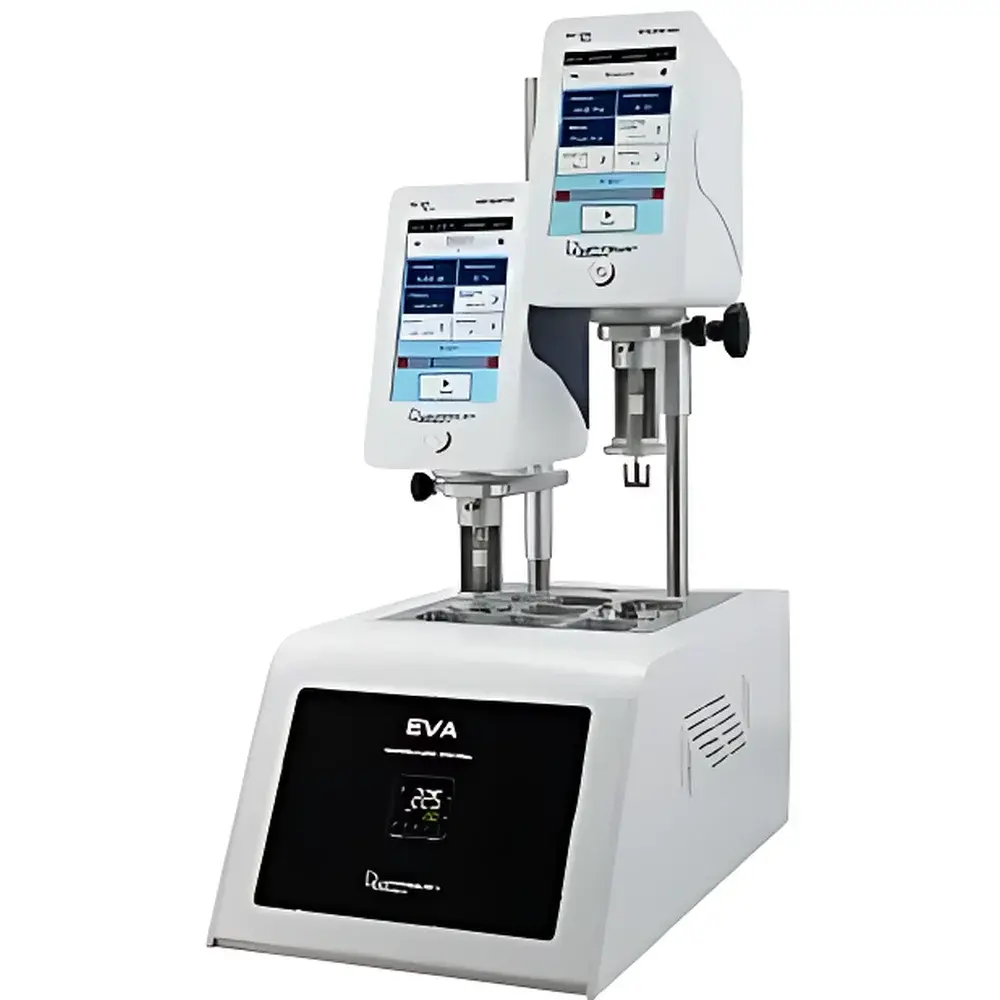
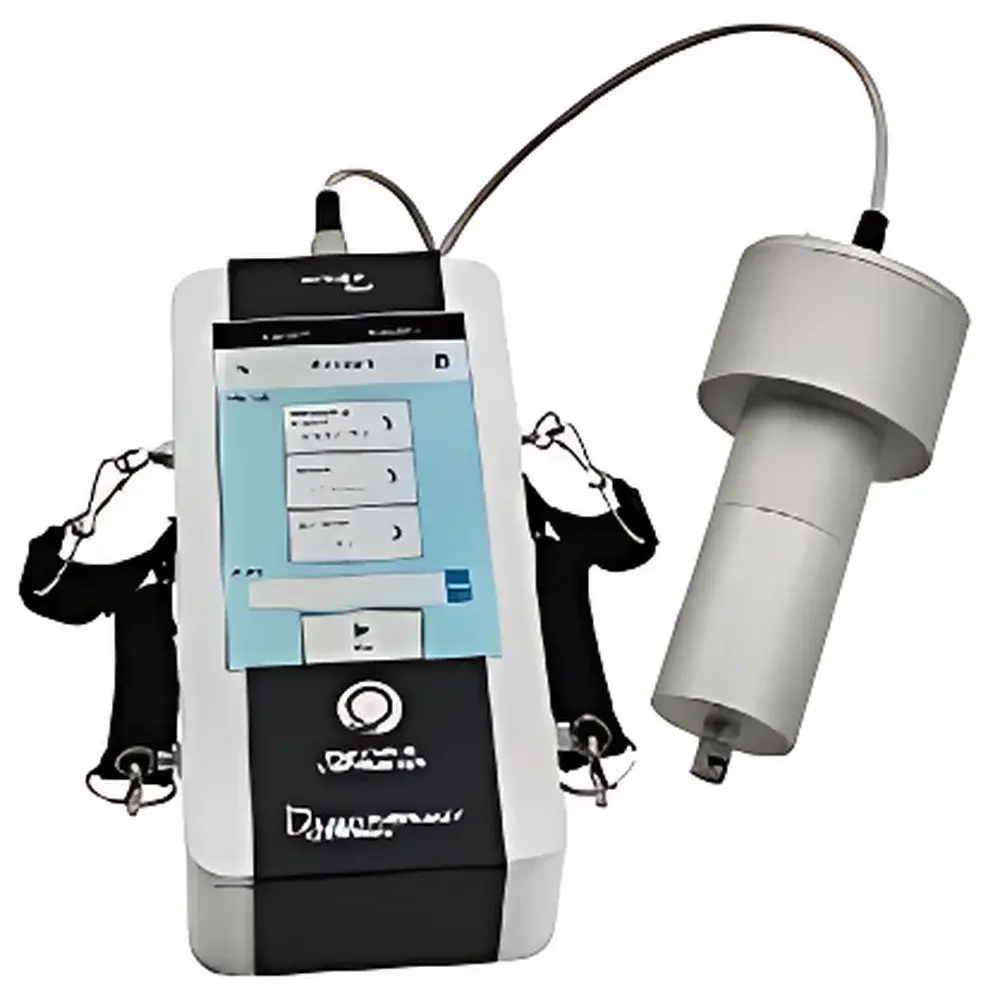
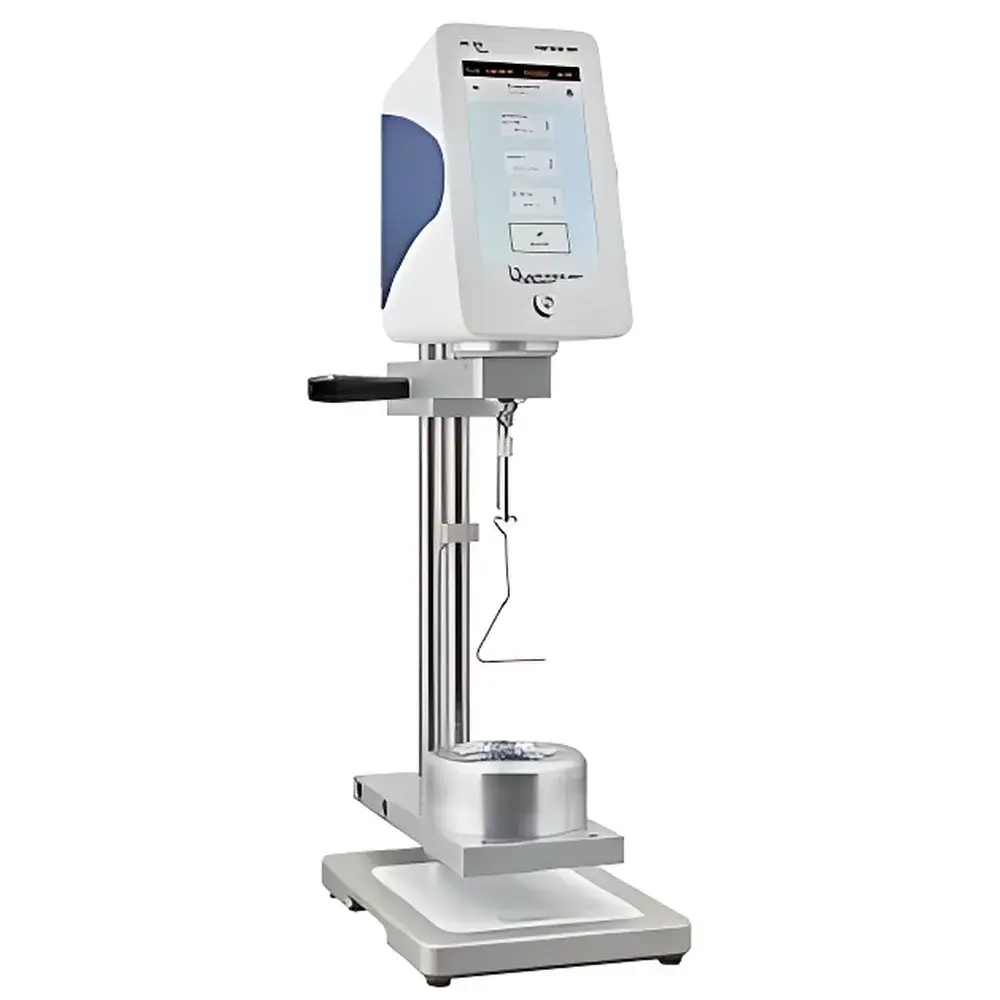
Lamy RM100i Industrial Rotational Viscometer
| Brand | Lamy Rheology |
|---|---|
| Origin | France |
| Model | RM100i |
| Rotational Speed Range | 0.3–1500 rpm |
| Torque Range | 0.05–13 mNm (Standard) / 0.005–0.8 mNm (LR Version) |
| Viscosity Range | 1–540,000,000 mPa·s |
| Accuracy | ±1% of full scale |
| Repeatability | ±0.2% |
| Temperature Control (with RT-1 furnace) | Ambient to 300 °C (±0.2 °C) |
| Display | 7" capacitive touchscreen |
| Interface | RS232, USB, 4–20 mA analog output |
| Compliance | ASTM D2555, ISO 2555, DIN ISO 3219, MS-R |
| Safety | User authentication via 4-digit password |
| Power Supply | 90–240 VAC, 50/60 Hz |
Overview
The Lamy RM100i Industrial Rotational Viscometer is a precision-engineered, CE-certified instrument designed for continuous, high-reliability viscosity monitoring in demanding production and quality control environments. Based on Couette-type rotational measurement principles, the RM100i employs a controlled-shear geometry—typically using concentric cylinder or coaxial spindle systems—to quantify dynamic viscosity under defined shear rates. Its modular architecture integrates seamlessly with the optional RT-1 high-temperature furnace (up to 300 °C), enabling real-time rheological assessment of thermally sensitive or high-melting-point materials such as polymer melts, hot asphalt, molten chocolate, pharmaceutical suspensions, and reactive coatings. Unlike capillary or falling-ball methods, the RM100i delivers absolute viscosity values traceable to SI units, with direct torque transduction and temperature-compensated signal processing ensuring metrological integrity across extended operational cycles.
Key Features
- Modular compatibility with Lamy’s FIRST TOUCH, RM 100 TOUCH, and RM 200 TOUCH platforms for unified method development and cross-system data harmonization.
- Disposable MS-C sample cups eliminate cross-contamination and reduce cleaning downtime—critical for GMP-compliant batch release testing in pharma and food manufacturing.
- Integrated Pt100 Class A temperature sensor with active thermal feedback loop ensures ±0.2 °C stability during isothermal measurements; optional RT-1 furnace extends operational range to 300 °C with programmable ramp/soak profiles.
- 7-inch industrial-grade capacitive touchscreen provides intuitive navigation, real-time curve plotting (viscosity vs. time, shear rate, or temperature), and on-device method programming—including multi-step protocols with conditional triggers.
- Dual-output architecture: isolated 4–20 mA analog signal for PLC integration and real-time process monitoring, plus native RS232 and USB 2.0 ports for PC-based data logging, firmware updates, and GLP-compliant audit trail export.
- Robust mechanical design rated for continuous operation in ambient temperatures from 5–40 °C and relative humidity ≤80% non-condensing; IP54-rated enclosure for factory-floor deployment.
Sample Compatibility & Compliance
The RM100i accommodates a broad spectrum of Newtonian and non-Newtonian fluids—including suspensions, emulsions, gels, pastes, and molten polymers—via interchangeable measuring systems (MS-DIN spindles, coaxial cylinders, and cone-plate geometries). Its adherence to ASTM D2555 (standard test method for apparent viscosity of adhesives), ISO 2555 (fluids in rotating viscometers), and DIN ISO 3219 (rheological properties of polymer solutions and dispersions) ensures regulatory acceptability in global QC laboratories. For pharmaceutical applications, the system supports 21 CFR Part 11-compliant user access control (4-digit password + username), electronic signature-capable method storage, and immutable measurement logs with timestamped metadata—facilitating FDA and EMA audit readiness. All firmware and calibration certificates are issued per ISO/IEC 17025-accredited procedures.
Software & Data Management
The RM100i operates natively via its embedded RHEOMATIC LS firmware, which enables full method scripting, statistical analysis (mean, SD, CV%), and customizable report generation (PDF/CSV/Excel). Measurement data—including raw torque, angular velocity, temperature, and calculated viscosity—is stored internally (≥10,000 records) and exportable via USB mass storage mode. Optional RHEOMATIC LS desktop software (Windows 10/11) extends functionality with advanced curve fitting (Power Law, Herschel-Bulkley), thixotropy quantification (structural recovery kinetics), and automated compliance reporting aligned with USP , EP 2.9.35, and ISO 16520-1. Audit trails record all user actions (login/logout, parameter changes, calibration events) with tamper-proof timestamps—meeting GLP/GMP documentation requirements.
Applications
The RM100i serves as a primary viscosity assurance tool across regulated and industrial sectors: in food manufacturing, it validates consistency of sauces, dairy concentrates, and confectionery masses under simulated shear conditions; in cosmetics, it characterizes yield stress and flow onset of creams and serums; in pharmaceuticals, it verifies viscosity of parenteral suspensions and ointment bases per USP monographs; in coatings and inks, it monitors dispersion stability and application viscosity pre- and post-dilution; and in petrochemical R&D, it evaluates pour point modifiers and high-temperature lubricant behavior. Its wide dynamic range (1–5.4×10⁸ mPa·s) and low-torque sensitivity make it suitable for both ultra-thin solvents and highly structured gels.
FAQ
Can the RM100i be integrated into an existing SCADA or DCS system?
Yes—the 4–20 mA analog output is fully configurable for viscosity, torque, or temperature signals and supports HART-compatible fieldbus communication when paired with optional signal conditioners.
Is calibration traceable to national standards?
All factory calibrations are performed using NIST-traceable silicone oil standards and documented per ISO/IEC 17025; on-site recalibration kits and certified reference fluids are available.
What safety certifications does the RM100i hold?
It carries CE marking (EMC Directive 2014/30/EU, LVD Directive 2014/35/EU), RoHS 2011/65/EU compliance, and meets UL 61010-1:2012 requirements for laboratory equipment.
How is temperature uniformity maintained inside the RT-1 furnace?
The RT-1 employs dual-zone PID-controlled resistive heating with axial airflow distribution and real-time Pt100 feedback at three spatial points, ensuring radial temperature deviation <±0.3 °C across the sample volume.
Does the system support automated cleaning validation protocols?
While the RM100i itself does not perform cleaning, its compatibility with disposable MS-C cups eliminates residue carryover—enabling validated cleaning verification through consecutive blank runs per ASTM E3054-16 guidelines.



