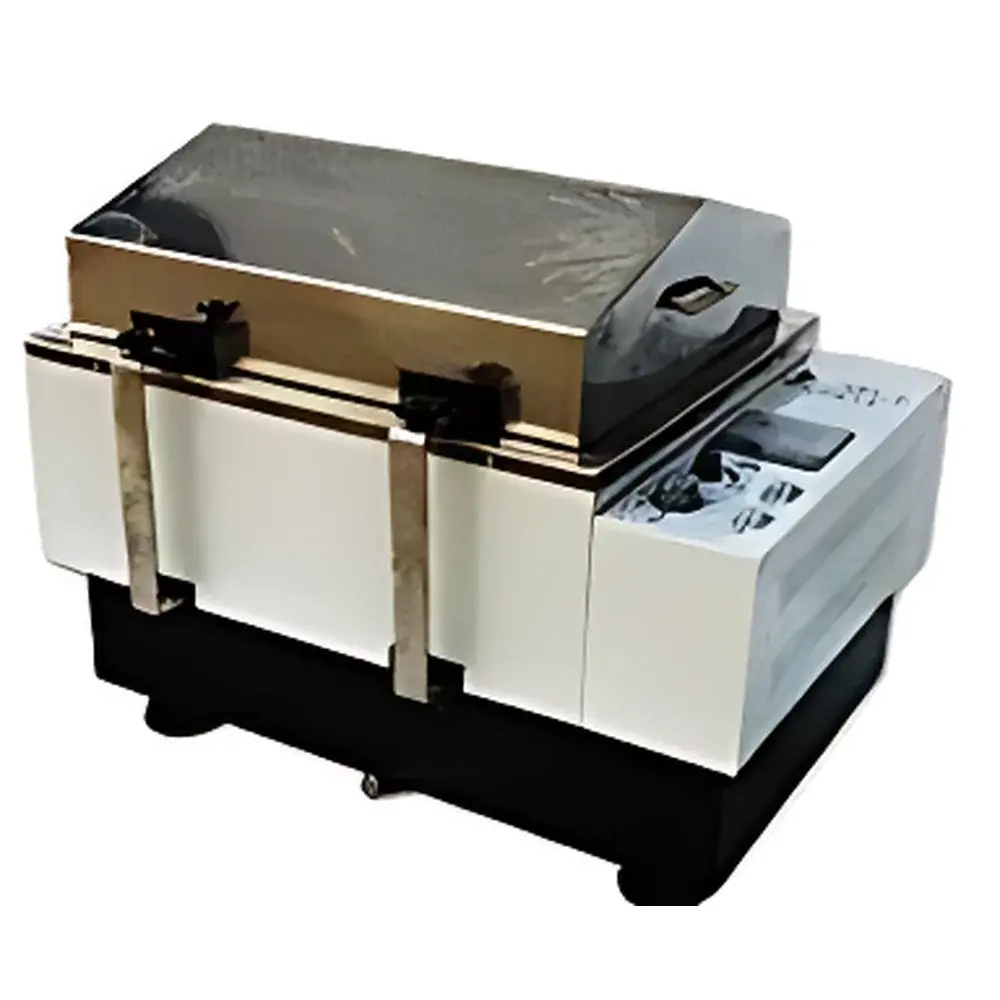
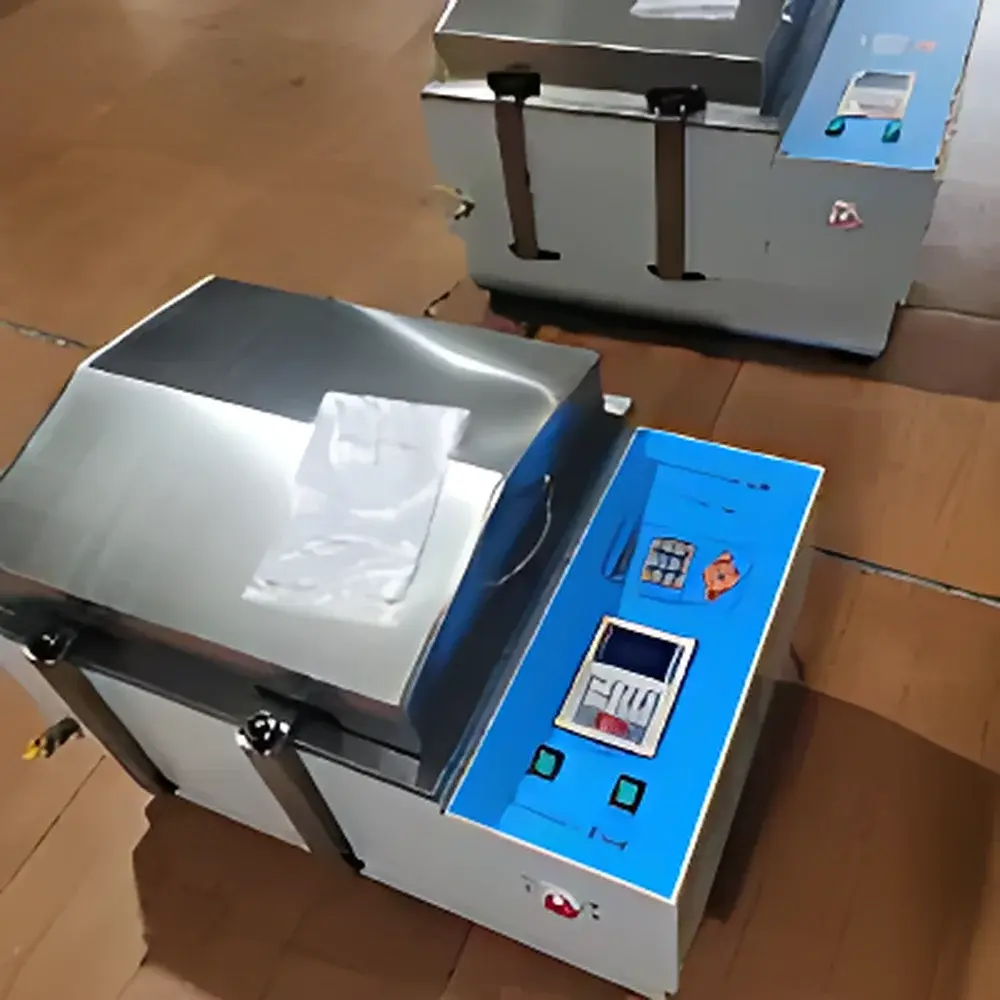
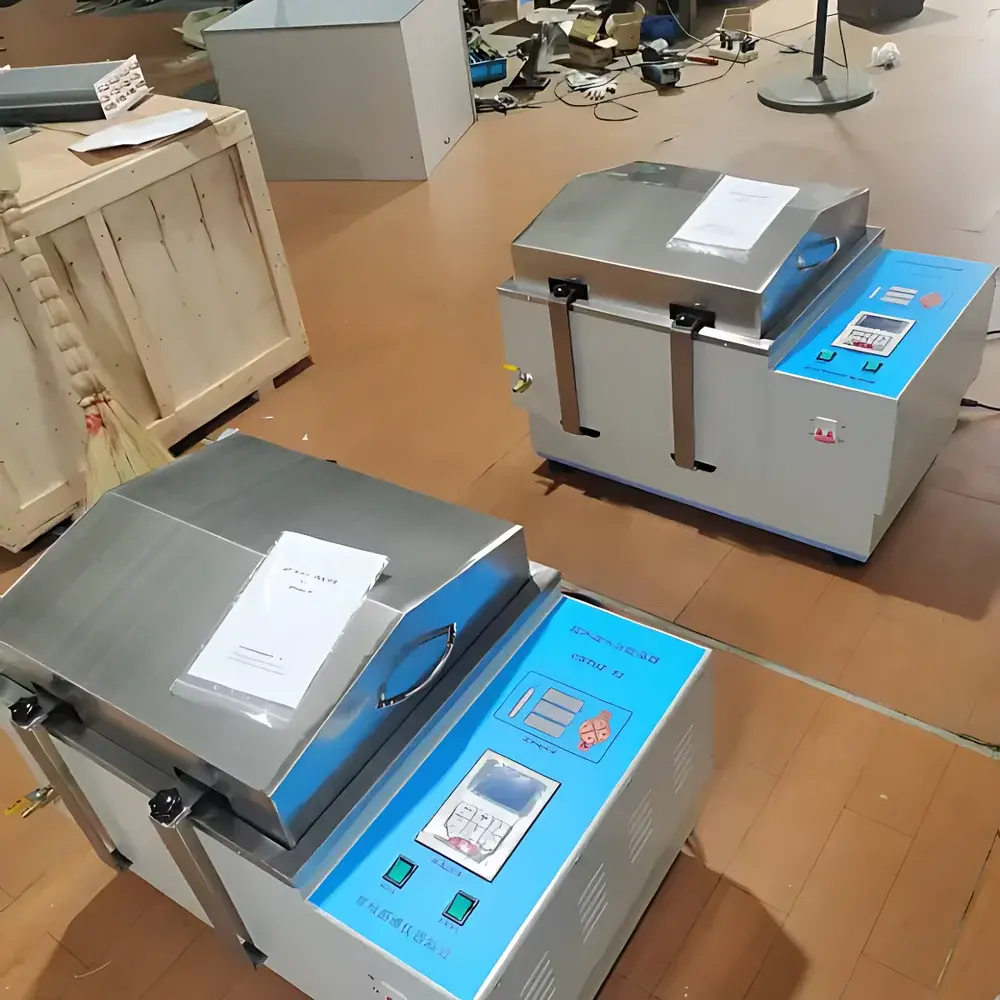
Langbo CSTHZ-82 Ultrasonic Constant-Temperature Water Bath Shaker
| Brand | Langbo Instruments |
|---|---|
| Origin | Jiangsu, China |
| Model | CSTHZ-82 |
| Timer Range | 1–120 min |
| Oscillation Frequency | 30–300 rpm (orbital) |
| Oscillation Amplitude | 26 mm |
| Temperature Control Range | RT to 90 °C |
| Temperature Accuracy | ±0.5 °C |
| Ultrasonic Frequency | 40–80 kHz (dual-frequency, adjustable) |
| Ultrasonic Power | 800 W |
| Ultrasonic Timer | up to 9999 min or continuous mode |
| Bath Volume | 52 L (560 × 495 × 190 mm) |
| Tray Dimensions | 420 × 350 mm |
| Cooling Function | Yes |
| Heating Power | 1.8 kW |
| Input Voltage | AC 220 V, 50 Hz |
| Number of Platforms | 1 |
Overview
The Langbo CSTHZ-82 Ultrasonic Constant-Temperature Water Bath Shaker integrates three core functionalities—precision temperature regulation, orbital shaking, and high-intensity ultrasonication—into a single platform engineered for reproducible sample processing in molecular biology, cell culture, enzymology, and analytical sample preparation. Unlike conventional water bath shakers, the CSTHZ-82 employs dual-frequency ultrasonic transducers (40–80 kHz) mounted directly beneath the stainless-steel bath chamber, enabling controlled cavitation for efficient cell lysis, nanoparticle dispersion, DNA shearing, and solvent degassing. Its Peltier-assisted cooling system—combined with a 1.8 kW heating element—ensures stable thermal control from ambient temperature to 90 °C (±0.5 °C), critical for temperature-sensitive protocols such as protein denaturation studies or enzyme kinetics assays. The orbital motion (30–300 rpm, 26 mm amplitude) is driven by a brushless DC motor with feedback-controlled speed regulation, minimizing mechanical drift and ensuring uniform mixing across all vessel positions on the 420 × 350 mm stainless-steel tray.
Key Features
- Triple-mode operation: simultaneous or independent control of temperature, shaking, and ultrasonication
- Dual-frequency ultrasonic generator (40/80 kHz) with stepless power adjustment (0–100% of 800 W nominal output)
- Precision PID temperature control with real-time digital display and auto-tuning algorithm
- Integrated thermoelectric (Peltier) cooling module enabling sub-ambient stabilization when ambient conditions permit
- Brushless DC motor drive for low-vibration, maintenance-free orbital agitation (30–300 rpm, ±1 rpm repeatability)
- Large-capacity 52 L water bath (560 × 495 × 190 mm internal dimensions) with corrosion-resistant 304 stainless steel construction
- Extended ultrasonic timer (1–9999 minutes) and independent mechanical/electronic safety cutoffs for overheat and dry-run protection
Sample Compatibility & Compliance
The CSTHZ-82 accommodates standard laboratory vessels including Erlenmeyer flasks (up to 2 L), centrifuge tubes (15–50 mL), microcentrifuge tube racks, and custom jigs secured via non-slip silicone matting. Its open-bath design allows direct immersion of reaction vials, sonotrode-compatible adapters, or temperature probes without obstruction. All electrical components comply with IEC 61010-1:2010 safety standards for laboratory equipment. While not certified for ISO 13485 or FDA 21 CFR Part 11 out-of-the-box, the device supports GLP/GMP-aligned workflows through its audit-ready parameter logging (time-stamped temperature, RPM, ultrasonic duty cycle), manual calibration traceability, and password-protected configuration locks. It meets general requirements for ASTM D2709 (emulsion stability testing) and ISO 8573-7 (compressed air cleanliness—when used for degassing applications).
Software & Data Management
The CSTHZ-82 operates via an embedded 4.3-inch TFT-LCD touchscreen interface with intuitive icon-based navigation. All operational parameters—including setpoints, ramp rates, hold durations, and ultrasonic burst cycles—are stored in non-volatile memory with automatic backup upon power loss. Real-time graphs of temperature and RPM are displayed during operation and exportable via USB 2.0 to CSV format for post-acquisition analysis in MATLAB, GraphPad Prism, or LabChart. Optional RS-485 Modbus RTU communication enables integration into centralized lab automation systems (e.g., Hamilton STAR, Tecan Fluent) for scheduled batch processing and remote monitoring via SCADA platforms. Firmware updates are performed locally using FAT32-formatted USB drives, with version history and checksum validation included.
Applications
- Cell disruption and organelle isolation in microbiology and biochemistry labs
- Accelerated solvent extraction (ASE) and homogenization of tissue samples prior to LC-MS analysis
- Preparation of uniform colloidal suspensions (e.g., liposomes, polymeric nanoparticles) requiring simultaneous thermal equilibration and acoustic energy input
- Enhanced hybridization efficiency in Southern/Northern blotting workflows
- Removal of dissolved gases from HPLC mobile phases and electrochemical electrolytes
- Thermal stability profiling of recombinant proteins under shear and acoustic stress
FAQ
Does the CSTHZ-82 support external temperature probe input for jacketed vessel control?
Yes—the rear panel includes a dedicated PT100 input port compatible with optional external probes for direct sample-core temperature feedback, bypassing bath-medium inference.
Can ultrasonic and shaking functions operate independently?
Yes—each subsystem (heating/cooling, orbital drive, ultrasonic generator) has discrete ON/OFF and parameter controls, allowing fully decoupled operation (e.g., sonication-only at ambient temperature, or shaking-only at 37 °C without ultrasound).
What is the maximum load capacity of the shaking platform?
The platform supports up to 15 kg distributed load; however, optimal ultrasonic coupling and thermal uniformity are maintained within 10 kg, especially above 60 °C or above 200 rpm.
Is the water bath resistant to organic solvents?
The stainless-steel chamber is compatible with aqueous buffers and low-concentration ethanol/methanol solutions; prolonged exposure to chlorinated or strong acidic solvents (e.g., acetone, DCM, concentrated HCl) is not recommended without supplemental inert liners.
How often does the unit require calibration verification?
We recommend annual verification of temperature accuracy (using NIST-traceable thermometer) and ultrasonic power output (via calorimetric measurement per ASTM E2810), documented in the instrument’s logbook per ISO/IEC 17025 guidelines.