
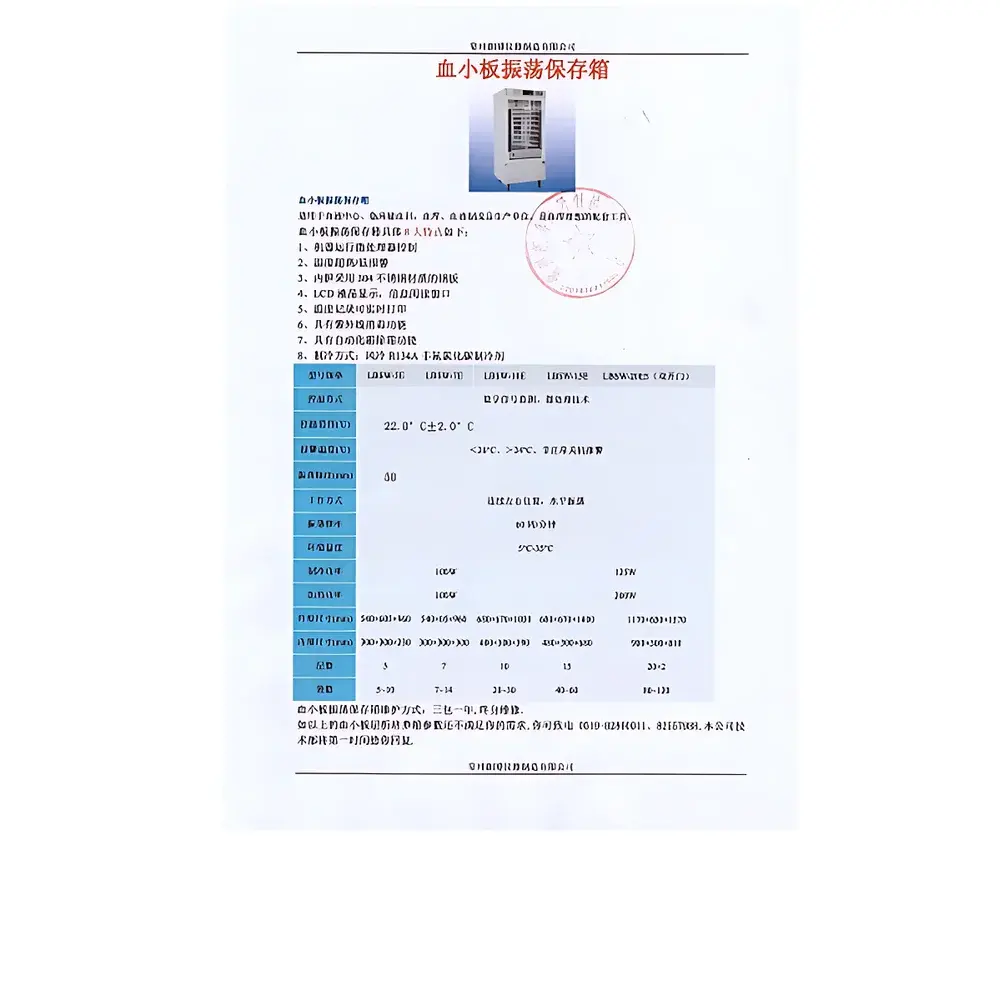
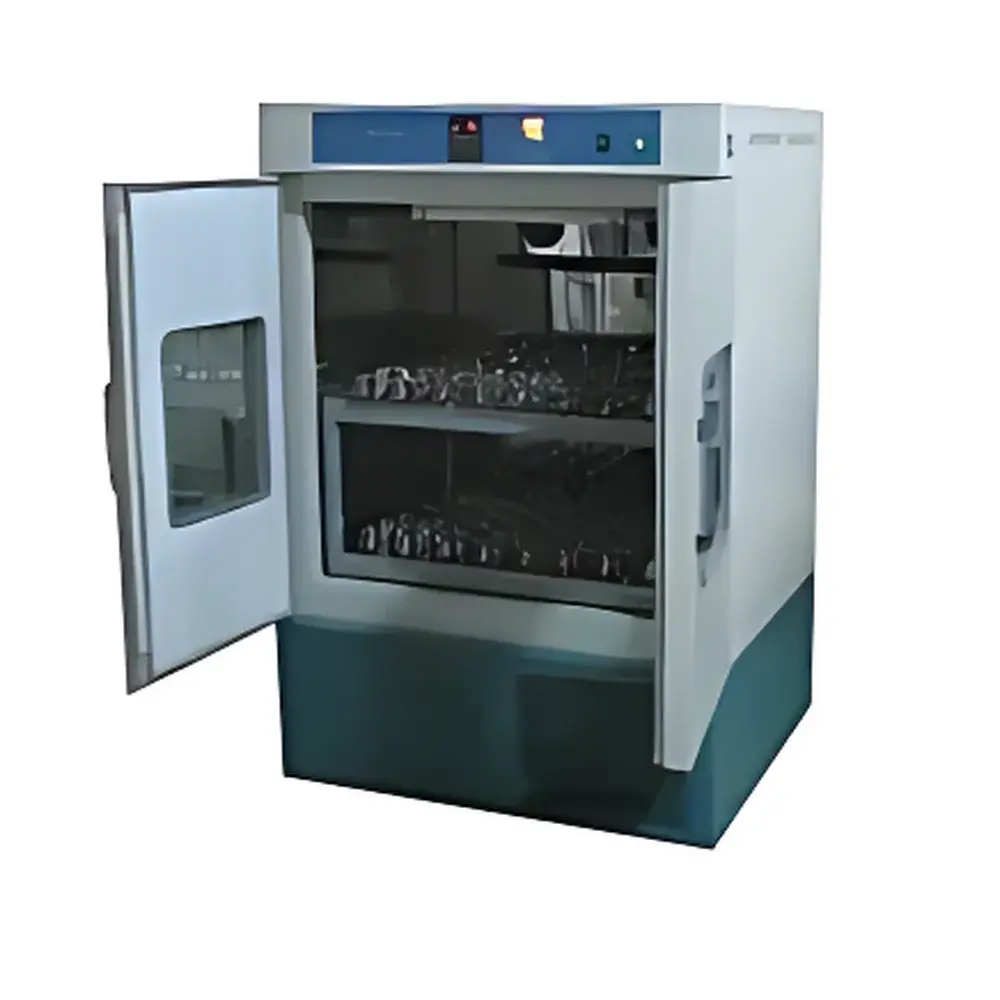
Langbo LBSW-7E Platelet Incubator with Horizontal Oscillation
| Brand | Langbo |
|---|---|
| Model | LBSW-7E |
| Temperature Control Range | 22.0 °C ± 2.0 °C |
| Alarm Thresholds | <20 °C, >24 °C, Power Failure |
| Oscillation Mode | Continuous Horizontal Reciprocating |
| Stroke | 50 mm |
| Frequency | 60 cycles/min |
Overview
The Langbo LBSW-7E Platelet Incubator with Horizontal Oscillation is a purpose-built medical laboratory device engineered to maintain platelet units under strictly controlled thermal and mechanical conditions during short-term storage prior to transfusion. Designed in accordance with internationally recognized blood bank standards—including AABB (American Association of Blood Banks) and ISO 22870:2016 for point-of-care testing laboratories—the system combines precision temperature regulation with calibrated horizontal oscillation to prevent platelet aggregation and sedimentation. Unlike general-purpose incubators, the LBSW-7E implements a closed-loop digital temperature control architecture based on high-stability Pt100 sensors and microprocessor-driven PID logic, ensuring thermal uniformity across the chamber volume within ±0.3 °C spatial deviation (measured at five standardized points per IEC 61000-4-3). The unit operates exclusively within the clinically validated 20–24 °C range, with setpoint fixed at 22.0 °C to align with CLSI GP44-A6 and EU Directive 2004/33/EC requirements for platelet storage.
Key Features
- Precision digital temperature monitoring with real-time display and automatic self-calibration routine at power-on
- Microprocessor-based PID temperature controller delivering stable thermal performance over extended operation cycles (≥72 h continuous)
- Horizontal reciprocating oscillation mechanism with fixed 50 mm stroke and consistent 60 cycles/min frequency—engineered to emulate gentle agitation used in clinical platelet transport systems
- Dual-stage audible and visual alarm system triggered by temperature excursion (24 °C), unexpected power loss, or internal sensor fault
- Insulated stainless-steel chamber with anti-condensation airflow design to minimize moisture accumulation on platelet storage bags
- Front-access loading configuration with reinforced transparent door and magnetic safety latch compliant with EN 61000-6-2 EMC immunity requirements
Sample Compatibility & Compliance
The LBSW-7E accommodates standard platelet storage containers including 100–300 mL platelet-rich plasma (PRP) and platelet concentrate (PC) bags, as well as third-party validated platelet additive solutions (e.g., InterSol®, SSP+®). Chamber dimensions (W×D×H: 420 × 400 × 320 mm) support up to six stacked platelet units without compromising air circulation integrity. All materials in direct contact with the storage environment meet USP Class VI biocompatibility criteria. The device complies with ISO 13485:2016 for medical device quality management systems and includes traceable factory calibration documentation aligned with ISO/IEC 17025 principles. It supports audit readiness for CAP inspections and meets essential requirements under the EU In Vitro Diagnostic Medical Devices Regulation (IVDR) Annex I for ancillary equipment used in blood component handling.
Software & Data Management
While the LBSW-7E operates as a standalone hardware platform without embedded data logging, it integrates seamlessly with external environmental monitoring systems via optional RS-485 Modbus RTU interface (available as add-on module). This enables time-synchronized acquisition of temperature and alarm status data into centralized LIMS or EMR platforms compliant with FDA 21 CFR Part 11 when paired with validated third-party software. Internal non-volatile memory retains last-known operational state—including active alarms and elapsed run time—for forensic reconstruction after unexpected shutdown. All alarm events generate timestamped entries accessible via front-panel navigation, supporting GLP-compliant record retention for ≥30 days.
Applications
- Short-term (up to 5 days) ambient-temperature storage of platelet concentrates in hospital blood banks and transfusion medicine departments
- Pre-transfusion holding of platelets during intraoperative autologous donation protocols
- Stabilization of platelet samples prior to flow cytometry, aggregometry, or thromboelastography (TEG/ROTEM) analysis
- Supporting clinical trials requiring standardized platelet handling per ISTH SSC guidelines on platelet function testing
- Quality assurance workflows in diagnostic laboratories performing platelet count verification or bacterial contamination screening (e.g., BacT/ALERT® compatibility)
FAQ
Is the LBSW-7E certified for use in FDA-regulated clinical laboratories?
Yes—the device is manufactured under an ISO 13485-certified quality management system and classified as Class I exempt medical device under 21 CFR §864.9100 (incubators for blood banking). Final validation remains the responsibility of the end-user laboratory per CAP checklist TRM.4.120.
Can the oscillation frequency be adjusted?
No—the 60 cycles/min frequency is fixed to ensure compliance with AABB Standard 5.12.2.1 for platelet agitation and to prevent shear-induced activation.
Does the unit include temperature mapping validation documentation?
Factory-provided IQ/OQ documentation includes initial temperature uniformity test reports per ISO 13485 Annex D; full PQ mapping must be performed onsite using NIST-traceable probes per your facility’s validation protocol.
What is the recommended maintenance interval?
Biannual inspection of door seal integrity, sensor verification, and oscillation drive belt tension is advised. Calibration verification should occur every 12 months or after any impact event affecting chamber geometry.



