
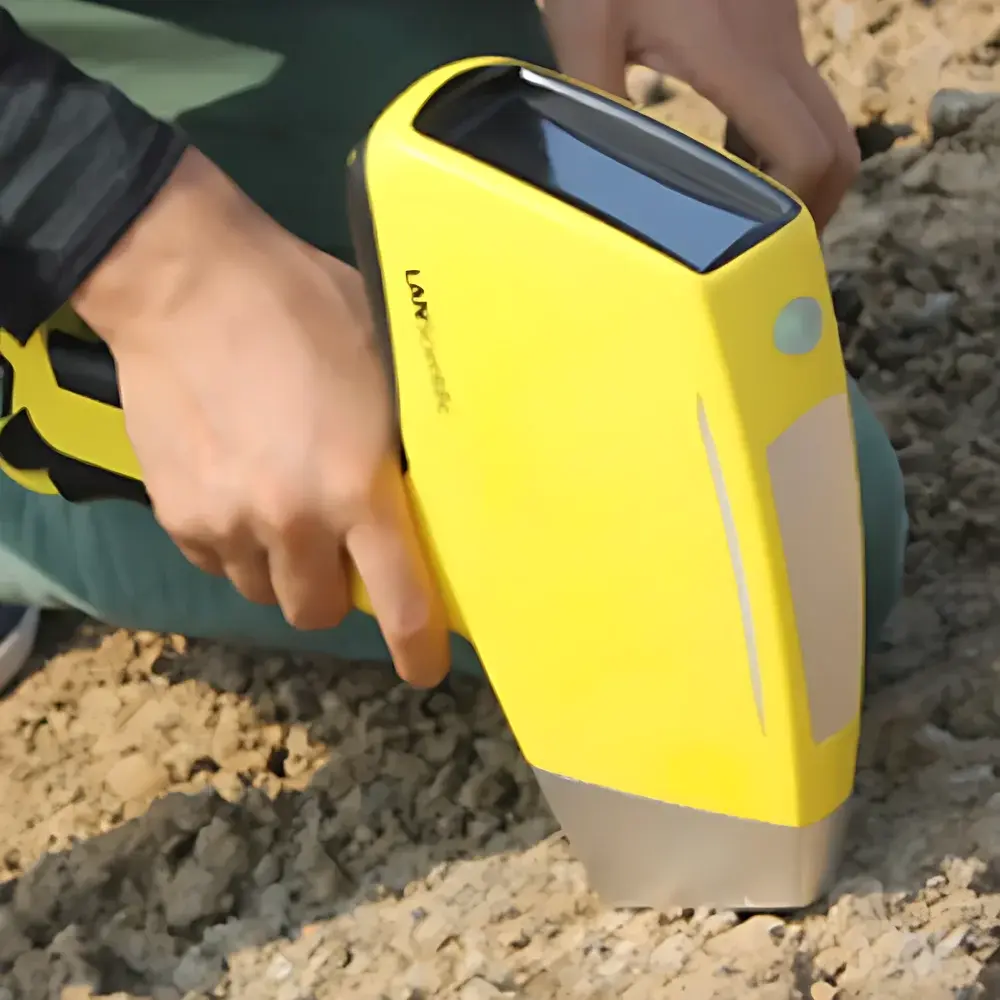
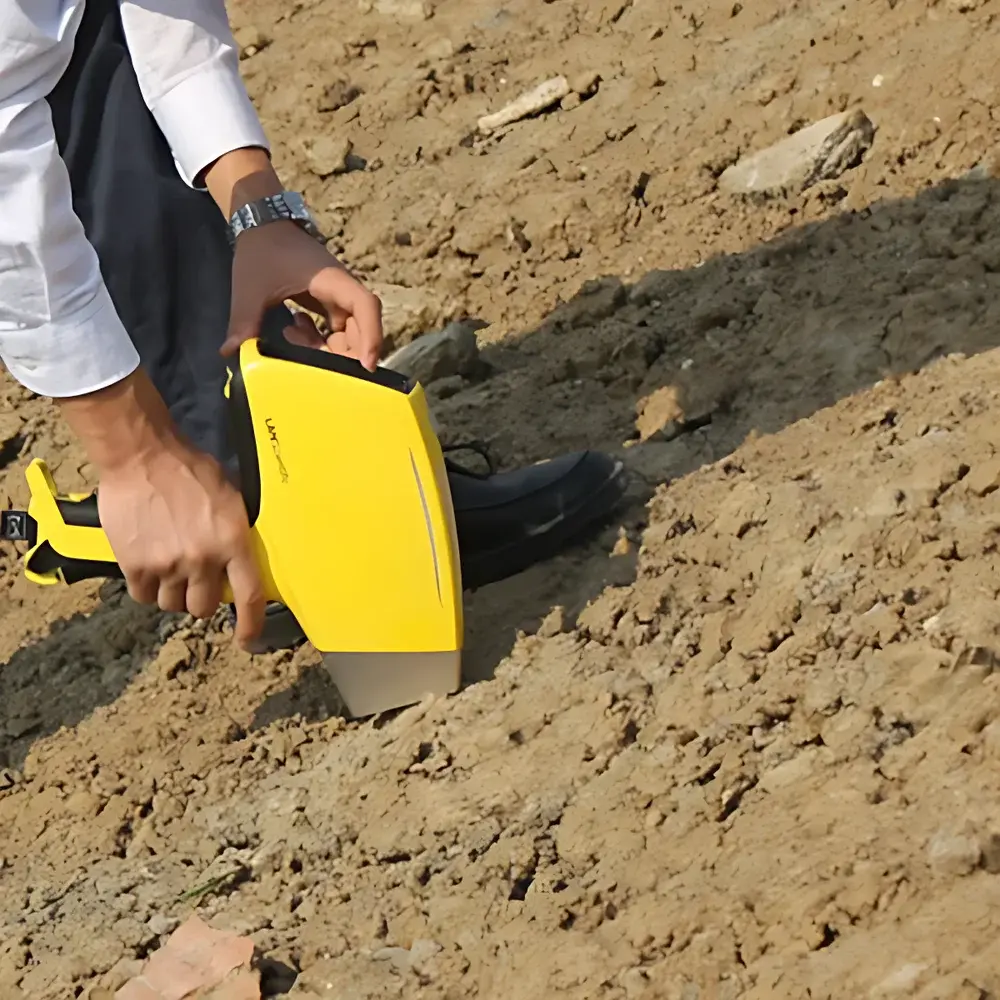
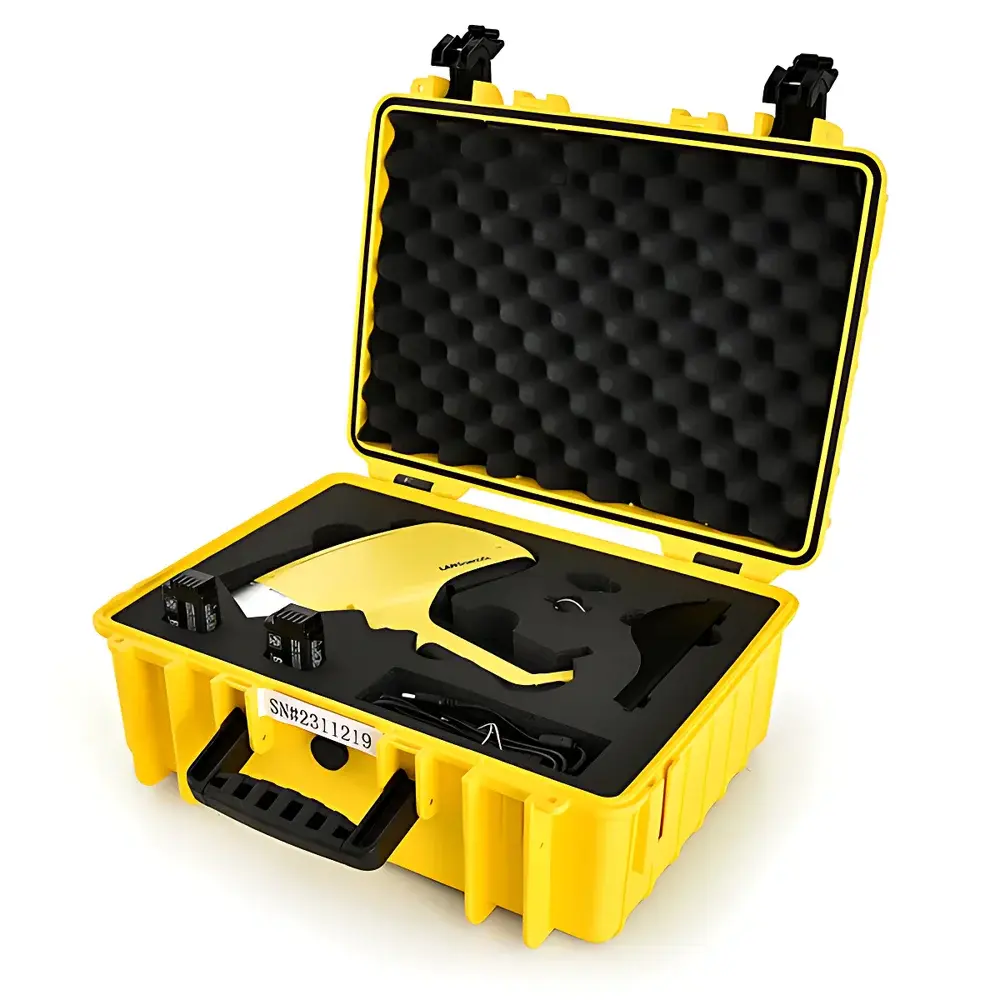
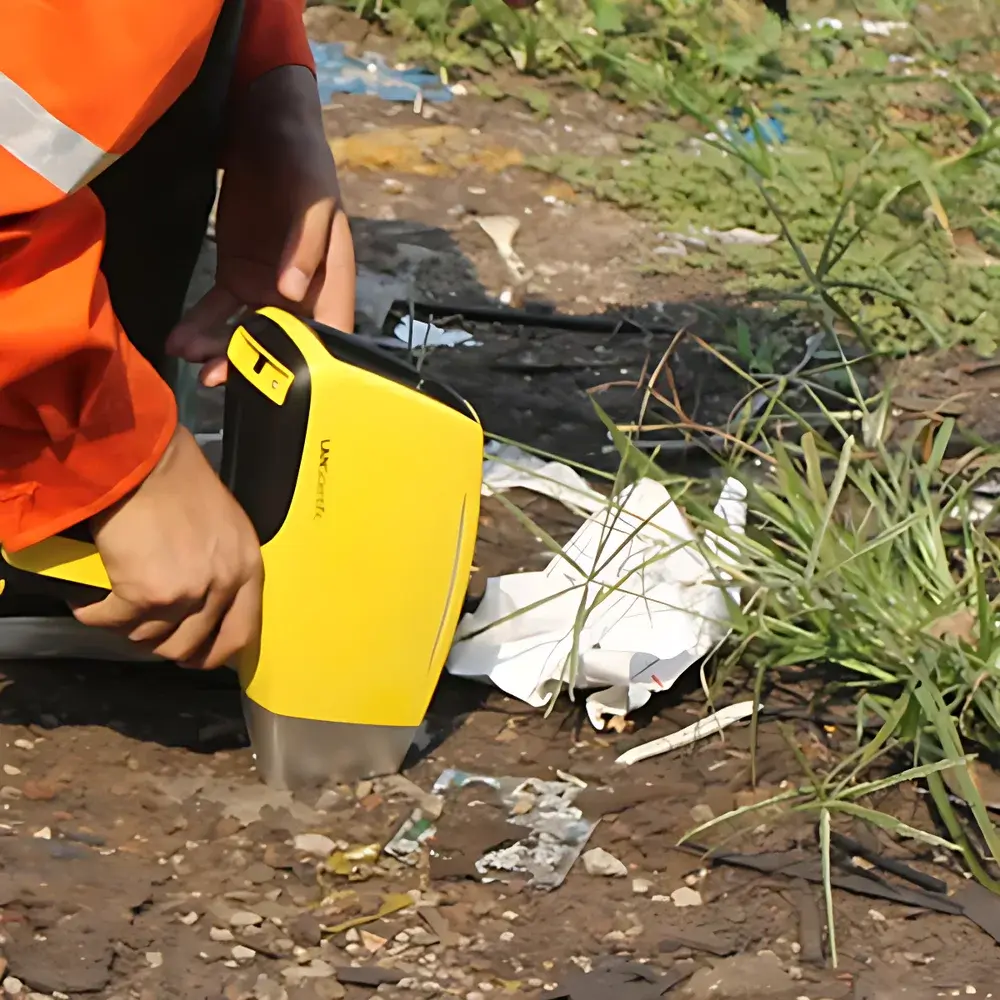
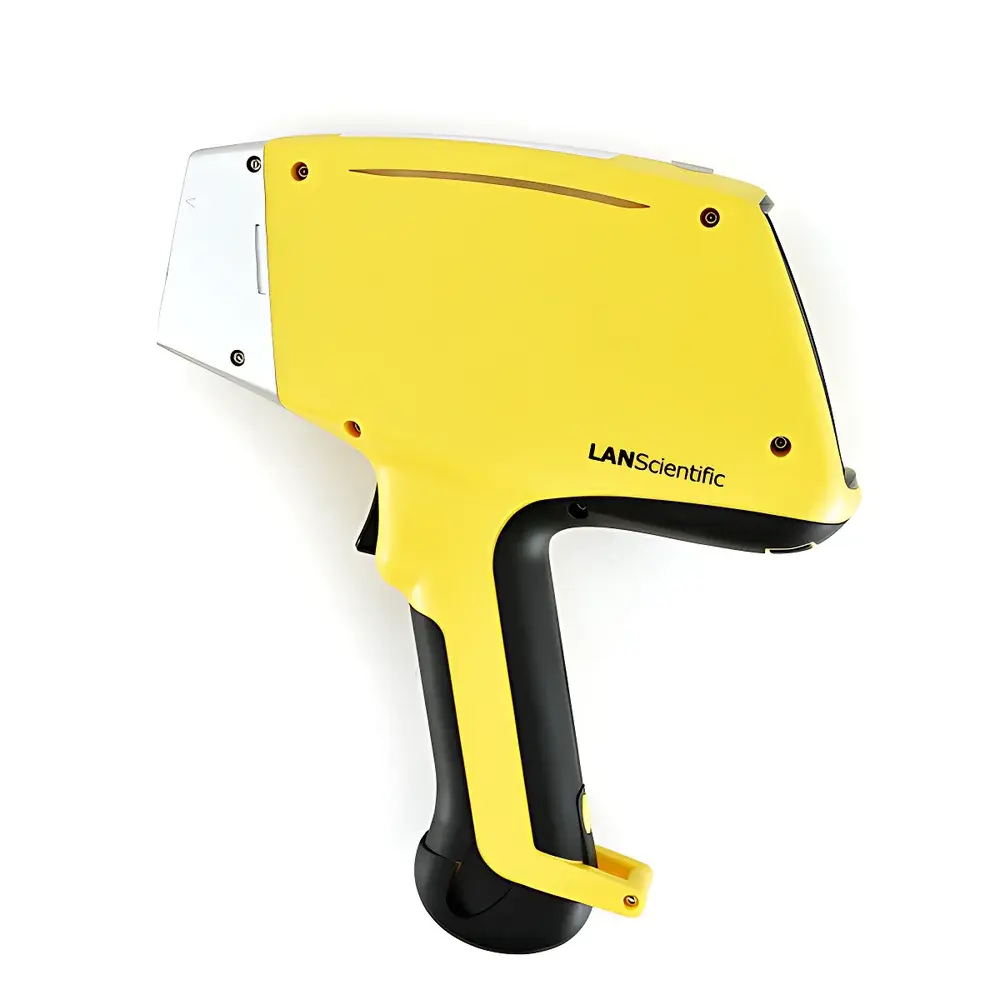
LANScientific TrueX 700 Series Handheld Energy Dispersive X-Ray Fluorescence (EDXRF) Spectrometer for Soil Heavy Metal Analysis
| Brand | LANScientific |
|---|---|
| Model | TrueX 700 Series |
| Origin | Jiangsu, China |
| Manufacturer Type | Direct Manufacturer |
| Instrument Type | Portable/Handheld EDXRF Spectrometer |
| Application Field | Environmental Soil & Sediment Screening |
| Elemental Range | Mg to U |
| Quantification Range | 1 ppm – 99.99 wt% |
| Energy Resolution | <140 eV (at Mn Kα) |
| Repeatability | ≤0.1% RSD (for major elements under standardized conditions) |
| Detector | High-resolution silicon drift detector (SDD), Peltier-cooled, 25 mm² active area |
| Sample Form Compatibility | Solids, powders, filter residues, slurries (dried or semi-dry), thin films, particulates, and heterogeneous field-collected matrices |
Overview
The LANScientific TrueX 700 Series is a field-deployable, handheld energy dispersive X-ray fluorescence (EDXRF) spectrometer engineered for rapid, non-destructive elemental quantification in soil, sediment, sludge, and other environmental solid matrices. Operating on the fundamental principle of X-ray fluorescence—where primary X-rays excite atoms in the sample, inducing emission of characteristic secondary X-rays—the instrument delivers lab-comparable precision directly at the point of sampling. Its optimized excitation geometry, high-efficiency SDD detector, and real-time spectral deconvolution algorithms enable robust multi-element analysis (Mg–U) without sample digestion or vacuum requirements. Designed for compliance-driven environmental workflows, the TrueX 700 meets the operational demands of RCRA site assessments, brownfield characterization, agricultural land monitoring, and EPA Method 6200 field screening protocols.
Key Features
- True portable architecture: Weighs <1.5 kg with integrated battery; ergonomic grip and ruggedized IP54-rated housing for all-weather field use.
- One-touch analysis: Pre-configured soil mode initiates full-spectrum acquisition, background subtraction, matrix correction, and quantitative reporting in ≤3 seconds per measurement.
- High-fidelity detection: Silicon drift detector (SDD) with <140 eV resolution at Mn Kα ensures clear peak separation for overlapping transitions (e.g., As Kα/Pb Lα, Cr Kα/V Kα), critical for regulatory-grade soil screening.
- Non-destructive testing (NDT): No sample preparation required—analysis performed directly on moist, granular, or layered field samples; zero consumables or chemical reagents.
- Trace-level sensitivity: Detection limits as low as 1 ppm for Cd, Pb, As, Cr, Hg, and Ni in representative soil matrices (NIST SRM 2710a verified).
- On-device data integrity: Built-in audit trail logs operator ID, timestamp, GPS coordinates, measurement duration, tube parameters, and calibration status for GLP/GMP traceability.
Sample Compatibility & Compliance
The TrueX 700 accommodates heterogeneous, unprocessed environmental specimens—including air-dried soils, wet sediments (≤30% moisture), digested filter cakes, dust wipes, and corrosion layers—without grinding, pressing, or pelletization. Its large-area collimator (8 mm diameter) and adaptive beam filtration minimize particle-size effects and enhance representativeness in coarse or stratified samples. The system complies with ISO 18507:2016 (soil analysis by portable XRF), ASTM D7522-22 (standard test method for field screening of metals in soils using portable XRF), and supports documentation alignment with US EPA Region 10 Field Screening Guidance and EU Council Directive 2004/35/EC (Environmental Liability Directive). All firmware and calibration libraries are validated against NIST-traceable reference materials (e.g., SRM 2709a, 2710a, 2711a).
Software & Data Management
LANScientific’s proprietary TrueX Manager software provides secure, role-based instrument control via Windows-based desktop or Android mobile interface. It supports 21 CFR Part 11–compliant electronic signatures, customizable user permissions (administrator/operator/auditor), and encrypted local/cloud backup. Calibration models are fully transparent: users may import custom calibrations, perform in-field energy calibration using Fe/Ni/Cu standards, and apply matrix-matched empirical corrections (e.g., for organic matter or clay content). Reports export natively to PDF and Excel formats, embedding spectral plots, statistical summaries (mean, SD, CV%), geo-referenced maps, and client-defined metadata fields (sample ID, location, depth, analyst, project code). Firmware updates are delivered over HTTPS with SHA-256 signature verification.
Applications
- RCRA waste characterization: Rapid screening of TCLP-extractable metals (Pb, As, Cr, Cd, Hg) in soils prior to disposal classification.
- Brownfield redevelopment: Real-time delineation of contamination plumes during grid-based surveying and excavation monitoring.
- Agricultural soil health assessment: Quantitative mapping of micronutrients (Zn, Cu, Mn) and toxicants (As, Cd) across crop fields.
- Construction material verification: On-site confirmation of regulated heavy metal content in backfill, capping layers, or demolition debris.
- Emergency response: Immediate triage of hazardous spills (e.g., battery acid leachate, mining runoff) to guide containment and remediation priorities.
- Regulatory compliance reporting: Generation of auditable datasets supporting Tier 1/2 risk assessments under ASTM E1527-21 and ISO 14001 environmental management systems.
FAQ
Does the TrueX 700 require annual factory recalibration?
No—users may perform energy calibration and intensity normalization in-field using supplied reference foils. Factory recalibration is recommended only after physical impact or extended operation beyond 10,000 hours.
Can it quantify total mercury in organic-rich soils?
Yes, when operated in high-sensitivity mode with extended counting time (15–30 s); certified performance verified per ASTM D7522 Annex A2 for Hg in peat and humic matrices.
Is GPS data embedded in exported reports?
Yes—each spectrum file (.trux) contains geotagged metadata (WGS84 coordinates, altitude, HDOP), automatically appended to PDF/Excel exports unless disabled by administrator policy.
How is instrument performance validated between uses?
Built-in daily verification check includes peak position stability (Mn Kα ±0.5 eV), resolution verification (<140 eV), and count-rate linearity testing—results logged and exportable.
Does the software support multi-language report generation?
Yes—interface language (English, Spanish, French, German, Chinese) and report template language are independently configurable per user profile.






