

LDI ROW Fluorescence-Based Oil-on-Water Monitoring Sensor
| Brand | LDI |
|---|---|
| Origin | Imported |
| Manufacturer Type | Authorized Distributor |
| Instrument Type | Online |
| Measurement Principle | UV-Induced Fluorescence Detection |
| Detection Range | Up to 10 m above water surface |
| Detection Limit | 1 µm oil film thickness |
| Accuracy | < ±2% of reading |
| Resolution | 0.1 ppm (equivalent oil concentration) |
| Measurement Frequency | 1 measurement per 10 seconds |
| Enclosure Rating | IP68 |
| Operating Temperature | −30 °C to +60 °C |
| Power Supply | 12–24 VDC (10–30 V range), optional AC/DC adapter or solar-battery configuration |
| Power Consumption | < 2 W |
| UV Source | Pulsed 365 nm LED, 5-year rated lifetime |
| Output Interfaces | Relay contacts, RS-485, 4–20 mA (standard) |
| Compliance | CE (EN 61000-6-2, -6-3, 61326-1, 61000-4-2/4-5/4-6/4-8, 61010-1), US EPA EPA/530/UST-90/009, IP68 (EN 60529), ATEX/IECEx Zone 1 for explosion-proof variants |
Overview
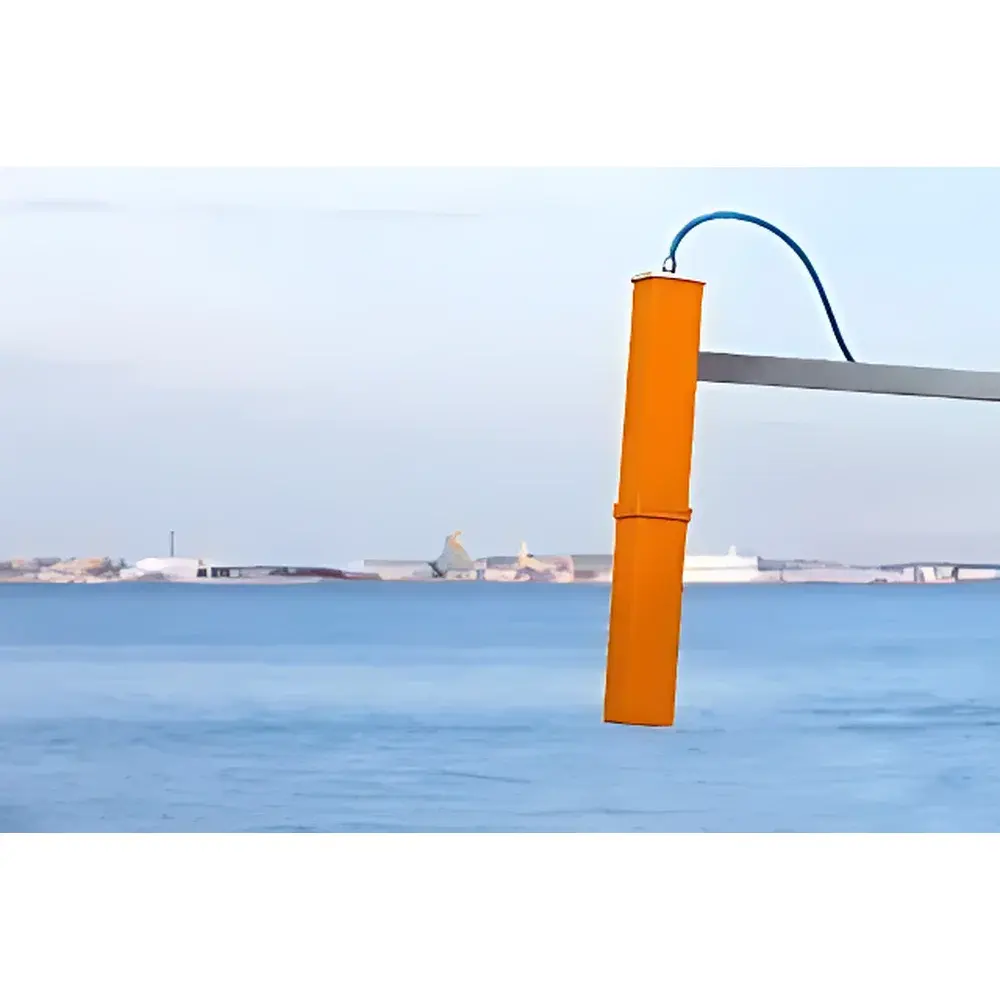
The LDI ROW Fluorescence-Based Oil-on-Water Monitoring Sensor is an industrial-grade, non-contact, online optical sensor engineered for continuous, real-time detection of hydrocarbon films on aqueous surfaces. It operates on the principle of ultraviolet-induced fluorescence: a pulsed 365 nm UV LED illuminates the water surface from an elevated position (up to 10 m), exciting native fluorophores present in petroleum-based compounds—including diesel, jet fuel, lubricants, crude oil, and even plant-derived oils. The resulting fluorescent emission is spectrally isolated and quantified using proprietary signal processing algorithms, enabling selective discrimination of oil signatures against background interference from organic matter, algae, or suspended solids. Unlike gravimetric or extraction-based methods, ROW delivers immediate, in-situ detection without sample collection, reagents, or consumables—making it ideal for unattended, long-term environmental surveillance in regulatory-compliant settings.
Key Features
- Continuous 24/7 operation across extreme ambient conditions (−30 °C to +60 °C), validated for Arctic and tropical deployments.
- IP68-rated sealed housing constructed from anodized aluminum (O-2311A), marine-grade 316L stainless steel (O-2311S/O-4501S), or ATEX-certified explosion-proof stainless steel (O-2301E/O-4501E), ensuring structural integrity and corrosion resistance in harsh coastal, offshore, and industrial environments.
- Internal nitrogen purging eliminates condensation, thermal drift, and optical path contamination—critical for maintaining baseline stability over extended deployment cycles.
- Low-power architecture (< 2 W DC consumption) supports off-grid operation via solar panels and rechargeable battery banks, with configurable telemetry options including cellular (GSM/GPRS), Wi-Fi, and Ethernet for remote data transmission.
- Industry-leading detection sensitivity down to 1 µm oil film thickness—validated per US EPA Method EPA/530/UST-90/009—with false-alarm suppression achieved through multi-parameter spectral validation and adaptive baseline correction.
- Modular interface suite: standard 4–20 mA analog output, RS-485 Modbus RTU, and dry-contact relay alarms; expandable via optional RS-232, LAN, audio alert, or custom protocol integration.
Sample Compatibility & Compliance
ROW detects a broad spectrum of hydrocarbons based on intrinsic fluorescence quantum yield, including light distillates (e.g., kerosene, Jet A-1), mid-range fuels (diesel, heating oil, lubricants), and heavy fractions (crude oil, bunker C). It does not require calibration against individual oil types under routine operation due to its physics-based spectral fingerprinting approach. The sensor complies with international electromagnetic compatibility (EMC) and safety standards (CE EN 61000 series, EN 61010-1), environmental monitoring guidance (US EPA UST leak detection protocols), and ingress protection requirements (EN 60529 IP68). Explosion-proof variants (O-2301E/O-4501E) meet ATEX Directive 2014/34/EU and IECEx System requirements for Zone 1 (Group II, Category 2G, T6 temperature class), supporting deployment in classified hazardous areas such as refinery perimeters, loading berths, and offshore platforms.
Software & Data Management
Configuration and diagnostics are managed via two dedicated software tools: ROW Configurator (local PC-based utility for sensor parameterization, threshold tuning, and firmware updates) and ROW Manager (server-side visualization platform supporting multi-sensor network dashboards, time-series trend analysis, event logging, and automated report generation). All system events—including alarm triggers, maintenance alerts, and communication status—are timestamped with millisecond precision and stored with audit-trail capability. ROW Manager optionally supports FDA 21 CFR Part 11–compliant electronic signature workflows and GLP/GMP-aligned data integrity features, including immutable log files, user-access controls, and change history tracking—enabling direct use in regulated wastewater discharge monitoring or drinking water source protection programs.
Applications
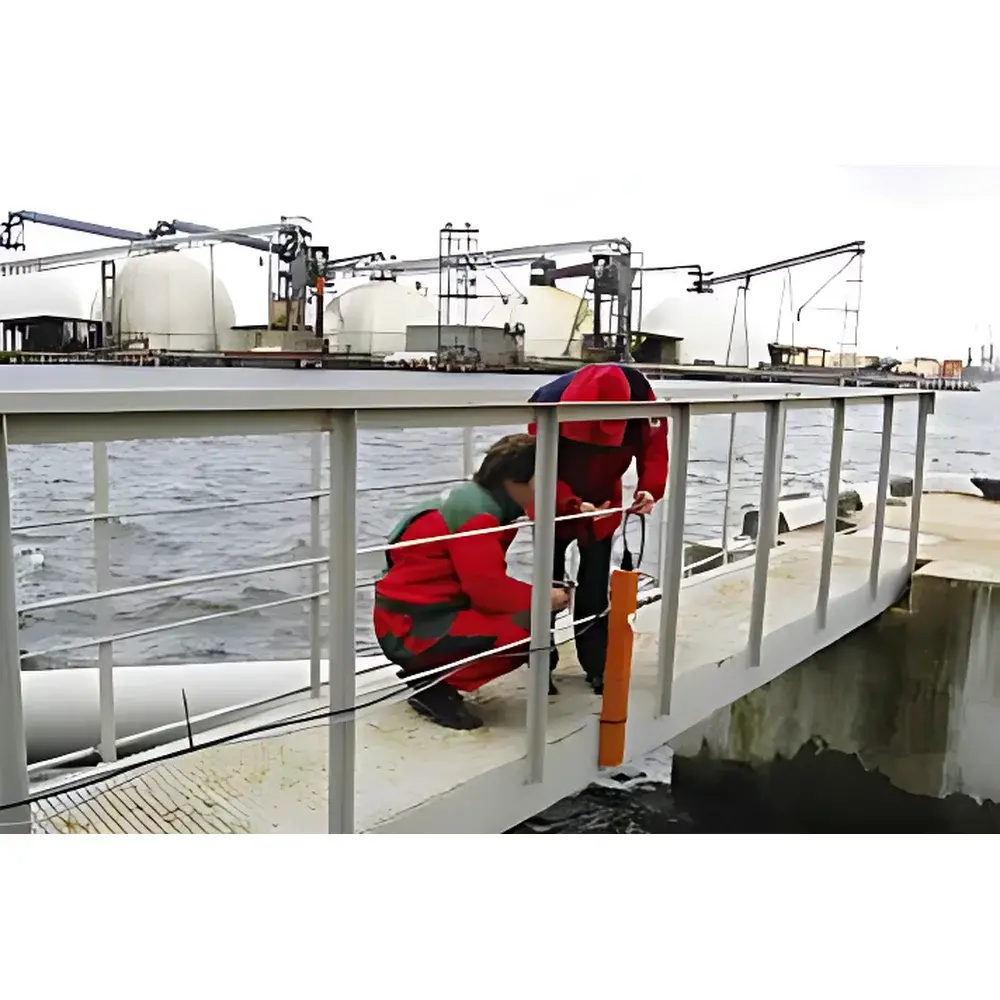
ROW is deployed globally across sectors where early hydrocarbon intrusion detection is mission-critical: upstream oil & gas (wellhead runoff, produced water outfalls), midstream logistics (tank farm bunds, pipeline right-of-way crossings), port authorities (berth spill containment, ballast water monitoring), municipal utilities (drinking water intakes, wastewater treatment plant influent channels), desalination facilities (intake screening), marine protected areas (coastal wildlife habitat surveillance), aquaculture operations (fuel storage perimeter monitoring), and industrial manufacturing (metalworking fluid containment, paper mill effluent control). Its rapid response (<10 s measurement interval) directly supports incident response planning, forensic source attribution, and regulatory reporting timelines mandated under ISO 14001, MARPOL Annex I, and national water quality statutes.
FAQ
How does ROW distinguish oil from naturally occurring fluorescent substances?
ROW employs narrowband spectral filtering combined with temporal gating of the pulsed UV excitation to isolate the characteristic decay kinetics and emission wavelength profile of hydrocarbon fluorophores—differentiating them from chlorophyll, humic acids, or mineral fluorescence.
Is calibration required during routine operation?
No routine recalibration is needed. Factory calibration is traceable to NIST-maintained hydrocarbon reference standards. Optional field verification kits (using certified oil-in-water suspensions) support periodic performance validation per ISO/IEC 17025 QA protocols.
Can ROW operate in turbid or aerated water conditions?
Yes. As a surface-only sensing method, ROW is unaffected by subsurface water clarity, sediment load, or dissolved oxygen levels—provided the oil film remains optically accessible at the air–water interface.
What cybersecurity measures are implemented in ROW Manager?
ROW Manager supports TLS 1.2+ encrypted communications, role-based access control (RBAC), session timeout enforcement, and optional integration with enterprise identity providers (LDAP/Active Directory) to meet IEC 62443-3-3 SL2 requirements for industrial control systems.
Does ROW support integration with SCADA or DCS platforms?
Yes. Native Modbus RTU (RS-485) and optional OPC UA or MQTT interfaces enable seamless interoperability with major industrial automation systems, including Siemens Desigo, Honeywell Experion, Emerson DeltaV, and Schneider EcoStruxure.
Related Products







