
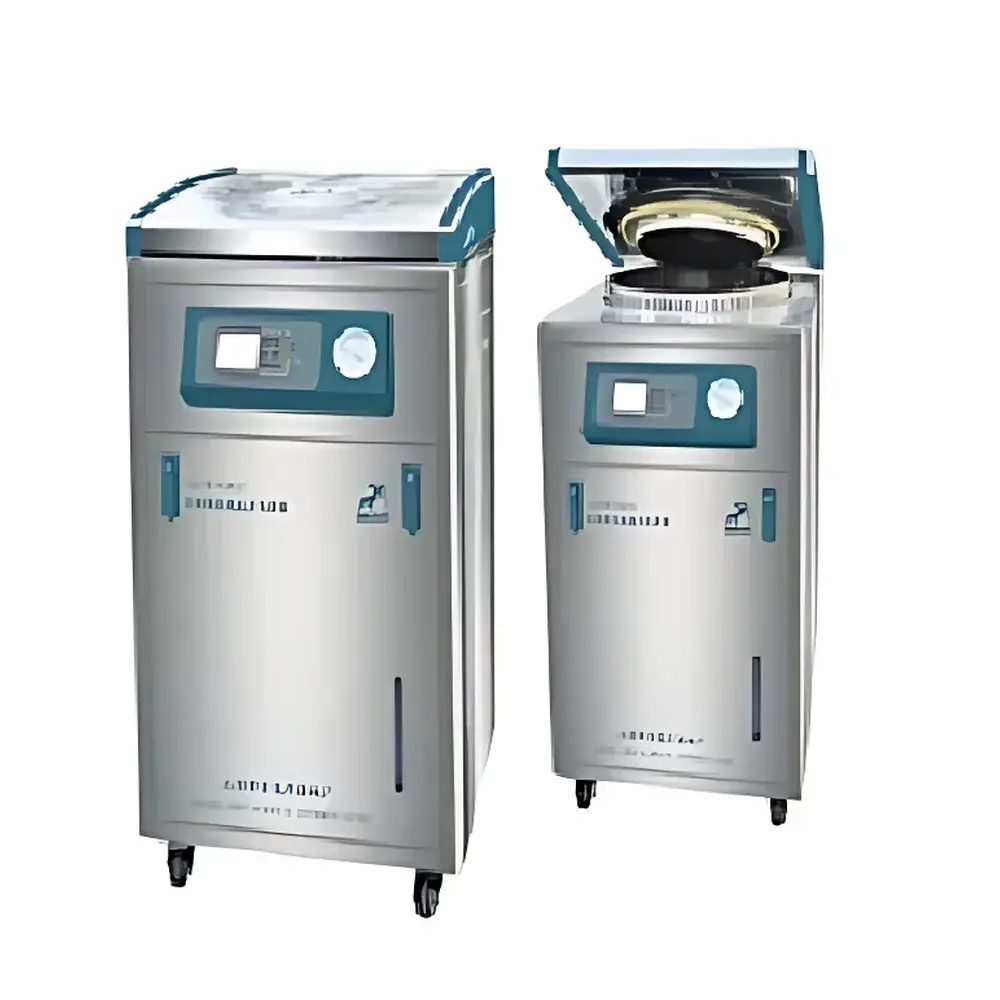
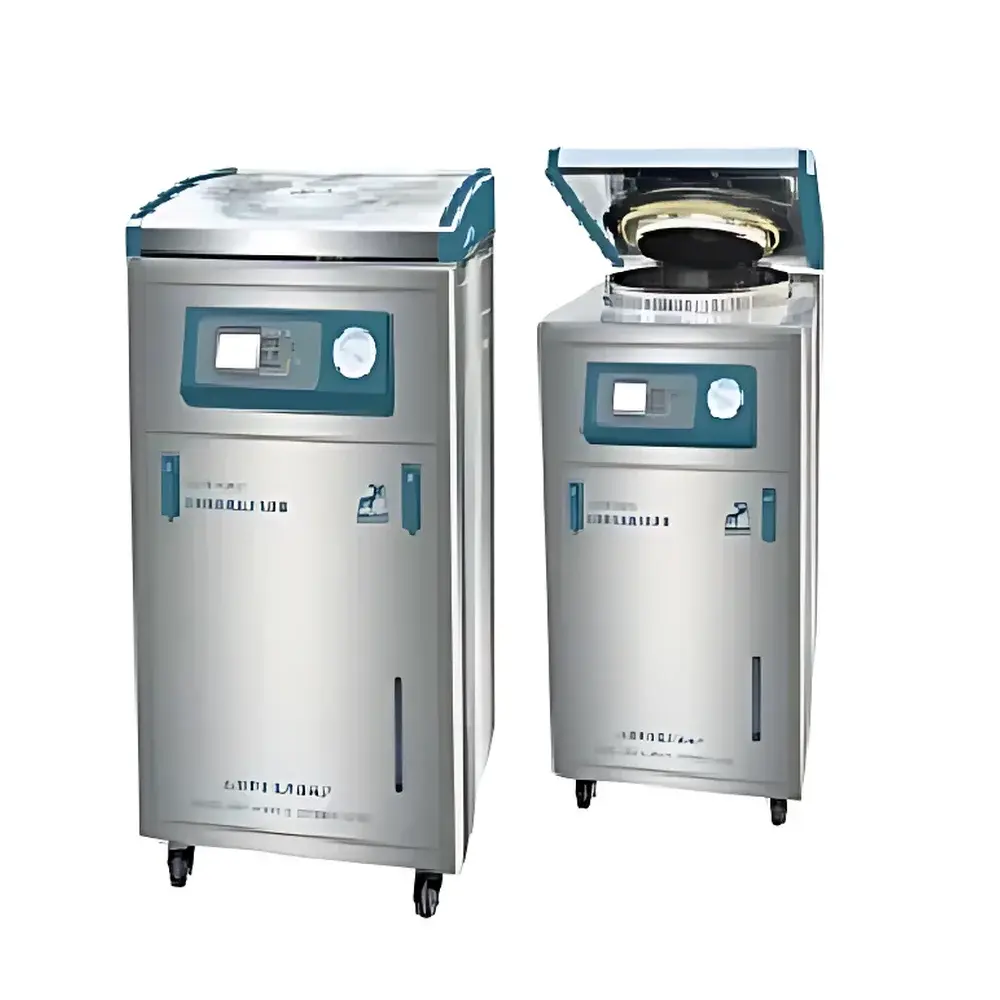
LDZM Series Stainless Steel Vertical Autoclaves (LDZM-40KCS / LDZM-60KCS / LDZM-80KCS)
| Origin | Shanghai, China |
|---|---|
| Manufacturer Type | Authorized Distributor |
| Product Origin | Domestic (PRC) |
| Models | LDZM-40KCS, LDZM-60KCS, LDZM-80KCS |
| Chamber Volume | 40 L / 60 L / 80 L |
| Power Supply | 220 V AC, 50 Hz |
| Heating Power | 3.5 kW |
| Chamber Dimensions (Ø × H) | 370 × 380 mm / 370 × 560 mm / 370 × 750 mm |
| Net Weight | 95 kg / 105 kg / 120 kg |
| External Dimensions (W × D × H) | 660 × 780 × 950 mm / 660 × 780 × 1150 mm / 660 × 780 × 1330 mm |
| Sterilization Temperature Range | 50–134 °C |
| Time Setting Range | 0–99 h |
| Safety Features | Interlocked door mechanism, low-water cutoff protection, automatic buzzer alert and shutdown upon cycle completion |
| Optional Accessories | Internal steam exhaust system, thermal printer interface, post-sterilization drying function |
Overview
The LDZM Series Stainless Steel Vertical Autoclaves are fully automated, microprocessor-controlled gravity-displacement steam sterilizers designed for reliable, repeatable terminal sterilization of heat-stable laboratory and clinical materials. Based on the fundamental principle of saturated steam under pressure—where elevated temperature and sustained exposure time synergistically inactivate microorganisms including bacterial spores—the LDZM units deliver validated thermal lethality (F0) across a wide operational envelope. Engineered for precision and safety compliance, each model features a seamless 304 stainless steel chamber, double-walled insulation, and a robust vertical cylindrical architecture optimized for space-constrained laboratories. The system operates via gravity displacement: ambient air is evacuated by downward steam flow, ensuring uniform chamber saturation prior to sterilization hold. This method conforms to internationally recognized sterilization validation frameworks, including ISO 17665-1 and EN 285 for steam sterilization processes.
Key Features
- Microprocessor-based control system with real-time monitoring and programmable cycle parameters (temperature, time, pre-vacuum duration where applicable)
- Intuitive one-touch operation interface with backlit LCD display showing current phase, setpoint, elapsed time, chamber pressure, and temperature
- Interlocked quick-release rotating lid mechanism compliant with ASME BPVC Section VIII and PED 2014/68/EU requirements
- Integrated low-water level detection and automatic power cutoff to prevent dry-heating damage
- Internal steam exhaust configuration (standard or optional) eliminates external venting, enabling safe installation in non-dedicated utility rooms
- Acoustic end-of-cycle alert followed by automatic system cooldown and power-down sequence
- Chamber constructed from medical-grade 304 stainless steel with electropolished interior surface for corrosion resistance and ease of cleaning
Sample Compatibility & Compliance
The LDZM autoclaves accommodate a broad range of load types: wrapped and unwrapped instruments, glassware, culture media (liquid and agar), textiles, rubber tubing, and porous loads. All models support standard sterilization cycles per ISO 11134, ISO 11140, and WHO TRS 992 Annex 2 guidelines. The sterilization chamber design facilitates adequate steam penetration and air removal, critical for achieving sterility assurance level (SAL) of 10−6. Units meet electrical safety standards IEC 61010-1 and electromagnetic compatibility requirements per IEC 61326-1. Optional thermal printer integration supports audit-ready documentation compliant with GLP and GMP environments requiring traceable cycle records.
Software & Data Management
While the base configuration operates via embedded firmware without PC connectivity, the optional RS-232 or USB interface enables direct connection to external data loggers or laboratory information management systems (LIMS). Cycle logs—including start time, set temperature, actual chamber temperature profile, pressure curve, and end status—are stored internally for up to 100 cycles and retrievable via the front-panel menu. When equipped with the thermal printer option, hard-copy output includes date/time stamp, operator ID (if entered), cycle type, duration, peak temperature, and pass/fail indication—fully traceable for internal QA audits and regulatory inspections (e.g., FDA 21 CFR Part 11 when paired with validated electronic signature workflows).
Applications
These autoclaves serve core sterilization needs across academic research labs, hospital central sterile supply departments (CSSD), pharmaceutical QC laboratories, biotechnology pilot facilities, and food safety testing centers. Typical applications include sterilization of surgical instrument packs, Petri dishes and pipette tips, buffered saline solutions, nutrient broths, and animal cage bedding. The adjustable temperature range (50–134 °C) supports both low-temperature pasteurization protocols and high-integrity sporicidal cycles. The 40–80 L capacity range allows scalability—from teaching lab throughput to mid-volume production sterilization—without compromising process consistency or thermal uniformity (validated per ISO 17665 Annex C temperature mapping procedures).
FAQ
What sterilization standards does the LDZM series comply with?
The LDZM autoclaves are engineered to meet the technical and safety requirements of ISO 17665-1, EN 285, ISO 11134, and IEC 61010-1. Validation support documentation and IQ/OQ templates are available upon request.
Can the unit be validated for use in GMP-regulated environments?
Yes—when equipped with optional data logging and printer modules, and operated within a documented qualification protocol (including temperature mapping, biological indicator challenge, and load configuration studies), the system supports GMP-compliant sterilization process validation.
Is external steam supply required?
No—these are self-contained electrically heated units generating steam internally via immersion heaters; no external boiler or steam line is needed.
What maintenance is recommended for long-term reliability?
Routine tasks include weekly chamber gasket inspection, monthly drain filter cleaning, quarterly calibration verification of temperature and pressure sensors using NIST-traceable references, and annual full-system performance qualification.
Does the system support drying cycles?
Drying functionality is available as an optional add-on module, utilizing controlled vacuum and heated air purge to reduce residual moisture on metal instruments and glassware post-sterilization.



