
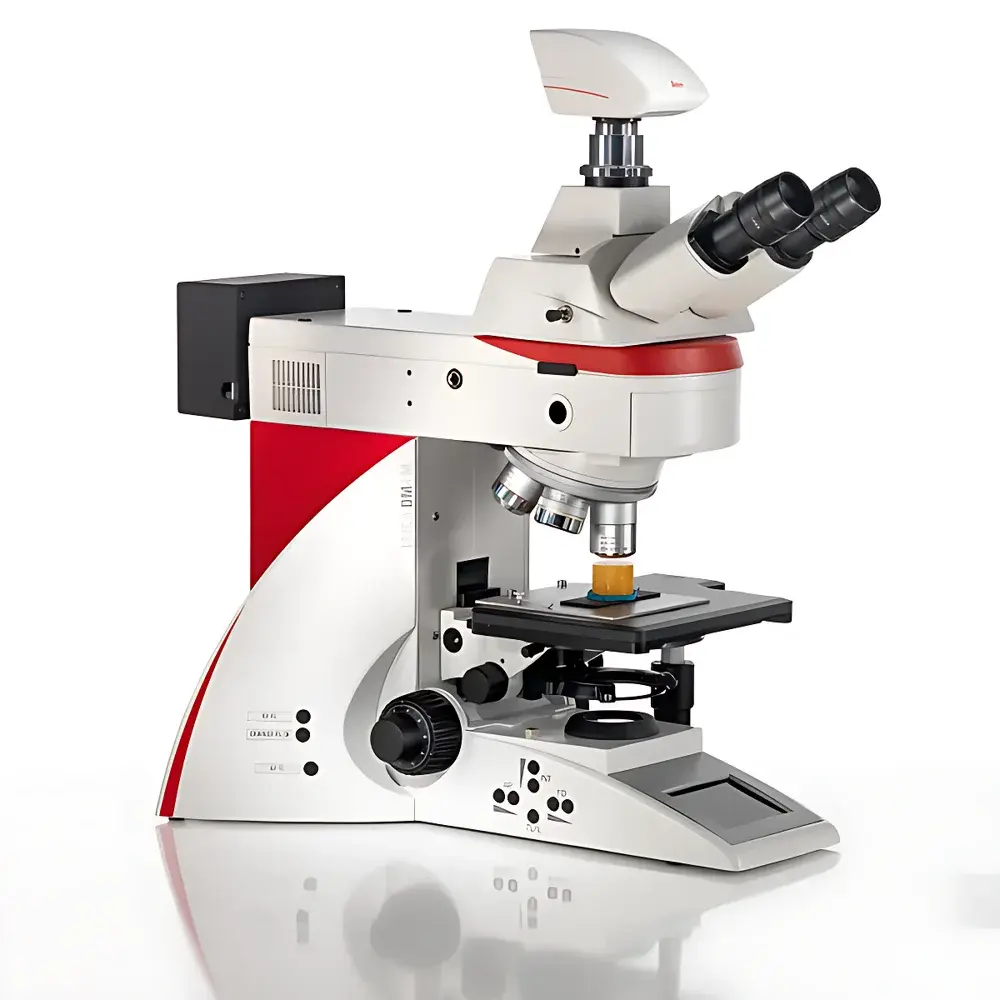
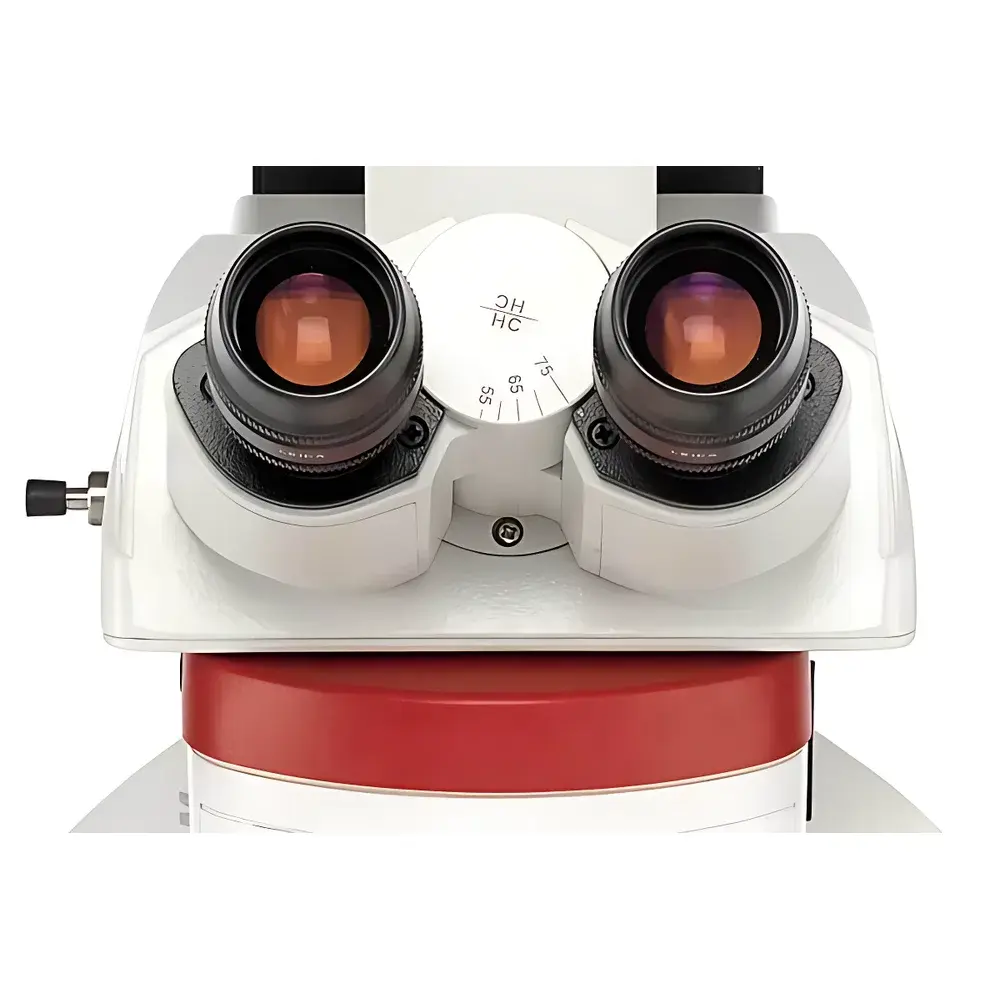
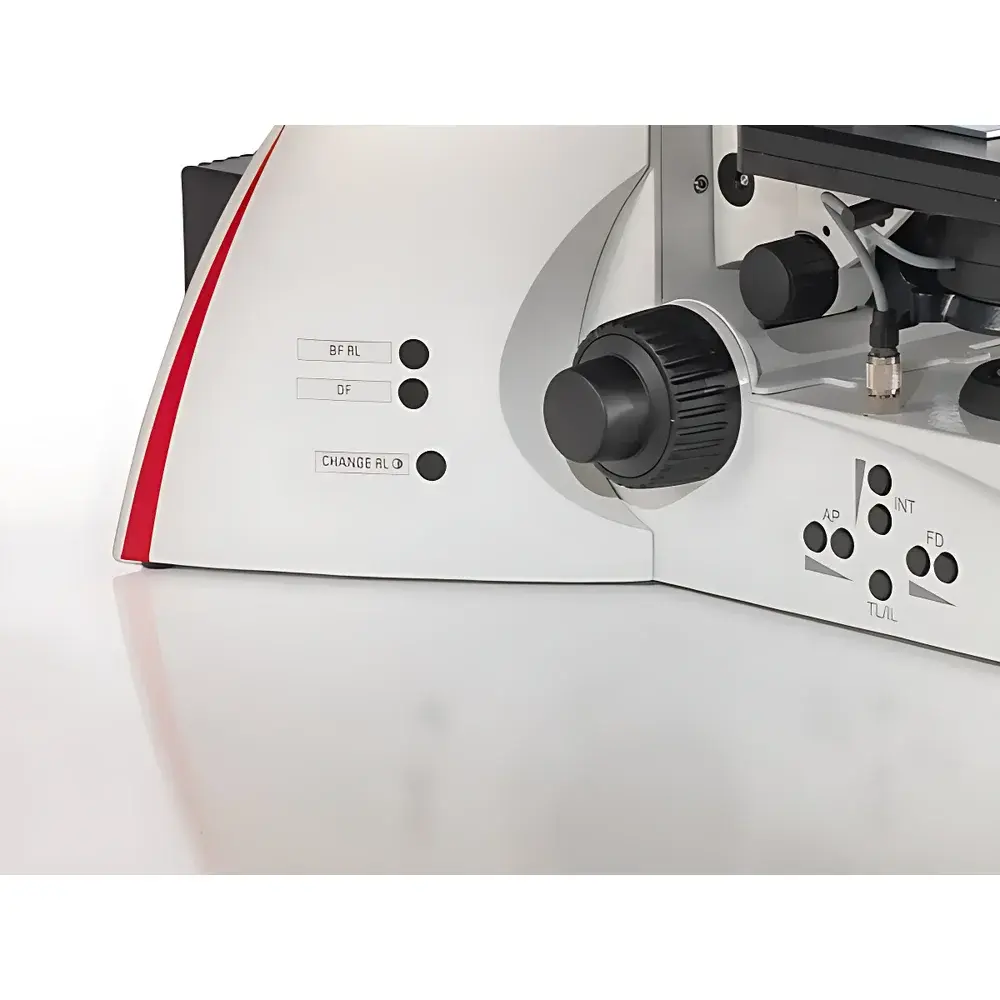
Leica DM4 M Intelligent Upright Metallurgical Microscope
| Brand | Leica |
|---|---|
| Origin | Shanghai, China |
| Manufacturer Type | Authorized Distributor |
| Product Origin | Domestic (China) |
| Model | DM4 M |
| Price Range | USD 35,000 – 70,000 |
| Configuration | Upright |
| Image Analysis System | Integrated |
| Total Magnification | 1000× |
| Eyepiece | 10× |
| Objective Lenses | Up to 100× |
| Illumination | Dual LED (Reflected & Transmitted) |
| Observation Modes | Brightfield, Darkfield, Polarization, DIC |
| Field of View Diameter | 25 mm |
| Objective Turret | 6-Position Encoded |
| Software | Leica Application Suite X (LAS X) with Quantitative Metallography Modules |
Overview
The Leica DM4 M is a research-grade upright metallurgical microscope engineered for precision microstructural analysis in materials science laboratories and industrial quality control environments. It employs an apochromatic optical path corrected for chromatic and spherical aberrations across the full visible spectrum, supporting a 25 mm field-of-view diameter — a critical requirement for standardized metallographic evaluation per ASTM E3, ISO 643, and EN 10365. Designed specifically for reflected-light observation of opaque specimens — including metals, alloys, ceramics, composites, electronic components, and powder particles — the DM4 M integrates fully encoded mechanical components with intelligent illumination management to ensure measurement traceability and inter-operator reproducibility. Its modular architecture permits seamless expansion for transmitted-light applications, high-temperature stage integration, cathodoluminescence, or fluorescence add-ons — making it adaptable to evolving analytical workflows without hardware replacement.
Key Features
- Encoded 6-position objective turret with automatic scale bar calibration: Each objective (4×, 10×, 20×, 50×, 100×) triggers precise recall of magnification-dependent parameters including aperture diaphragm position, condenser height, and illumination intensity.
- Dual LED illumination system (reflected + transmitted): Cold-white LEDs (5700 K color temperature, ±150 K stability) deliver uniform, flicker-free illumination across all contrast modes — brightfield, darkfield (high-resolution HDF), polarization, and differential interference contrast (DIC). Lifetime exceeds 20,000 hours; zero IR/UV emission ensures thermal stability of heat-sensitive samples.
- Intelligent illumination control: The system auto-adjusts LED brightness, aperture, and condenser alignment within <1 second when switching observation modes — eliminating manual recalibration and reducing operator-induced variability.
- Integrated status display: A built-in LCD panel shows real-time configuration data — active objective, illumination mode, light intensity (%), aperture setting, and software connection status — enabling rapid verification during GLP/GMP audits.
- Motorized component compatibility: Optional motorized focus drive, filter wheels, and XY stage enable automated acquisition sequences compliant with FDA 21 CFR Part 11 requirements when paired with LAS X software.
Sample Compatibility & Compliance
The DM4 M accommodates specimens up to 150 × 150 mm using optional large-format stages (4×4 or 6×6 inch), supporting wafer-level inspection and bulk metallography. Its rigid mechanical design minimizes vibration-induced drift during long-exposure imaging or time-lapse thermal analysis. All optical components meet ISO 10934-1 standards for resolution validation, and the encoded hardware architecture satisfies traceability requirements outlined in ISO/IEC 17025:2017 Clause 7.7. The system supports ASTM E112 (grain size), E45 (inclusions), E1268 (decarburization), and ISO 4967 classification protocols — with embedded calibration routines for pixel-to-micron conversion and stage movement repeatability (<0.5 µm RMS).
Software & Data Management
Leica Application Suite X (LAS X) provides validated, audit-ready image acquisition and quantitative analysis. Modules include Grain Analysis (ASTM E112-compliant), Phase Distribution Mapping, Cast Iron Classification (ISO 945), Inclusion Rating (ASTM E45 Type A–D), Decarburization Depth Measurement, and Particle Cleanliness Assessment (ISO 16232). All measurements embed metadata (objective ID, illumination mode, exposure time, calibration timestamp) into TIFF headers. LAS X supports role-based user permissions, electronic signatures, and full audit trails meeting FDA 21 CFR Part 11 and EU Annex 11 requirements. Raw image data is stored in vendor-neutral formats (TIFF, OME-TIFF), ensuring long-term archival integrity.
Applications
- Quality assurance of incoming raw materials (e.g., steel billets, aluminum castings, sintered ceramics)
- Failure analysis of fractured components via fracture surface morphology assessment
- Heat treatment verification (case depth, grain coarsening, phase transformation)
- Weld inspection (fusion zone microstructure, HAZ characterization, porosity quantification)
- Electronic packaging analysis (solder joint integrity, intermetallic layer thickness, void detection)
- Research-scale microstructure-property correlation studies in advanced alloys and additive-manufactured parts
FAQ
Does the DM4 M support both reflected and transmitted light observation?
Yes — the integrated dual LED illumination system enables simultaneous configuration for reflected-light metallurgy and transmitted-light applications (e.g., thin-sectioned minerals or polymer films) via optional condenser modules.
Is the system compliant with regulatory documentation requirements for pharmaceutical or aerospace QA labs?
When deployed with LAS X software, the DM4 M meets FDA 21 CFR Part 11, EU GMP Annex 11, and ISO/IEC 17025 data integrity requirements through electronic signature support, audit trail logging, and secure user access controls.
Can third-party cameras or analysis software be integrated?
The microscope features standard C-mount and USB3.0 interfaces; however, only Leica-certified cameras and LAS X modules are validated for quantitative metrology compliance. Non-Leica peripherals may operate in basic imaging mode but lack calibration traceability.
What maintenance is required for long-term optical performance?
No lamp replacements are needed due to LED longevity. Annual verification of objective encoding accuracy and illumination uniformity (per ISO 9335) is recommended for ISO/IEC 17025-accredited labs.
Is thermal drift compensation available for high-temperature stage experiments?
While the base DM4 M does not include active thermal compensation, its rigid Z-axis design and low-heat LED illumination minimize thermal lensing effects. For dynamic thermal studies, optional motorized focus compensation modules synchronize with stage temperature feedback signals.




