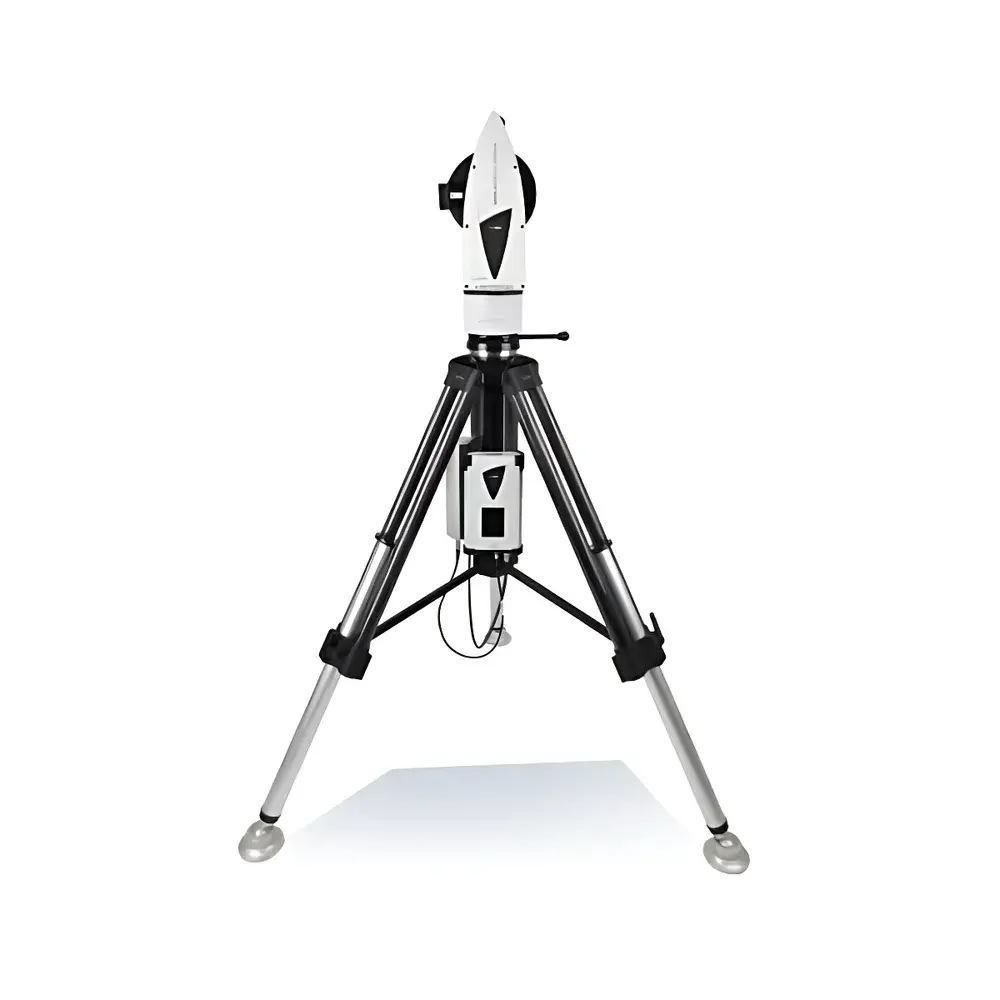
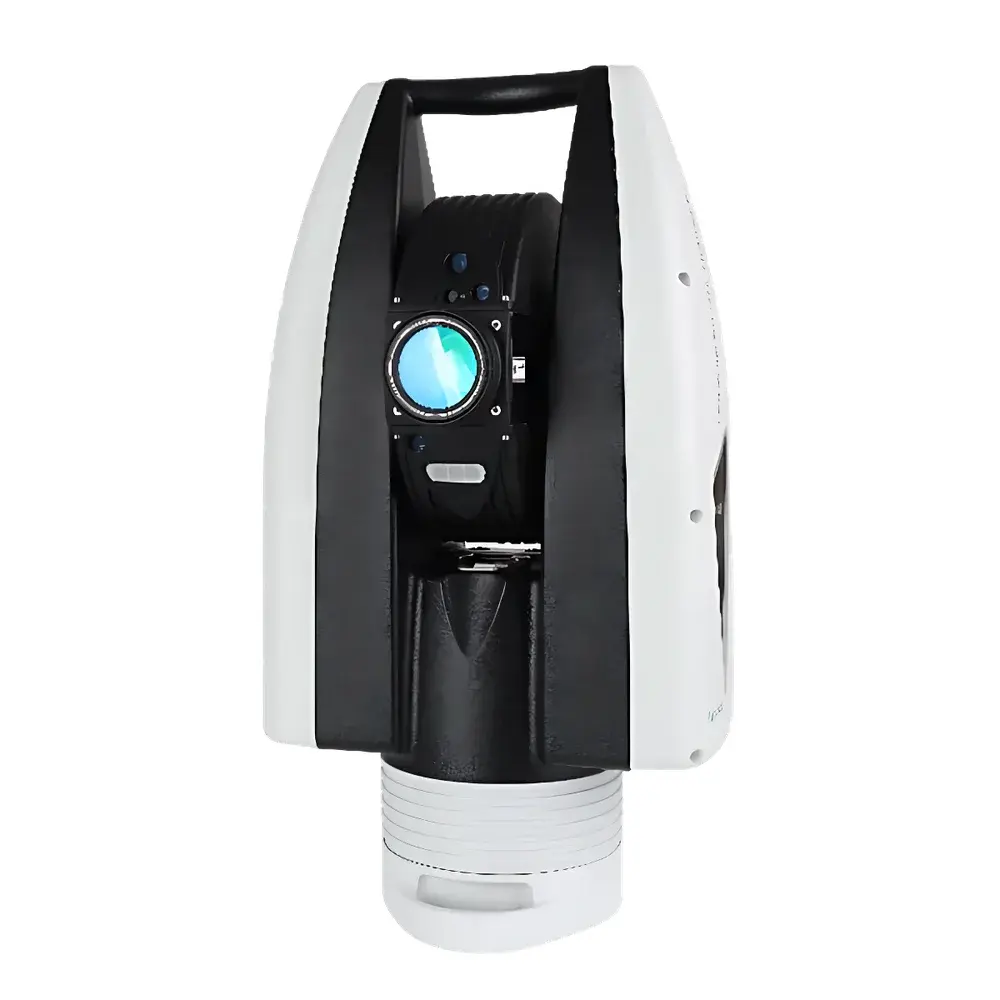
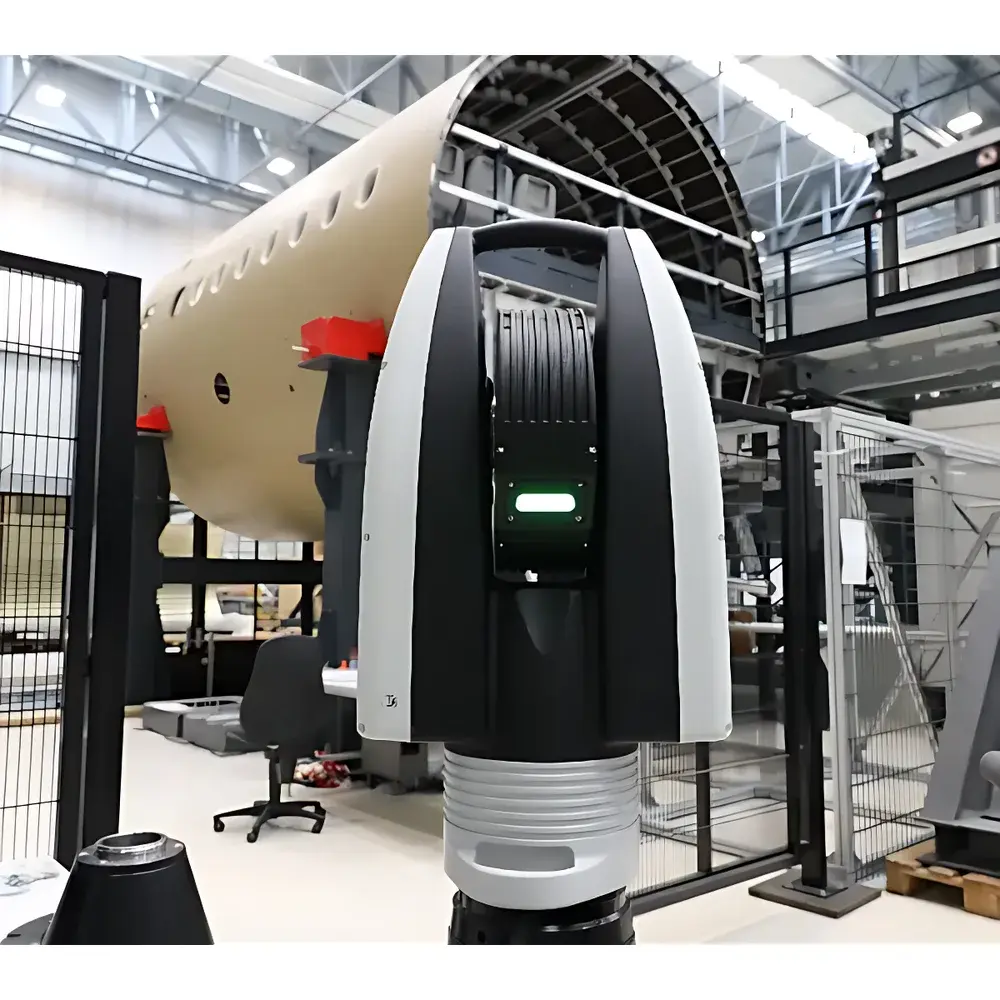
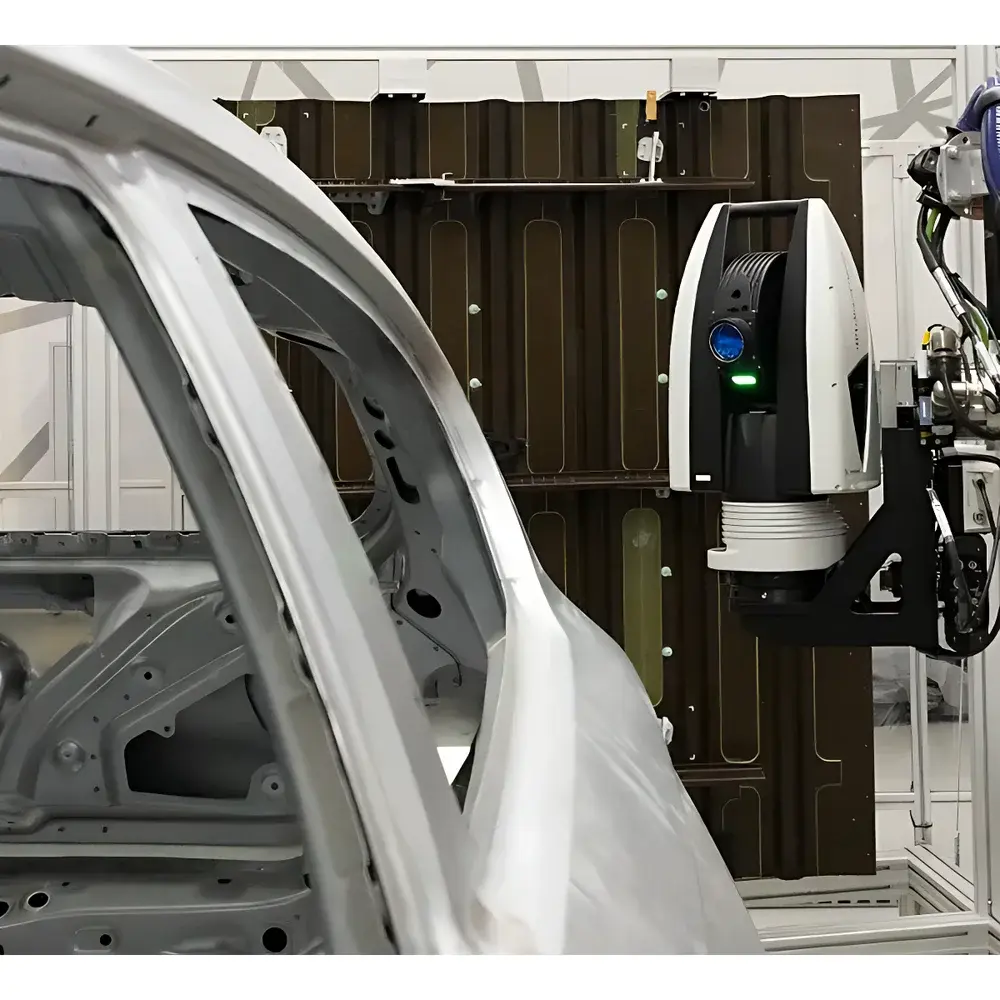
Leica HEXAGON ATS800 Direct-Scan Laser Tracker
| Brand | HEXAGON |
|---|---|
| Origin | Shandong, China |
| Manufacturer Type | Authorized Distributor |
| Origin Category | Domestic |
| Model | ATS800 |
| Price | USD 420,000 (approx.) |
| Max Measurement Range | Ø80 m |
| IP Rating | IP54 |
| Operating Temperature | 0 °C to +40 °C |
| Relative Humidity | ≤95% (non-condensing) |
| Laser Class | IEC 60825-1:2014 Ed.2 Class 1 |
| Environmental Monitoring | Integrated temperature, pressure & humidity sensors |
| Power | Rechargeable battery pack with hot-swap capability |
| Connectivity | Built-in Wi-Fi 5 (802.11ac), Ethernet, USB-C |
Overview
The Leica HEXAGON ATS800 Direct-Scan Laser Tracker is an industrial metrology system engineered for high-accuracy, large-volume coordinate measurement and non-contact 3D scanning in production and assembly environments. Unlike conventional laser trackers that rely exclusively on retroreflector-based point measurement, the ATS800 integrates a coaxial scanning interferometer with real-time feature recognition algorithms to perform direct surface acquisition—eliminating the need for manual probe placement or physical contact. Its core measurement principle combines heterodyne interferometry (TruePoint technology) with dynamic beam steering and adaptive focus control, enabling sub-micron-level center-point localization accuracy across its full 80-meter spherical envelope. Designed for aerospace structural assemblies, automotive body-in-white validation, wind turbine blade inspection, and railcar dimensional verification, the ATS800 delivers traceable, NIST-aligned spatial measurements while operating under ISO 10360-12 and VDI/VDE 2634 Part 3 compliance frameworks.
Key Features
- TruePoint Interferometric Centering: Patented interferometric signal processing identifies the geometric centroid of each measured point—even on low-reflectivity or curved surfaces—reducing systematic offset errors common in traditional tracker-based photogrammetry.
- AI-Driven Feature Recognition: Onboard neural inference engine automatically detects and classifies edges, holes, slots, and boundary contours during live scanning; outputs GD&T-compliant feature reports without post-processing.
- Selective Scan Zone Definition: Users define arbitrary 2D/3D scan volumes via CAD overlay or freehand bounding; system dynamically adjusts point density and dwell time to ensure uniform sampling resolution and statistical repeatability (σ < 0.015 mm at 40 m).
- PowerLock Acquisition: Automatic retroreflector lock-on within ±3° angular tolerance and 500 ms response time; supports continuous tracking during AMR/AGV motion at velocities up to 0.5 m/s.
- Ruggedized Field Architecture: IP54-rated enclosure with thermal-stabilized optical bench; operational across ambient fluctuations from 0 °C to +40 °C and humidity up to 95% RH (non-condensing); integrated environmental sensor suite feeds real-time compensation into measurement algorithms.
- Wireless Workflow Integration: Dual-band Wi-Fi 5 connectivity enables remote control via tablet or laptop; supports secure TLS 1.2 encrypted data streaming to enterprise PLM/MES systems and cloud-based metrology dashboards.
Sample Compatibility & Compliance
The ATS800 accommodates raw metallic, composite, painted, and thermally sprayed surfaces without surface preparation—achieving stable signal return from materials with reflectivity as low as 5% (e.g., matte carbon fiber, oxidized aluminum). It complies with ISO 17025:2017 requirements for calibration laboratories, supports audit-ready GLP/GMP documentation workflows, and meets FDA 21 CFR Part 11 criteria for electronic records and signatures when deployed with certified software modules. All measurement data are timestamped, digitally signed, and linked to environmental metadata (temperature, barometric pressure, relative humidity) for full traceability in AS9100 Rev D and IATF 16949 audits.
Software & Data Management
The system operates natively with Leica Metrology Suite (LMS) v5.3+, providing calibrated point cloud generation, automated GD&T evaluation (per ISO 1101 and ASME Y14.5–2018), and deviation heat mapping against nominal CAD models. Raw scan data export formats include .PTX, .E57, .XYZ, and .STP (with PMI embedding). LMS supports role-based access control, change logging, and versioned report archiving aligned with ISO/IEC 17025 Clause 7.5. For enterprise integration, RESTful APIs enable bidirectional synchronization with Siemens Teamcenter, PTC Windchill, and Hexagon’s own SmartQuality platform.
Applications
- Aerospace: Wing spar alignment verification, fuselage section mating checks, and tooling calibration for composite layup molds.
- Automotive: BIW dimensional stability monitoring, battery tray flatness assessment, and robotic weld path validation.
- Energy: Offshore platform module fit-up verification, turbine hub concentricity analysis, and solar concentrator mirror array alignment.
- Rail Transportation: Bogie frame distortion mapping, carbody straightness certification, and pantograph geometry inspection.
- Heavy Machinery: Gearbox housing bore alignment, excavator boom curvature validation, and hydraulic cylinder rod straightness quantification.
FAQ
Does the ATS800 require external environmental sensors for temperature compensation?
No—the system includes embedded, factory-calibrated temperature, pressure, and humidity sensors that feed real-time atmospheric correction values directly into the interferometric path length calculation.
Can the ATS800 perform measurements without a retroreflector?
Yes—it operates in both reflector-based (targeted point measurement) and reflectorless (direct surface scanning) modes; the latter uses high-gain CMOS imaging and adaptive laser power modulation for reliable acquisition on unprepared surfaces.
Is the ATS800 compatible with existing Hexagon hardware ecosystems?
Yes—it interoperates seamlessly with Leica Absolute Scanner AS1, T-Probe, and iGPS systems via common LMS software infrastructure and shared calibration databases.
What level of cybersecurity does the onboard Wi-Fi interface support?
Wi-Fi implements WPA3-Enterprise authentication with RADIUS server integration, TLS 1.2 encryption for all command/data channels, and configurable firewall rules per IEEE 802.1X standards.
How is measurement uncertainty validated across the full 80-meter range?
Uncertainty budgets are generated per ISO/IEC Guide 98-3 (GUM) using Monte Carlo simulation; certified volumetric performance reports (per VDI/VDE 2634 Part 3) are issued with each factory calibration and include expanded uncertainty (k=2) values at multiple radial distances and elevation angles.